
Growing thinning hair back comes down to three things: figuring out why it's thinning, taking action that directly targets the cause, and giving it enough time to actually work. Most people jump straight to products without ever solving the first part, which is why so many end up frustrated after months of effort. The good news is that a lot of thinning is reversible, and even the types that aren't fully reversible can be significantly improved with the right approach.
How to Grow Hair That Is Thinning: Step-by-Step Guide

Marcus Holloway
13 May 2026
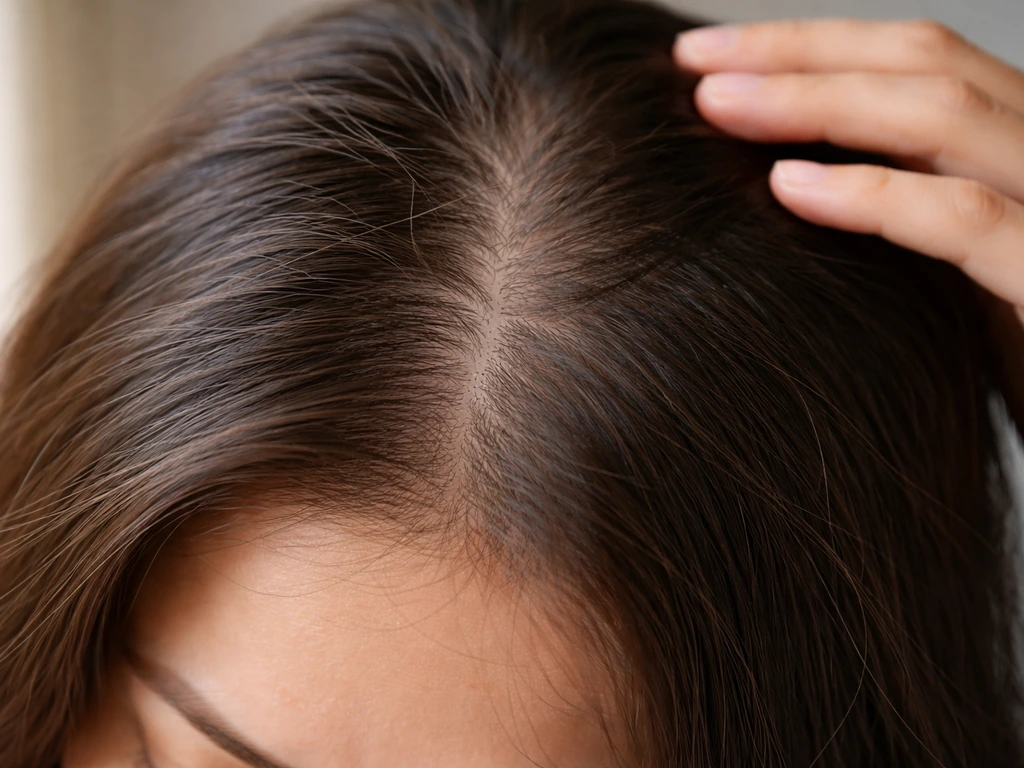
Figure out why your hair is thinning first
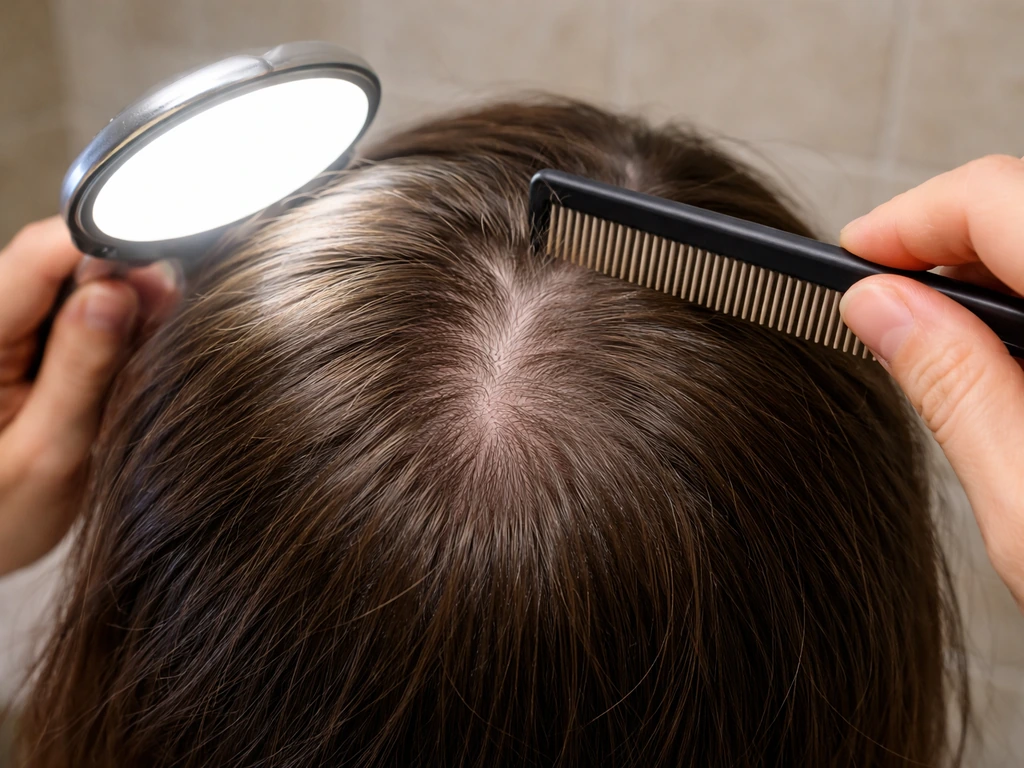
This step matters more than any product or supplement you could buy. The cause of your thinning completely changes what you should do about it. There are a few main categories worth understanding.
Pattern hair loss (androgenetic alopecia)
This is the most common type, and it's hereditary. In men it usually shows up as a receding hairline or thinning at the crown. In women it tends to be a widening part or overall reduced density across the top of the scalp. If you want a targeted plan for how to grow hair in thinning areas, start by figuring out the category of thinning and then build your routine around it.
It's progressive without treatment, meaning it continues to worsen over time if you don't intervene. The mechanism is a hormone called DHT gradually shrinking hair follicles until they stop producing visible hair.
If you have a family history of hair loss on either side, this is a strong candidate.
Telogen effluvium (stress-triggered shedding)
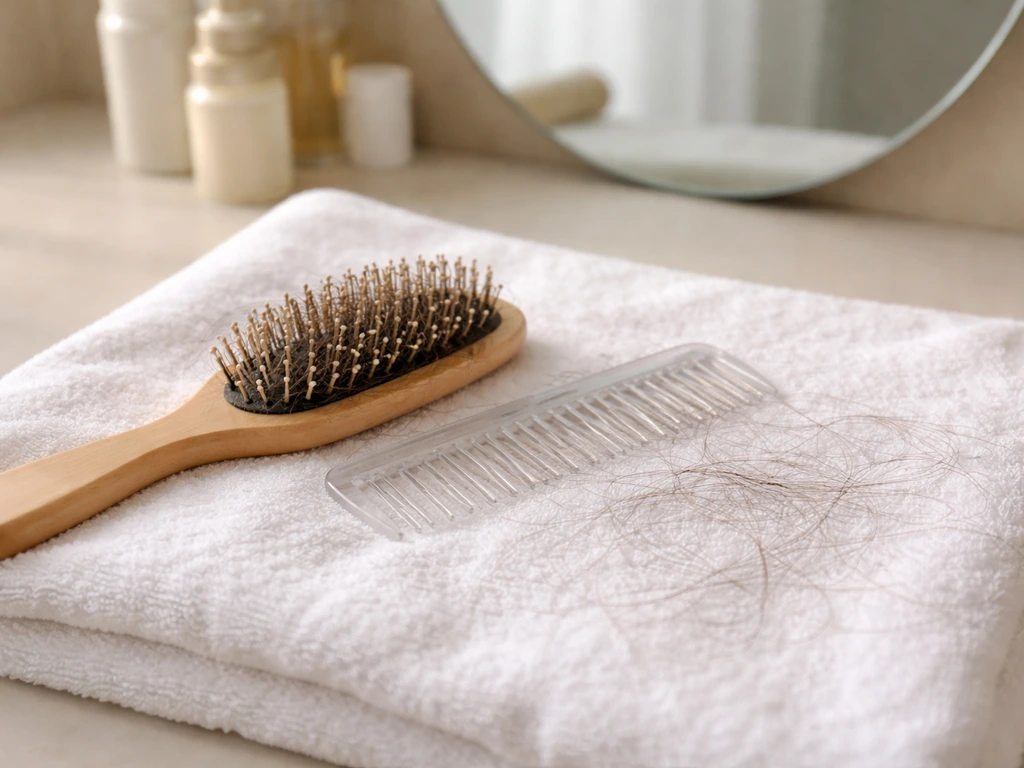
This is the type where you suddenly notice handfuls of hair falling out and you can see your scalp more clearly than before. It's diffuse, meaning it happens all over rather than in one spot. The key thing about telogen effluvium is that it typically starts 2 to 3 months after a triggering event, whether that's major physical stress, illness, surgery, crash dieting, childbirth, or a significant hormonal change. The shedding phase usually lasts 3 to 6 months before it stops on its own. The frustrating part is that by the time you notice it, the stressor may have passed weeks ago.
Traction alopecia
If your thinning is happening at the hairline, temples, or along a part line, and you regularly wear tight buns, braids, cornrows, ponytails, or extensions, traction is very likely the culprit. The good news is that in its early stages, traction alopecia is usually reversible once the pulling stops. Early signs include broken hairs around the hairline, small bumps or folliculitis, and reduced density in tension zones. The longer it goes on, scarring can develop, which is why acting early matters here.
Breakage vs. true hair loss
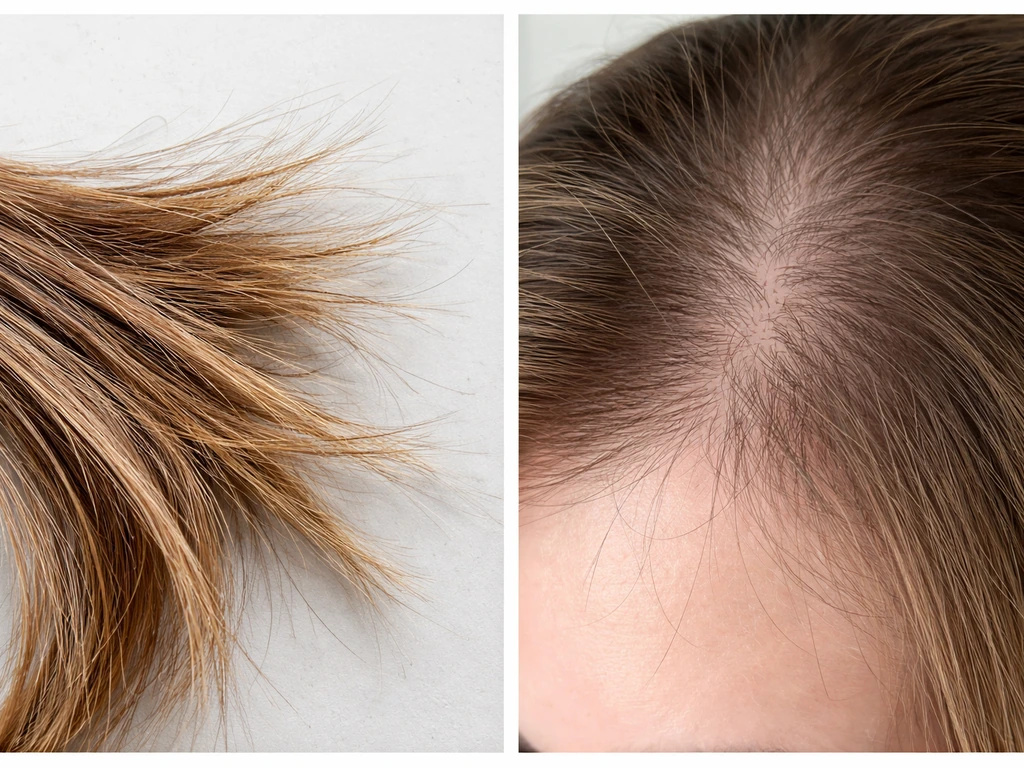
Not all thinning is actual hair loss from the follicle. Breakage from heat damage, over-processing, or mechanical stress (aggressive brushing, tight elastics) can make hair look thin and wispy even when the follicle is fine. If your hair still looks thin, focusing on whether you need true hair regrowth versus repairing breakage can help you choose the right hair growth approach. If your shed hairs have a white bulb at the root, that's true shedding.
If they're short fragments without a root, that's breakage. The approach for breakage is about protecting and strengthening the hair shaft, not stimulating the follicle. If your hair is thin, you can still grow it longer, but the priority is first reducing breakage and treating the underlying thinning so you keep density as it grows can i grow my hair long if it's thin.
If you are mainly dealing with breakage that makes body hair look thinner, focus on reducing heat and friction so the hair shaft stays intact.
Other causes worth flagging
Alopecia areata is immune-mediated, where your own immune system attacks follicles, causing patchy loss that can sometimes be treated with topical or injected corticosteroids with good regrowth results. Nutritional deficiencies, thyroid disorders, and certain medications can also cause diffuse thinning that looks similar to telogen effluvium. If your thinning doesn't fit neatly into the pattern or shedding categories, bloodwork is the fastest way to rule these out.
What to realistically expect and when
Hair grows about half an inch per month under good conditions, and follicles that have been dormant or stressed take time to reactivate. Here's a realistic picture of what different timelines look like depending on your situation.
| Type of thinning | When you might see improvement | What improvement looks like |
|---|---|---|
| Telogen effluvium | 3 to 6 months after shedding slows | New growth (baby hairs) across affected areas, reduced daily shed count |
| Pattern hair loss (with treatment) | 3 to 6 months of consistent treatment | Slower progression, some density return, especially with early intervention |
| Traction alopecia (early) | 2 to 4 months after stopping traction | Regrowth along hairline and temples |
| Breakage | 1 to 3 months of protective care | Fewer split ends, less flyaways, improved texture |
| Nutritional deficiency | 2 to 4 months after correcting deficiency | Reduced shedding, improved hair texture and thickness |
The biggest thing to internalize here: you're not going to see results in two weeks. Most people give up right before things start turning around. Set a 90-day minimum before judging any approach, and use photos and shed counts to track progress rather than relying on how your hair looks on any given day.
Build a scalp-first hair growth routine
Think of your scalp the way you think of soil for a garden. The follicle lives in the scalp, and what happens at the scalp level directly affects what grows out of it. This is why a scalp-first routine matters more than most people realize.
Cleansing and buildup control
Scalp buildup from sebum, product residue, and dead skin cells can clog follicles and create a low-grade inflammatory environment that isn't great for hair growth. Washing 2 to 4 times per week is reasonable for most people, though if you have an oily scalp or use a lot of styling products, more frequent washing helps. Use a gentle, sulfate-free shampoo for everyday cleansing, and add a clarifying wash once or twice a month to fully strip product buildup. If you're dealing with dandruff or scalp flaking, a shampoo with zinc pyrithione, selenium sulfide, or ketoconazole addresses the fungal component that often drives scalp inflammation.
Scalp massage
Scalp massage is one of the most underrated and underused free tools for hair growth. It increases blood flow to the follicles, which brings more nutrients and oxygen to the area. Use your fingertips (not nails) and apply firm but gentle circular pressure for 4 to 5 minutes daily. You can do this during washing, after applying a serum, or just dry. Some people use a silicone scalp massager, which works just as well. Consistency matters more than duration here: daily light massage beats occasional long sessions.
Gentle handling habits
- Detangle with a wide-tooth comb starting from the ends, working upward, especially when hair is wet
- Avoid tight hairstyles that pull at the hairline or crown
- Let hair air dry when possible, or use a diffuser on low heat
- Switch to a satin or silk pillowcase to reduce overnight friction
- Avoid vigorous towel rubbing; blot gently instead
Treatments that actually thicken hair and restore density
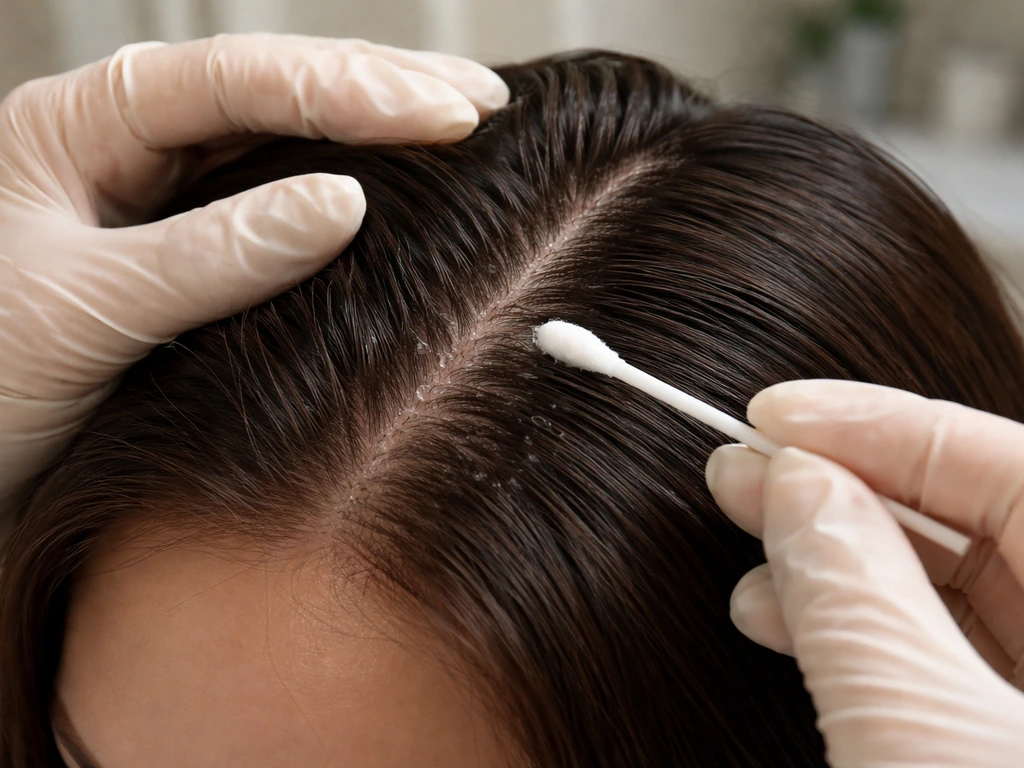
The goal here is specifically density and thickness, not just length. Longer hair that's still thin doesn't solve the problem. These are the approaches with the strongest evidence behind them.
Minoxidil (topical)
Minoxidil is the most well-researched over-the-counter option for pattern hair loss and for women with diffuse thinning. It works by prolonging the growth phase of the hair cycle and increasing blood flow to the follicle. Managing the growth phase is also key to figuring out how to grow long thin hair into fuller, thicker strands growth phase of the hair cycle.
The 2% solution is typically recommended for women, and the 5% foam or solution is used for men, though 5% foam is now often used in women too under guidance. You apply it to a dry scalp once or twice daily. The critical thing: you need to use it continuously. Results take 3 to 6 months to show, and stopping it means any gains gradually reverse over several months.
Prescription options
For men with pattern loss, finasteride (oral, prescription only) blocks the conversion of testosterone to DHT and has strong evidence for slowing loss and improving density, typically used at 1mg daily. Dutasteride is a stronger DHT blocker sometimes prescribed off-label. For women, spironolactone is a commonly prescribed option that reduces androgen activity. These require a doctor's prescription and monitoring, but for moderate to advanced pattern loss they're often more effective than topical minoxidil alone.
Ketoconazole shampoo
Ketoconazole at 1% to 2% concentration has some evidence as an adjunct treatment for androgenetic alopecia, likely due to its mild anti-androgen effect at the scalp plus its anti-inflammatory properties. Using it 2 to 3 times a week in place of your regular shampoo is a low-effort addition that can complement other treatments. It won't regrow hair on its own but it does support the environment your follicles are working in.
Topical serums and caffeine
Caffeine applied topically has shown some evidence of inhibiting DHT activity at the follicle level. Several over-the-counter scalp serums and shampoos include it. It's not going to replace minoxidil for significant thinning, but it's a useful support ingredient in your routine. Rosemary oil, particularly at 2% concentration, has shown in a small but notable study to be comparable to 2% minoxidil for certain types of hair loss over a 6-month period. It's worth including in a scalp massage oil if you prefer a more natural approach.
Nutrition and supplements that affect hair growth
Hair is not a vital organ, so when your body is under nutritional stress, hair is one of the first things it deprioritizes. Deficiencies in specific nutrients are a very common and often overlooked driver of thinning, particularly in women.
Protein
Hair is made of keratin, which is a protein. If you're not eating enough protein, your body will cut back on hair production. Aim for at least 0.7 to 1 gram of protein per pound of body weight. This matters especially if you've recently dieted aggressively or follow a restrictive eating pattern. Eggs, legumes, fish, chicken, and Greek yogurt are all practical sources.
Iron and ferritin
Low ferritin (stored iron) is one of the most common nutritional causes of hair shedding in women, and it often goes undiagnosed because ferritin isn't always checked in standard blood panels. Even if your hemoglobin looks normal, ferritin can be low enough to affect hair growth. Many hair specialists look for a ferritin level above 70 ng/mL for optimal hair growth, while the general normal range often starts at 12 ng/mL. Ask your doctor to specifically check ferritin if you haven't had it tested.
Vitamin D
Vitamin D deficiency is extremely common and linked to several forms of hair loss, including telogen effluvium and alopecia areata. Your target blood level is generally 40 to 60 ng/mL. Supplementing with 1,000 to 2,000 IU daily is a reasonable starting point if you're deficient, though some people need more. This is worth checking via bloodwork because vitamin D is one of the easier deficiencies to fix.
Zinc and biotin
Zinc deficiency can cause hair shedding and a dry, flaky scalp. Good food sources include pumpkin seeds, beef, shellfish, and legumes. Biotin is heavily marketed for hair growth, but the honest reality is that supplementing with biotin only meaningfully helps if you have an actual biotin deficiency, which is rare. If you're eating a reasonably varied diet, adding more biotin probably won't do much. That said, it's water-soluble and low-risk, so it won't hurt.
Other worth-considering supplements
- Omega-3 fatty acids (fish oil or flaxseed): anti-inflammatory and may support scalp health
- Collagen peptides: provides glycine and proline, amino acids used in hair protein synthesis
- Saw palmetto: a plant-based DHT inhibitor with some supporting evidence for pattern loss, available over the counter
- Viviscal or Nutrafol: multi-ingredient supplements with some clinical backing, though results vary and they're expensive
Lifestyle habits that speed up hair growth and stop further thinning
These factors don't get as much attention as products and supplements, but they're genuinely powerful. Some of them have more effect on your hair than anything you could buy.
Stress management
Chronic stress elevates cortisol, which can push hair follicles into the resting (telogen) phase prematurely. This is exactly the mechanism behind telogen effluvium. If you're under sustained high stress and you want your hair to stop shedding and start growing, managing the stress isn't optional. Exercise, sleep, therapy, and basic nervous system regulation (even just consistent outdoor time) all contribute here. It sounds soft as advice, but the biology is real.
Sleep
Most tissue repair and growth hormone release happens during deep sleep. Getting less than 7 hours consistently is a stress on the body that affects hair growth among other things. It's also when your scalp circulation is highest relative to your activity level. Prioritizing sleep genuinely supports faster regrowth during a recovery phase.
Smoking
Smoking impairs scalp circulation and has been linked to accelerated pattern hair loss. If you smoke and you're experiencing thinning, this is a factor. Quitting improves peripheral blood flow, which matters for follicle health.
Heat and chemical damage
Repeated heat styling above 350°F (175°C), chemical relaxers, bleach, and tight perms all damage the hair shaft over time and can, with sustained tension and follicle stress, lead to actual thinning. If you're already dealing with thinning, dialing back heat frequency and using a heat protectant every time is a meaningful change. For thinning crown hair specifically, it's worth looking at whether your styling routine is contributing to the problem. If you specifically want to address how to grow thinning crown hair, tailoring your routine to reduce follicle stress can make the biggest difference.
When to see a dermatologist and how to track your progress
See a dermatologist if you notice any of these
- Patchy hair loss rather than diffuse thinning (could be alopecia areata or tinea capitis)
- Scalp that is sore, itchy, scaly, or inflamed in areas of thinning
- Rapid or severe shedding (more than 150 to 200 hairs per day consistently for weeks)
- No improvement after 6 months of consistent, evidence-based self-treatment
- Thinning that's been progressing for years with no clear trigger
- Hairline recession in a young woman (could signal hormonal or autoimmune issue)
A dermatologist can do a scalp examination, sometimes using a dermatoscope to look at follicle density and health directly. They can also run the bloodwork that actually matters: ferritin, full thyroid panel (TSH, free T3, free T4), vitamin D, zinc, complete blood count, and in women often a hormonal panel including androgens. This gives you a real diagnosis instead of guessing.
How to track your progress at home
Photos are the most reliable tracking tool. Take them in the same lighting, same position, same day of your wash cycle, once a month. Focus on your part line and any thinning zones. The change month to month will be subtle, but over 4 to 6 months it becomes visible. Comparing your photo from month 1 to month 6 is far more informative than comparing today to yesterday.
Shed counts are also useful during an active shedding phase. Collect all hairs from your brush and shower drain for a few days to get a baseline. More than 100 hairs per day is considered elevated shedding. Tracking this weekly gives you an objective sign that things are improving even before you see visible density changes.
One more thing: hair regrowth almost always shows up as fine, short hairs before it becomes noticeable density. Those baby hairs at your hairline or part are a genuine positive sign, not a sign that the hair is growing back thin. Give them 6 to 12 months to mature into full terminal hairs. If you're specifically working on thinning areas like the crown or dealing with hair that has been thin for a long time and doesn't seem to grow, the approach slightly shifts, but the foundation is the same: address the root cause, support the scalp, be consistent, and give it time.
FAQ
How can I tell if I’m actually thinning because of hair loss versus breakage making my hair look thinner?
Look at the ends and the root of shed hairs. True shedding hairs usually have a white, club-like bulb at one end, while breakage leaves short fragments without a root and often shows consistent short “fluffy” pieces. If shedding is low but hair still looks thin, focus first on reducing heat, chemical processing, and friction (tight styles and rough detangling).
If I have hair loss in a patchy area, does that mean it’s necessarily alopecia areata?
Not necessarily. Patchy loss can be traction-related, inflammatory, or a scarring process. The fastest way to avoid missing something important is an in-person scalp exam, ideally with dermatoscopy, because treatment choices change a lot depending on whether follicles are active versus scarred.
I started minoxidil, but my shedding increased in the first weeks. Should I stop?
A temporary shed can happen as follicles move through the hair cycle, so an early increase alone is not a reason to quit. Don’t judge results until at least the 3 to 6 month mark, unless you’re having severe side effects (intense scalp irritation, swelling, chest symptoms). If you get heavy irritation, ask about switching formulation (foam vs solution) or using a gentler regimen.
How long should I try a routine before deciding it isn’t working?
Plan for a minimum 90 days before reassessing, and often 4 to 6 months for visible density changes. Use monthly photos taken under identical lighting and part position, plus (if you are actively shedding) a weekly shed count to reduce the chance you’re reacting to normal day-to-day variation.
Do I have to use minoxidil forever to keep the gains?
For most people, yes. Stopping usually leads to a gradual reversal over several months because it does not eliminate the underlying cause of follicle signaling. If you want to discontinue, discuss tapering or alternative maintenance with a clinician rather than stopping abruptly.
Can diet alone fix thinning hair, or do I still need hair-growth treatments?
Diet can be a major lever when you have a deficiency (commonly low ferritin, vitamin D, or zinc), but it rarely replaces evidence-based hair-growth treatments for androgen-related pattern loss. If bloodwork is normal, diet optimization helps overall health but may not fully reverse thinning on its own.
What blood tests matter most when someone asks how to grow hair that is thinning?
If shedding or thinning is unexplained, ask your clinician to check ferritin (not just hemoglobin), vitamin D, and thyroid markers (typically TSH plus free T4, sometimes free T3). For additional context, a complete blood count helps screen for broader issues, and women often benefit from androgen testing depending on symptoms (for example irregular periods, acne, or hirsutism).
How do I know whether my thinning is likely DHT-driven versus stress-related?
Pattern/DHT-related thinning tends to follow a slow progression (receding hairline or crown thinning in men, widened part or diffuse top thinning in women) rather than starting suddenly. Stress-related telogen effluvium often begins 2 to 3 months after a clear trigger and then improves over 3 to 6 months once the trigger is addressed.
Is topical ketoconazole just for dandruff, or does it actually help hair regrowth?
It can help as an adjunct because it targets scalp inflammation and may modestly support androgenetic alopecia. If your scalp is flaking or inflamed, it can be doubly useful, but it generally will not produce major regrowth by itself without also addressing the underlying thinning driver.
What should I do if my hair is thinning but I’m also using extensions, tight styles, or frequent heat?
Treat mechanical stress as a priority. Stop or reduce the tension-causing styles (tight buns, braids, cornrows, frequent extensions) and lower heat frequency, then add a heat protectant. If traction is early, density can recover, but waiting for months while pulling continues can increase the risk of scarring.
Does scalp massage really matter, and what’s the safest way to do it?
Scalp massage can help because it may improve local circulation, but it’s not a substitute for cause-specific treatment. Use fingertip pressure (no nails), aim for firm but comfortable circular pressure for about 4 to 5 minutes daily, and avoid aggressive rubbing if you have active scalp inflammation or open irritation.
How should I take photos and track progress so I don’t get discouraged?
Take pictures once per month, same day of your wash cycle, same lighting, same camera distance, and same part line. Focus on the part and specific thinning zones, and compare month-to-month rather than day-to-day, because early regrowth often shows up as fine short hairs before density noticeably increases.
Next Articles
Tips on How to Grow Your Hair Out: A Step by Step Guide
Step-by-step tips to grow hair out: stop breakage, build scalp routine, nutrition, safe actives, and track progress.
Grow Hair Long Tips: Step-by-Step Routine to Reach Length
Step-by-step grow hair long tips: boost scalp health, cut breakage, improve diet, and track progress for length.
Tips for How to Grow Long Hair: A Practical Guide
Actionable tips to grow long hair naturally: care routine, scalp habits, nutrition and breakage prevention for healthy l