
Hair grows about 1 cm (roughly half an inch) per month, which means shoulder-length hair from a short cut takes around 12 to 18 months, and truly long hair takes 2 to 3 years. That's the honest answer. You can't dramatically change that number, but you can stop losing ground to breakage, shedding, and damage, and that's where most guys go wrong. The real strategy for growing long hair is equal parts growing it and not losing it.
How to Grow Long Hair for a Guy: Fast Plan + Tips

Marcus Holloway
24 Apr 2026

Realistic expectations and timelines
The average human scalp hair grows about 0.35 mm per day, which works out to approximately 1 cm per month or 6 inches per year. That's a biological ceiling set mostly by genetics, and no shampoo, oil, or supplement will double it. What varies a lot between people is how much of that growth actually survives to become visible length, and that's where your habits matter.
Here's a rough timeline to help you plan. If you're starting from a buzzcut or very short cut, expect chin length in about 12 to 15 months, shoulder length in 18 to 24 months, and armpit length in 3 or more years. If you're starting from a medium-length cut, you're already a year ahead. These timelines assume reasonable hair health, if you're dealing with a lot of breakage, they stretch out.
One thing worth knowing: it's normal to lose 50 to 100 hairs per day. On washing days you might notice more in the drain because loose hairs that would have shed throughout the day all come out at once. That's not extra shedding, it's just timing. About 85 to 90 percent of your follicles are actively growing at any given time (called the anagen phase), so your scalp is already doing a lot of work, you just need to support it.
What actually makes hair grow faster (and what doesn't)
There's no proven way to significantly speed up your hair's growth rate beyond its genetic potential. But two things genuinely move the needle: removing obstacles to growth and reducing breakage. If your follicles are clogged, inflamed, or undernourished, they'll underperform. Fix those things and you'll likely see improvement. If you are specifically trying to grow a flow with thick hair, the same principles apply, but you will want to tailor your routine to reduce breakage and support thickness as you go how to grow a flow with thick hair. If everything is already healthy, you're working near your ceiling, and patience is the only tool left.
Scalp massage is one of the more credible low-effort options. A small study found that standardized scalp massage (4 minutes daily for 24 weeks) was associated with increased hair thickness, likely by stimulating blood flow to follicles. It won't make hair grow faster in terms of rate, but it supports follicle health. Doing it while applying a scalp oil is a good habit to build.
Heat styling, rough towel drying, and tight hairstyles all cause breakage that eats into your length gains month after month. A guy who grows 6 inches per year but loses 2 inches to breakage and split ends effectively only gains 4 inches. Protecting your hair from mechanical and heat damage is the single most underrated 'growth' strategy. If you're trying to grow healthy long hair as a guy, remember that the real bottleneck is keeping hair health high so length actually survives the growth period, not just boosting growth rate how to grow healthy long hair male.
Your daily and weekly hair routine

How often to wash
Most guys wash their hair every day out of habit, but daily shampooing strips natural oils that keep your hair flexible and resistant to breakage. As your hair gets longer, those oils matter more. Try washing 2 to 3 times per week, and use a sulfate-free or gentle shampoo. On non-wash days, a quick rinse with water is fine if you've been sweating. If your scalp gets oily fast, a light dry shampoo at the roots (not the lengths) can help you stretch between washes.
Conditioning is non-negotiable
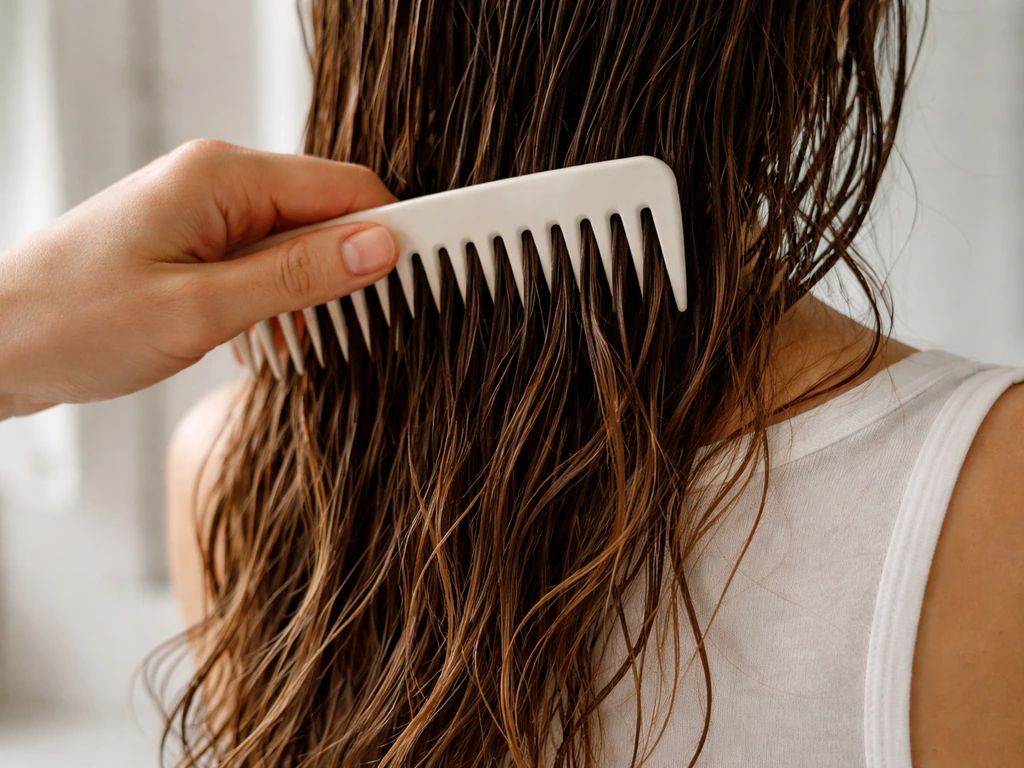
Every wash should be followed by conditioner applied from mid-lengths to ends. The ends are the oldest, most fragile part of your hair, and they need the most moisture. Leave the conditioner on for 2 to 3 minutes before rinsing. Once or twice a week, swap your regular conditioner for a deep conditioning mask or treatment, especially if your hair is thick, coarse, or prone to dryness. This step alone dramatically reduces breakage.
Drying and detangling
Wet hair is at its most fragile. Rough towel drying is one of the fastest ways to create breakage and frizz. Instead, gently squeeze water out with your towel or use a microfiber towel or soft cotton t-shirt. When detangling, always start from the ends and work your way up to the roots with a wide-tooth comb or a wet brush. Never yank through a knot from the root down. If your hair tangles badly, apply a leave-in conditioner or detangling spray first.
Styling habits that protect length
Limit heat styling as much as you can. If you do use a blow dryer, use the cool or low setting and keep it moving. Always apply a heat protectant spray before any heat tool. For everyday styling, loose styles are far better than tight ones. Tight ponytails and buns create traction on your hairline and can cause breakage at the elastic. Use silk or fabric hair ties instead of rubber bands, and vary where you tie your hair to avoid repeated stress on the same spot.
Scalp care for better growth

Your scalp is essentially the soil your hair grows from. A clean, well-nourished, inflammation-free scalp gives follicles the best chance to perform. Most guys don't think about scalp health at all until something goes wrong, so getting ahead of it puts you in a genuinely better position.
Oily scalp vs dry scalp
If your scalp is oily, resist the urge to wash more often, it often makes things worse by triggering even more oil production. Instead, use a balancing, gentle shampoo and make sure you're rinsing thoroughly. If your scalp is dry or flaky (not dandruff, just dry), massaging a light oil like jojoba or argan into your scalp 30 to 60 minutes before washing can restore moisture without leaving residue.
Dealing with dandruff
Dandruff is usually caused by a yeast called Malassezia overgrowth and chronic scalp inflammation, not dryness, despite what it looks like. An anti-dandruff shampoo with zinc pyrithione, selenium sulfide, or ketoconazole used 2 to 3 times per week is the standard approach and works well for most people. Don't scratch or pick at a flaky scalp, as that irritates follicles. Once dandruff is under control, you can maintain with an anti-dandruff shampoo once weekly.
Scalp massage and oil routine
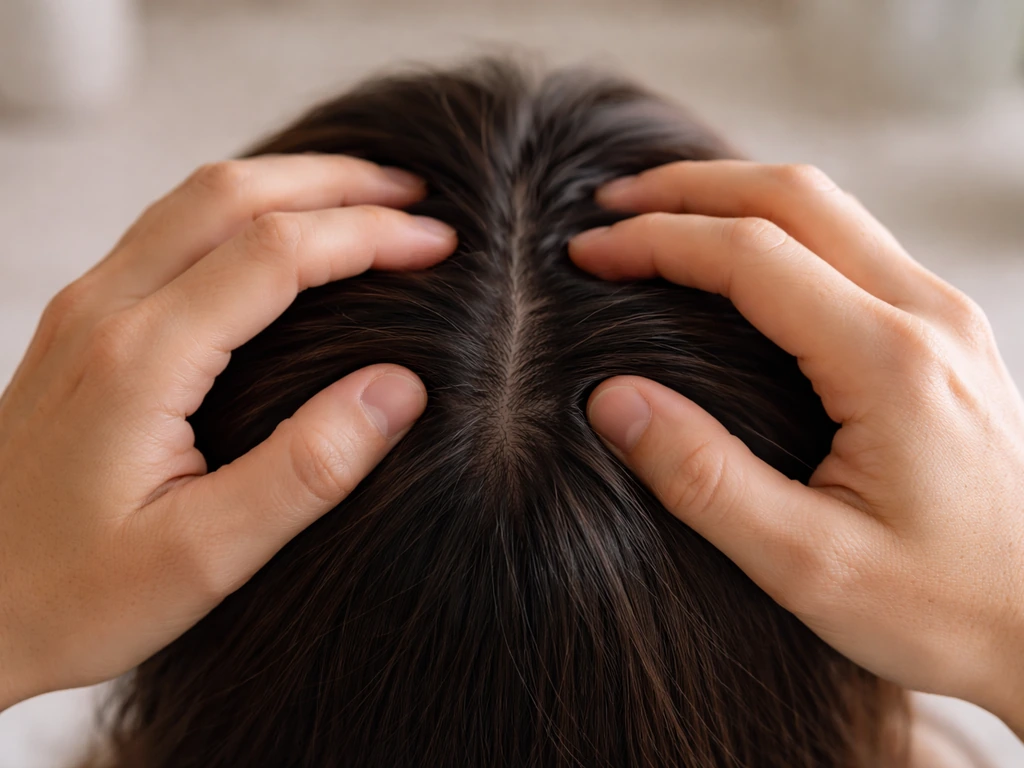
A 4 to 5 minute scalp massage a few times per week is worth building into your routine. Use your fingertips (not nails) in circular motions across your entire scalp. You can do this dry or with a few drops of a carrier oil like rosemary oil, jojoba, or castor oil. Rosemary oil in particular has attracted real research interest, a 2015 study found it comparable to 2% minoxidil for hair count after 6 months. Apply it diluted in a carrier oil, work it in, leave it 30 minutes to overnight, then wash out.
Nutrition and supplements for longer hair
Hair is made of keratin, a protein, and your body needs a steady supply of specific nutrients to build it. If your diet is missing key players, your follicles will be among the first to feel it. Hair loss and slow growth are known early signs of nutritional deficiencies, so it's worth knowing which ones to watch for.
What to eat
Prioritize protein first, hair is protein, and low protein intake is directly linked to poor hair growth and increased shedding. Aim for at least 1.2 to 1.6 grams of protein per kilogram of body weight daily from eggs, chicken, fish, legumes, or dairy. Beyond protein, focus on getting iron (especially if you don't eat much red meat), zinc, vitamin D, and omega-3 fatty acids regularly. Eggs are a great all-in-one source for hair health: they provide protein, biotin, zinc, and iron in one food.
Supplements worth considering
If your diet is solid, you probably don't need a long list of supplements. But a few are genuinely worth considering for men growing long hair. Vitamin D deficiency is extremely common and linked to hair thinning, get your levels checked if you can. Iron deficiency (even without full anemia) is another underdiagnosed cause of slow growth and shedding in men who don't eat much meat. Biotin gets a lot of attention, but evidence shows it mainly helps if you're actually deficient, which is uncommon. Still, a general hair supplement or multivitamin covering B vitamins, zinc, and vitamin C won't hurt.
| Nutrient | Why it matters for hair | Best food sources |
|---|---|---|
| Protein | Keratin building block; deficiency causes shedding | Eggs, chicken, fish, Greek yogurt, lentils |
| Iron | Carries oxygen to follicles; low levels slow growth | Red meat, spinach, lentils, fortified cereals |
| Zinc | Supports follicle repair and oil gland function | Oysters, pumpkin seeds, beef, chickpeas |
| Vitamin D | Linked to follicle cycling; deficiency causes thinning | Fatty fish, egg yolks, sunlight, supplements |
| Omega-3s | Reduce scalp inflammation; support shine and flexibility | Salmon, sardines, walnuts, flaxseed |
| Biotin (B7) | Keratin structure; helpful if deficient | Eggs, almonds, sweet potato, avocado |
| Vitamin C | Aids iron absorption; antioxidant for follicles | Bell peppers, citrus, strawberries, kiwi |
Topical treatments and home remedies that actually help
There's a lot of noise in this space, but a handful of topical options have decent evidence or a strong enough track record to be worth trying.
- Rosemary oil: Dilute 5 to 10 drops in a tablespoon of carrier oil (jojoba works well), massage into the scalp, leave for at least 30 minutes, then wash out. Use 3 to 4 times per week. Research suggests it may be as effective as low-dose minoxidil for some people.
- Castor oil: Thick and rich in ricinoleic acid, which has anti-inflammatory properties. Apply to scalp and lengths, leave overnight, wash out in the morning. Best for dry or coarse hair—it can be heavy.
- Minoxidil (topical): The most clinically proven topical treatment for hair growth in men. Available over the counter in 2% and 5% formulations. It extends the anagen (growth) phase and is most useful if you're also dealing with any degree of thinning.
- Peppermint oil: A small but promising study found peppermint oil increased hair count and follicle depth in animal models. Apply diluted (2 to 3 drops per tablespoon of carrier oil) before washing.
- Aloe vera: Soothing for the scalp and mildly anti-inflammatory. Applying pure aloe gel to the scalp 20 minutes before washing can help with irritation and dryness.
- Onion juice: Has some early research behind it for alopecia areata. It's not for everyone (the smell is strong), but massaging onion juice into the scalp and rinsing after 15 to 30 minutes is a legitimate traditional remedy.
One important note: consistency matters more than which remedy you choose. Pick one or two that fit your routine and stick with them for at least 3 months before judging results.
Maintaining your hair as it grows
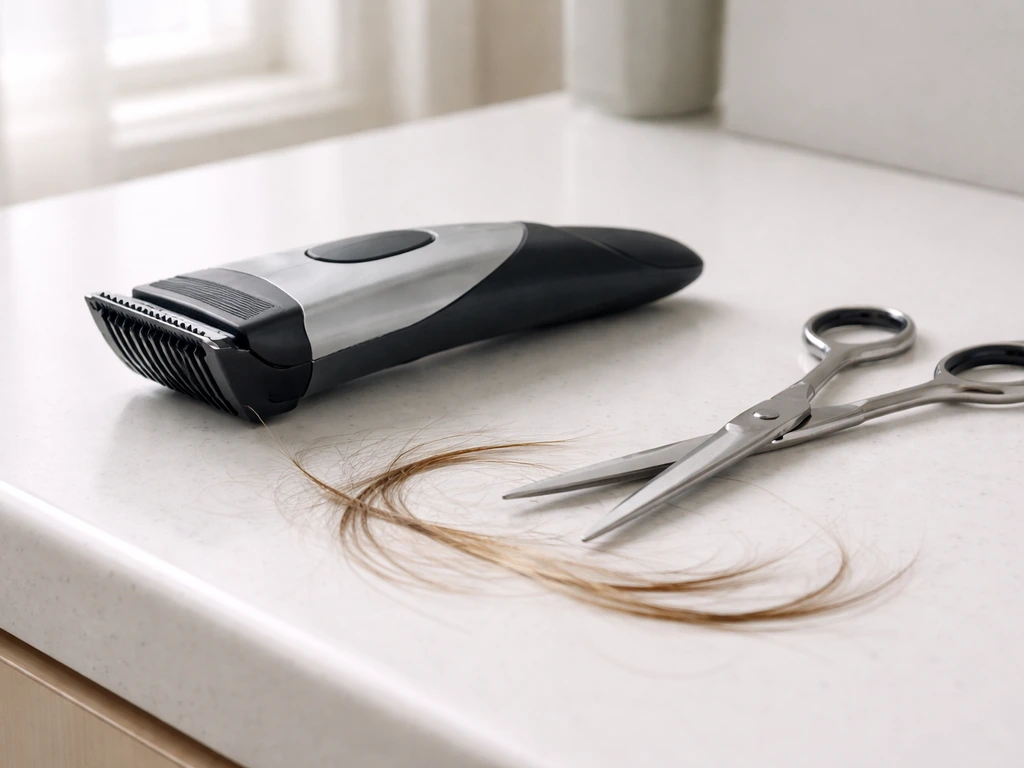
This is where most guys drop the ball. Growing hair long isn't just about what happens at the follicle, it's about keeping the hair you already have on your head. Breakage is the silent thief of length, and it gets worse the longer your hair gets because the ends are older and more vulnerable.
Trimming strategy
Yes, you should trim even when growing. Split ends travel up the hair shaft if left alone, causing more length loss in the long run. A small dusting (trimming just 1/4 inch, roughly 6 mm) every 10 to 12 weeks removes damage without sacrificing visible progress. You don't need regular 1-inch trims, that approach is for maintaining a style, not growing length. Communicate clearly with your barber or stylist that you're growing it out and only want the bare minimum taken off.
Protecting your hair at night
Cotton pillowcases create friction that roughs up the hair cuticle and causes breakage overnight. Switching to a satin or silk pillowcase is a simple upgrade that makes a real difference, especially for longer hair. Alternatively, loosely braid your hair or put it in a very loose bun before bed to reduce tangling.
Daily detangling habits
Once your hair is past your ears, tangles become part of daily life. Always detangle gently with a wide-tooth comb or a boar bristle brush, starting at the ends and working upward. Never detangle completely dry hair with force, mist it with a little water or leave-in conditioner first. Detangle before washing (not just after) to reduce knotting in the shower, which is when a lot of breakage happens.
Common obstacles and how to troubleshoot them
My hair grows so slowly
First, confirm whether it's actually slow growth or breakage making it seem that way. If your hair is dry, splitting, or snapping off, that's a maintenance problem, not a growth problem. Fix your moisture and handling routine first. If growth truly seems slower than 1 cm per month, check your nutrition (particularly iron and vitamin D), stress levels, and sleep. Chronic stress and poor sleep genuinely affect the hair cycle.
Thin or fine hair
Fine hair is mostly genetic, but it can be made worse by nutritional deficiencies, scalp inflammation, or harsh products. If you want to grow thick hair long, use a volumizing or strengthening shampoo (look for ingredients like biotin, keratin, or niacinamide), avoid heavy oils on the lengths, and focus nutrition on protein and zinc. Growing flow hair or achieving thicker-looking styles with fine hair is definitely possible with the right product choices, it just requires a slightly different approach than coarse hair.
Normal shedding vs hair loss: how to tell the difference
Losing 50 to 100 hairs per day is completely normal, your scalp sheds this amount naturally as part of the hair growth cycle. If you suddenly start losing noticeably more than that, or you're seeing thinning patches, a receding hairline, or visible scalp, that's different. A condition called telogen effluvium (stress-triggered mass shedding) can cause you to lose 30 to 50 percent of scalp hair, usually appearing about 3 months after a stressful event, illness, or drastic diet change. The good news: it's usually temporary and reverses once the trigger is resolved.
Male pattern hair loss (androgenetic alopecia) is the other major category. It follows a recognizable pattern: receding at the temples and thinning at the crown. If you notice this, growing long hair is still possible in the early stages, but you'll want to address it proactively. Minoxidil and finasteride are the two clinically proven options, and the sooner you start, the more you preserve. Talk to a dermatologist if you're seeing a pattern, they can confirm whether it's genetic thinning and map out a treatment plan.
The awkward growth phase
Almost everyone hits the awkward phase around 3 to 6 months in, where hair is too long to look intentionally short but too short to style as 'long.' This is the phase where most guys give up. A few things help: learning one or two versatile styles for medium-length hair (a textured side part, a slick-back with product, or a simple half-up), using a light styling cream to control flyaways, and mentally committing to the 12-month mark before reassessing. Wearing a hat on bad-hair days is underrated.
Your starting routine from today
Here's a simple baseline you can start immediately without buying anything special. The goal is to stop losing length to breakage and poor scalp health while your hair does its job of growing. If you're looking for the best way to grow hair male, focus on reducing breakage and supporting scalp health first.
- Reduce washing to 2 to 3 times per week with a gentle, sulfate-free shampoo.
- Condition every wash, focusing on mid-lengths to ends. Add a deep conditioning mask once a week.
- Switch to a wide-tooth comb. Detangle from ends to roots, never the other way around.
- Do a 4 to 5 minute scalp massage 3 times per week—use your fingertips, with or without a diluted rosemary oil.
- Eat enough protein daily and consider a vitamin D check if you haven't had one recently.
- Sleep on a satin pillowcase or loosely braid your hair at night.
- Set a 10-week reminder for a small trim (ask for a dusting, 1/4 inch only).
- Take a photo today. Check back in 12 weeks—you'll want the reference point.
Growing long hair as a guy takes patience above all else, but the process is a lot smoother when you're not fighting breakage, scalp issues, or nutritional gaps at the same time. If you also want thick hair, focus on reducing breakage and supporting follicle health with the right routine for male hair how to grow thick hair long male. If you're looking for the best way to grow hair male, focus on protecting length and supporting follicle health from day one. If you want a shoulder-length result, focus on preventing breakage while you stick to a realistic 18 to 24 month timeline. If you want the practical steps, follow a simple routine that prevents breakage, supports your scalp, and keeps your timeline realistic how to grow my hair long men. If you want the practical steps, follow a simple routine that prevents breakage, supports your scalp, and keeps your timeline realistic as you work through how to grow longer hair male. Get the basics right, stay consistent, and the length will follow.
FAQ
How can I tell if my long-hair progress is slow growth or breakage?
A good rule is to track “survival,” not just growth. If your hair feels rough, snaps, or has lots of split ends, you are probably losing length to breakage even if growth rate is normal. Take a monthly photo from the same angle and compare how far the ends have progressed, not how thick the roots look.
What’s the right way to use anti-dandruff shampoo while growing long hair?
If you are using an anti-dandruff shampoo, treat it like a scalp medicine, not a leave-on product. Massage it into the scalp, let it sit for the full recommended time on the label, then rinse thoroughly. After dandruff is controlled, switching to once weekly as maintenance is usually enough.
Should I detangle before or after washing, and why does it matter?
Yes, you should detangle before washing, especially when hair is longer, because the knots loosen as water and conditioner mix. Work in sections, starting at the ends, then move up. If you detangle only after shampoo, you often create more friction when the hair is at its weakest.
How often should I trim to keep length while growing long hair?
Use trimming strategically instead of frequently cutting off progress. A dusting around every 10 to 12 weeks (about 6 mm) helps stop splits traveling upward. If you go longer than that, you can get split ends that keep spreading, which makes your “trim” feel like a reset.
Are ponytails and buns bad for hair growth, and how do I minimize traction damage?
If you tie hair back, it matters where tension sits. Keep styles loose, use fabric or silk ties, and change the tie position (for example, left side one day, center the next) so the same hairline spot is not under constant traction.
How do I adjust washing if my scalp gets oily fast while growing long hair?
Watch your shampoo schedule as your scalp changes. If you get oily quickly, more frequent washing with a gentle or balancing shampoo can be necessary, but harsh daily stripping often backfires. If you are sweating, a quick water rinse is fine, but don’t skip washing for weeks if you get clogged or itchy.
Should I take supplements to grow long hair, and which ones are actually worth testing?
Most “hair supplement” pills are unnecessary if your diet is solid, but labs can prevent guessing. If you have symptoms like fatigue, low libido, or heavy shedding, ask your clinician about vitamin D and iron studies (ferritin). This is more useful than starting high-dose biotin, which can also interfere with certain lab tests.
Is sulfate-free shampoo required, or will any gentle shampoo work?
Sulfate-free is not automatically “better,” it just tends to be gentler for many people. What matters most is whether your hair stays flexible and your scalp feels calm, not dry and tight. If you still get breakage, shift focus from shampoo choice to conditioning, detangling, and heat and friction control.
How long after stress or illness would shedding show up, and when should I worry?
If you have sudden heavier shedding, check timing. Telogen effluvium often shows up about 2 to 3 months after a trigger like illness, stress, surgery, or major diet change. If you notice patchy loss, scalp burning, or visible scalp texture changes, see a dermatologist sooner.
If I might have male pattern hair loss, can I still grow long hair?
In the early stages of androgenetic alopecia, long hair can still look good, but you should address it early if you want to preserve density. Dermatologists can confirm the pattern and suggest evidence-based treatments, and starting sooner usually means more options.
What are the 2 or 3 non-negotiable steps I should do every week?
A consistent routine matters more than any single product, but your “anchor steps” are clear: conditioner on mid-lengths to ends every wash, detangle gently with a wide-tooth tool, reduce heat and tight styles, and do occasional dust trims. If you pick one extra step, prioritize deep conditioning or a leave-in detangler rather than adding multiple new products at once.
How do I use heat tools safely without slowing down my length gains?
Treat heat protection like a mandatory layer, especially if you style frequently. Use the lowest effective heat, keep the tool moving, and finish with cool air if possible. Also remember that blow-drying itself can create tangles if you rub, so squeeze water out first and towel-dry gently.
Next Articles
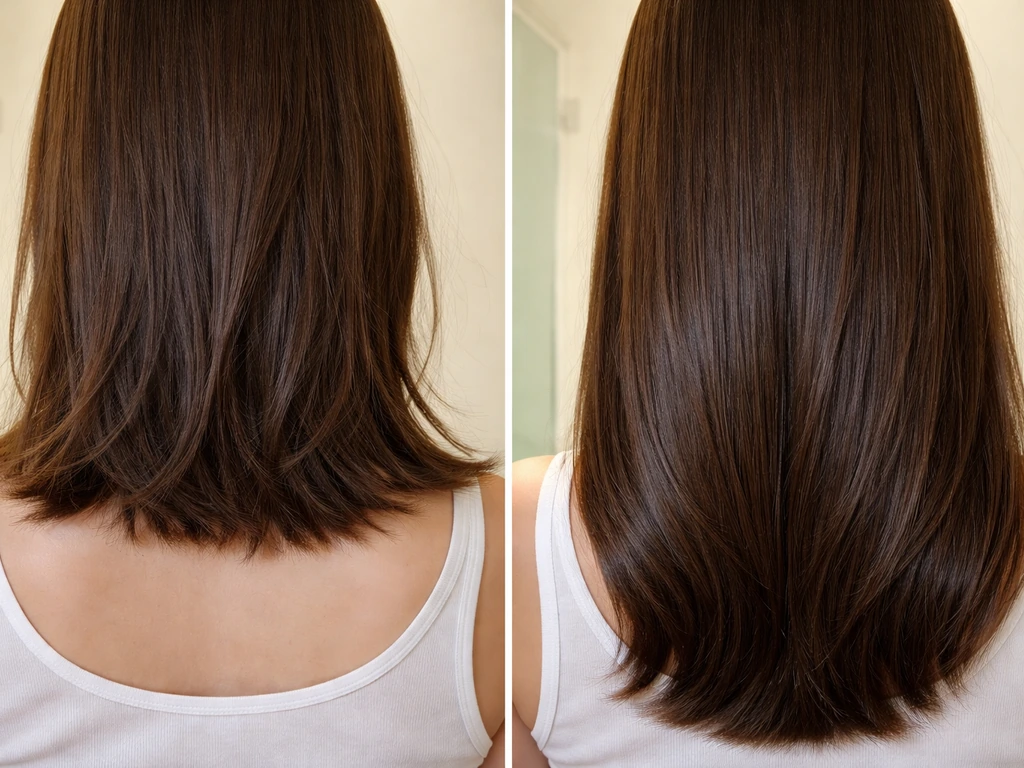
Tips on How to Grow Your Hair Out: A Step by Step Guide
Step-by-step tips to grow hair out: stop breakage, build scalp routine, nutrition, safe actives, and track progress.
Grow Hair Long Tips: Step-by-Step Routine to Reach Length
Step-by-step grow hair long tips: boost scalp health, cut breakage, improve diet, and track progress for length.
Tips for How to Grow Long Hair: A Practical Guide
Actionable tips to grow long hair naturally: care routine, scalp habits, nutrition and breakage prevention for healthy l