
Hair grows about half an inch per month on average, which adds up to roughly 6 inches per year. That's the baseline. But whether you're trying to grow your hair longer, get back fullness you've lost, or both, the half-inch-a-month number is almost beside the point if your scalp isn't healthy, your diet is missing key nutrients, or your styling habits are breaking the hair off as fast as it's growing in. This guide covers all of it: the biology, a real routine, nutrition, topical treatments, and a practical plan for keeping length once you've grown it. If you want the biggest length gains, pair this with a focused routine on how to grow big hair, not just faster growth.
How to Grow Your Hair: Length, Thickness, and Regrowth Steps

Marcus Holloway
24 Mar 2026
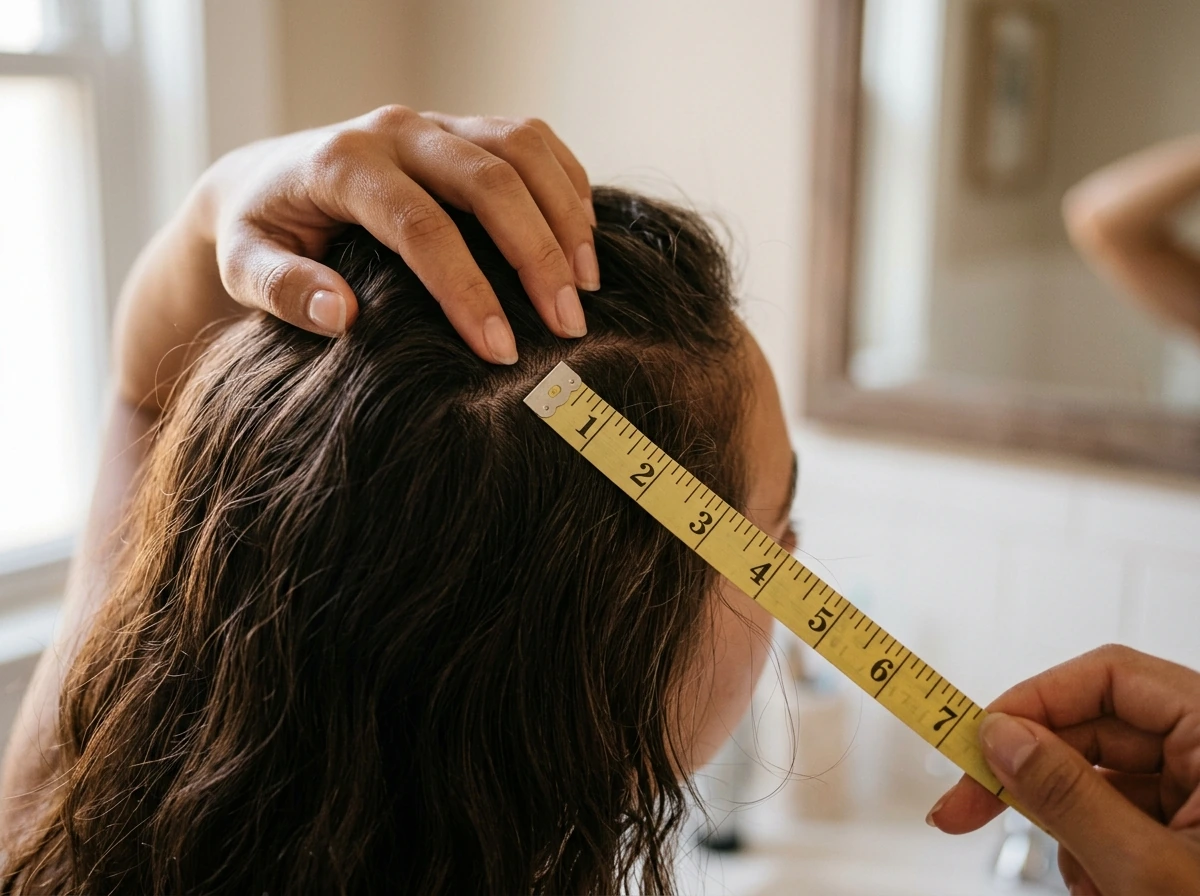
Growing out vs. growing back: they're different problems
Before you do anything else, it helps to get clear on what you're actually trying to fix, because the approach is different depending on the answer.
"Growing out" your hair is a length problem. Your follicles are working fine, hair is coming in, but you want it longer, like when growing your hair longer early. The main challenge here is retention: keeping the hair that's growing from breaking off before it reaches your goal length.
"Growing back" your hair is a follicle or density problem. You've noticed thinning, a receding hairline, wider parts, or shedding that seems beyond normal. Here the goal is either reactivating follicles that have gone dormant, slowing ongoing loss, or improving the density of what's already growing in.
Many people are actually dealing with both at the same time, and they confuse breakage with hair loss. If your hair snaps off mid-shaft when you detangle or style, that's breakage, not follicle loss. True follicle-related thinning shows up at the root: shorter, thinner hairs near the scalp, a wider part, or noticeable scalp visibility. Knowing the difference tells you where to put your energy.
Here's a quick way to tell: pull a shed hair out and look at the root end. If it has a small white or translucent bulb, it shed naturally from the root. If the end is tapered or frayed with no bulb, it broke. A lot of "hair loss" is really just breakage, which is actually good news because breakage is much easier to address.
Set realistic expectations before you start
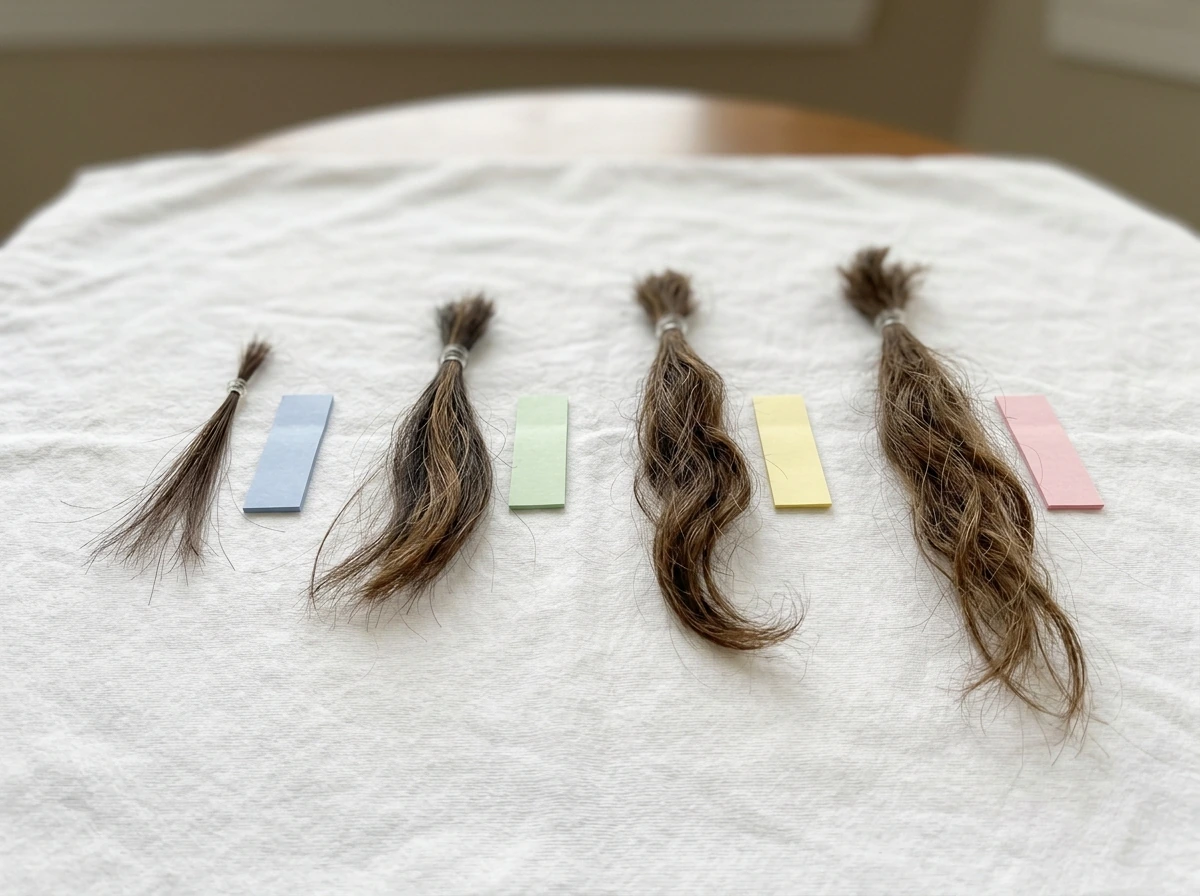
Hair grows in a cycle with four phases: anagen (active growth), catagen (regression), telogen (rest), and exogen (shedding). The anagen phase for scalp hair can last anywhere from 2 to 8 years, with an average somewhere around 150 weeks, or roughly 3 years. That long growth phase is why scalp hair can grow so much longer than, say, your eyebrows or leg hair, which have much shorter anagen phases.
At any given time, about 85 to 90 percent of your scalp hairs are in the anagen phase. Catagen lasts just 1 to 3 weeks, and telogen lasts around 12 weeks before the hair sheds and the cycle starts again. Losing 50 to 100 hairs a day is completely normal and is just the telogen and exogen phases doing their job. The American Academy of Dermatology notes that shedding about 50 to 100 hairs per day is normal.
What this means practically: if you've had significant shedding or thinning, you won't see dramatic regrowth in 4 weeks. New hairs entering anagen take months to become visible and years to grow long. Most people notice meaningful improvement in density after 3 to 6 months of consistent effort, and visible length progress takes patience over a year or more. Anyone promising major results in 30 days is selling you something.
A few things affect your personal growth rate and maximum potential length: genetics (the biggest factor), age (growth slows somewhat with age), hormones, overall health, nutrition, and how well you retain the length you've grown. You can't change your genetics, but you can absolutely optimize everything else, and for most people that makes a real, noticeable difference. If you're specifically searching for the best ways to grow hair, this is the same principle: optimize nutrition, scalp health, and retention so the growth you have can actually stay on your head.
Build a scalp and follicle care routine
Your scalp is the soil. Everything that grows from it depends on how healthy that environment is. This is the most overlooked part of most people's hair routines, and it's where consistent effort pays off the most.
Cleansing
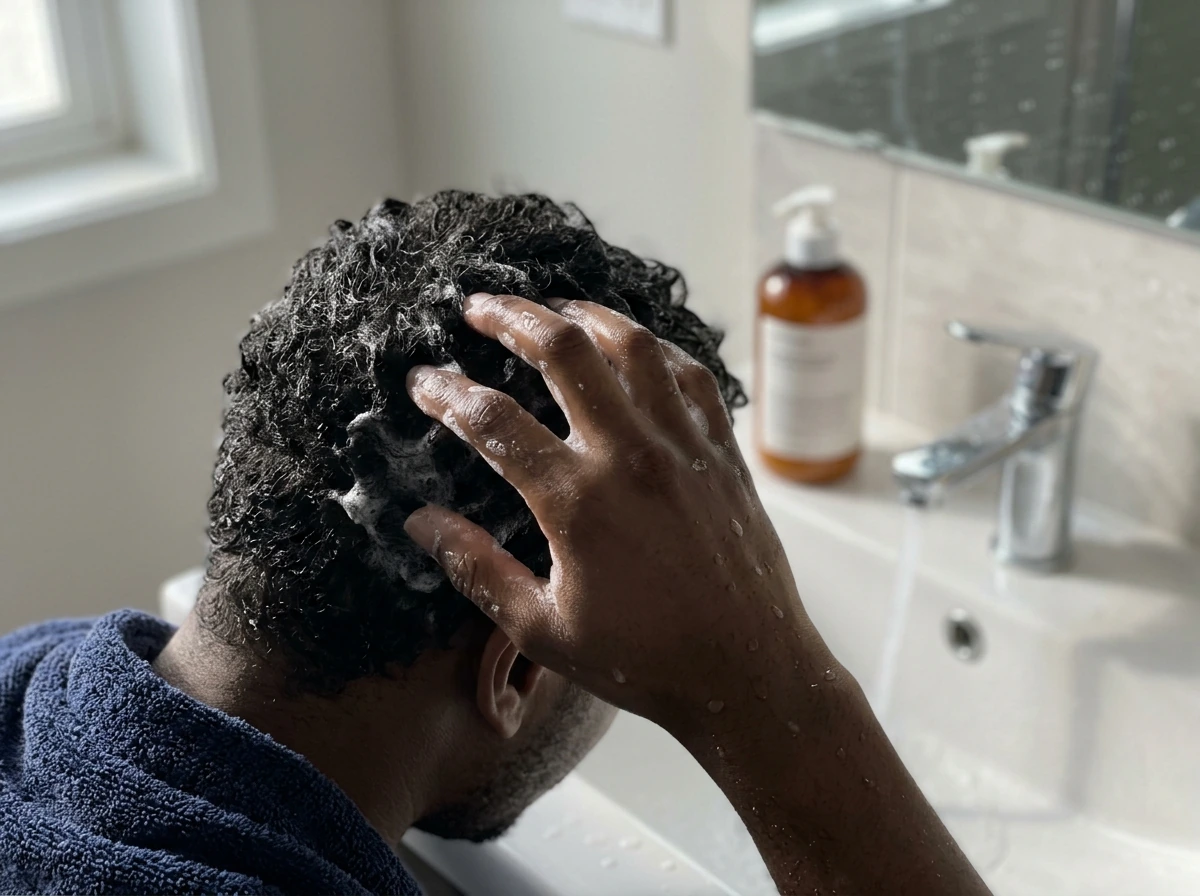
A clean scalp is a non-negotiable foundation. Product buildup, excess sebum, and dead skin can clog follicles and create an inflammatory environment that impairs growth. How often you need to wash depends on your hair type and scalp: if you have an oily scalp or use a lot of products, washing every 2 to 3 days makes sense. If you have dry, coily, or textured hair that doesn't produce as much oil, once a week or even less can work fine. The key is that your scalp should never feel consistently itchy, flaky, or greasy.
Choose a sulfate-free shampoo if your hair is color-treated, dry, or textured. If you have dandruff or seborrheic dermatitis, a medicated shampoo with zinc pyrithione, ketoconazole (1%), or salicylic acid used once or twice a week can reduce scalp inflammation that actively interferes with healthy follicle function.
Scalp massage
Scalp massage is one of the most evidence-supported, zero-cost things you can add to your routine. A small Japanese study found that 4 minutes of daily scalp massage for 24 weeks increased hair thickness. The likely mechanism is mechanical stimulation that increases blood flow to follicles and may stretch follicle cells in a way that promotes growth. Do it with your fingertips (not nails) in small circular motions across your whole scalp for 3 to 5 minutes. You can do it dry, while shampooing, or with a light oil. If you add a scalp massager tool, that works too. Just be gentle: aggressive scrubbing causes more harm than good.
Reducing scalp inflammation
Chronic scalp inflammation, whether from dandruff, psoriasis, contact dermatitis, or buildup, is a real driver of hair thinning. If your scalp is consistently red, itchy, or flaky, treating that condition directly should be your first priority, because no supplement or topical is going to overcome an inflamed follicle environment. See a dermatologist if over-the-counter options aren't working after a month or two.
Protecting your hair
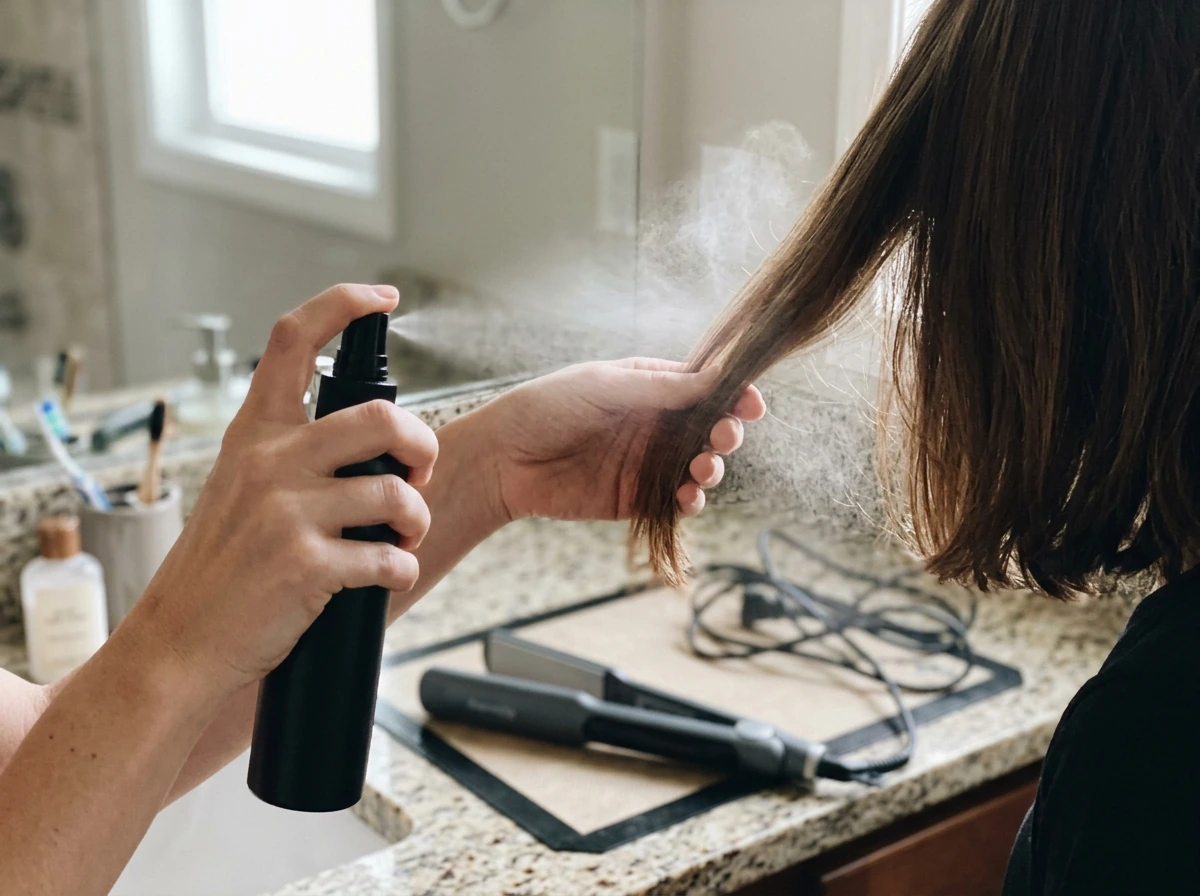
Heat, UV exposure, friction, and mechanical stress all degrade the hair shaft and cause breakage. Use a heat protectant spray every single time you use hot tools, and keep the temperature at or below 375°F (190°C) for most hair types. Sleeping on a silk or satin pillowcase (or using a silk bonnet) dramatically reduces overnight friction, especially for curly and coily textures. Pat hair dry with a microfiber towel instead of rubbing with a regular towel.
What you eat matters more than most people think
Hair follicles are among the most metabolically active cells in the body. They need a steady supply of protein, vitamins, and minerals to function. Deficiencies in specific nutrients are a well-documented, reversible cause of hair shedding and reduced growth, and they're more common than people realize, especially in people who are dieting, menstruating, postpartum, or eating a restricted diet.
The nutrients that matter most
- Protein: Hair is made almost entirely of keratin, a protein. If you're not eating enough total protein, your body deprioritizes hair growth. Aim for at least 0.7 to 1 gram of protein per pound of body weight daily. Good sources: eggs, chicken, fish, legumes, Greek yogurt.
- Iron: Low ferritin (stored iron) is one of the most common and most overlooked causes of hair shedding, especially in women with heavy periods. You can be iron-deficient without being clinically anemic. Ask your doctor to test ferritin specifically, not just hemoglobin.
- Zinc: Zinc deficiency causes hair loss and a flaky, inflamed scalp. It's found in meat, shellfish, legumes, seeds, and nuts. Avoid mega-dosing zinc supplements without confirmed deficiency, as excess zinc can actually cause shedding.
- Vitamin D: Low vitamin D is associated with alopecia areata and general hair thinning. A significant portion of the population is deficient, particularly in northern climates or people who work indoors. Testing is simple and worth doing.
- Omega-3 fatty acids: Found in fatty fish, walnuts, and flaxseed, omega-3s support a healthy scalp environment and reduce inflammation. Some studies show supplementation improves hair density and reduces shedding, though evidence is still building.
- Biotin: Biotin deficiency does cause hair loss, but true deficiency is rare in people eating a varied diet. If you're already getting enough biotin, taking more won't make your hair grow faster. It's widely over-marketed relative to the evidence for people who aren't deficient.
When to get labs done
If you've been losing more hair than usual for more than 2 to 3 months, it's worth asking your doctor for a blood panel. The most useful tests are ferritin, full iron panel, vitamin D (25-OH), thyroid function (TSH and free T4), zinc, and a complete blood count. These can rule out the most common, treatable internal causes of hair shedding. Don't guess and self-supplement with high doses of everything: too much of certain nutrients (like selenium or vitamin A) can actually cause hair loss.
Topical treatments and natural remedies worth trying
This is where the evidence varies a lot, so it's worth being honest about what has real data behind it versus what's popular but unproven.
Minoxidil
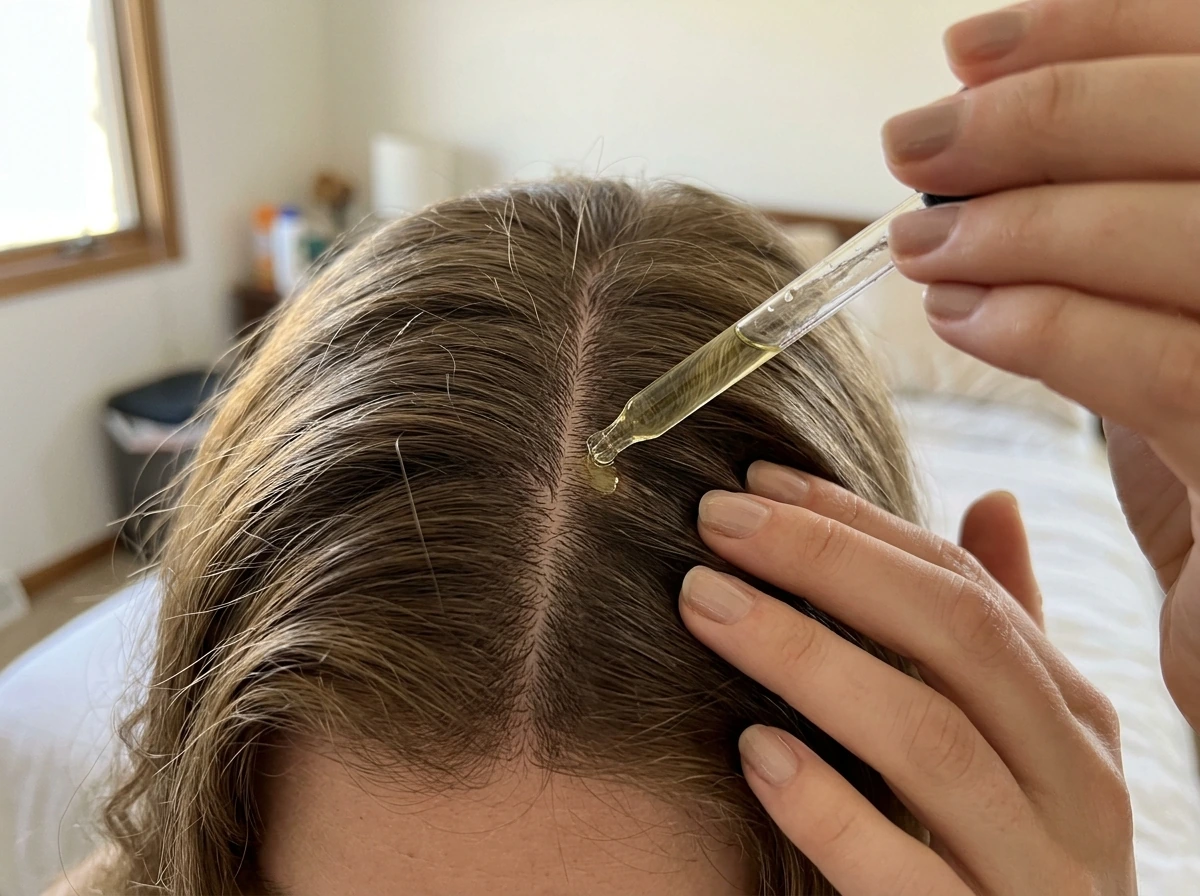
Minoxidil (Rogaine) is the most evidence-backed over-the-counter topical for hair regrowth. It's FDA-approved for both men and women. It works by extending the anagen phase and increasing blood flow to follicles. blank" rel="noopener noreferrer">The 2% solution is approved for women; the 5% foam or solution is approved for men, though many dermatologists use 5% for women too. You need to use it consistently, once or twice daily, and expect to wait 4 to 6 months before seeing results. Stopping use reverses the gains within a few months, so it's a long-term commitment. If you're dealing with significant thinning, this is the first topical to consider and one worth discussing with a dermatologist.
Rosemary oil
Rosemary oil has the best evidence of any natural remedy. A 2015 randomized controlled trial comparing rosemary oil to 2% minoxidil found that both produced similar increases in hair count at 6 months, with rosemary oil causing less scalp itching. The proposed mechanism is improved circulation and inhibition of DHT (the hormone most linked to androgenetic hair loss). To use it: mix 2 to 3 drops of rosemary essential oil with a tablespoon of a carrier oil like jojoba or coconut oil, massage into your scalp, and leave for at least 30 minutes before washing out. Do this 2 to 3 times per week. Do not apply undiluted essential oil directly to your scalp.
Peppermint oil
Peppermint oil showed promising results in a 2014 animal study, where it outperformed minoxidil for follicle depth and number in mice. Human data is limited but the theory (vasodilation and improved circulation) is reasonable. Use it the same way as rosemary oil, diluted in a carrier oil, a couple times a week. Some people use both together.
Caffeine-based products
Caffeine applied topically has been shown in lab studies to stimulate hair follicle growth and counteract some DHT effects. Caffeine shampoos and serums are widely available. They're low-risk and worth adding to your routine, but the evidence for significant regrowth in humans is less definitive than for minoxidil or rosemary.
Castor oil, coconut oil, and other popular oils
Castor oil is massively popular for hair growth, but the clinical evidence for follicle stimulation is essentially absent. What it may do is coat and moisturize the hair shaft, reducing breakage and improving the appearance of thickness. Coconut oil has better evidence for penetrating the hair shaft and reducing protein loss when used as a pre-wash treatment. Both are safe to use and can be part of a moisture and protection routine, just don't expect them to restart dormant follicles.
Quick comparison of topical options
| Treatment | Evidence Level | Best For | How to Use | Key Caveat |
|---|---|---|---|---|
| Minoxidil (5%/2%) | Strong (FDA-approved) | Androgenetic alopecia, general thinning | Apply to scalp 1-2x daily | Must use long-term; stopping reverses results |
| Rosemary oil (diluted) | Moderate (human RCT) | Mild-moderate thinning, DHT-related loss | Diluted in carrier oil, 2-3x per week | Takes 4-6 months; use diluted only |
| Peppermint oil (diluted) | Preliminary (animal data) | General scalp health, circulation | Diluted in carrier oil, 2-3x per week | Limited human trials |
| Caffeine serums/shampoos | Moderate (in vitro + some human) | DHT-related thinning, general use | Use as part of wash routine or leave-in | Results are modest; evidence still growing |
| Castor oil | Weak (anecdotal) | Moisturizing, reducing breakage | As a pre-wash or ends treatment | No solid evidence for follicle stimulation |
| Coconut oil | Moderate for conditioning | Reducing protein loss, breakage prevention | Pre-wash treatment, 20-30 min before washing | Not a growth stimulant; best for retention |
Why your hair might be thinning or not growing: the common culprits
If growth has stalled or you're losing more than you'd like, one of these is usually at the root of it (sometimes literally).
Breakage vs. actual loss
As mentioned above, a huge amount of apparent hair loss is actually mechanical breakage from heat styling, over-processing with chemicals, aggressive brushing on wet hair, or dryness. If you fix your handling and moisture routine, you can see dramatic improvement in density and length within a few months, not because you grew new hair, but because you stopped destroying the hair you already had.
Genetics and androgenetic alopecia
Androgenetic alopecia, or pattern hair loss, is the most common cause of thinning in both men and women. In men it shows up as a receding hairline and thinning crown; in women it typically presents as a widening part or diffuse thinning on the top of the head. It's driven by DHT (dihydrotestosterone) shrinking follicles over time. You can't change your genetics, but you can slow the process significantly with the right approach: minoxidil, DHT-blocking treatments (like finasteride, which requires a prescription), and early intervention all make a real difference. The earlier you start, the more you preserve.
Hormonal changes
Postpartum hair shedding (telogen effluvium) is extremely common, usually starting 2 to 3 months after birth and peaking around 4 months. It's temporary, and hair typically returns to normal by 12 to 15 months. Thyroid imbalances, both hypothyroidism and hyperthyroidism, are also well-documented causes of diffuse hair shedding. Polycystic ovarian syndrome (PCOS) can cause androgenetic-pattern hair thinning in women due to elevated androgens. If you suspect a hormonal cause, blood work and a conversation with your doctor is the right move.
Stress and telogen effluvium
Physical or emotional stress, illness, crash dieting, major surgery, or even a high fever can push a large number of follicles into the telogen (resting) phase at once. This shows up as sudden, diffuse shedding 2 to 3 months after the triggering event. The frustrating part is that by the time you notice the shedding, the stressor is often already in the past. The good news: telogen effluvium is almost always temporary and resolves on its own, though managing ongoing stress, eating adequately, and giving it time are the main interventions.
Traction and styling damage
Traction alopecia is hair loss caused by repeated tension on the follicle, from tight ponytails, braids, weaves, extensions, or buns worn in the same spot consistently. It starts as breakage and temporary shedding around the hairline and temples, but over time can cause permanent follicle damage if not addressed. Vary your styles, avoid styles that pull tightly on the same areas day after day, and give your hair regular breaks from extensions and weaves.
Inflammatory scalp conditions
Dandruff, seborrheic dermatitis, scalp psoriasis, and folliculitis all create an inflammatory environment that can impair follicle function and cause shedding. These are also among the most treatable causes. A medicated shampoo used consistently can clear most of these up within a few weeks. If it persists, see a dermatologist.
Your practical grow-out plan: keeping the length you're growing
Once you've addressed the internal stuff (nutrition, scalp health, any underlying causes), the job becomes keeping the hair you're growing from breaking off before it gets to your goal length. This is where most people lose the battle. Hair at shoulder length and beyond is months or years old, and older hair needs extra care.
Moisture and protein balance
Dry, brittle hair breaks. Keep your hair moisturized with regular deep conditioning treatments (once a week for curly, coily, or chemically treated hair; every 2 to 4 weeks for straight or less porous hair). Protein treatments can help rebuild strength in damaged or over-processed hair, but too much protein makes hair stiff and prone to snapping, so balance matters. If your hair feels dry and limp, it probably needs moisture. If it feels mushy or stretches excessively before breaking, it may need a light protein treatment.
Handling and detangling
Detangle gently, starting from the ends and working up to the roots. Never rip a brush through dry, tangled hair. Use a wide-tooth comb or your fingers, especially when hair is wet and most fragile. Apply a detangling conditioner or leave-in before working through knots. This one habit change alone can dramatically reduce breakage.
Protective styles and low-manipulation habits
The less you manipulate your hair, the more it retains length. Protective styles (braids, twists, buns, updos that don't pull) tuck away your ends and reduce daily friction and breakage. For people with textured hair especially, alternating between wearing hair out and putting it in low-manipulation styles makes a significant difference in length retention. The goal is to keep your ends, which are the oldest and most fragile part, protected and moisturized.
The trimming question
Trims don't make hair grow faster, that's a myth. Hair grows from the root, not the ends. But trimming split and damaged ends prevents breakage from traveling up the shaft and causing more loss. If you're growing your hair out, you don't need to trim on a fixed schedule. Trim when you actually see split ends or damage, or about every 3 to 4 months if your hair is healthy. Dusting (removing just the very tips, a quarter inch or less) is an option for people who want to minimize length loss while keeping ends healthy.
Your week-by-week routine at a glance
| Frequency | Action |
|---|---|
| Daily | Scalp massage 3-5 minutes; silk pillowcase or bonnet at night; stay hydrated and hit protein targets |
| Every wash day | Use heat protectant before any hot tools; detangle gently from ends to roots; apply leave-in conditioner |
| 2-3x per week | Apply diluted rosemary or peppermint oil to scalp if targeting regrowth; use a scalp massager |
| Weekly | Deep conditioning treatment; check for scalp buildup or irritation; scalp-focused shampoo if needed |
| Monthly | Assess progress: photos in consistent lighting help track density and length changes |
| Every 3-4 months | Trim split ends as needed; reassess your routine and adjust based on what's working |
Your next steps: where to start today
If this all feels like a lot, start here. These are the highest-impact moves, in roughly the order to tackle them:
- Figure out whether you're dealing with breakage, shedding, or true follicle thinning. Check the root end of shed hairs and examine where hair loss is most noticeable.
- If you've been shedding heavily for 2+ months, get a blood panel: ferritin, vitamin D, thyroid, and zinc at minimum. Treat any confirmed deficiencies before throwing money at topicals.
- Start scalp massages today. 3 to 5 minutes daily costs nothing and has real evidence behind it.
- Add protein to your diet if you're not eating at least 0.7g per pound of body weight. This is often the simplest, fastest fix for people in a hair rut.
- If you're dealing with pattern thinning or significant hair loss, start minoxidil sooner rather than later. The earlier you intervene, the better the outcome. Talk to a dermatologist if you're unsure what type of loss you have.
- Audit your styling habits: heat frequency, tension, detangling method, and sleep setup. Cutting breakage is the fastest way to see apparent length and thickness gains.
- Be patient. Give any new routine at least 3 to 6 months before evaluating. Hair biology runs on a long timeline, and consistency over months matters far more than intensity over weeks.
There's no single secret to growing your hair. But there is a logical order: healthy scalp, adequate nutrition, reduced damage, targeted topicals where appropriate, and consistent patience. If you want an easy, step-by-step approach, follow this guide for healthy scalp habits, nutrition, and breakage control easy, step-by-step approach to grow hair. If you are wondering what to grow your hair with, focus on a consistent routine for scalp health, nutrition, and damage reduction. For the best things to grow hair, start by choosing a routine that improves scalp health, covers key nutrition, and reduces breakage what to grow hair with. But there is a logical order: healthy scalp, adequate nutrition, reduced damage, targeted topicals where appropriate, and consistent patience. Work through that list and you'll be ahead of most people who are still chasing the magic product that doesn't exist. how to grow hair f If you want a clear, practical plan for how to grow hair fast and keep it from breaking, use the steps in this guide as your checklist.
FAQ
Can I make my hair grow faster than the usual half-inch per month?
Yes, but only indirectly. If you have a breakage problem, reducing snapping and friction can make your hair look thicker and longer sooner, even though the follicles are still growing at the same rate. True regrowth from dormant or damaged follicles takes months, so focus on retention (gentle detangling, moisture, heat protection) first if you notice mid-shaft snapping.
How do I tell if I am shedding hair or breaking it off?
If your shed hairs have a clear or white bulb at the root end, it is more consistent with normal shedding from the cycle or telogen effluvium. If the ends look tapered, frayed, or broken without a bulb, it is breakage. This distinction matters because minoxidil and anti-inflammatory scalp care help hair loss, while conditioning and handling changes help breakage.
What signs suggest thinning at the root versus just damaged ends?
Yes. Look for new short hairs around the hairline, scalp visibility changes, and your part widening. Breakage usually creates uneven lengths and frizzy, damaged ends, while follicle-related thinning often shows more consistent thinning near the roots.
What happens if I stop or miss doses of minoxidil?
If you stop minoxidil, the gains typically fade within a few months. That does not mean it failed, it means maintenance is needed. If you miss doses, use it inconsistently, or stop and restart repeatedly, results are usually less noticeable and you may see temporary shedding during transitions.
Is it safe to apply rosemary or peppermint oil directly to my scalp?
Do not use hair-growth oils undiluted. Essential oils like rosemary and peppermint should be diluted (for scalp use) and patch-tested first, because irritation can worsen shedding by triggering inflammation. If you feel burning, intense itching, or see worsening redness, stop and reassess.
My scalp gets itchy and flaky, should I still use hair growth products?
If your scalp is itchy, flaky, or red, treat the scalp first, because irritation can interfere with follicle function even if you add topicals. Many people see best results when they use a medicated anti-dandruff shampoo consistently, then layer non-irritating conditioning and styling care on top.
How do I know whether my hair needs more moisture or more protein?
Protein and moisture are different tools. If your hair is stretchy, mushy, or breaks easily when wet, you may need lighter protein plus better moisture balance. If it feels dry and brittle, emphasize conditioning and hydration. Overdoing protein can increase stiffness and snapping, so adjust based on how your hair behaves during detangling.
How often should I wash if I am trying to grow my hair?
Wash frequency should be based on scalp comfort and product use, not just hair texture. A workable rule is: if you are consistently greasy or itchy, wash more often, if you feel dry and scalp is comfortable, you can wash less often. Also, do not assume that “sulfate-free” equals “anti-breakage,” the goal is a scalp that is not inflamed.
How can I maintain length after I start seeing improvement?
Once you see results, protect them by keeping the basics steady: reduce heat, avoid rough detangling, use a satin or silk sleep setup, and keep your scalp routine consistent. If you also use a growth topical or treat scalp inflammation, avoid stopping abruptly without a plan, because shedding can recur.
Can low calories or dieting cause hair to shed?
Yes, diet can be a driver. If you are dieting, postpartum, have heavy menstrual bleeding, or eat a restricted diet, hair shedding can increase due to nutrient shortfalls. Rather than mega-dosing supplements, confirm suspected deficiencies with a doctor, then fill gaps within safe ranges.
When should I ask my doctor for blood work for hair shedding?
Get checked if shedding is heavy for more than 2 to 3 months, especially if you also have fatigue, weight changes, menstrual changes, or sudden onset after an illness. A blood panel focusing on ferritin and iron status, vitamin D, thyroid function, zinc, and a CBC can reveal treatable causes.
Is postpartum hair shedding normal, and how long does it last?
Yes, postpartum shedding is common and usually temporary. It typically starts 2 to 3 months after birth and can peak around 4 months, then improves over the next year. If shedding is extreme and you also have symptoms like hair loss with scalp inflammation or irregular thyroid symptoms, still ask your clinician.
What should I do if I suspect traction alopecia from hairstyles?
Traction-related loss can become permanent if tight styles continue. If you notice a receding hairline, thinning at temples, or persistent edge breakage, stop pulling styles and give the areas a break. Vary styles, loosen tension, and avoid wearing extensions in the same tight way for months.
Next Articles
Tips on How to Grow Your Hair Out: A Step by Step Guide
Step-by-step tips to grow hair out: stop breakage, build scalp routine, nutrition, safe actives, and track progress.
Grow Hair Long Tips: Step-by-Step Routine to Reach Length
Step-by-step grow hair long tips: boost scalp health, cut breakage, improve diet, and track progress for length.
Tips for How to Grow Long Hair: A Practical Guide
Actionable tips to grow long hair naturally: care routine, scalp habits, nutrition and breakage prevention for healthy l