
Growing your hair 'backwards' is absolutely possible to work toward, but what that actually means depends on what you're dealing with. If your hair naturally falls toward your face, lays flat in the wrong direction, or grows in a cowlick pattern you hate, you can train it over time. If you're seeing thinning or breakage in a specific area and the new growth is coming in sparse or patchy, that's a different problem with a different fix. This guide walks through both scenarios so you're not wasting time on the wrong approach.
How to Grow Hair Backwards: Train the Direction Safely

Marcus Holloway
22 Apr 2026
What 'hair growing backwards' actually means (and what you can change)
People search for this phrase for very different reasons. Some want their hair to grow away from the face, toward the back of the head. Some have a cowlick or natural part that pushes hair in a direction they don't want. Others notice hair at the nape, temples, or hairline growing in a weird direction after thinning or breakage, and they want it to grow back in a more uniform way. All of these are legitimate goals, but they require different strategies.
Here's the biological reality: the direction your hair grows out of the follicle is largely set by the angle and orientation of that follicle in your scalp. You can't physically reorient a follicle. What you can do is train the hair shaft to lay in a different direction through consistent styling, and you can create conditions where new growth comes in healthier, denser, and with less breakage obscuring the pattern. Cowlicks, whorls, and growth direction near the nape or hairline are related topics worth understanding together, since many of the techniques overlap.
Quick self-assessment: figure out what you're actually dealing with
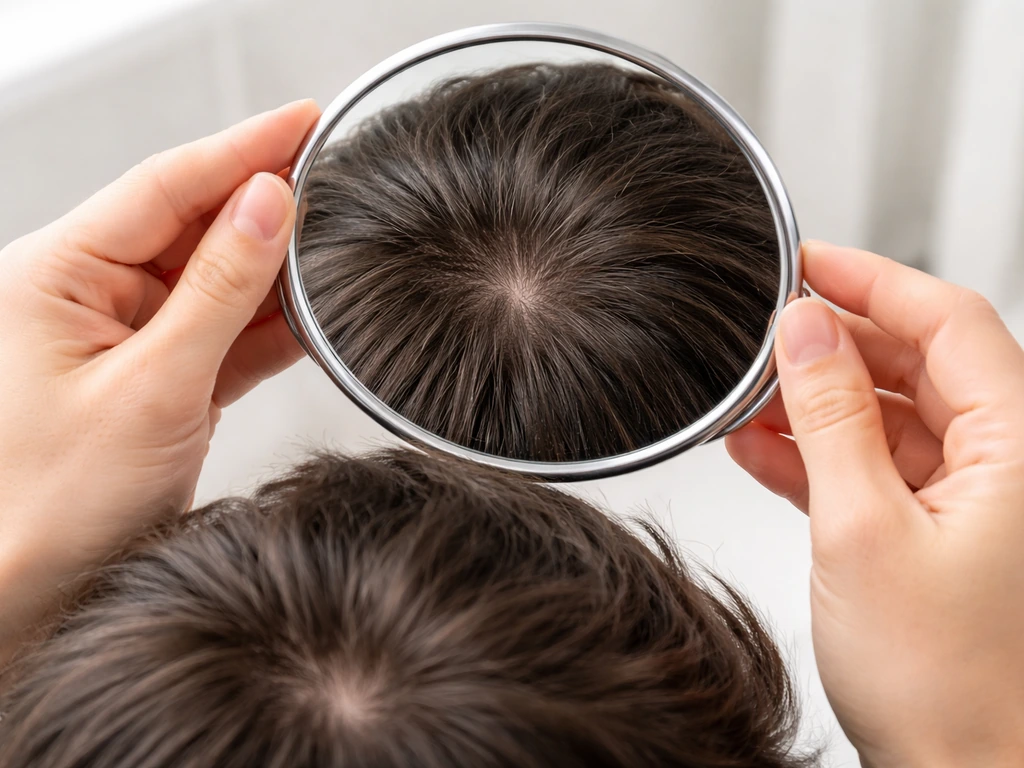
Before you do anything, spend five minutes diagnosing your situation. Pull your hair back and look at the problem area in good lighting, ideally with a hand mirror so you can see the back and sides clearly. The answer to 'why is my hair doing this?' changes everything about how you respond.
- Cowlick or whorl pattern: Hair spirals or shoots out at an angle from a specific point. This is follicle orientation. The hair is healthy, just directionally stubborn. Training is your main tool here.
- Hair growing toward the face or ears: Common near the temples, sideburns, and nape. Often a natural growth pattern, but can be worsened by breakage. Look closely: are those hairs full-thickness, or thinner and shorter than the rest?
- Miniaturized hairs (thin, fine, short): If new growth in an area is noticeably finer than surrounding hair, this suggests follicular miniaturization, a key feature of androgenetic (pattern) hair loss. Training alone won't fix this.
- Breakage vs. true short regrowth: Run your fingers along the short hairs. Broken hairs usually have rough, jagged tips. True new growth has tapered, soft tips. Breakage is a mechanical/damage problem; true sparse regrowth signals a growth-cycle issue.
- Scalp signs: Redness, flaking, itching, or a shiny scalp with no visible follicle openings in the affected area are red flags. Flaking and redness suggest seborrheic dermatitis or inflammation. A smooth, shiny scalp without visible pores in the area is a warning sign for scarring alopecia, which needs prompt dermatology evaluation.
- Tender or painful hairline: Pain, stinging, or small pimple-like bumps along the frontal or temporal hairline, especially with a history of tight styles, points to traction alopecia. This is reversible early on but can become permanent if traction continues.
Once you know which category you're in, you can pick the right strategy. Most people land in either 'healthy hair, wrong direction' or 'thinning/breakage causing the problem.' Some deal with both at once. That's fine. The sections below cover each in sequence.
How to train your hair to grow in a different direction
Hair training works because the hair shaft, while it's long enough to lay against the scalp, can be conditioned to fall in a consistent direction. You're not changing the follicle. You're teaching the hair to bend and lay the way you want. It takes weeks of consistency, and it's much easier to maintain once you've got the habit down.
Brush and comb consistently in the target direction
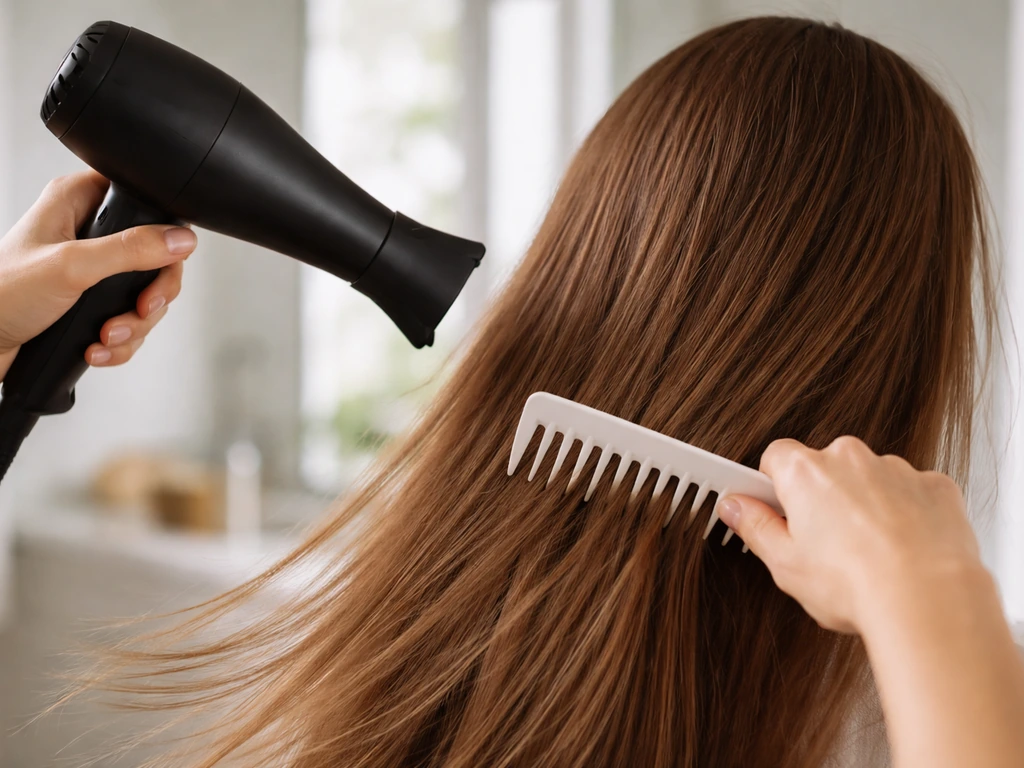
This is the core of hair training. Every time you brush or comb, direct the hair the way you want it to end up. If you want hair to sweep back and away from your face, brush it back firmly but gently from roots to ends every single day. Do this when your hair is slightly damp (not soaking wet, which increases breakage risk) and follow with a light product if needed to hold the direction. Consistency over weeks is what creates the habit. Doing it twice one day and skipping three days breaks the conditioning.
Use heat and airflow to set direction
A blow dryer with a concentrator nozzle is genuinely useful for training direction, especially with stubborn cowlicks or temple hair that wants to grow forward. Dry your hair about 80% with a towel first, then use the dryer on medium heat with the nozzle directing airflow in your target direction as you brush or comb through the section. Finish with cool air to set it. If you prefer heat-free methods, apply a light hold product while hair is damp, comb in the desired direction, and let it air-dry in that position. Diffusers are great if you have wavy or curly hair and want to encourage backward movement without frizz.
Pin or wrap the hair while it dries
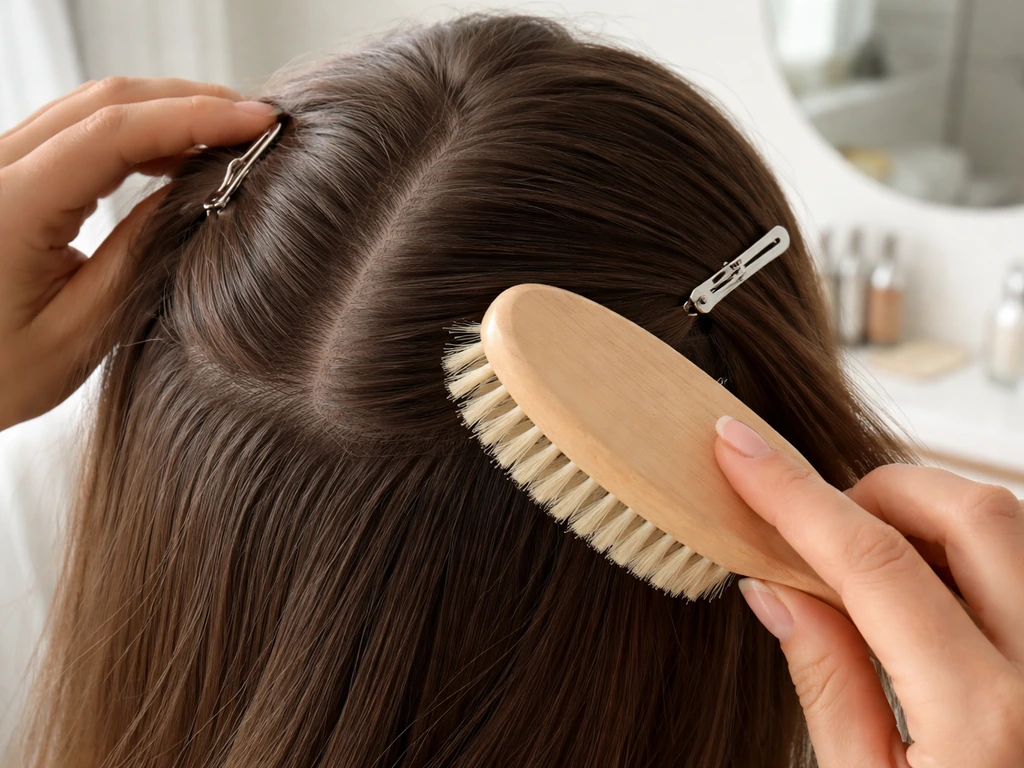
For sections that really fight you (like a strong nape cowlick or a part that keeps reverting), pinning or wrapping the hair in the desired direction while it dries can accelerate training. Use duckbill clips or soft fabric pins, not tight elastic bands that can cause tension. Leave them in for 20 to 30 minutes after air-drying or blow-drying. This reinforces the direction the hair has been encouraged into. Over 4 to 8 weeks of daily consistency, many people see a real shift in how naturally the hair falls.
Avoid friction and counterproductive habits
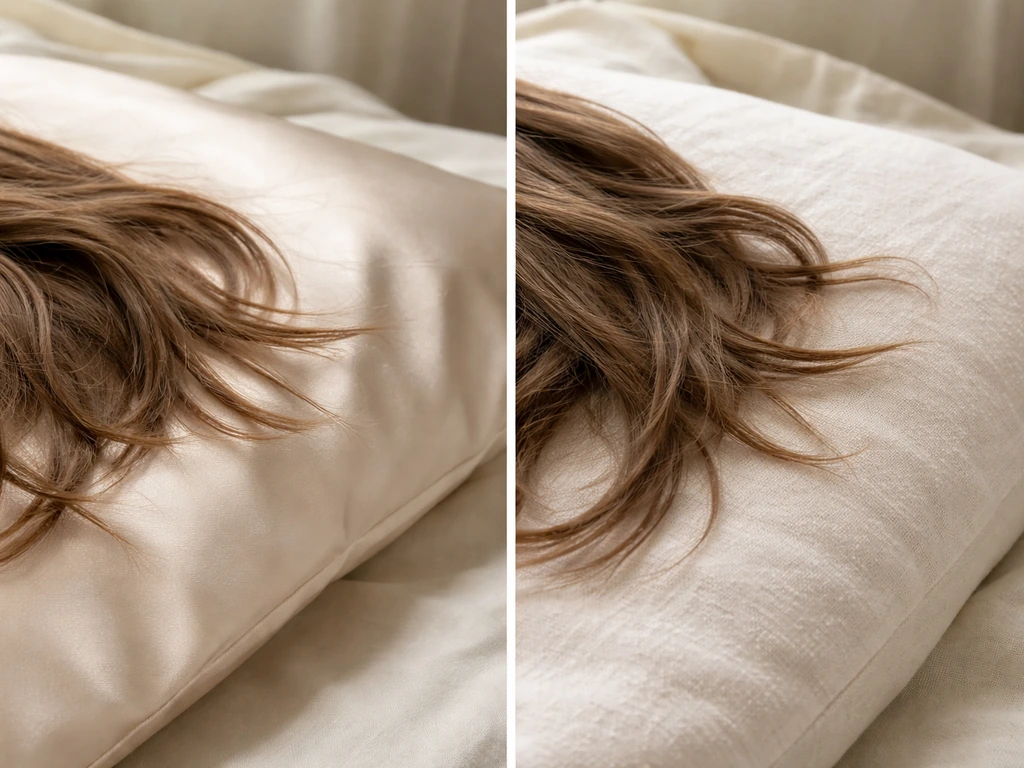
Sleeping on a cotton pillowcase and constantly touching or pushing hair in random directions undoes your training. A silk or satin pillowcase reduces friction and helps maintain the direction you've set during the day. Sleep Foundation notes that satin pillowcases’ smoother surface can reduce friction that may otherwise contribute to hair frizzing and breakage. If you toss and turn and wake up with hair pushed in all directions, consider a loose wrap or bonnet. This matters especially for anyone working on the nape or back hairline, since those areas are in constant contact with pillow surfaces all night.
Scalp care: the foundation for healthier regrowth

If the direction problem is partly driven by thinning, breakage, or patchy regrowth, your scalp environment matters a lot. An inflamed, flaky, or oil-clogged scalp doesn't support the best hair growth, and in some cases actively disrupts it. Getting the scalp in good shape is what gives new growth the best chance of coming in full and in the right direction.
Address dandruff and seborrheic dermatitis
If you see flaking, redness, or an itchy scalp, seborrheic dermatitis is likely involved. This is worth treating actively, not just tolerating. A medicated shampoo with ketoconazole 2%, zinc pyrithione, or salicylic acid is the standard starting point. Ketoconazole 2% shampoo used twice a week with a few minutes of leave-on time before rinsing is a well-supported approach. Zinc pyrithione shampoos (like Head & Shoulders) are milder and can be used more frequently. Don't skip this step if your scalp is symptomatic: chronic inflammation at the follicle level doesn't do your hair growth any favors.
Gentle cleansing routine
Over-washing strips natural oils and leaves the scalp reactive; under-washing allows buildup that can clog follicles and worsen inflammation. For most people, washing two to three times a week with a gentle, sulfate-free shampoo is a reasonable baseline. Massage the shampoo into your scalp with your fingertips (not nails) using circular motions. This improves circulation and helps clear dead skin without irritation. Rinse thoroughly, because residue left on the scalp can contribute to buildup and flaking.
Moisture and barrier care
A dry, tight scalp can contribute to breakage near the roots, which makes it look like hair is growing in patchy or sparse in certain areas. Light scalp oils like jojoba or argan applied in small amounts to the scalp (not the lengths) can help maintain the moisture barrier without clogging follicles. People with curly, coily, or textured hair often need more deliberate scalp moisture work than those with fine or straight hair. If you're dealing with the nape or back hairline specifically, those areas can dry out faster due to clothing friction and sweat.
Watch out for traction
Tight ponytails, braids, buns, or extensions that pull on the hairline or nape are one of the most common causes of directional hair problems and unexpected thinning. Traction alopecia starts with tenderness, small bumps, and reduced density along the margins of the hairline. Traction alopecia is largely preventable with awareness and early intervention, and StatPearls (NCBI Bookshelf) outlines clinical evaluation concepts and epidemiologic estimates. If caught early and the tight styles are stopped, regrowth is often possible. But long-term traction can progress to scarring, which is irreversible. If you've worn tight styles for years and the marginal hairline is noticeably thinner, this is worth addressing now. Switch to loose styles and avoid anything that pulls.
Nutrition and supplements that actually support hair growth
Hair is one of the first places your body shows nutritional gaps, because it's not a priority organ. Your body directs resources toward vital functions first, and hair gets what's left. If you're dealing with unexplained shedding, patchy growth, or hair that seems to grow slowly and break easily, nutrition is worth a serious look.
Key nutrients to check and prioritize
| Nutrient | Why it matters for hair | What to do |
|---|---|---|
| Iron (ferritin) | Low ferritin drives telogen effluvium (excess shedding). Levels below 30-40 ng/mL are associated with nonscarring hair loss in women. | Ask your doctor for a serum ferritin test. Don't supplement iron without testing; excess iron has its own risks. |
| Zinc | Deficiency disrupts the hair cycle and has been linked to multiple types of hair loss. | A blood zinc test is inexpensive. Dietary sources include red meat, shellfish, seeds, and legumes. |
| Vitamin D | Low vitamin D is associated with hair loss in several studies. Many people are deficient without knowing it. | Test your 25-OH vitamin D level. Supplementing 1000-2000 IU daily is low-risk and widely used. |
| Protein | Hair is made of keratin, a protein. Consistently low protein intake leads to increased shedding. | Aim for at least 0.8-1g of protein per kg of body weight daily from varied sources. |
| Biotin | Popular in supplements but evidence for hair growth is weak unless you're actually deficient, which is rare. | Skip expensive biotin supplements unless a deficiency is confirmed. They won't hurt, but they probably won't help if levels are normal. |
The most practical step here is getting a basic blood panel done. Ferritin, zinc, vitamin D, and a complete blood count give you a clear picture of where you stand. Supplementing blind based on what you've read online is a gamble. Testing tells you what's actually low and where correcting a deficiency will make a real difference to your hair cycle.
Food-first approach
If your diet is genuinely varied, you're getting enough calories, and you're not restricting a whole food group, supplementation is probably not your main lever. Focus on consistently including iron-rich foods (especially heme iron from meat, which absorbs well), zinc-rich foods like pumpkin seeds and shellfish, fatty fish for vitamin D, and sufficient total protein. Crash diets and very low-calorie phases are notorious triggers for telogen effluvium, where a large portion of hairs simultaneously shift into the resting phase and shed about three months later. If you've had a period of intense dietary restriction in the last six months, that timeline aligns suspiciously well with sudden shedding.
Evidence-based treatments and when to see a dermatologist
If your self-assessment pointed toward real thinning, miniaturization, or a hairline that isn't recovering after removing traction, training and scalp care alone may not be enough. There are clinically proven options worth knowing about, and a point at which a professional evaluation is genuinely important.
Topical minoxidil
Minoxidil is the most accessible and best-studied over-the-counter hair regrowth treatment. It works by prolonging the anagen (growth) phase of the hair cycle and increasing blood flow to the follicle. The 5% topical solution or foam applied twice daily for men and once daily for women (to reduce the risk of unwanted facial hair) is the standard approach.
You can start seeing early changes around the two-month mark, but a fair assessment requires at least four to six months of consistent daily use. Critically, the regrowth does not persist if you stop. Minoxidil is a maintenance treatment, not a one-time fix. It's a reasonable first step for anyone dealing with androgenetic hair loss where the hair is thinning in a pattern, not just laying in the wrong direction.
Finasteride (for men)
Finasteride 1 mg daily is FDA-approved for male pattern hair loss and works by reducing DHT, the hormone that drives follicular miniaturization in genetically susceptible men. It requires a prescription. Studies show measurable improvement around six months with continued gains through two years. Like minoxidil, stopping finasteride reverses the benefit over time. It's not appropriate for women of childbearing potential due to serious risks in pregnancy. This is a conversation to have with a dermatologist or general practitioner, not something to source informally.
When you need a dermatologist, not just a product
Some situations genuinely require professional evaluation rather than home treatment. Scarring alopecia, which causes irreversible follicle destruction and accounts for about 7% of people who seek help for hair loss, cannot be reversed once it progresses. Signs that point to scarring include a smooth, shiny scalp in the affected area with no visible follicle openings, and little to no response to standard treatments. Advanced or rapidly progressing traction alopecia, sudden patchy loss that looks like alopecia areata, or any hair loss accompanied by systemic symptoms (fatigue, unusual weight changes, joint pain) all warrant a visit to a dermatologist sooner rather than later. The earlier scarring or autoimmune causes are identified, the more options remain available.
Realistic timeline and what to do when it's not working
Hair grows about 1 cm per month on average. The hair cycle means that follicles don't respond instantly to anything you do, whether that's changing your diet, starting minoxidil, or adjusting your scalp care routine. Telogen hairs (resting-phase hairs) sit in the follicle for roughly three months before they shed and new growth begins. This is why you often don't see the results of a change until months after you made it, and why a sudden shed can happen three months after a stressful event or nutritional dip.
For hair training specifically, most people see a noticeable shift in how the hair naturally lays after four to eight weeks of daily consistent effort. If you're specifically working on how to grow wings hair, the same timeline and daily consistency apply. For new growth direction and density improvements from scalp care or nutrition, allow three to six months before evaluating.
For people focused on how to grow your nape hair, that same patience matters as you train direction and support new growth. If your goal is to grow tailbone length hair, the same patience and foundation still matter, especially when you are also training direction and reducing breakage how to grow your nape hair. For minoxidil, give it a full six months before deciding whether it's working. Patience here isn't a platitude; it's just biology.
Troubleshooting common blockers
- Not seeing any training progress after 8 weeks: Check your technique. Are you being consistent every single day? Are you using any hold product to lock in the direction? And are you sleeping on a silk or satin surface to preserve the direction overnight?
- Hair keeps breaking at the roots in the problem area: This is a damage and tension issue, not a growth issue. Reduce heat, avoid tight styles, and assess whether your brush or comb is too harsh for your hair type.
- Scalp care helped but density hasn't improved: If dandruff and inflammation are under control but you're still seeing sparse areas, it's time to look at the growth cycle: nutrition, minoxidil, or a dermatology appointment.
- Minoxidil caused a shed in the first few weeks: This is a well-documented initial effect where resting hairs are pushed out to make way for new growth. It's temporary and typically resolves within a month. Stopping minoxidil because of this shed is one of the most common reasons people don't see results.
- Nothing works and the area isn't recovering: If an area hasn't responded to six months of consistent effort across multiple strategies, get it checked by a dermatologist. Scarring causes, autoimmune causes, and severe traction damage all need professional diagnosis and targeted treatment that over-the-counter approaches can't address.
The honest summary is this: if your hair is healthy but just laying in the wrong direction, training it is absolutely achievable with consistency and the right technique. If there's an underlying issue with your scalp, growth cycle, or follicle health, training is only part of the answer. Fixing the root cause (literally) is what makes the difference between hair that finally cooperates and hair that keeps frustrating you.
If you are also trying to figure out how to grow hair at the back for thicker, stronger regrowth, combine this troubleshooting with a targeted back-hair routine. Start with the self-assessment, address the scalp environment, dial in your nutrition if there are gaps, and be realistic about how long the biology takes to catch up with your efforts.
FAQ
What should I do if my hair training makes my hair look thinner or more broken in the cowlick area?
Use the same training direction, but switch the styling tool strategy. If you feel more breakage, stop daily firm brushing and try combing with a wide-tooth comb on slightly damp hair using a light-hold product, then let it air-dry in the target direction. Also avoid heat on the exact cowlick or hairline area for a few weeks, because repeated heat plus tension can look like “direction problems” when the real issue is breakage.
How long does it take to see results if I am trying to grow the hair backwards from short, new growth?
It depends on where the “backwards” goal is. For hair that naturally falls toward your face, you need to train the new hair shaft as it grows long enough to be moved. For very short regrowth at the nape or temples, direction changes may not look dramatic for weeks because the hair is still too short to hold shape. Track results by taking the same photo angles every 2 weeks, and judge progress after 4 to 8 weeks rather than day-to-day changes.
Should I start with hair training or scalp treatment first when I want my hair to grow in the opposite direction?
Yes, but choose based on what is causing the problem. If your scalp is itchy or flaky, prioritize medicated shampoo timing and consistency before changing your training routine. If your scalp looks calm and the issue is mainly the lay, you can usually start hair training first. Either way, start one change at a time so you can tell whether breakage improves (training too aggressive) or flaking improves (scalp treatment too weak).
Can I use tight hairstyles or hats while training my hair to grow backwards?
Do not “train” with tight pull-back styles while you are actively trying to redirect hair. Even if the direction looks right during the day, traction can thin the margin of the hairline and create a different pattern that looks like the hair is refusing to grow correctly. If you need clips or pins, keep tension minimal and remove them promptly after the short reinforcement window.
My cowlick or part always goes back to the original direction, what’s the most effective way to make it stick?
If the part or whorl keeps reverting after you train it, you likely need reinforcement at dry time. Pin or wrap only the target section while it cools or finishes drying, then keep hands off the hair for the first 20 to 30 minutes after styling. Also check for friction from collars, helmets, or towels, since consistent rubbing at the nape can overpower the direction you set.
How does shampoo frequency affect my ability to train hair backwards?
Yes. Washing changes how “layable” hair is. If hair is too dry, it may spring back into its natural direction; if it is too coated, it may slip but not stay put, increasing tangles and breakage. A practical approach is wash 2 to 3 times per week, condition lightly on lengths only, and do training right after drying to about 80 percent, using a small amount of light hold.
Will coloring or chemical treatments prevent me from training my hair to grow backwards?
Bleaching and aggressive chemical straightening can make directional training harder by increasing breakage at the surface. If you color or chemically process, switch to gentler detangling, reduce heat, and limit brushing when the hair is fully dry. You can still train direction, but judge results by new growth and reduced breakage, not by how smoothly the current length lays.
How can I tell the difference between hair that is falling out versus hair that is just laying in the wrong direction?
If shedding is coming from roots, look for patterns and timing. Direction training will not stop true shedding driven by inflammation or telogen effluvium. Use the process of elimination: check scalp symptoms, review recent stress or dietary restriction 2 to 4 months earlier, and consider blood work if shedding is ongoing. If there is patchy loss, rapid expansion, or scalp pain, get evaluated sooner.
If I use minoxidil, do I still need to train the hair backwards, and when should I start?
Minoxidil changes hair growth cycle and thickness, but it does not “reprogram” direction by itself. You should still train the new growth after it emerges, otherwise it may grow back but still lay against your intended direction. Start training once the hair is long enough to be redirected safely, and avoid applying training-related tension or heavy styling right where the product was applied until the scalp is not irritated.
What if my “direction problem” started after I wore tight styles for years?
If you suspect traction, the most important step is removing the pulling source first. Continue training only if it does not involve tension, and switch to loose styles while you monitor the hairline margins. If the area is tender, bumpy, or noticeably widening over weeks, get a dermatologist assessment because early traction alopecia can sometimes recover, but advanced cases may scar.
When should I stop trying at-home training and see a dermatologist instead?
Consider professional help when the pattern is rapidly changing, the scalp looks shiny or follicle openings disappear, or you have symptoms like significant itching, pain, or systemic issues. A dermatologist can distinguish scarring causes from non-scarring ones and choose targeted therapy. Waiting is especially risky when traction or inflammatory disorders might be progressing.
What is the best way to measure progress so I know my hair training is actually working?
A practical way is to use two baselines: a “lay” baseline and a “coverage” baseline. For lay, mark the target direction and take photos with the same brush direction and lighting every 2 weeks. For coverage, note changes in the density of new growth at the nape or temples once hair is long enough to see direction clearly. If you see no improvement at the 8-week lay milestone, adjust technique, product hold, or reinforcement method.
Next Articles
Tips on How to Grow Your Hair Out: A Step by Step Guide
Step-by-step tips to grow hair out: stop breakage, build scalp routine, nutrition, safe actives, and track progress.
Grow Hair Long Tips: Step-by-Step Routine to Reach Length
Step-by-step grow hair long tips: boost scalp health, cut breakage, improve diet, and track progress for length.
Tips for How to Grow Long Hair: A Practical Guide
Actionable tips to grow long hair naturally: care routine, scalp habits, nutrition and breakage prevention for healthy l