
Growing thicker hair in the front is genuinely possible for most people, but the right approach depends entirely on why it's thinning in the first place. Minoxidil, scalp massage, better nutrition, and medical treatments all have real evidence behind them, but none of them work equally well for every cause. This guide walks you through how to figure out your most likely cause, what diagnostics are worth running, which treatments have solid evidence, and what realistic timelines look like so you're not guessing and waiting in the dark.
How to Grow Thicker Hair in Front: Evidence-Based Guide

Marcus Holloway
9 Aug 2026
What this guide covers and who it's for
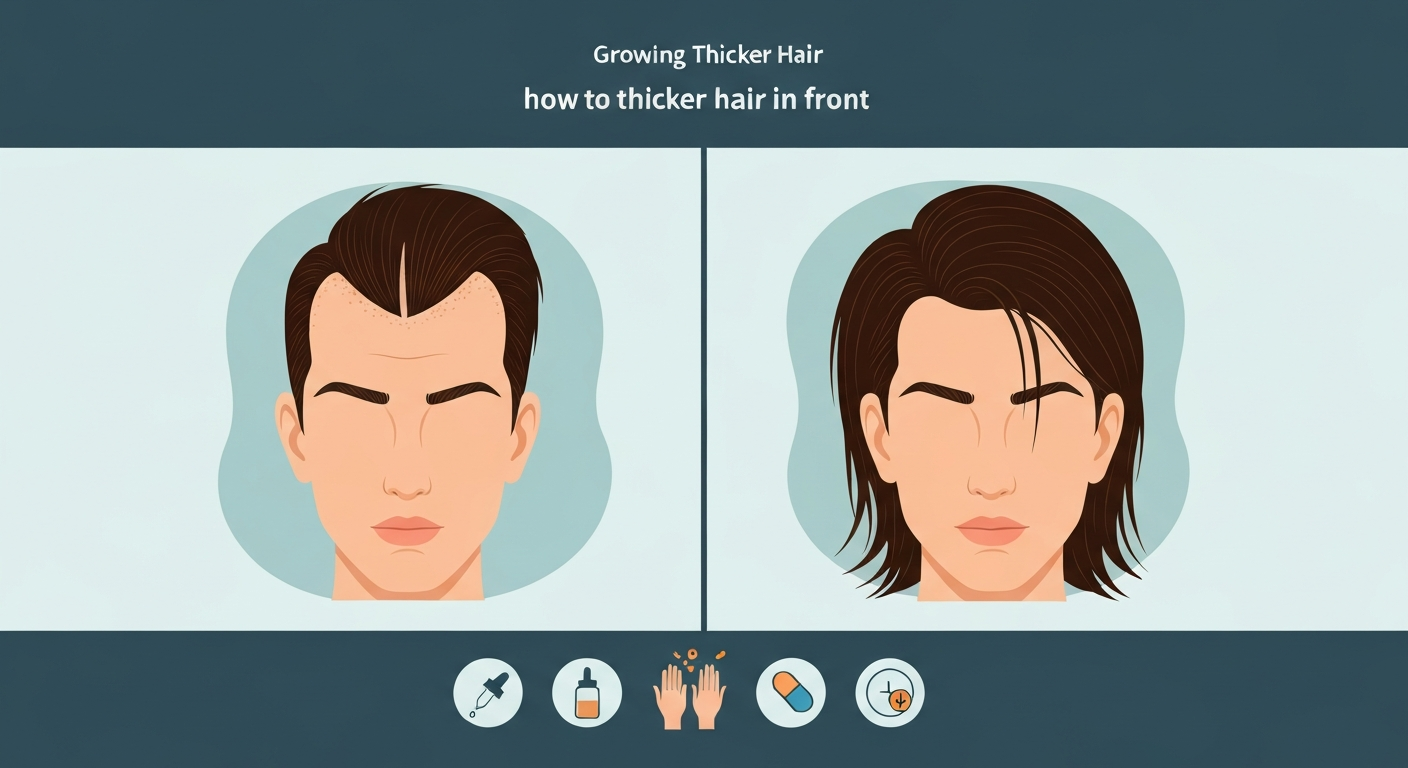
This article is written for men and women of any age or hair type who've noticed the front of their hairline thinning, receding, or losing density. That includes a receding hairline at the temples, a widening part at the mid-frontal scalp, or an overall flattening of the hairline that used to look fuller. If you're in your twenties noticing early recession, or in your forties dealing with diffuse frontal thinning after a stressful year, or postmenopausal and watching your hairline quietly creep back, this is for you. I'll cover the biology of why it happens, how to identify your likely cause, what tests are worth doing, medical treatments including minoxidil (with honest pros and cons), in-office procedures, topical and home-based options, nutrition, scalp care, and how to camouflage while you wait for results.
What frontal thinning actually looks like
Not all frontal hair loss looks the same, and recognizing the pattern you're dealing with helps narrow down the cause considerably. Here are the main presentations to know.
Temple recession
This is usually the first sign of male-pattern loss: the hairline pulls back at the corners, creating an M-shape. In women it's less common as a standalone sign but can appear with androgenetic alopecia or after prolonged traction from tight styles. Temples are also one of the zones where traction alopecia shows up earliest, so the history of your hairstyles matters a lot here.
Mid-frontal and midline thinning (the Christmas-tree pattern)
Women with androgenetic alopecia (female-pattern hair loss) more often experience thinning along the midline part that widens toward the front of the scalp, sometimes described as a Christmas-tree pattern when viewed from above. The frontal hairline itself is often preserved at first, which is one reason it can go unnoticed for a while. The hair doesn't fall out in clumps; individual strands gradually miniaturize, producing less visible, finer hair over time.
Diffuse frontal thinning
Sometimes thinning is spread across the whole frontal scalp without a clear pattern. This is more likely with telogen effluvium (stress or nutritional-related shedding), thyroid issues, or iron deficiency. You'll often notice this most in photos or in harsh lighting, or when you see more hair on your brush than usual over a period of weeks to months.
Band-like recession with eyebrow loss
If you're a postmenopausal woman and notice a very clean, band-like recession of the hairline along with loss of eyebrow or body hair, frontal fibrosing alopecia (FFA) is a possibility. FFA is a scarring form of hair loss, meaning the follicles are gradually replaced by fibrous tissue, and it requires specialist attention quickly because the damage can become permanent. Early signs include slight redness or scaling right at the hairline margin.
Why the front thins: the main causes compared
The frontal scalp and hairline are among the most androgen-sensitive zones on the head, which is why so many different triggers show up here first. Here's a quick comparison of the most common causes.
| Cause | Who it affects most | Pattern | Reversible? | Key clue |
|---|---|---|---|---|
| Androgenetic alopecia (AGA) | Men and women, genetic | M-shape recession (men); midline widening (women) | Manageable, not curable | Family history, gradual onset, miniaturized hairs |
| Traction alopecia | Anyone using tight styles, common in textured-hair communities | Temporal/frontal margins, fringe sign | Yes if caught early; scarring if prolonged | History of tight braids, extensions, ponytails |
| Hormonal shifts (PCOS, postpartum, menopause) | Women | Diffuse or patterned frontal thinning | Often yes with treatment | Irregular periods, rapid onset, other hormonal signs |
| Nutrient deficiency (iron, vitamin D, protein) | Anyone with poor diet, heavy periods, strict vegan/keto diets | Diffuse, not strictly frontal | Yes with correction | Low ferritin, fatigue, diet history |
| Telogen effluvium (stress, illness, surgery) | Anyone after a major physical or emotional stressor | Diffuse shedding 2-4 months after trigger | Usually yes within 6-12 months | Clear trigger event 2-3 months prior |
| Scalp conditions (seborrheic dermatitis, psoriasis) | Anyone, often exacerbates other causes | Diffuse, often frontal and temporal | Yes with treatment | Flaking, itching, redness on scalp |
| Frontal fibrosing alopecia (FFA) | Mostly postmenopausal women | Band-like frontotemporal recession + eyebrow loss | No (scarring); slow if treated early | Clean receding band, lost vellus hairs at margin |
| Medications (retinoids, anticoagulants, some antidepressants) | Anyone on relevant medications | Diffuse, may worsen frontal area | Usually yes after stopping | Started after new medication, check drug list |
It's worth noting that causes often overlap. Someone can have androgenetic alopecia made noticeably worse by iron deficiency, or traction alopecia layered on top of early genetic thinning. Working out the primary driver helps you prioritize, but addressing secondary contributors matters too.
How to figure out your most likely cause
Before you spend money on treatments, take 15 minutes to answer these questions honestly. Your history is one of the most useful diagnostic tools available.
- When did you first notice it? Gradual over years suggests AGA; sudden over weeks-to-months after a stressor suggests telogen effluvium.
- Do parents or grandparents on either side have significant hair thinning? A strong family history on both sides raises AGA likelihood considerably.
- Do you wear your hair in tight styles regularly, or have you historically? Tight braids, high buns, sewn-in extensions, and nightly tight wraps all apply.
- Have you had a major physical event 2-4 months before the shedding started: illness, surgery, childbirth, rapid weight loss, very high fever, or prolonged severe stress?
- Are your periods irregular, heavier than usual, or do you have other signs of androgen excess like acne or unwanted facial hair?
- Are you on any new medications (especially retinoids, blood thinners, mood stabilizers, or hormonal contraceptives)?
- How's your diet? Are you eating enough protein (roughly 0.8-1g per kg of bodyweight)? Do you avoid meat and rarely eat iron-rich foods?
- Is there any redness, flaking, or itching on your scalp, or have you noticed your eyebrows thinning or receding?
Red flags that mean you should skip straight to a dermatologist rather than self-treating: visible scarring or permanent skin changes at the hairline, loss of eyebrows alongside hairline recession, patchy smooth bald spots (could be alopecia areata), any signs of scalp infection, or thinning that's progressing very rapidly over just a few weeks.
Tests worth running before you start treatment
A lot of people skip this step and go straight to buying products. I understand the impulse, but running a few basic blood tests can save you months of treating the wrong problem. Here's what's genuinely useful.
Blood tests
- Serum ferritin: This is the single most important test for women with diffuse hair thinning. A systematic review found that women with nonscarring alopecia tend to have lower ferritin than controls. Most dermatologists recommend aiming for ferritin above 40-70 ng/mL for hair health, though that specific target isn't yet proven by RCTs. If yours is below 30 ng/mL, you have a clear, treatable contributor.
- CBC (complete blood count): Screens for anemia, which can accompany iron deficiency and drive hair shedding independently.
- TSH (thyroid-stimulating hormone): Both hypothyroidism and hyperthyroidism can cause diffuse hair thinning. Correcting thyroid disease often reverses the hair loss associated with it. Add free T4 if your TSH is borderline or symptoms point to thyroid.
- Total testosterone and DHEA-S: Relevant for women with signs of androgen excess (irregular periods, acne, hirsutism). If you're a woman with these signs, the Endocrine Society recommends measuring early-morning total testosterone and considering SHBG and androstenedione as well.
- Vitamin D: Low vitamin D is associated with alopecia areata and has been linked in some studies to other forms of hair loss. It's inexpensive to test and easy to correct.
Scalp examination and trichoscopy
A dermatologist using a dermatoscope (a handheld magnifying device) can examine your scalp at 10-70x magnification and distinguish between AGA, telogen effluvium, alopecia areata, traction alopecia, and scarring conditions with reasonable accuracy. This is called trichoscopy and it's a first-line, non-invasive diagnostic tool. In AGA you'll see miniaturized hairs of varying diameter; in traction alopecia, broken shafts and perifollicular scaling; in alopecia areata, yellow dots and exclamation-mark hairs. A scalp biopsy is only needed when scarring alopecia can't be ruled out or the diagnosis is still unclear after trichoscopy.
The pull test and photo timeline
The pull test is simple: grasp about 40-60 hairs between your thumb and forefinger near the root and pull gently. Pulling out more than 6 hairs is considered a positive result suggesting active shedding (telogen effluvium or active alopecia areata). It's not definitive on its own but gives useful context. For your own tracking, take standardized photos now: front, top, and sides in the same lighting and with the same parting. Repeat every 3 months. Hair changes are slow and photos are the only reliable way to know if you're progressing or stabilizing.
When to see a dermatologist (and how urgently)
You don't need a specialist to start basic self-care, but there are situations where seeing a board-certified dermatologist or trichologist sooner rather than later genuinely matters, because some causes become irreversible if ignored too long.
- See someone soon (within a few weeks) if: the recession is progressing quickly, you notice a band-like receding hairline with eyebrow loss, you have any scalp tenderness, visible skin changes at the hairline, or patchy smooth bald spots.
- See someone within 1-2 months if: you've had traction-heavy styles for years and are noticing permanent-feeling thinning at the temples, or if your hair loss started after a new medication and stopping it isn't an option without guidance.
- See someone when convenient (within 3-6 months) if: your thinning is gradual and you suspect AGA or telogen effluvium, your blood tests show a clear nutritional deficiency you're already correcting, or you've been using minoxidil for 6+ months without any noticeable response.
- General rule: if in doubt, a single consultation early is far cheaper and less stressful than trying to undo permanent damage later. Scarring alopecias like FFA do not respond to the treatments that work for AGA, and the window for slowing them down is limited.
Realistic timelines: what to expect month by month
One of the most frustrating things about treating hair loss is how long everything takes. Hair grows about 1 cm per month, follicles cycle over months, and most effective treatments take 6-12 months before you see meaningful visual change. Here's an honest breakdown.
| Time period | What's happening biologically | What you might notice | What to do |
|---|---|---|---|
| 0-3 months | Dormant follicles begin re-entering growth phase; no visible new terminal hairs yet | Possibly increased shedding (especially with minoxidil); no visible improvement | Stay consistent; don't stop treatment due to initial shed; take baseline photos now |
| 3-6 months | New vellus hairs start emerging; some may still be fine and colorless | Subtle improvement in coverage; hairs may look shorter and finer than surrounding hair | Continue treatment; assess with photos vs. baseline; run any outstanding blood tests if not done |
| 6-12 months | New hairs mature and thicken; measurable increases in hair count | Visible improvement in density, especially with minoxidil or after correcting a deficiency | Compare photos; assess whether to continue, adjust, or add treatments; consider dermatologist review |
| 12+ months | Further consolidation; ongoing maintenance required for most treatments | Best visible results typically occur after 12 months of consistent treatment | Maintenance is ongoing; results typically plateau and reverse if effective treatments are stopped |
The hardest part is months 1-4, when you're doing everything right and seeing nothing, or even seeing more shedding. This is normal with treatments like minoxidil (more on that below) and with nutritional correction. Your follicles are working on a timeline that doesn't match your patience, and that's just the biology.
Minoxidil for frontal hair thinning: the evidence, the application, and the downsides
Minoxidil is the most well-studied over-the-counter treatment for hair loss, with multiple randomized controlled trials and meta-analyses showing it increases non-vellus hair counts and overall perceived hair density versus placebo. Here's what you actually need to know to use it well.
How minoxidil works
Minoxidil was originally a blood pressure medication. Applied to the scalp, it works primarily as a vasodilator, increasing blood flow to follicles, but more importantly it prolongs the anagen (active growth) phase of the hair cycle and shortens the resting (telogen) phase. This is why you get more hairs actively growing at once, and why hairs can thicken over time. It doesn't block DHT (the androgen that drives miniaturization in AGA), which is why it works better in combination with anti-androgen treatments for people with significant AGA, but it does produce real, measurable results on its own.
Which strength and formulation to use
For men, 5% is the standard and supported dose. For women, both 2% and 5% have RCT support, with 5% generally outperforming 2% in clinical trials at 24-48 weeks. The 5% foam formulation is popular because it dries faster, is less greasy, and contains no propylene glycol (which causes scalp irritation in some people). The liquid/solution format is applied twice daily; the foam is typically once daily. Topical minoxidil adverse effects are mainly local (scalp irritation, contact dermatitis) and transient hypertrichosis at adjacent sites; systemic effects are rare, and choices between twice‑daily solution and once‑daily foam influence tolerability and compliance (see Topical Minoxidil: Systematic Review and Meta-Analysis of Its Efficacy in Androgenetic Alopecia (2015)). Whichever you choose, consistency matters far more than which exact format you pick.
How to apply it correctly
- Apply to a dry scalp, not wet hair. Wet hair dilutes the product and reduces contact with the scalp.
- For liquid: use the dropper to apply 1 mL directly to the thinning frontal area and temples, then spread gently with your fingertips.
- For foam: dispense half a capful into your hand (away from the can, as warmth melts the foam), then work it into the frontal scalp with your fingertips.
- Wash your hands thoroughly after application. Minoxidil can cause facial hair growth if transferred to the face.
- Wait at least 4 hours (ideally overnight) before washing hair if you applied at night. Morning applications need about 4 hours before swimming or intense sweating.
- Do not apply to irritated, sunburned, or broken skin.
- Apply twice daily (solution) or once daily (foam) consistently. Missing doses occasionally is fine; long gaps in use reduce effectiveness.
What results to expect and when
Most RCT data shows objective increases in hair count by 16-24 weeks, with maximal or near-maximal effects at around 48 weeks of continuous use. You may notice an initial increase in shedding in the first 2-8 weeks. This is called minoxidil-induced telogen effluvium, and it happens because follicles are pushed out of their resting phase simultaneously. It looks alarming but it's actually a sign the treatment is working. It typically resolves within 4-8 weeks. The key is not to stop treatment during this phase, which is exactly when most people give up.
Side effects and who should be cautious
- Scalp irritation and contact dermatitis: The most common local side effect, more often caused by propylene glycol in liquid formulations. Switching to foam often resolves this.
- Unwanted facial or body hair (hypertrichosis): More common with 5% formulations and in women. Usually mild and reversible by reducing dose or stopping. This is why precise application matters.
- Fluid retention and cardiovascular effects: Rare with topical use at standard doses, but worth knowing about if you have a cardiac history. Oral minoxidil (a separate, lower-dose prescription option) carries higher systemic risk.
- Initial increased shedding: Normal and temporary as described above.
- Not recommended during pregnancy: Topical minoxidil should be stopped if you become pregnant or are trying to conceive.
When to stop, switch, or add something
If you've used minoxidil consistently for 12 months and see no meaningful change in photos, it's worth revisiting whether the underlying cause has been addressed. Minoxidil works best for AGA and for recovering follicles after telogen effluvium; it does not work well for scarring alopecias (where follicles are already destroyed), and it won't regrow hair in areas of permanent traction damage. If you stop minoxidil after a good response, expect to gradually lose the gains over 3-6 months as the follicles return to their pre-treatment cycle. This is not a side effect; it's just the biology of a treatment that requires maintenance. Alternatives or additions for frontal AGA include finasteride (men) and spironolactone (women), which target the androgen-driven cause more directly, as well as in-office options like PRP and microneedling for cases where topical treatment alone isn't sufficient.
Other medical treatments for the frontal hairline
Finasteride (men)
Finasteride is an oral prescription medication that blocks the conversion of testosterone to DHT, the androgen responsible for follicle miniaturization in AGA. It's well-supported by RCT evidence for slowing progression and producing modest regrowth, including at the frontal hairline, though vertex response tends to be slightly better. Side effects (sexual dysfunction, mood changes) occur in a minority of men but should be discussed honestly with a prescribing doctor. It's not approved for use in premenopausal women.
Spironolactone (women)
Spironolactone is a prescription oral anti-androgen commonly used off-label in women with hormonally-driven hair loss, particularly those with PCOS or elevated androgens. It works by blocking androgen receptors at the follicle. It's not suitable for women who are pregnant or planning pregnancy, and it requires monitoring of potassium levels. Response can take 6-12 months, similar to other treatments.
In-office procedures: PRP, microneedling, and LLLT
Platelet-rich plasma (PRP) injections involve drawing your blood, spinning it to concentrate growth factors, and injecting it into the thinning scalp. Evidence is promising but not yet conclusive, with most studies being small and lacking standardized protocols. Results vary considerably. Microneedling (creating controlled micro-injuries to the scalp) enhances topical treatment absorption and may independently stimulate follicles; small trials show benefit when combined with minoxidil. Low-level laser/light therapy (LLLT) devices (helmets and combs) have FDA clearance for hair loss and modest RCT support, particularly as an adjunct to other treatments. None of these are magic bullets, but they can add incremental benefit for people who want to maximize their approach.
Hair transplant surgery
For significant permanent frontal recession, hair transplant surgery (FUE or FUT) is the only way to physically restore density in areas of permanent follicle loss. It works by relocating androgen-resistant follicles from the back and sides of the scalp to the frontal zone. Results can be excellent, but surgery requires stable, ongoing loss (not in active rapid progression), a sufficient donor area, and a realistic understanding that medical treatment should continue afterward to preserve non-transplanted follicles.
Topical and home-based approaches with real evidence
Rosemary oil
Rosemary oil has the best natural evidence of any topical remedy. A randomized controlled trial found rosemary oil to be comparable to 2% minoxidil in hair count improvement after 6 months, with less scalp itching. The proposed mechanism involves inhibiting DHT binding and improving scalp circulation. Dilute it to 1-2% in a carrier oil (jojoba, coconut) and apply to the scalp a few times per week. It won't replace 5% minoxidil for significant AGA, but it's a low-risk addition or starting point.
Peppermint oil
Animal studies showed peppermint oil increased follicle depth and dermal thickness better than minoxidil in mice. Human trials are limited. The mechanism likely involves increased scalp blood flow. It's safe when diluted (1% in a carrier oil) but the jump from mouse data to human clinical results is not proven. It's a reasonable addition to a scalp massage routine, not a standalone treatment.
Caffeine (topical)
Caffeine applied topically has shown in lab studies to penetrate hair follicles and partially counteract DHT-related follicle suppression. Some caffeine shampoos have small RCTs supporting modest benefit. It's not a replacement for minoxidil but is a sensible ingredient to look for in a daily shampoo if you have AGA.
Scalp massage
A Japanese study showed that 4 minutes of standardized scalp massage daily for 24 weeks increased hair shaft thickness. The mechanism is mechanical stretching of dermal papilla cells, which promotes growth gene expression. It's free, low-risk, and compatible with everything else. Use your fingertips (not nails) in firm circular motions across the entire frontal scalp for 4-5 minutes daily. Electric scalp massagers can make this easier to stick with.
Onion juice
A small RCT found onion juice applied twice daily outperformed tap water for alopecia areata regrowth. The proposed mechanism involves sulfur compounds supporting keratin production. The evidence is weak and the smell is genuinely difficult. I'd prioritize other options first unless you're specifically dealing with alopecia areata and want a natural adjunct.
Nutrition and supplements for frontal hair growth
Iron
Iron deficiency is probably the most commonly missed contributor to diffuse frontal thinning in women. A systematic review and meta-analysis found lower serum ferritin on average in women with nonscarring alopecia versus controls. If your ferritin is below 30 ng/mL, treating that deficiency is a high priority. Most dermatologists suggest aiming for 40-70 ng/mL for hair health. Clinical reviews commonly recommend correcting iron deficiency and cite ferritin targets ranging from >30–50 ng/mL to 40–70 ng/mL Clinical reviews commonly recommend correcting iron deficiency and cite ferritin targets ranging from >30–50 ng/mL to 40–70 ng/mL.. Food sources include red meat, lentils, spinach, and fortified cereals; pair plant-based iron with vitamin C to improve absorption. Iron supplementation should be guided by blood tests since excess iron carries its own risks.
Protein
Hair is made almost entirely of keratin, a protein. If you're not eating enough, your body de-prioritizes hair follicle activity. Aim for at least 0.8-1g of protein per kilogram of bodyweight daily. If you're restricting calories heavily (common with crash diets), this is likely contributing to your shedding. Eggs, fish, legumes, Greek yogurt, and lean meats are practical sources.
Vitamin D
Vitamin D receptors are expressed in hair follicles, and deficiency has been associated with alopecia areata and other forms of hair loss in observational studies. Testing first is sensible; if you're deficient (below 20 ng/mL), supplementing with 1000-2000 IU daily is safe for most people. This is particularly relevant for people who live in northern latitudes, avoid sun exposure, or have darker skin.
Biotin: the overhyped supplement
Biotin deficiency is genuinely rare in people eating a normal diet. The marketing around biotin supplements far exceeds the clinical evidence. True biotin deficiency does cause hair loss and supplementing in that specific case helps, but most people buying biotin gummies don't have a deficiency. If you're eating eggs, nuts, and a varied diet, extra biotin likely won't make a meaningful difference to your hair. Save your money for iron or vitamin D testing instead.
Zinc, selenium, and saw palmetto
Zinc deficiency has been linked to hair loss and blood testing can identify this. Saw palmetto has some small RCT evidence suggesting modest DHT-blocking properties, making it potentially useful as a supplement for mild AGA. Selenium should only be supplemented if deficient; excess selenium can actually cause hair loss. The general rule is: test first, supplement second.
Scalp care and styling strategies
A healthy scalp is the foundation for everything else. Seborrheic dermatitis (dandruff with oiliness and flaking) creates an inflammatory environment that can worsen any underlying hair loss. Using a zinc pyrithione or ketoconazole shampoo 2-3 times per week if you have flaking or itching is a simple, evidence-backed step. Ketoconazole shampoo in particular has modest RCT evidence for mildly supporting hair density even without obvious fungal involvement.
For styling, the key rule for frontal thinning is to reduce tension and heat at the hairline. If you're dealing with traction alopecia or are at risk of it, resting from tight styles for at least 3 months is non-negotiable before other treatments can work. For practical, targeted tips on how to grow thicker hair on the sides, see our focused guide on side-specific strategies. The fringe of fine hairs that remains at the temporal margin is a sign of early traction alopecia, and catching it at this stage means recovery is still likely. Anyone with textured or curly hair who routinely wears extensions or tight braids should take this seriously. The same principles apply if you're addressing thinning at the temples or sides of the scalp.
Cosmetic camouflage while you wait
Hair treatments take months. In the meantime, there are legitimate tools for making thinning less visible without damaging follicles further.
- Hair fibers (like Toppik or Caboki): keratin or cotton fibers that electrostatically cling to existing hairs and fill in sparse areas. They look natural in most lighting and wash out easily. Particularly useful at the part line and temples.
- Scalp concealers and tinted sprays: work similarly to fibers but are sprayed directly on the scalp to reduce color contrast between scalp and hair. Good for diffuse thinning.
- Volumizing and thickening shampoos and conditioners: these don't regrow hair but coat each strand to add visible body. Avoid heavy silicone-based conditioners applied directly to the scalp, as buildup can clog follicles over time.
- Strategic styling: a side part, textured blow-dry, or slight backcomb at the root can add significant visual volume at the hairline. Low-heat volumizing techniques are far better than high-heat flat-ironing for thinning hair.
- Hair toppers and clip-in volumizers: for more significant frontal thinning, partial hairpieces can blend naturally and protect the existing hair underneath.
Action plans by most likely cause
If you suspect androgenetic alopecia (genetic thinning)
- Get blood tests to rule out nutritional deficiencies and hormonal contributors.
- Start minoxidil 5% (men or women) applied consistently to the frontal scalp.
- Men: discuss finasteride with a doctor if minoxidil alone isn't sufficient after 12 months or if progression is fast.
- Women: if hormonal signs are present, request testosterone and DHEA-S testing; discuss spironolactone with a dermatologist.
- Add daily scalp massage (4-5 minutes) and a ketoconazole shampoo 2-3x per week.
- Consider rosemary oil as a complementary topical on non-minoxidil days.
- Take photos every 3 months. Expect meaningful results around the 6-12 month mark.
If you suspect traction alopecia
- Stop or significantly reduce the tight hairstyle immediately. This is the single most important step.
- See a dermatologist for trichoscopy to assess whether scarring has already occurred.
- If no scarring: allow 3-6 months of rest; regrowth often begins naturally.
- If recovery is slow after 6 months: add minoxidil to the affected frontal/temporal areas.
- Adopt low-tension styling going forward: loose braids, lower ponytails, sleeping with a satin bonnet instead of tight wraps.
If you suspect nutritional deficiency or telogen effluvium
- Get blood tests: ferritin, CBC, TSH, vitamin D as a minimum.
- Address identified deficiencies through diet first and supplementation second, guided by results.
- Increase daily protein intake if under 0.8g per kg bodyweight.
- Manage or remove the triggering stressor if still ongoing.
- Be patient: telogen effluvium typically resolves within 6-12 months after the trigger is removed.
- If shedding continues beyond 12 months despite addressing deficiencies, revisit diagnosis with a dermatologist.
What forum communities get right (and wrong)
Online hair loss communities, including Reddit forums, contain genuinely useful shared experience alongside a fair amount of misinformation. The most reliable consensus tends to be around minoxidil (almost universally recommended and well-supported by evidence), scalp massage (low risk, some evidence, widely reported positive experiences), and the importance of ferritin testing in women. Where forums go wrong is in promoting high-dose supplement cocktails without testing, recommending DHT-blocking shampoos as primary treatments (they may have a modest effect but are not replacements for proven treatments), or claiming that castor oil alone regrows hairlines (no solid RCT evidence for this). The most useful thing any community does is normalize patience, because real hair growth timelines are measured in months and years, not weeks.
A note on body hair growth and why it's different
It's worth briefly clarifying that scalp hair and body hair operate under different hormonal signals. Body hair growth is actually stimulated by androgens (which is the opposite of what happens on the scalp in AGA), and the follicle cycling and growth rate are entirely different. Treatments that promote scalp hair growth, including minoxidil and anti-androgens, don't translate meaningfully to growing thicker body hair. If that's a separate goal, the biology and the approach are genuinely different territory. If you're specifically interested in how to grow thicker body hair, see our guide on how to grow thicker body hair for biology, treatments, and realistic expectations.
FAQ
What tests should I get if I notice thinning at the front hairline?
Start with a focused history and scalp exam; then baseline lab tests commonly recommended are CBC (to detect anemia), serum ferritin (iron stores), TSH (± free T4), and targeted androgen testing (total testosterone ± DHEA‑S/SHBG) if there are signs of hyperandrogenism. Consider vitamin D and additional tests based on history. Trichoscopy (dermoscopy) is a noninvasive office tool to distinguish AGA, telogen effluvium, alopecia areata, and cicatricial alopecias; scalp biopsy is indicated if trichoscopy is inconclusive or scarring alopecia (e.g., frontal fibrosing alopecia) is suspected.
How do I tell the likely cause of frontal thinning (genetic vs traction vs scarring vs other)?
Clues: androgenetic alopecia (AGA) typically shows patterned frontal/temporal or mid‑frontal miniaturization with family history and gradual onset. Traction alopecia links to tight hairstyles, has a 'fringe sign' (short retained hairs at margin) and may show perifollicular changes. Frontal fibrosing alopecia (FFA) causes band‑like frontal recession often in postmenopausal women, with perifollicular inflammation and loss of vellus hairs. Alopecia areata presents abruptly with patchy loss and trichoscopic signs (exclamation‑mark hairs, yellow dots). Use history, exam, trichoscopy, and biopsy if needed to confirm.
What medical treatments have the best evidence to thicken frontal hair in adults?
Topical minoxidil (5% for men; 2% or 5% for women) has robust RCT evidence for increasing hair counts and diameter in AGA, including frontal areas when applied correctly and long term. Oral finasteride (1 mg daily) is evidence‑based for male pattern hair loss (best for vertex and slowing frontal progression; evidence for restoring mature frontal recession is more limited). In women with hyperandrogenism, antiandrogens like spironolactone can help; use after pregnancy avoidance and with monitoring. Choose treatments based on sex, reproductive plans, and diagnosis; combine modalities for better outcomes.
How long until I can expect results from minoxidil, finasteride, or spironolactone?
Minoxidil: some initial shedding can occur in weeks; measurable hair count improvements by 16–24 weeks; maximal/near‑maximal effects often by ~48 weeks with continued use. Finasteride (men): objective improvements and slowing of loss are usually seen by 3–6 months, with maximal effect up to 12 months or longer; therapy must be continued to maintain gains. Spironolactone (women): timelines vary; expect several months (3–6+) to judge response. Individual response varies; stop/alter only after adequate trial and specialist guidance.
Do in‑office procedures (PRP, microneedling, LLLT, hair transplant) reliably improve frontal thickness?
Evidence: PRP shows modest, variable benefit in some RCTs for AGA when combined with other therapies; protocols vary. Microneedling plus topical treatments can enhance minoxidil response in some studies. Low‑level laser therapy (LLLT) has supportive trials showing improved hair density with regular use. Hair transplant (FUE/FUT) is the definitive option to restore a receded frontal hairline when donor supply allows—results are immediate after grafting (maturation over 8–12 months) but require a skilled surgeon and realistic expectations about density. Choose procedures after accurate diagnosis (avoiding transplants in active scarring alopecia like FFA) and discuss costs/risks with a dermatologist/surgeon.
Are natural/topical home remedies like rosemary oil, peppermint oil, onion juice, or caffeine effective for frontal hair thickness?
Some small trials and animal studies suggest potential benefits for certain botanicals (rosemary oil showed noninferiority to minoxidil in one small RCT; evidence is limited). Peppermint oil improved hair growth in animal models; human data are sparse. Onion juice may help alopecia areata in small studies but is messy and irritant for some. Caffeine shampoo has weak supportive evidence. Overall, most home remedies have limited, low‑quality human evidence; they may be safe adjuncts but should not replace proven treatments for pattern or scarring hair loss.
Next Articles

How to Grow Thicker Hair on the Sides: A Practical Plan
Evidence-based, step-by-step plan to thicken temple hair: diagnosis checklist, treatments, safety tips, timelines.
How to Grow Thicker Hair: Reddit-Style Plan That Works
Step-by-step plan to get thicker hair, cut shedding, fix scalp care, diet and supplements, plus timelines and when to se
Tips on How to Grow Your Hair Out: A Step by Step Guide
Step-by-step tips to grow hair out: stop breakage, build scalp routine, nutrition, safe actives, and track progress.