
Growing longer, healthier hair comes down to three things: keeping your scalp in good shape so follicles can do their job, protecting the hair you already have from breaking off before it reaches length, and giving your body the nutrients it needs to produce strong strands in the first place. Hair grows about 1 cm per month on average, so every centimeter you retain matters. The steps below are ordered the way I'd actually walk someone through this process: start with the scalp, layer in topical support, fix what you're eating, and then protect the length you're building. If you want a more direct guide on how to grow 3B hair, follow the same scalp, nutrition, and breakage-prevention priorities, then tailor products to your curl pattern.
Steps to Grow Hair: A Daily Plan for Longer Hair

Marcus Holloway
15 Jun 2026
Why your hair might not be growing as long as you expect
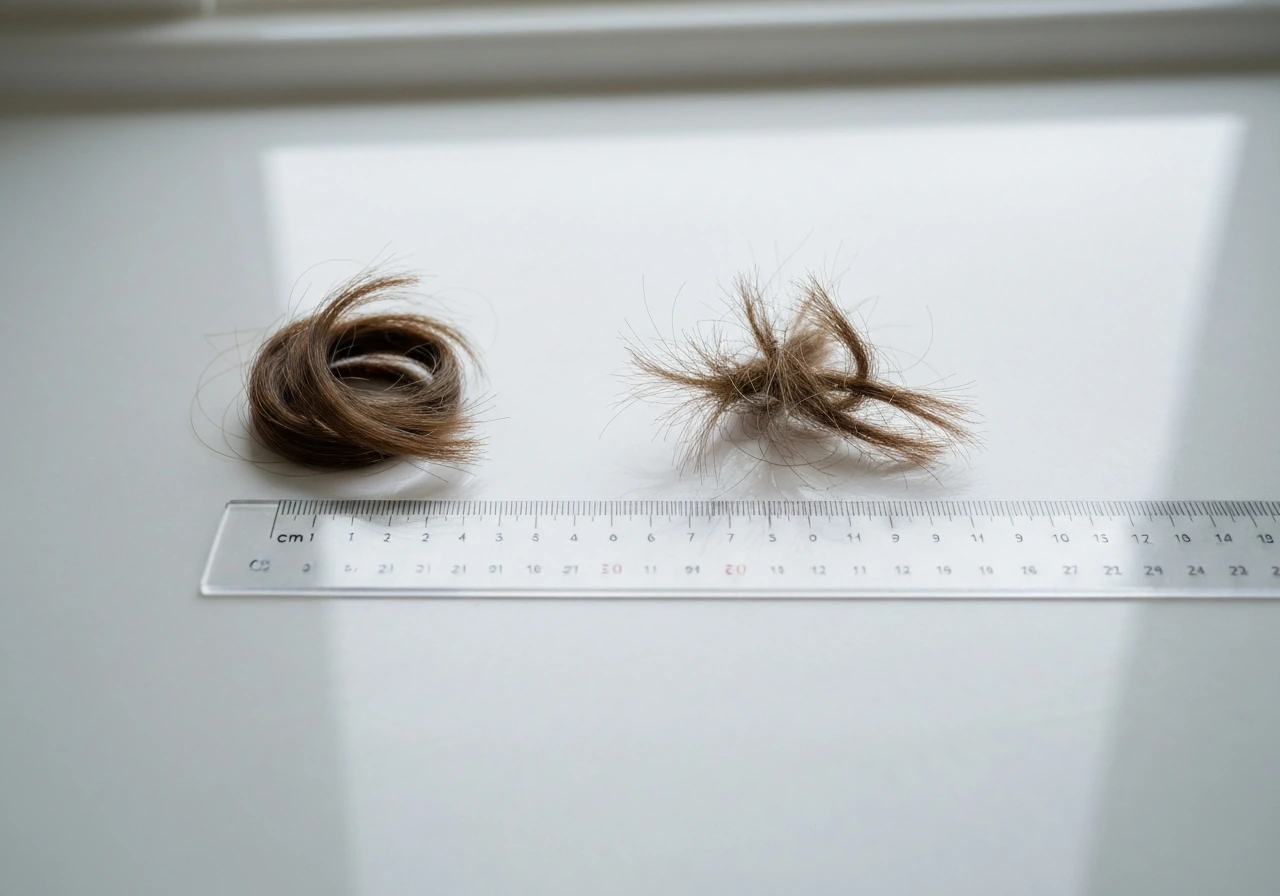
Before you change a single product, it helps to understand what's actually happening. Hair grows at roughly 0.35 mm per day, about 1 cm per month or 15 cm per year. That number doesn't change much no matter what you do topically. What does change is how much of that growth you actually keep. If you want the full picture of how hair will grow from root to tip, focus on both growth rate and breakage control how much of that growth you actually keep. If your ends are snapping off at the same rate your roots are growing, your length stays flat. That's the most common reason people feel like their hair "never grows."
The second thing to understand is the difference between shedding and true hair loss. Shedding up to 100 to 200 hairs per day is completely normal. You'll notice it most in the shower or on your brush, and that's fine. [What isn't fine is a sudden increase in daily shedding over weeks, especially if it follows a stressor like illness, surgery, dramatic weight loss, or major emotional upheaval.
](https://my. clevelandclinic. org/health/diseases/24486-telogen-effluvium) That pattern, called telogen effluvium, can show up two to four months after the triggering event, which makes it confusing to trace. Cleveland Clinic notes that [telogen effluvium](https://www.
clevelandclinic. org/health/diseases/24486-telogen-effluvium) is characterized by increased or heavy shedding that people may notice in a shower drain, on a hairbrush, or on pillows. True hair loss, like androgenetic alopecia (pattern baldness), is a different process involving follicle miniaturization and needs a different approach than shedding.
So your first job is a quick self-audit. Is your scalp healthy and relatively itch-free? Are you seeing normal amounts of shed hair or dramatically more? Has anything stressful happened in the last three to four months? Are your ends dry and snapping off, or is the hair falling out with the root bulb attached? The answers tell you which parts of the plan below to prioritize.
Step-by-step scalp routine: cleanse, exfoliate, massage
A healthy scalp is the foundation. Think of it like soil: if it's clogged, inflamed, or imbalanced, the follicles can't function at their best. The good news is that a solid scalp routine doesn't require a lot of products or time.
Cleanse: find your frequency
Wash your scalp as often as it needs it, not on an arbitrary schedule. For most people with an oily or normal scalp, that means every two to three days. If you have dry or low-porosity hair (common in coily and Type 3 hair textures), once a week with a moisturizing or sulfate-free shampoo is often enough. The goal is to remove buildup without stripping your scalp's natural oils. Buildup from dry shampoo, styling products, and sebum can block follicle openings over time, so don't skip washing in the name of "protecting" your hair.
Exfoliate: once a week clears the way
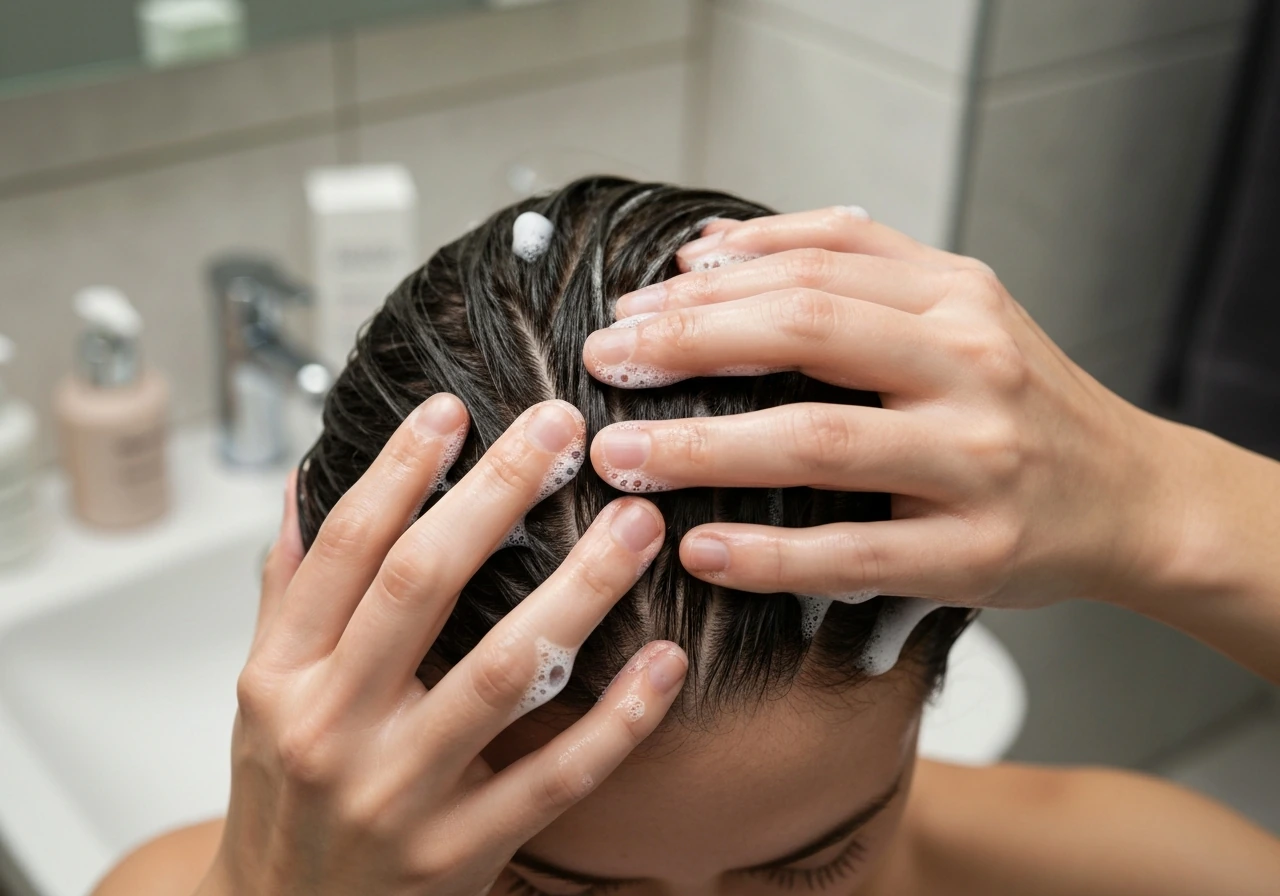
A scalp scrub or exfoliating shampoo (look for salicylic acid, glycolic acid, or gentle physical granules) used once a week removes dead skin cells, excess sebum, and product residue that regular shampoo misses. Apply it directly to a wet scalp before washing, work it in with your fingertips in small circular motions, and then rinse thoroughly before following with your regular shampoo and conditioner. Don't over-exfoliate. Once a week is plenty; more than that can irritate the scalp and worsen the exact conditions you're trying to fix.
Massage: the one habit worth being consistent about
Scalp massage is one of the most genuinely supported habits in hair growth routines. It increases blood circulation to the follicles, which improves nutrient and oxygen delivery. Spend four to five minutes massaging your scalp daily, either with your fingertips or a silicone scalp massager. You can do it dry, with a lightweight oil, or during washing. The technique matters: use the pads of your fingers (not your nails), apply firm but comfortable pressure, and work in small circles across the whole scalp. Do this consistently for at least a few months before judging results.
What to apply to your scalp and hair (and what to skip)
Topical products can support a healthy environment for growth and reduce shedding, but let's be honest about what has real evidence behind it versus what's mostly marketing.
Minoxidil: the most evidence-backed topical
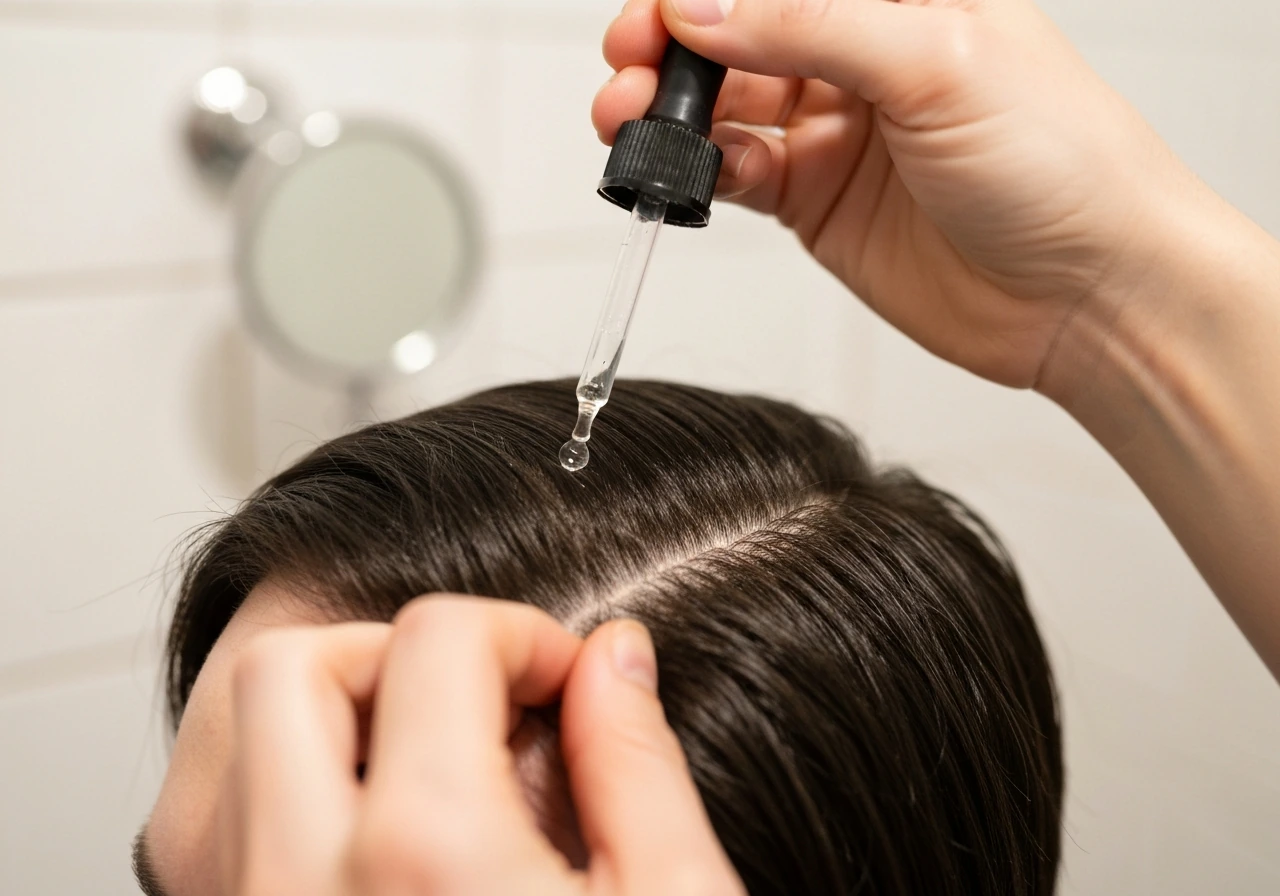
If you're dealing with actual hair thinning or pattern-related hair loss (not just slow growth), minoxidil is the most clinically supported over-the-counter option available. It comes in 2% and 5% concentrations and is applied directly to the scalp once or twice daily. It takes two to four months of consistent daily use before you'll notice any change, so don't quit early. Minoxidil is approved for both men and women, though the dosing guidance differs. It doesn't work on everyone and doesn't address the root cause of androgenetic alopecia, but it's the baseline starting point if thinning is your concern.
Natural oils: supportive but not magic
Oils like rosemary, peppermint, castor, and jojoba are popular, and some have reasonable supporting data. Rosemary oil in particular has shown comparable results to 2% minoxidil in a small number of studies for stimulating growth. Apply a few drops of diluted rosemary or peppermint essential oil (always dilute in a carrier oil like jojoba or coconut at a 2 to 3% concentration) directly to the scalp two to three times per week. Castor oil is thick and can clog follicles if overused, so use it sparingly and rinse it out properly. Oils applied to the hair lengths work mainly as sealants and conditioners, not growth stimulants.
What to avoid applying
- Heavy petroleum-based products directly on the scalp: they can trap buildup and block follicles
- High-alcohol styling products used daily: they dry out both the scalp and hair shaft
- Excessive heat tools without a heat protectant: direct heat weakens the hair shaft and causes breakage
- Any product claiming to "double growth rate" in weeks: hair biology doesn't work that fast
What to eat and take to support hair growth
Hair is made of keratin, a protein, and follicles are metabolically active tissue. That means what you eat directly affects the quality of what grows out of your head. Deficiencies are a real and underappreciated cause of slow growth and increased shedding.
Diet patterns that help
Prioritize protein at every meal. Aim for 0.8 to 1 gram of protein per kilogram of body weight daily at minimum. Eggs, fish, chicken, legumes, Greek yogurt, and tofu are all solid sources. Pair that with iron-rich foods (especially important for women who menstruate), leafy greens, nuts, seeds, and fatty fish for omega-3s. Staying well hydrated keeps the scalp from becoming dry and flaky. Crash dieting or very low-calorie eating is one of the fastest ways to trigger telogen effluvium shedding, so if you're losing weight, do it gradually.
Supplements worth considering
Supplements work best when you're actually deficient. Getting bloodwork done before stacking a bunch of pills is genuinely worthwhile. That said, the most commonly relevant nutrients for hair growth are iron, ferritin (stored iron), vitamin D, zinc, and biotin. Biotin deficiency is less common than supplement marketing implies, but if you're eating a very restricted diet, it's worth checking. Collagen supplements have some early supporting data for hair health. Saw palmetto has emerging evidence for addressing androgenetic hair loss in both men and women by mildly blocking DHT activity. A general high-quality multivitamin plus any specific deficiencies you've confirmed via blood test is the most sensible approach.
Sleep and stress: the underrated factors
Chronic stress elevates cortisol, which disrupts the hair growth cycle and pushes more follicles into the resting (telogen) phase. Consistently getting seven to nine hours of sleep and actively managing stress through exercise, mindfulness, or whatever works for you isn't a "nice to have" for hair growth. It's part of the actual plan. This is also why telogen effluvium is so common after major life stressors: the body deprioritizes non-essential processes like hair growth when it's under siege.
Protecting your length: reducing breakage and using protective styles
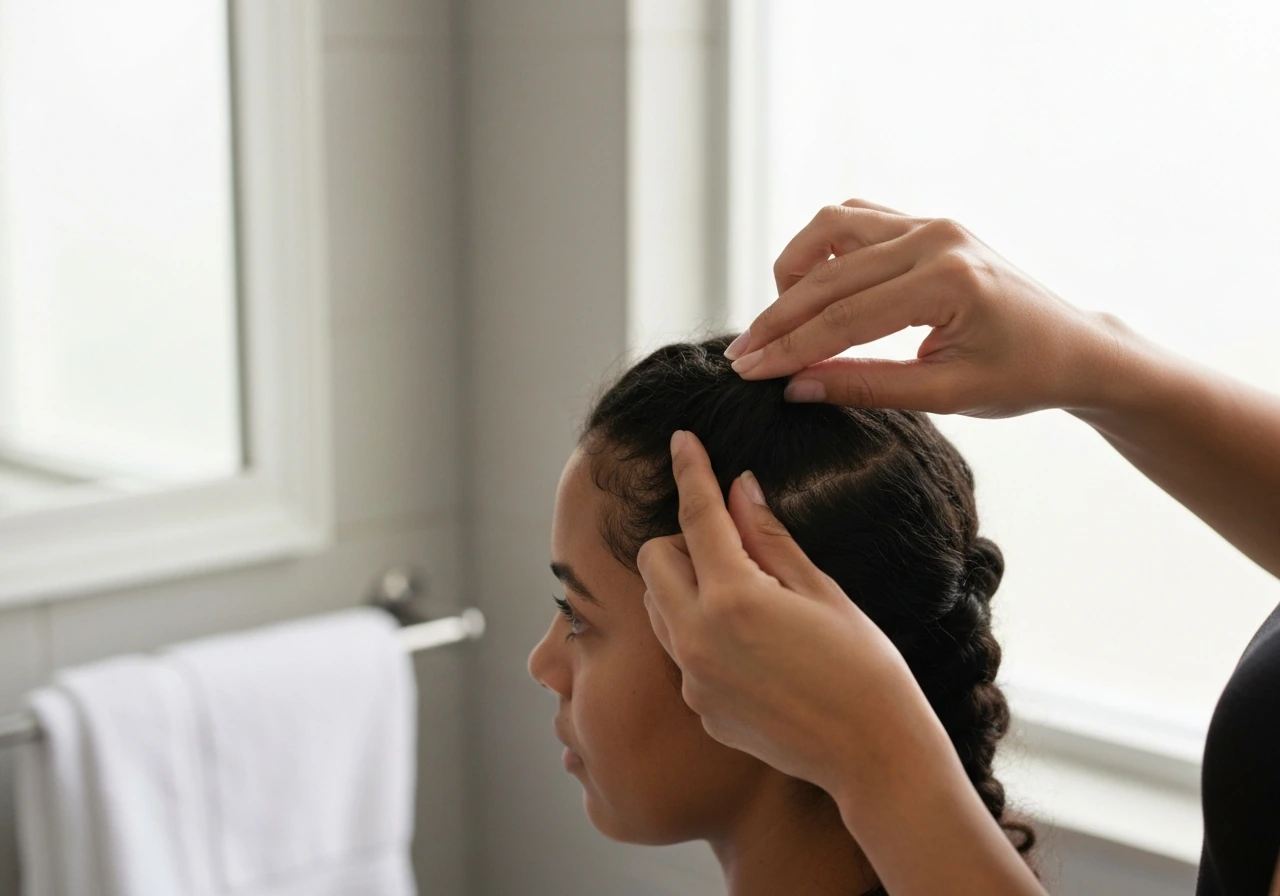
Remember, if your hair is growing 1 cm per month but breaking off just as fast at the ends, you're standing still. Hair growth depends on both how fast your follicles produce new strands and how much length you retain by preventing breakage. Breakage control is how you actually retain length over time.
Keep ends moisturized
The oldest parts of your hair are the ends, and they're the driest and most fragile. Apply a leave-in conditioner or light hair oil to your ends every few days, more frequently if you have coily, curly, or chemically treated hair. Trim your ends every eight to twelve weeks, or when you notice split ends forming. Skipping trims to "keep length" is counterproductive because splits travel up the shaft and cause more breakage.
Handle hair gently
- Detangle from ends to roots, never root to ends, using a wide-tooth comb or your fingers
- Avoid brushing hair when it's soaking wet (most fragile state)
- Use a microfiber towel or an old t-shirt to blot hair dry instead of rubbing vigorously
- Sleep on a satin or silk pillowcase, or use a satin bonnet, to reduce overnight friction
- Reduce heat styling to two to three times per week maximum, and always use a heat protectant spray first
Protective styles: how to use them without causing damage
Protective styles like braids, twists, buns, and updos keep your ends tucked away and reduce daily manipulation. They're especially valuable for coily and curly hair types, where shrinkage and tangles create more opportunities for breakage. The key is to not make them too tight.
Repeated tension on the hairline and edges from tight ponytails, braids, or weaves is the direct cause of traction alopecia, a form of hair loss that starts with inflammation and bumps along the hairline and can progress to permanent scarring if the tension continues. Keep styles loose enough that you feel no pain or pulling, and give your hair a break between installations.
Don't leave any protective style in for more than six to eight weeks without refreshing or removing it.
Men vs. women: where the process differs
The core steps above apply to everyone, but there are a few meaningful differences worth addressing directly.
| Factor | Men | Women |
|---|---|---|
| Primary hair loss driver | Androgenetic alopecia (DHT-related), typically at temples and crown | Androgenetic alopecia (diffuse thinning at part line), telogen effluvium from hormonal shifts |
| Scalp oiliness | Often oilier due to higher androgen levels; may need to wash more frequently | Varies widely; hormonal cycles affect sebum production |
| Minoxidil | 5% formulation is standard; must use consistently or gains reverse | 2% or 5% available; often prescribed off-label at higher doses by dermatologists |
| Common nutritional gaps | Zinc, vitamin D, protein intake | Iron/ferritin, vitamin D, biotin (especially during pregnancy or postpartum) |
| Protective styling relevance | Less commonly used but beneficial for those growing out short cuts | Central strategy for retaining length, especially for textured hair types |
| Hormonal impact | DHT is the main hormonal driver of follicle miniaturization | Postpartum, perimenopause, and thyroid shifts are common shedding triggers |
For men specifically: if you're noticing a receding hairline or thinning at the crown, the earlier you address it, the better your options. Pattern hair loss is progressive, and follicles that have been dormant for years are harder to reactivate than those that are newly miniaturizing. For women: if shedding spiked after pregnancy, illness, or a stressful period, give it three to six months before panicking. Acute telogen effluvium typically resolves once the underlying trigger is gone, though it can take several months to see density return.
Realistic timelines, how to track your progress, and when to get help
Hair growth is slow by design, and this is where a lot of people give up prematurely. Here's what a realistic timeline actually looks like when you're doing everything right.
| Timeframe | What to expect |
|---|---|
| Weeks 1 to 4 | Scalp health improves, shedding may temporarily increase with new topical treatments (normal), less irritation and flakiness |
| Months 1 to 3 | About 1 to 3 cm of new growth; ends may look healthier with consistent moisture; no dramatic length yet |
| Months 3 to 6 | Visible length retention if breakage is controlled; about 3 to 6 cm of cumulative growth from start |
| Months 6 to 12 | Clear length gains (around 6 cm); noticeably improved density if nutritional gaps were addressed; minoxidil results become visible |
| 12+ months | Significant length differences possible (up to 15 cm from start); texture and strength improvements become obvious |
How to track your progress without driving yourself crazy
- Take a photo of your hair from the same angle every four weeks, ideally against a plain background
- Measure a specific section (like the length from crown to ends) monthly with a tape measure
- Keep a simple log of shedding: count roughly how much you lose in the shower two or three times per week
- Note any changes to your scalp condition: itchiness, flaking, tenderness along the hairline
When to stop self-managing and see a dermatologist
See a dermatologist or trichologist if: shedding dramatically exceeds what you'd consider normal and has lasted more than three months; you notice bald patches rather than diffuse thinning; your hairline or edges are receding and feel inflamed or tender (possible early traction alopecia or scarring alopecia); hair loss is accompanied by other symptoms like fatigue, skin changes, or unexplained weight shifts (may indicate thyroid, autoimmune, or hormonal issues); or you've been consistent with a full routine for six months and have seen no improvement at all. A dermatologist can run bloodwork, perform a scalp exam, and in some cases do a scalp biopsy to identify what's actually happening. That information is worth a lot more than another month of guessing.
Growing your hair out is genuinely one of the slower goals you can set, but the steps are clear and the process is manageable. If you want the quickest practical path, use these steps as your how 2 grow hair game plan the steps are clear. Start with your scalp, be serious about breakage control, feed your body what it needs, and give the whole system at least six months before you decide something isn't working. For specific hair types like Type 3a, 3b, or other curl patterns, some of the protective styling and moisture strategies need a bit of adjustment to fit the texture, but the foundational biology is the same for everyone.
FAQ
How long do the steps to grow hair actually take before I can tell they’re working?
Plan for 3 to 4 months to see early changes in shedding and scalp comfort, then 6 months to judge breakage control and measurable length retention. Because hair length increases slowly, progress is usually “how much you keep,” not “how much grows,” so take monthly photos at the same lighting and part.
Is it normal if my hair grows but I still feel like it isn’t getting longer?
Yes, it often means breakage is cancelling out growth. Check whether you’re losing length from the tips by looking for split ends or short, frayed pieces. If shedding hairs have no root bulb but ends look damaged, focus on end protection (leave-in, gentle detangling, trims) rather than adding more scalp stimulants.
How can I tell shedding from true hair loss, and what should I track?
Count your shed hair on wash days versus non-wash days (normal shedding is often most noticeable when washing or brushing). True loss is more likely when you see thinning over a widening part, bald patches, or increasing visible scalp, not just more hairs in the shower.
What’s the fastest mistake people make with scalp washing and exfoliation?
Overwashing to “prevent buildup” and over-exfoliating. If your scalp gets tight, itchy, or more oily within a day or two, it may be irritated. Adjust frequency first, then limit exfoliating (like salicylic or glycolic) to about once weekly unless a clinician advises otherwise.
Can I combine minoxidil with oils or scalp massage?
You can, but separate timing helps. Apply minoxidil to a dry, clean scalp, then wait before adding oil so you don’t dilute the dose or irritate the skin. If you use essential oils, always dilute them and stop if you get burning, redness, or increased shedding.
Do I need supplements if I’m already eating well?
Not automatically. Supplements work best when there’s a deficiency, so consider bloodwork if you have heavy periods, a restricted diet, fatigue, or sudden shedding. In the meantime, prioritize protein and iron-rich foods, because diet gaps usually show up first as poor fiber quality and increased shedding.
Is biotin helpful for hair growth?
Only if you’re deficient. If you take high-dose biotin without a need, it can interfere with some lab tests, so tell your clinician before bloodwork. If your diet is varied and you have no deficiency risk, skip high-dose biotin and focus on iron, vitamin D, zinc, and overall protein intake.
How often should I trim my hair if I’m trying to grow it out?
Trim every 8 to 12 weeks, or sooner when you see splits traveling up the shaft. If trims make you nervous, you can reduce the amount but don’t ignore early split ends, because they keep splitting and cause new breakage higher up, which stalls length retention.
What protective styles should I use to reduce breakage without causing hair loss?
Use styles that keep ends tucked while avoiding tension on the hairline. The “no pain or pulling” rule matters, if you feel soreness, itching, or a tight band sensation, loosen it or switch styles. Also rotate installation and remove or refresh within 6 to 8 weeks to prevent buildup and traction-related inflammation.
Is hair growth different for curly or coily hair types?
The biology is the same, but the process of retaining length is harder due to tangling and shrinkage. Use more frequent conditioning or leave-in on the ends, detangle gently when hair is adequately moisturized, and keep protective styles that minimize manipulation. Expect to measure growth by length from root to tip, not just visual “shrinkage size.”
When should I see a dermatologist instead of continuing the routine?
If shedding is clearly increased for more than 3 months, if you see bald patches, if your hairline or edges become tender or inflamed, or if you have systemic symptoms like fatigue or weight changes. If no improvement occurs after 6 months of consistent scalp care and breakage control, a specialist can identify causes like thyroid issues, nutrient problems, or scarring conditions.
What should I do if my shedding started after a stressful event?
Treat it as telogen effluvium until proven otherwise, usually the shedding begins 2 to 4 months after the trigger (illness, surgery, major stress, rapid weight loss). Keep the plan steady, avoid drastic calorie cuts, and focus on sleep and stress reduction, because density recovery often takes several months once the trigger has passed.
Next Articles
How Do We Grow Hair: A Practical Guide to Thicker Growth
Learn how hair grows and how to grow it back with scalp care, nutrition, safe topicals, timelines, and when to see a doc
How Do Hair Grow: Cycle, Regrowth, and Growth Tips
Learn hair growth cycle, regrowth after shedding, and practical steps to boost thickness, health, and timeline expectati
How Hair Will Grow: Step-by-Step Guide for Faster, Healthier Growth
Step-by-step plan for faster healthier hair growth, explain growth cycle, breakage vs shedding, treatments, nutrition, t