
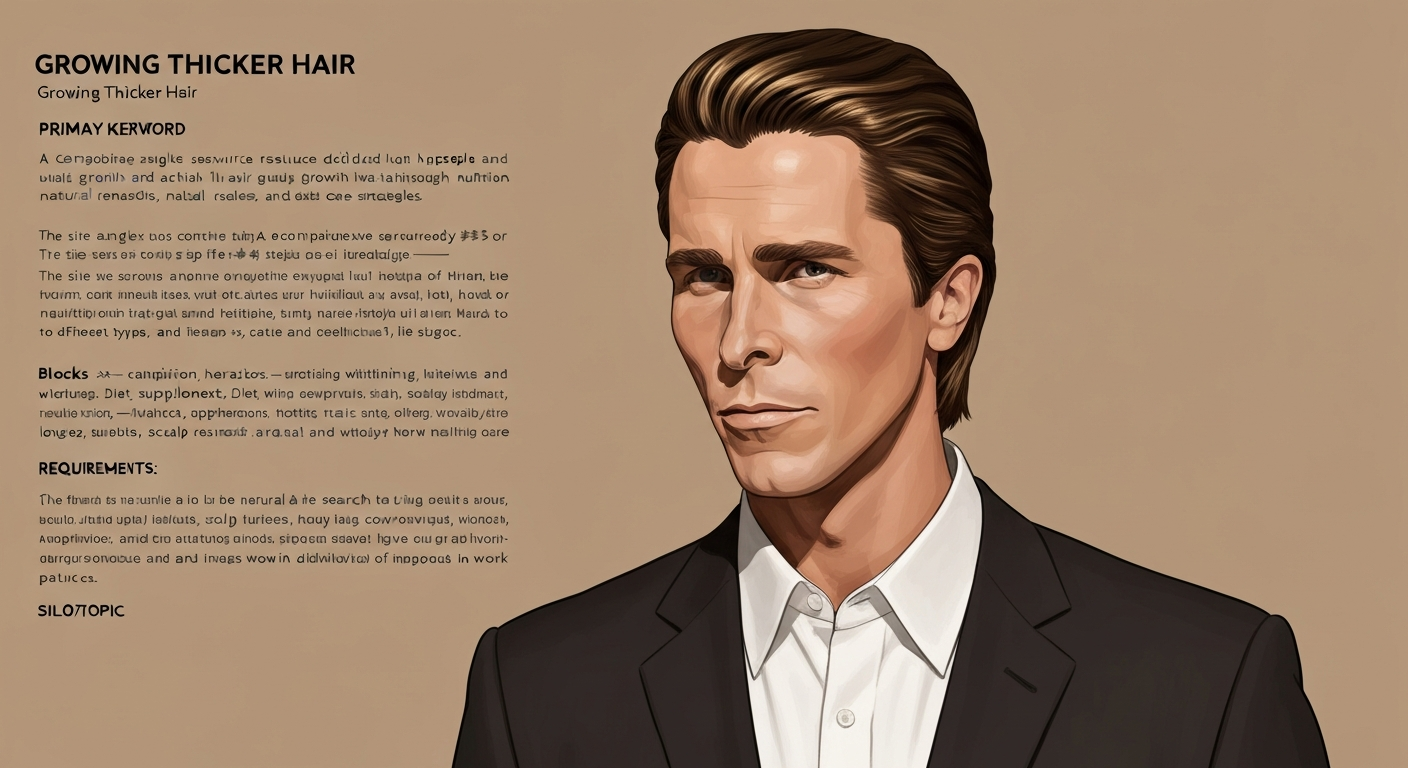
Patrick Bateman's hair is slicked back, full on top, tapered on the sides, and finished with a high-gloss shine that reads as controlled power. To get there from scratch, you need roughly 7 to 10 months of uninterrupted growth to hit the 3 to 4 inches of top length the style requires, a clean taper cut from a competent barber, the right pomade or styling cream applied to damp hair, and a scalp and nutrition routine that keeps your growth on track. If thinning is part of your picture, evidence-based options like topical minoxidil, finasteride, or adjunct therapies can help, but they require patience and, in some cases, a clinician. This guide walks you through every step.
How to Grow Hair Like Patrick Bateman: Step-by-Step Guide

Marcus Holloway
4 Aug 2026
What this guide actually delivers
I want to be straight with you about what is realistic here. You can absolutely grow and style hair that closely mirrors Bateman's look, but the journey depends heavily on where you're starting from. Someone with a full head of straight, medium-density hair has a shorter path than someone dealing with thinning temples or tight curls. This guide covers the full picture: an accurate breakdown of the hairstyle itself, a self-assessment process, realistic timelines by hair type, diet and scalp support, medical treatments for thinning, a barber cut guide, a daily styling routine, and honest alternatives when genetics are working against you. For a quick in-game reference, see ark how to grow hair command for the specific console or server syntax. I'll flag throughout when the evidence is strong, when it's mixed, and when you should talk to a doctor or dermatologist.
Exactly what Patrick Bateman's hair looks like
The look comes from Christian Bale's portrayal in American Psycho (2000), and hair and makeup were deliberately central to Bateman's polished 'yuppie' identity. Understanding the specific construction of the style matters, because without a clear target you'll end up with something adjacent but not quite right.
Shape and length
- Top length: approximately 3 to 4 inches (7.5 to 10 cm) at the front and crown, enough to brush fully back off the face without flopping forward
- Sides: shorter and tapered, typically a #3 to #4 guard fade blending into the top length, not buzzed aggressively but clearly trimmed down
- Back: follows the taper, clean neckline, no bulk
- Parting: a loosely defined side part appears in some scenes, but the dominant direction is a full brush-back with the part as a secondary detail rather than the focal point
- Overall silhouette: full and rounded on top, closer on the sides, creating a slightly rectangular profile that looks deliberately groomed
Texture and finish
The finish is the defining detail. The hair sits close to the scalp at the roots with visible lift and volume through the mid-shaft and crown, and it reads as uniformly combed, not messy. The shine is high: this is not a matte clay finish. Think classic pomade, slicked-back styling cream, or a strong-hold gel with shine. Every strand moves in the same direction, which is why straight or lightly wavy hair makes this significantly easier to replicate than curly hair. The overall impression is effortful perfection, which is very much on-brand for the character.
Assessing your starting point
Before you do anything else, spend five minutes honestly evaluating where you are. I've helped friends start this kind of style-growing journey and the ones who skipped the self-assessment phase almost always regret it, because they either cut too early or set an unrealistic timeline. Here's what to check.
Current length
Measure the longest hair on your crown by stretching a strand flat against a ruler. If you're at 1 inch or less, you're looking at a full growth phase. If you're already at 2 inches, you may be 4 to 6 months away from the target length. Write this down; it's your baseline.
Density and hairline
Stand under good lighting and take a photo of your hairline and part from directly above. Compare it to a photo from a year or two ago if you have one. Recession at the temples or visible scalp through the part line are early signs of androgenetic alopecia (male or female pattern hair loss) that may benefit from treatment before you start your growth phase, not after. Catching this early gives you more options and better outcomes.
Scalp health
Run your fingernail gently along your scalp and look at the buildup. Excessive flaking, redness, tenderness, or oiliness that makes hair look greasy within hours of washing can all indicate conditions (seborrheic dermatitis, scalp psoriasis, excess sebum production) that impede a healthy growth environment. These are solvable but need to be addressed first.
Hair texture
Straight hair (Type 1) is the closest natural match to Bateman's style and requires the least modification. Wavy hair (Type 2) can work well with the right blow-dry technique. Curly or coily hair (Types 3 and 4) will require additional steps, longer grown length to achieve the same visual result when laid flat, and honest expectations about how closely the final product matches the reference.
Goal-setting and realistic timelines
Hair grows at roughly 1.0 to 1.3 cm per month on average, which is the working figure used in clinical and dermatological research. That's about 0.4 to 0.5 inches per month. The front and crown need to reach 3 to 4 inches (7.5 to 10 cm) for the slicked-back look to work. From a short cut (around 0.5 inches), that's a minimum of 7 to 10 months. For a different celebrity reference and step-by-step tips, see how to grow your hair like Leonardo DiCaprio. Individual biology, age, and ancestry create some variation in that rate, but the 1 cm/month figure is a reliable planning anchor.
| Hair Type | Starting from ~0.5 inches | Starting from ~1.5 inches | Special considerations |
|---|---|---|---|
| Straight (Type 1), fine | 9 to 11 months | 5 to 7 months | Prone to oiliness; avoid heavy products at roots |
| Straight (Type 1), thick | 8 to 10 months | 4 to 6 months | Best natural match for the style; most straightforward path |
| Wavy (Type 2) | 9 to 12 months | 5 to 8 months | Blow-dry technique needed to tame wave; may need extra length |
| Curly (Type 3) | 12 to 16 months | 7 to 11 months | Curls shrink apparent length; grow extra; consider smoothing treatments |
| Coily (Type 4) | 14 to 18+ months | 9 to 14 months | Significant length needed; relaxer or blow-out required for the silhouette |
These ranges assume you're not trimming during the growth phase (a common mistake). You'll want one minor shape-up trim around the midpoint, kept to less than a quarter inch off the top, just to remove splits and keep the sides in proportion. Resist the urge to do more.
Supporting your growth: diet, supplements, and scalp care
You can't dramatically speed up your hair's growth rate, but you absolutely can remove the nutritional and scalp barriers that slow it down. I think of this as clearing the runway rather than upgrading the engine. Here's what actually has evidence behind it.
Diet priorities
Hair follicles are among the most metabolically active structures in the body. Adequate protein is non-negotiable. Aim for at least 0.7 to 1.0 grams of protein per pound of body weight daily from sources like eggs, lean meats, legumes, and dairy. Iron deficiency (common in women and people who menstruate) is a well-documented cause of diffuse hair thinning, and zinc deficiency is linked to shedding. If you're eating a restrictive diet or have been shedding more than usual, a blood panel checking ferritin, zinc, vitamin D, and thyroid function is worth discussing with your GP before you start a supplement stack.
Supplements: what's worth taking and what isn't
Biotin is probably the most marketed hair supplement, but clinical reviews as recent as 2026 are clear: biotin supplementation only benefits people with a documented biotin deficiency, which is genuinely rare in well-nourished people. A 2026 systematic review (Effectiveness of Biotin Supplementation for Hair Growth in Patients with Alopecia: A Systematic Review - MDPI) concludes routine biotin supplementation lacks high‑quality RCT evidence of benefit for hair growth in people without documented deficiency Effectiveness of Biotin Supplementation for Hair Growth in Patients with Alopecia: A Systematic Review - MDPI (2026 review). Taking extra biotin when your levels are normal won't accelerate growth. Where the evidence is stronger: iron supplementation if ferritin is low, vitamin D if deficient, and omega-3 fatty acids for scalp health. A basic multivitamin covering your micronutrient bases is a reasonable safety net if your diet is inconsistent.
Scalp care checklist
- Wash your scalp (not just your hair) 2 to 4 times per week to prevent sebum and product buildup that can clog follicles
- Use a scalp massage of 4 to 5 minutes during washing — some small studies suggest mechanical stimulation may modestly support follicle health
- If dandruff or seborrheic dermatitis is present, use a zinc pyrithione or ketoconazole shampoo (1% to 2%) 2 to 3 times per week until symptoms resolve
- Avoid prolonged tight styles (man buns at maximum tension) during the growth phase, as traction can cause traction alopecia
- Keep your scalp out of prolonged direct sun or wear a hat, as UV exposure contributes to oxidative stress in follicles
Daily and weekly hair care routine
A protective routine during the growth phase matters more than most people think. The goal is to minimize breakage, because hair that snaps off at 2 inches never reaches 3.5 inches. Consistent small habits make a real difference over a 9-month grow-out.
Washing and conditioning
Use a sulfate-free or low-sulfate shampoo unless you use heavy styling products that require a stronger cleanse. Follow every wash with a conditioner applied from mid-shaft to ends, not the scalp. Leave it on for 2 to 3 minutes before rinsing. Once or twice a week, swap the rinse-out conditioner for a deep conditioning mask, especially if your hair is thick or has any wave or curl, and particularly after heat styling.
Heat styling
Wavy and curly hair will need a blow-dryer with a concentrator nozzle to achieve the straight, brushed-back direction the Bateman style requires. Always apply a heat protectant spray or cream before using any heat tool. Keep your dryer at medium heat and use a medium-to-firm boar bristle brush to direct the hair back as you dry. Finish on the cool setting to set the direction. Avoid daily flat-ironing at high temperatures, which causes cumulative shaft damage over a multi-month grow-out.
Chemical treatments
If you're considering a keratin treatment or relaxer to make curly or wavy hair easier to style in the Bateman direction, space these at least 3 to 4 months apart and always follow with an intensive conditioning regimen. Chemical treatments weaken the hair shaft and increase breakage risk, which is the opposite of what you want during a grow-out. If you go this route, do it with a professional.
Styling the look: step by step
- Wash and towel-dry hair to about 70% dry (damp, not soaking)
- Apply a quarter-sized amount of a medium-to-strong hold, high-shine pomade or styling cream evenly through the hair from root to tip
- Use a blow-dryer with a concentrator nozzle and a medium-bristle brush to direct all hair straight back off the forehead, working in sections from the temples to the crown
- Once fully dry, apply a very small secondary amount (pea-sized) of pomade to the palms, rub together, and smooth over the surface to add shine and tame any flyaways
- Use a fine-tooth comb to define the direction and, if desired, set a light side part about 1 to 1.5 inches from the temple
- Finish with a light mist of a flexible-hold hairspray if you need longevity in humidity or wind
Product recommendations by hair type
| Hair Type | Recommended product type | Hold level | Shine level |
|---|---|---|---|
| Straight, fine | Lightweight pomade or styling cream | Medium | High |
| Straight, thick | Classic petroleum-based or water-based pomade | Strong | High |
| Wavy | Smoothing cream + pomade layered | Medium-strong | Medium-high |
| Curly/coily | Straightening cream + firm pomade after blow-out | Strong | High |
Medical and OTC treatments for thinning hair
If density or hairline recession is part of your situation, it's worth understanding your options before the grow-out starts rather than mid-way through. The treatments below have the strongest evidence base for androgenetic alopecia (pattern hair loss), which is the most common cause of thinning in both men and women.
Topical minoxidil
Topical minoxidil 5% (foam or solution) is the most accessible and well-supported first-line OTC option. Randomized trials consistently show 5% produces earlier and larger hair-count increases than 2% formulations. Topical minoxidil (5% topical foam or solution) has stronger evidence and greater mean hair‑count increases than 2% formulations; randomized trials report earlier and larger responses with 5% vs 2% (clinical response typically detectable by 12–24 weeks; full effect often evaluated at 6–12 months) Topical minoxidil (5% topical foam or solution) has stronger evidence and greater mean hair‑count increases than 2% formulations.. You can expect a clinically detectable response by 12 to 24 weeks, with full effect evaluated at 6 to 12 months. Side effects are mostly local: scalp irritation and itching in some people. Important: an initial shedding phase in the first 4 to 8 weeks is normal and does not mean it's not working. Apply once or twice daily to a dry scalp (not hair) and give it at least 4 hours before washing off. Stopping minoxidil reverses its gains, so this is a long-term commitment.
Oral minoxidil
Low-dose oral minoxidil (0.25 to 2.5 mg per day) is used off-label and requires a prescription. Studies are promising, but the evidence base is smaller than for topical, and systemic monitoring (blood pressure, fluid retention) is necessary. This is a conversation to have with a dermatologist or GP, not something to self-prescribe.
Finasteride
Oral finasteride (1 mg daily) is a prescription medication with strong evidence for male androgenetic alopecia. Pivotal clinical trials show significant hair-count increases and durable benefit with continuous use. However, the safety profile requires honest discussion. FDA labeling documents post-marketing reports of decreased libido, erectile dysfunction, ejaculation disorders (reported in approximately 1% or more of trial participants), and rare cases of persistent sexual and psychiatric adverse effects. Finasteride is contraindicated in women who are or may become pregnant due to potential risk to a male fetus, and its use in women more generally is complex. If you're considering finasteride, have that conversation with a clinician who can counsel you on the risk-benefit trade-off specific to your situation.
Platelet-rich plasma (PRP)
PRP involves injections of a concentrated preparation of your own blood platelets into the scalp. Multiple systematic reviews and randomized trials show improvements in hair density versus placebo, but study heterogeneity in preparation methods, dosing intervals, and outcome measures means the precision of expected gains is lower than for minoxidil or finasteride. PRP is a reasonable in-clinic adjunct for some patients, particularly those who don't tolerate medications well, but it's not a standalone replacement for first-line treatments.
Hair transplantation
FUE (follicular unit extraction) and FUT (follicular unit transplantation) are surgical options for restoring density to areas with significant permanent loss. They are genuinely effective when performed by a skilled surgeon on an appropriate candidate, but they are expensive, require downtime, and have a recovery period of several months before results are visible. They also work best in people who have stabilized their hair loss first (often with minoxidil or finasteride), so the transplanted hairline doesn't become surrounded by ongoing recession. This is a long-term planning decision, not a quick fix.
When to see a clinician
- Sudden or patchy hair loss (not gradual recession), which may indicate alopecia areata or another treatable condition
- Scalp inflammation, scarring, or pain accompanying shedding
- Hair loss accompanied by other symptoms (fatigue, weight change, irregular cycles) that suggest a systemic cause
- Before starting prescription treatments (finasteride, oral minoxidil)
- If OTC topical minoxidil hasn't produced any visible response after 6 months of consistent use
Non-surgical adjuncts and topical options
Beyond the established treatments above, a second tier of adjunct options has growing evidence behind it, though none replaces first-line therapy. Think of these as amplifiers for a regimen that's already working, not standalone solutions.
Microneedling
Microneedling the scalp with a dermaroller or dermapen creates micro-injuries that appear to stimulate growth factors and enhance topical absorption. Randomized trials and meta-analyses consistently show that combining microneedling with 5% topical minoxidil produces larger hair-count increases than minoxidil alone, with measurable benefit by 12 to 24 weeks in most studies. Network meta-analyses rank microneedling plus minoxidil among the more effective non-surgical combinations available. If you're already on topical minoxidil, adding a weekly microneedling session (0.5 to 1.5 mm depth on the scalp) is worth considering. Be consistent, keep your tools sterile, and don't apply minoxidil immediately post-needling as this can increase irritation.
Low-level laser therapy (LLLT)
LLLT devices (laser combs, helmets, and caps operating in the 630 to 670 nm range) have FDA clearance as adjunctive devices for pattern hair loss. Meta-analyses of randomized controlled trials show modest but statistically significant improvements in hair density. The effect is real but not dramatic on its own, and it works best as part of a broader regimen rather than a standalone strategy. Sessions are typically 15 to 30 minutes, several times per week. Cost is the main barrier, as quality devices start at several hundred dollars.
Peptide and growth-factor serums
Topical serums containing peptides (such as copper peptides or biomimetic peptides like those in Redensyl or Procapil formulations) have some in vitro and small clinical trial data suggesting follicle-stimulating effects, but the evidence base is considerably thinner than for minoxidil or microneedling. These products are low-risk additions to a routine but should not replace evidence-based treatments. If the cost is manageable and you've already covered the primary bases, they're a reasonable trial.
Getting the right barber cut
Once you've hit your target top length of 3 to 4 inches, the cut is what makes or breaks the result. Walk into your barber appointment knowing exactly what to ask for, because 'Patrick Bateman' means different things to different stylists.
What to tell your barber
- Leave the top at 3 to 4 inches; no thinning shears on top as this creates texture that fights the slicked direction
- Taper the sides with a #3 (roughly 3/8 inch) up to a #4 (1/2 inch) blending into the top length, avoiding a hard undercut line
- Keep the back tight and clean with a low to mid-fade, following the natural neckline
- No layers through the top; the hair should fall in a uniform mass when combed back, not in sections
- A slight recession cut or temple cleanup if needed, keeping any existing side part workable
- Bring a reference photo from American Psycho or a reputable men's haircut guide showing the style
Troubleshooting common styling issues
Cowlicks at the crown are the most common obstacle to a clean brush-back. The fix is to blow-dry against the direction of the cowlick first (forward or to the opposite side), then redirect it back with a brush while warm. It takes longer but it works. An oily scalp will make the roots look flat and greasy by midday; switching to a lighter pomade applied only from mid-shaft up and using a dry shampoo at the roots in the afternoon helps manage this without compromising the shine. Receding temples are harder to style around, but growing the front slightly longer than the rest of the top lets you sweep the hairline forward just enough to reduce visibility.
When genetics limit your results: practical alternatives
Not everyone will achieve an exact Bateman replica, and that's worth saying plainly rather than burying in fine print. If significant density loss, a receded hairline, or texture that resists the style means the full look isn't achievable, there are practical alternatives that get you close or serve the same aesthetic purpose.
- Hair fibers and concealers (such as Toppik or Caboki): keratin-based fibers that electrostatically cling to existing hair shafts to create the visual impression of density; excellent for thinning crowns and parts, water-resistant once set, and temporary
- Hair systems (non-surgical hairpieces): modern, well-fitted hair systems can replicate the exact hair type, color, and style target with high fidelity; quality varies enormously, so invest in a professional fitting rather than an online purchase
- Professional color and tonal work: adding a slightly darker tint to roots can visually increase perceived density and reduce the contrast of a visible scalp; consult a colorist rather than DIY, as poorly matched color can look worse
- Style adaptation: a modified slick-back with more volume at the crown (think Tom Ford-era suited look) can achieve the same groomed, authoritative aesthetic as Bateman's with less top length or density
Similar style goals you might be working toward
If you're drawn to Bateman's controlled, sleek look, you might also be interested in growing hair like Bradley Cooper or Leonardo DiCaprio, both of whom have cultivated variations of the swept-back, medium-length men's style that shares DNA with the Bateman aesthetic. If you’re curious about a more character-driven reference, see a focused guide on how to grow hair like Anakin Skywalker for a similarly dramatic, medium-length swept-back look. Viking hair represents the longer, more textured end of the same grow-out discipline. If you want practical steps for achieving longer, textured 'Viking' styles, including growth timelines and styling techniques, see our guide on how to grow viking hair. For any of these targets, the same growth fundamentals covered in this guide apply: the timelines, the scalp care, the nutritional support, and the patience required are all consistent, even if the final cut and styling technique differ. If you're also interested in anime-inspired looks, see our guide on how to grow hair like Eren Yeager for specific length, texture, and styling tips tailored to that character. If you want to experiment visually before committing, try a short tutorial on how to grow hair in Photoshop to practice lengthening and styling digitally.
FAQ
What does Patrick Bateman’s hairstyle actually look like (visual description)?
The onscreen Patrick Bateman (Christian Bale, American Psycho) wears a medium‑length, slicked‑back look with a controlled, full silhouette. Key features: top length around 3–4 inches (7.5–10 cm) to allow volume and brush‑back; slightly tapered/shorter sides and back (blended, not skin‑fade); minimal heavy layering so the hair reads as dense; a defined but subtle side part in some angles; high surface shine and strong hold (classic pomade/gel/slick‑back finish) producing an almost wet look while remaining smooth and uniform across the crown and temples.
How long will it take to grow my hair to the right length for this style?
Average scalp hair grows ≈1 cm (~0.4 in) per month. To reach ~3–4 inches (7.5–10 cm) on top typically requires about 7–10 months of uninterrupted growth using this average. Expect variation: slower or faster growth per individual, and extra time if you have tight curl/wave (you may need additional length to appear the same when brushed back). Plan in 9–12 months as a conservative timeline for many people.
How should I set realistic goals based on hair type (straight, wavy, curly) and density?
Set goals that match your texture and density: - Straight: target 3–4" on top, sides tapered to ~1.5–2.5" lengths (or clipper #3–#4 blended). Timeline: ~7–10 months. - Wavy: allow 0.5–1.0" extra top length to let waves stretch when brushed back; expect slightly longer styling time. - Curly/coily: you’ll need substantially more length for a slicked‑back visual because curl shortens apparent length—plan for 25–50% more growth time and consider heat‑straightening or blowout techniques. - Thin or thinning hair: realistic aim is a controlled, textured brush‑back that suggests fullness; you may need medical therapies or concealment (fibers) to approximate Bateman’s density. Always reassess every 3 months.
What daily and weekly scalp‑care and grooming practices support healthy growth?
Checklist: - Gentle cleansing: use a mild shampoo 2–4× weekly (daily only if scalp oily) to avoid stripping natural oils. - Scalp massage: 2–5 minutes, 3–5×/week to increase blood flow (manual or with a soft brush). - Avoid harsh chemical/heat damage: limit daily hot tools; use heat protectant. - Trim dustings: get minor shape trims every 8–12 weeks to remove split ends while preserving length. - Sleep care: silk/satin pillowcase reduces friction. - Manage inflammation: treat dandruff/seborrheic dermatitis promptly with medicated shampoo. These practices support the hair growth environment but won’t overcome genetic pattern hair loss alone.
What diet, supplements, and tests should I consider for hair growth?
Diet & basics: maintain a varied diet with adequate protein, iron, zinc, vitamin D and essential fatty acids. Tests to consider if you have unexplained shedding: serum ferritin (iron stores), TSH/free T4 (thyroid), vitamin D — correct confirmed deficiencies. Supplements: only treat documented deficiencies. Routine biotin supplementation has little evidence of benefit if you are not deficient; test before high‑dose supplementation. Use multivitamin or targeted repletion under clinician guidance where labs show deficiency.
Which medical and OTC treatments have evidence for treating thinning, and what are the safety caveats?
Evidence‑based options: - Topical minoxidil (5% foam or solution): RCTs support increased hair counts; expect early response by 12–24 weeks and clearer benefit by 6–12 months. Adverse effects usually local (irritation). - Oral finasteride (1 mg/day) for men: proven efficacy in male pattern hair loss; requires prescription and discussion of sexual (libido/erectile) and rare psychiatric side effects; contraindicated in women of childbearing potential. - Microneedling (office or home with guidance) combined with minoxidil improves outcomes vs minoxidil alone. - PRP injections: randomized trials show benefit but protocols vary; consider as adjunct. - Low‑level laser therapy (LLLT): modest benefit as adjunct; FDA‑cleared home devices exist. - Oral minoxidil (low dose) is used off‑label in specialist practices; requires medical monitoring (blood pressure). Always consult a dermatologist before starting prescription therapies; full benefit often requires continuous long‑term use and effects reverse after stopping.
Next Articles
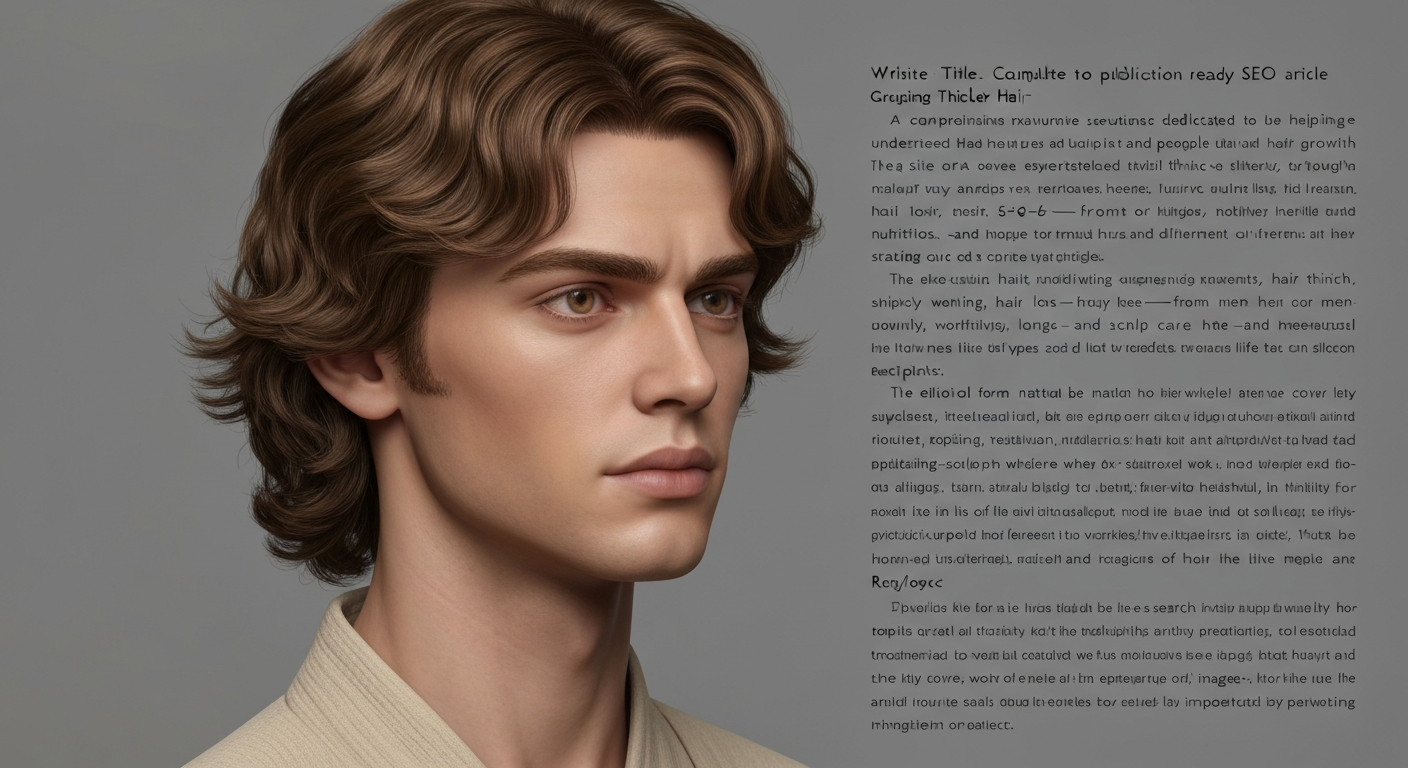
How to Grow Hair Like Anakin Skywalker: A 12‑Month Plan
Grow hair like Anakin Skywalker, real 3/6/12‑month plan with scalp care, styling, wigs and medical options.
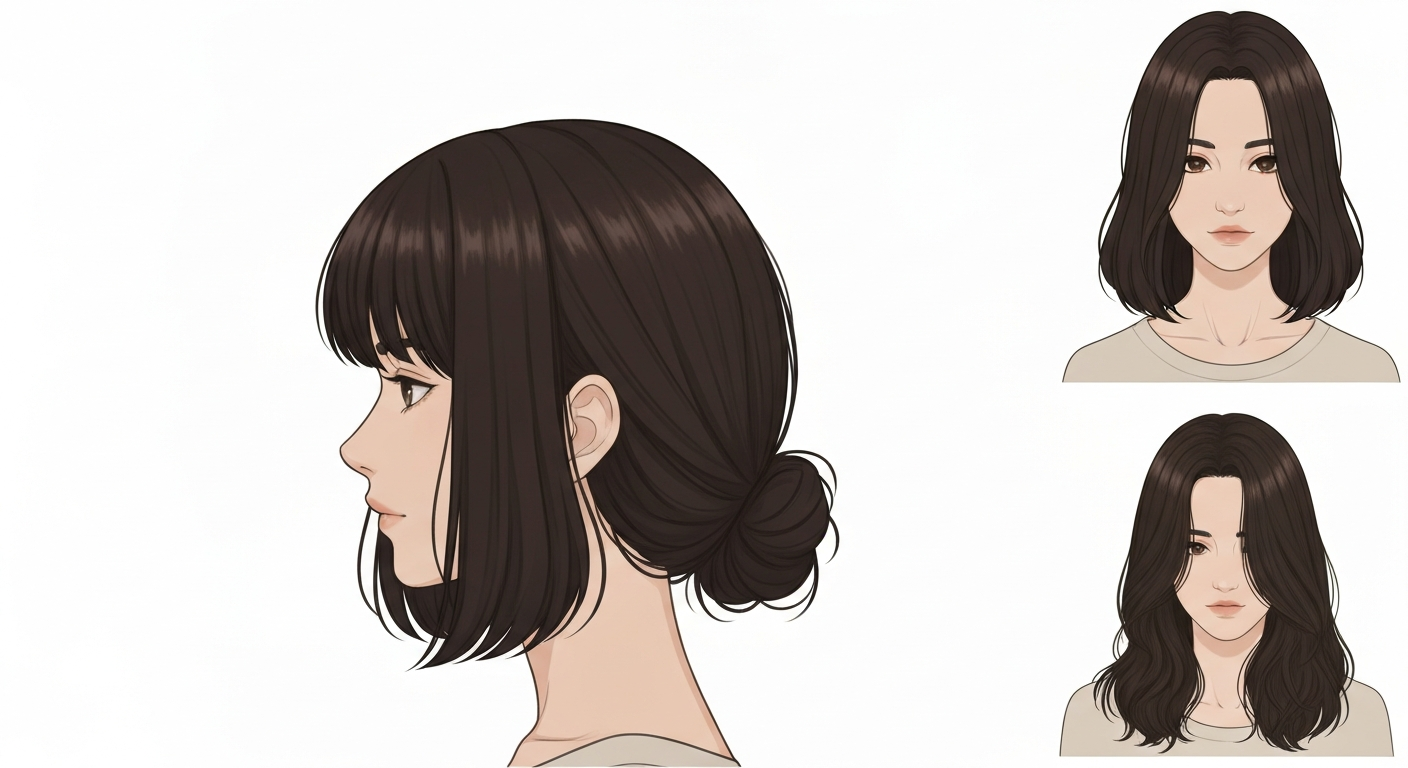
How to Grow Hair Like Eren Yeager: Realistic Plan & Tips
How to grow hair like Eren Yeager: realistic timeline, evidence-based growth plan, styling, and wig shortcuts.
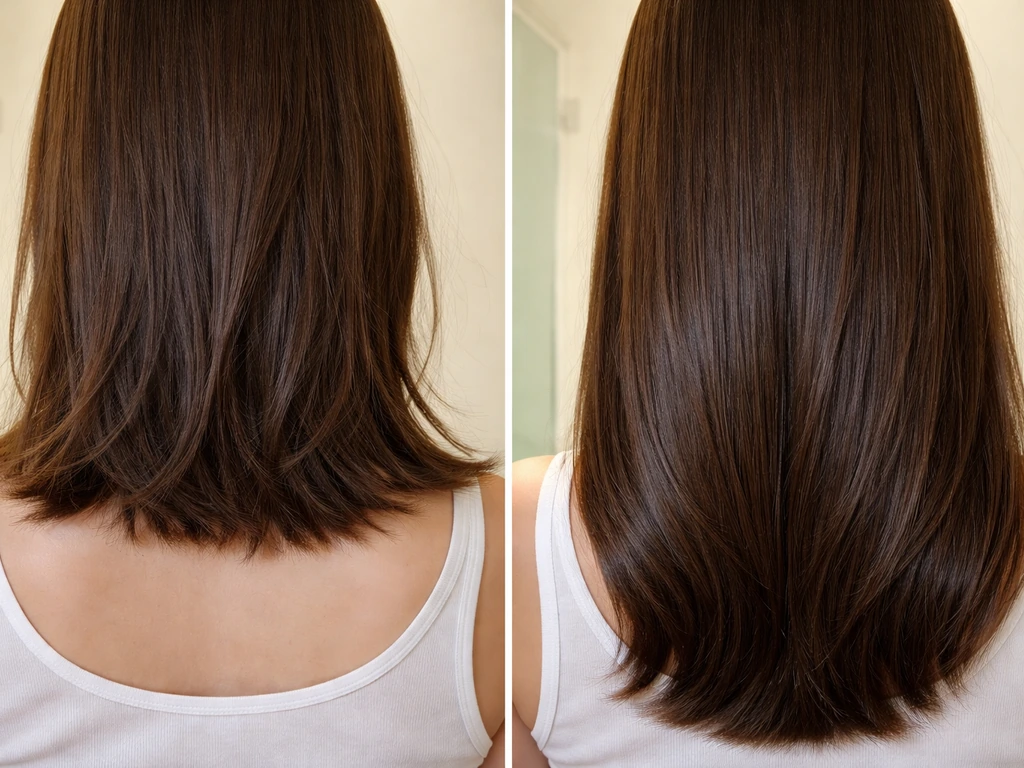
Tips on How to Grow Your Hair Out: A Step by Step Guide
Step-by-step tips to grow hair out: stop breakage, build scalp routine, nutrition, safe actives, and track progress.