
You can encourage thicker, denser body hair on skin through a combination of targeted nutrition, off-label topical treatments like minoxidil, hormone support where appropriate, and consistent skin care. Results depend heavily on your genetics, the site you're targeting, and any underlying health factors driving sparse hair in the first place. Most approaches take three to six months to show clear changes, and some people will see modest gains at best. That's not pessimism, it's biology. But there's a lot you can do to work with your follicles rather than against them.
How to Grow Hair on Skin: Evidence-Based Guide for Body & Genitals

Marcus Holloway
17 Jul 2026
Who this guide is for
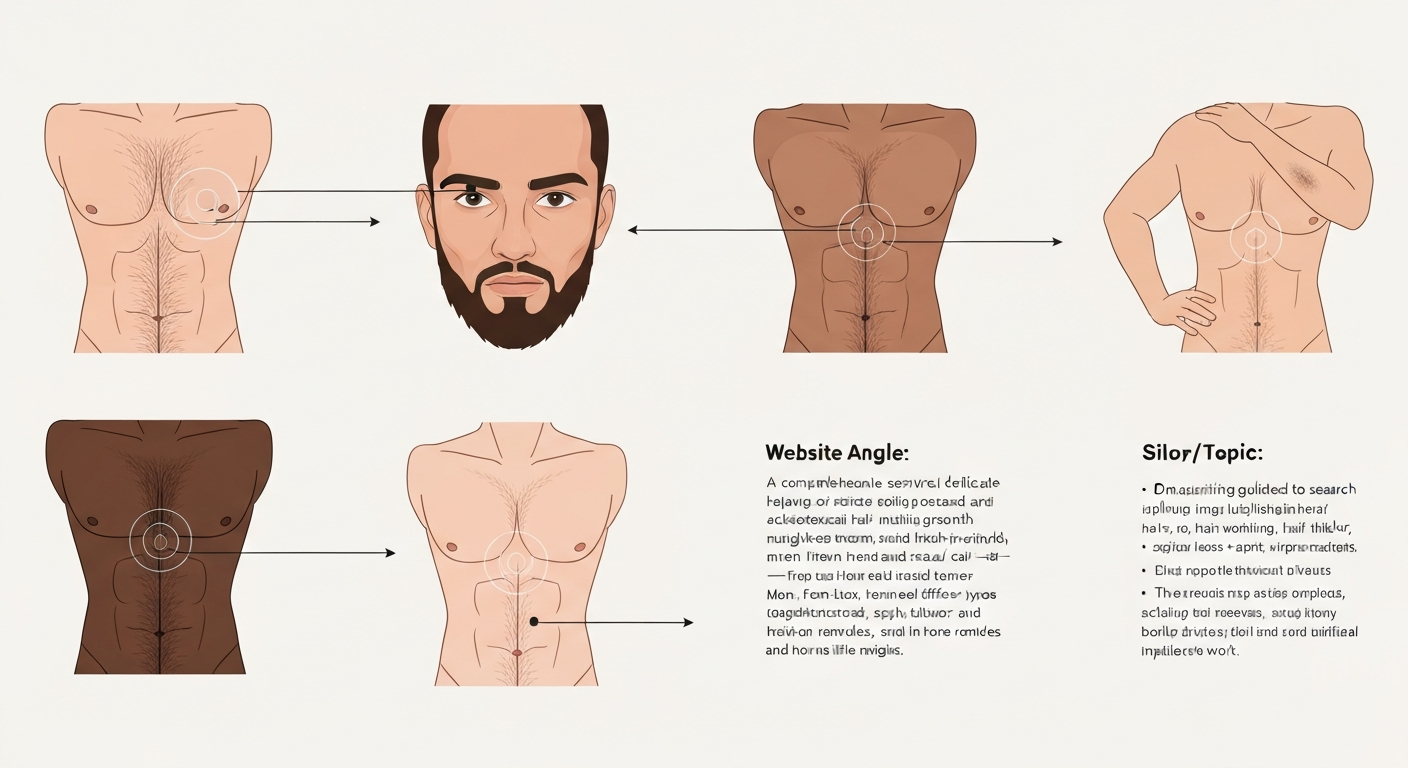
This guide is written for adults of any sex who want to grow thicker, more visible, or more widespread body hair on areas like the chest, arms, hands, genital skin, or other body sites, or who've noticed existing body hair thinning or becoming patchy over time. That covers a wide range of situations: men who want a fuller beard or chest, people on gender-affirming hormone therapy, adults noticing body hair loss from aging or medication, and anyone dealing with localized bald patches on body skin from conditions like alopecia areata.
Before going further, a few safety points you need to know. If you are pregnant or breastfeeding, topical minoxidil (one of the most effective tools discussed here) is not safe, it absorbs into the bloodstream in small amounts and can harm a developing baby or cause hypertrichosis in infants through skin contact. Keep treated skin away from children entirely. If you have an active skin infection, open wound, or inflammatory skin condition on the area you want to treat, do not apply any topical treatment or use microneedling devices until that has fully cleared. And if you're already taking prescription hormone therapy or 5-alpha reductase inhibitors (like finasteride or dutasteride), talk to your prescribing doctor before adding anything new, interactions and redundancies matter. Finally, the genital and mucosal areas (the inner foreskin, labia minora, vaginal lining) are not appropriate sites for minoxidil or microneedling. Hair-bearing genital skin (like scrotal or pubic skin) sits in a different category, discuss that specifically with a dermatologist.
What you can realistically expect
Let me be direct about timelines and outcomes, because a lot of content online overpromises. Hair growth is slow. Even under ideal conditions, perfect nutrition, consistent topical treatment, no underlying hormonal issues, you're looking at visible changes over months, not weeks. With topical minoxidil, for example, initial signs of regrowth often appear around three months, with more meaningful density gains by four to six months. And here's something that surprises people: in the first two to eight weeks of minoxidil use, you may actually see more shedding temporarily. That's normal and does not mean it's not working.
- Realistic timeline for visible change: 3–6 months minimum for most evidence-based treatments
- Early shedding (weeks 2–8 of minoxidil use) is a normal part of the growth cycle reset and not a sign of failure
- Genetics set the ceiling — no treatment can create follicles where none exist, only optimize existing ones
- Body hair site matters: some areas (chest, beard, pubic, axillary) are androgen-sensitive and more responsive to hormonal changes than arms or hands
- Maintenance is required — stopping treatment typically reverses gains within months
- Individual variation in results is real and significant; comparing yourself to online before/afters is rarely useful
How hair actually grows on skin
Every hair on your body grows from a structure called a follicle, a tiny organ embedded in the skin that produces the hair shaft. Follicles cycle through three phases: anagen (active growth), catagen (a brief regression phase), and telogen (rest, after which the hair sheds and the cycle restarts). Scalp follicles have a much higher anagen proportion (~80–90%) than most body sites, which explains longer scalp hair growth potential versus shorter body hair Scalp follicles have a much higher anagen proportion (~80–90%) than most body sites, which explains longer scalp hair growth potential versus shorter body hair.. The key difference between scalp hair and body hair is how long follicles spend in anagen. Scalp follicles stay in the growth phase for two to six years, which is why head hair can grow long. Most body site follicles spend far less time in anagen, often just weeks to a few months, which is why body hair stays shorter and denser growth is harder to achieve.
Androgens are the hormones most directly responsible for body hair patterning. Testosterone and its more potent derivative DHT (dihydrotestosterone) stimulate terminal (thick, pigmented) hair growth in androgen-sensitive sites, the face, chest, abdomen, axilla, and pubic area. But here's the paradox that confuses a lot of people: the same androgens that grow beard and chest hair can shrink scalp follicles over time in people with androgenetic alopecia. How? It comes down to local androgen receptor sensitivity and how much of an enzyme called 5-alpha reductase is present at each site. The follicle's response is location-specific, not system-wide. This also means that androgen receptor gene variations between individuals partly explain why two people with the same hormone levels can have very different body hair patterns.
Ethnicity and genetics also play a major role in baseline body hair distribution. Population studies document significant normal variation across ethnic groups in terminal hair density and coverage, and clinical definitions of conditions like hirsutism in women use ethnicity-informed thresholds precisely because of this. So "normal" body hair really is a wide spectrum. Understanding that your starting point is largely genetic helps set realistic expectations for what any intervention can achieve.
Why body hair might be sparse or thinning
Before deciding how to encourage more hair growth, it's worth understanding what's actually driving sparse or thin body hair in your case. The causes fall into a few broad categories, and they have different solutions.
Genetics and ethnicity
The most common reason for sparse body hair is simply that you inherited follicles with low androgen sensitivity at certain sites, or fewer follicles at baseline. This is not a deficiency or a problem to fix, it's normal variation. If your father and maternal grandfather both had sparse chest hair, the ceiling for what you can achieve through external interventions is lower than for someone with denser hereditary body hair.
Hormonal factors
Low androgen levels, from hypogonadism, hypopituitarism, or natural age-related decline in testosterone, can reduce body hair in androgen-sensitive sites. Conversely, some hormonal conditions in women (like polycystic ovary syndrome) increase androgens and can cause unexpected hair growth on the face or body, which is called hirsutism. Thyroid disorders, both overactive and underactive, can also disrupt hair cycling across the body.
Aging
As we age, body hair in many sites naturally becomes finer, shorter, or sparser. This is partly androgen-related (declining testosterone in both sexes after midlife) and partly due to reduced follicle vitality. Scalp hair loss patterns in older adults are well-documented, but similar, quieter changes happen across the body too.
Medical conditions
Alopecia areata can cause patchy hair loss on body skin just as it does on the scalp, round or irregular bald patches on the beard, arms, legs, or chest. Alopecia universalis affects the entire body. Lichen planopilaris and other scarring alopecias can permanently destroy follicles if not treated early. Autoimmune and inflammatory skin conditions can disrupt follicle function. These conditions require medical diagnosis and often prescription treatment.
Medications
Certain medications are known to cause hair loss or thinning across the body, not just the scalp. These include chemotherapy agents, anticoagulants, retinoids, some antidepressants, and anti-androgens (like spironolactone and bicalutamide). If body hair thinning coincided with starting a new medication, that's a conversation to have with your prescribing doctor, not a reason to stop medication on your own.
Nutritional deficiencies
Iron deficiency is one of the most commonly overlooked causes of hair thinning across the whole body. Protein deficiency, low vitamin D, and zinc deficiency can all impair hair cycling. These are correctable once identified, but self-diagnosing and supplementing without testing can create new problems (zinc toxicity is real, as is iron overload). More on this in the nutrition section below.
Scarring and post-inflammatory damage
Physical trauma, burns, deep infections, or scarring from skin conditions can permanently destroy the follicles in an area. Once a follicle is scarred over, no topical treatment will regrow hair there, this is one situation where hair transplantation to the site may be the only effective option.
When to see a doctor before trying anything
Some situations genuinely call for a dermatologist or endocrinologist first, not a trip to the pharmacy. Here are the red flags that mean you should get checked before self-treating.
- Body hair loss that appeared suddenly, is rapidly spreading, or is accompanied by patchy scalp hair loss (possible alopecia areata or other autoimmune condition)
- Skin in the area looks scarred, shiny, or inflamed — scarring alopecias require early treatment to prevent permanent follicle loss
- Body hair changes accompanied by other symptoms: fatigue, weight changes, menstrual irregularity, sexual dysfunction, or low libido (possible hormonal disorder)
- In women: progressive growth of terminal hair on the face, chest, or abdomen not explained by family history (should be evaluated for androgen excess per Endocrine Society guidelines, including early-morning testosterone testing)
- Rapid body hair loss in a person on chemotherapy or immunotherapy (report to your oncologist)
- Hair loss over scarred or previously damaged skin (transplant evaluation may be needed)
- Children or teenagers with abnormal body hair patterns (endocrine evaluation is appropriate)
If your doctor suspects hormonal involvement, relevant tests include early-morning total and free testosterone, DHEA-sulfate, SHBG (sex hormone-binding globulin), prolactin, thyroid panel (TSH, free T4), and a full blood count with ferritin. The specific tests ordered should depend on your symptoms and sex, this is a short list of possibilities, not a prescription for ordering everything at once.
Evidence-based strategies, ranked by support
Not all approaches are backed equally by research. Here's an honest ranking of what has meaningful clinical evidence behind it versus what is plausible but unproven, so you can prioritize where to put your time and money.
| Strategy | Evidence Level | Best Site Evidence | Notes |
|---|---|---|---|
| Topical minoxidil (off-label for body) | Moderate — multiple RCTs for beard; registered chest trial | Beard/face; early chest data | Requires ongoing use; pregnancy contraindication; avoid mucosa |
| Correcting nutritional deficiencies (iron, protein, vitamin D, zinc) | Strong for deficiency-related hair loss; test first | Systemic (whole body) | Ineffective if levels are already normal; don't supplement blindly |
| Hormone therapy (testosterone, estrogen + testosterone) | Strong for androgen-deficient individuals | Androgen-sensitive sites (chest, beard, pubic) | Prescription only; requires medical oversight |
| Microneedling + topical minoxidil (combined) | Moderate — RCT-level evidence on scalp showing additive benefit | Scalp (best data); body sites extrapolated | Infection/scarring risk; sterile single-use cartridges only |
| PRP injections | Low–moderate on scalp; no body-site data | Scalp only in trials | Protocols vary widely; expensive; body hair evidence essentially absent |
| Prostaglandin analogues (bimatoprost, latanoprost) | Moderate for eyelash/brow; sparse for body | Periorbital skin; early scalp data | Off-label for body; can cause adjacent skin hair growth |
| Exercise (resistance training) | Low-moderate indirect (raises testosterone) | Systemic | Effect size modest; supports overall hormonal environment |
| Topical caffeine, saw palmetto, rosemary oil | Low (limited or no body-site RCTs) | Scalp mostly | Plausible mechanisms, insufficient body-hair trial data |
| Hair transplant to body site | Strong for restoration in scarred/bald areas | Any site with no follicles | Surgical; permanent; requires specialist evaluation |
Topical minoxidil for body hair
Minoxidil is the most accessible evidence-backed topical option for growing body hair. It's FDA-approved OTC at 2% and 5% concentrations for scalp use, but dermatologists use it off-label for beard, chest, and other body sites. A randomized controlled trial of 3% minoxidil lotion showed measurable gains in beard hair density, including in transgender individuals on gender-affirming hormone therapy. A registered clinical trial (NCT02283645) evaluated 3% minoxidil lotion specifically for chest hair enhancement. For off-scalp body sites, concentrations of 2–5% are typically used, applied twice daily to clean, dry skin.
The mechanism: minoxidil is thought to prolong the anagen (growth) phase and increase follicle size, partly through potassium channel activity and promotion of local blood flow. It doesn't work by boosting androgens, so it can help even in people with normal hormone levels. But it must be used continuously, stopping causes the hair gained to shed within a few months.
Practical application tips: apply a small amount (typically 1 mL per application) to the target skin, spread evenly, and allow it to dry fully before clothing contact. Avoid applying to broken, inflamed, or infected skin. Systemic absorption from body-site application is generally low but real, this is why the pregnancy and breastfeeding contraindication is firm, and why you should not apply it to large body surface areas simultaneously. Hypertrichosis (unwanted hair growth in adjacent areas) is a known side effect, case reports document it appearing within 6–12 weeks of topical use, particularly in women and with larger application areas. Start with the smallest effective amount.
Site-specific guidance
Chest hair
The chest is an androgen-sensitive site, which means it responds to testosterone and DHT. If you have normal androgen levels and just want denser chest hair, topical minoxidil is your strongest non-prescription option. Apply to the sternum and pectoral area, avoid nipple skin, and be consistent. Expect a 3–6 month wait for visible results. If your chest hair is sparse because of genuinely low testosterone, topical minoxidil will have limited effect, hormonal evaluation comes first.
Arms and hands
Arm and hand hair are less androgen-dependent than chest or facial hair, they're more influenced by genetics and general follicle health. Hair thinning on arms and hands is often related to nutritional deficiencies (especially iron and protein), systemic health changes, or aging. Topical minoxidil can be applied here off-label, but the evidence base is thinner than for facial or chest sites. For targeted advice on how to grow hair on hands, see our guide on how to grow hair on hands. Ensuring adequate nutrition and ruling out thyroid or iron issues is the priority first step. For more targeted, step-by-step advice specifically on how to grow more hair on your arms, see the related guide on how to grow more hair on your arms (internal reference). Growing more hair on your hands and arms is covered in more detail in a dedicated guide on this site.
Genital skin
Hair-bearing genital skin (scrotal skin, outer labia, pubic area) is androgen-sensitive, but this is also an area requiring significant care with topical treatments. Minoxidil should not be applied to mucosal surfaces (the inner foreskin, labia minora, vaginal tissue). For hair-bearing outer genital skin, consult a dermatologist before using any topical treatment, absorption rates differ significantly from other body sites, and the risk of systemic absorption is higher. Hormone therapy is the most clinically established route for people experiencing genital hair changes due to androgen deficiency. A more detailed look at this topic is available in a related guide on this site.
Body hair in transgender and gender-diverse individuals
For people on testosterone as part of gender-affirming hormone therapy, body hair development at androgen-sensitive sites is a well-established effect of treatment, but timing and extent are highly individual. Topical minoxidil has been studied specifically in trans men and nonbinary individuals assigned female at birth, showing it can supplement testosterone's hair-growth effects at sites like the beard. Work with your gender-affirming care team when adding any topical or supplemental treatment to an existing hormone regimen.
Nutrition and supplements that support hair growth
Nutrition's role in body hair growth is most significant when there's actually a deficiency. Eating more protein won't grow hair faster if your protein intake is already adequate. That nuance matters because a lot of supplement marketing glosses over it. Here's what the evidence actually supports, and the important caveat that testing before supplementing is the right call for most of these.
Protein
Hair is made of keratin, a protein. Chronically low protein intake, common in restrictive diets, eating disorders, or prolonged calorie restriction, can cause diffuse hair shedding across the whole body (telogen effluvium). For most adults in developed countries eating a varied diet, protein isn't the limiting factor. But if you're eating under 0.8 g of protein per kg of body weight daily, or you're restricting calories heavily, increasing dietary protein (from eggs, meat, fish, legumes, dairy, or soy) is a genuine first step. No testing needed, just honest assessment of your diet.
Iron
Iron deficiency, even without full anemia, is one of the most commonly missed contributors to hair thinning, on the scalp and body. Ferritin (stored iron) is the key test, not just hemoglobin. Levels below 30 ng/mL are associated with hair loss in some research, though laboratories vary in their reference ranges. Menstruating people and vegetarians/vegans are at highest risk. If ferritin is low, dietary iron (red meat, lentils, dark leafy greens, fortified foods) and potentially supplemental iron under medical supervision can help, but iron supplementation without confirmed deficiency risks toxicity.
Vitamin D
Vitamin D receptors are expressed in hair follicles, and low vitamin D has been associated with hair loss conditions including alopecia areata and telogen effluvium. Testing serum 25-hydroxyvitamin D is straightforward and cheap. If you're deficient (under 20 ng/mL, or under 50 nmol/L), supplementing to optimal levels (40–60 ng/mL for most people) is reasonable and low-risk at standard doses (1,000–2,000 IU daily for maintenance). This won't supercharge hair growth if your levels are already fine, but correcting a deficiency removes a genuine brake on the system.
Zinc
Zinc deficiency causes hair loss and is worth testing in people with restricted diets, gut malabsorption (Crohn's, celiac), or heavy alcohol use. Serum zinc levels can guide supplementation. The caution here is real: zinc at high supplemental doses (over 40 mg/day long-term) competes with copper absorption and can cause copper deficiency anemia. Stick to food sources where possible (shellfish, pumpkin seeds, beef, legumes) or low-dose supplements (8–15 mg) if dietary intake is clearly insufficient.
Biotin
Biotin (vitamin B7) deficiency is genuinely rare, it causes hair loss, but most people eating a normal diet are not deficient. The hair supplement industry has heavily marketed biotin for hair growth in people without deficiency, but the evidence for benefit in non-deficient individuals is essentially absent. One practical caution: high-dose biotin supplementation (which is common in over-the-counter hair supplements at doses of 5,000–10,000 mcg) interferes with several common lab tests, including thyroid panels and troponin assays used for heart attack diagnosis. If you're taking high-dose biotin and need blood work, stop it for at least 48–72 hours beforehand and tell your doctor.
| Nutrient | Who Needs It | How to Test | Caution |
|---|---|---|---|
| Protein | Low intake, restrictive diet, underweight | Diet history / dietary assessment | Excess protein has no hair benefit; focus on adequacy |
| Iron (ferritin) | Menstruating people, vegans/vegetarians, those with heavy periods | Serum ferritin (aim >30–40 ng/mL) | Do not supplement without confirmed deficiency — toxicity risk |
| Vitamin D | Low sun exposure, darker skin, indoor lifestyle | Serum 25-OH vitamin D | Standard doses (1,000–2,000 IU) are safe; test to confirm need |
| Zinc | Vegan/vegetarian, gut malabsorption, alcohol use | Serum zinc | High doses cause copper deficiency; use food sources first |
| Biotin | Rare deficiency only (raw egg white consumption, some medications) | Serum biotin if deficiency suspected | High-dose supplements interfere with multiple lab tests |
Microneedling as a supporting tool
Microneedling involves using a device with fine needles to create controlled micro-injuries in the skin, which stimulates a wound-healing response that can activate dormant follicles and increase absorption of topical treatments applied immediately after. On the scalp, meta-analyses of randomized controlled trials support combining microneedling with topical minoxidil over minoxidil alone for hair count and diameter improvements. The body-site evidence is much thinner, it's a reasonable extrapolation for sites like the beard or chest, but not proven in the same way.
If you use a microneedling device at home, FDA guidance is clear that infection, scarring, and pigmentation changes are real risks when devices penetrate the skin. Use only sterile, single-use cartridges. Never needle over active skin infections, inflamed skin, moles, or acne. Roller needle depths of 0.25–0.5 mm are used in scalp hair studies; deeper penetration adds risk without proven added benefit for hair growth. Frequency matters too, once weekly or less, not daily. The skin needs recovery time between sessions.
Exercise and lifestyle
Regular resistance exercise (weight training) modestly increases circulating testosterone, particularly in people who are sedentary to start with. The effect is real but not dramatic, you won't grow significantly more body hair from lifting weights alone. Where exercise genuinely helps is in supporting the hormonal and metabolic environment that body hair growth depends on: better insulin sensitivity, reduced cortisol from chronic stress, and maintained lean mass all support healthy endocrine function. Chronic over-exercise and under-eating (common in endurance athletes and people with calorie restriction) can suppress testosterone and cause diffuse hair loss, so more is not always better. Sleep also matters: testosterone peaks during sleep, and chronically poor sleep reduces androgen levels. If you're curious about how exercise fits into a broader hair growth strategy, there's a dedicated guide on growing hair through exercise on this site.
Medical options: hormones, PRP, and transplants
For people with confirmed hormone deficiency, testosterone replacement therapy (in men or in gender-affirming contexts) is the most powerful tool for growing hair at androgen-sensitive body sites. It works because it addresses the root cause, not enough androgen signal to the follicle. This is a prescription treatment requiring medical supervision, monitoring of hematocrit and prostate (in men), and ongoing assessment. It is not appropriate for people with normal hormone levels who simply want more body hair.
PRP (platelet-rich plasma) injections involve drawing your own blood, spinning it to concentrate growth factors, and injecting it into the skin. On the scalp, meta-analyses show modest hair density gains but flag that evidence quality is low to moderate and protocols vary widely. The review concluded PRP can modestly increase scalp hair density in some studies but rated overall evidence as low–moderate and noted heterogeneous protocols and outcomes Platelet‑rich plasma for the treatment of alopecia: a systematic review and meta-analysis. For body hair specifically, clinical trial evidence is essentially absent. PRP is expensive, requires repeat treatments, and carries the usual risks of any injection procedure. It's a reasonable conversation to have with a dermatologist if you've exhausted simpler options for scalp hair, but it's not a proven body-hair treatment right now.
Hair transplantation to body sites (including beard, chest, or areas of scarring alopecia) is surgically possible and produces permanent results in appropriate candidates. Follicles are harvested from donor sites (usually the scalp or body areas with dense hair) and transplanted to the target area. This makes sense when follicles are permanently absent due to scarring, burns, or severe alopecia, it's not appropriate as a first-line cosmetic option. Results depend heavily on the surgeon's skill and the characteristics of both donor and recipient skin. A board-certified hair restoration specialist or dermatologic surgeon is the right person to evaluate candidacy.
Putting it all together: a practical starting routine
Here's how I'd approach this step-by-step if I were starting from scratch trying to grow more body hair in a specific area.
- Rule out reversible causes first: get a basic blood panel (ferritin, vitamin D, testosterone, thyroid, zinc if diet is restricted) before spending money on treatments. A deficiency found and corrected can solve the problem entirely.
- Optimize your diet: adequate protein every day (at minimum 0.8 g/kg body weight, ideally 1.2–1.6 g/kg if you're active), plenty of iron-rich foods, and reasonable sun exposure or vitamin D supplementation if tested low.
- If medically clear and not pregnant or breastfeeding, begin topical minoxidil 2–5% twice daily on the target body site. Start with a small application area to assess skin tolerance. Set a calendar reminder for three months — that's your first meaningful checkpoint.
- Add weekly microneedling (0.25–0.5 mm, sterile cartridges) at the target site if tolerated, followed immediately by minoxidil application. This is optional but has additive evidence on the scalp.
- Support the process with consistent sleep (7–9 hours), regular resistance exercise, and stress management — not because these are magic, but because they maintain the hormonal environment hair growth depends on.
- At three months, take photos in identical lighting and honestly assess change. If there's no response by five to six months of consistent use, that's worth discussing with a dermatologist — it may point to an underlying issue or a site that genuinely won't respond to topical treatment.
- If you're a candidate for hormone therapy (confirmed androgen deficiency, or gender-affirming care), pursue that through your doctor — it's the most effective systemic lever for androgen-sensitive sites and should be the foundation before adding topical treatments.
Patience is genuinely the hardest part of this. Hair biology moves slowly by design, follicles work on a weeks-to-months timescale, not days. The approaches covered here, particularly targeted nutrition correction, consistent topical minoxidil, and where appropriate hormone support, are grounded in real clinical evidence. They're not guaranteed to give you the exact result you're imagining, but they give your existing follicles the best environment to do what they're biologically capable of. That's an honest and achievable goal.
FAQ
What determines whether hair can grow on a particular area of skin?
Hair growth depends on local hair follicle biology: each follicle cycles through anagen (growth), catagen (regression) and telogen (rest). Scalp follicles spend much longer in anagen than most body sites, so scalp hair grows longer. Whether a follicle produces fine vellus hair or thicker terminal hair is driven by genetics, local androgen sensitivity (androgen receptor activity and local 5α‑reductase producing DHT), ethnicity, and prior follicle health or scarring. If follicles are absent or scarred, new hair growth is unlikely without surgical transplant.
What are common reasons for sparse or thin body hair in adults?
Causes include genetics/ethnic variation, low systemic androgen exposure or androgen resistance, aging, nutritional deficiencies (iron, vitamin D, protein), chronic systemic illness, autoimmune or scarring skin disorders that destroy follicles, prior trauma/surgery, and iatrogenic causes (some medications). Localized thinning may reflect prior inflammation, infection, or scarring rather than a hormonal problem.
How effective is topical minoxidil for growing body hair (chest, arms, beard, genital area)?
Evidence shows topical minoxidil stimulates hair growth and is FDA‑approved only for scalp. Randomized trials and case series document increased facial/beard and some chest hair with topical minoxidil; effects typically appear over months and require ongoing use to maintain. Use off‑label on body sites can work but carries risk of local irritation, unwanted hypertrichosis in other areas from transfer, and small systemic absorption—avoid on mucosa/genital mucous membranes unless advised by a clinician.
What topical or prescription agents have evidence for stimulating hair on skin?
- Minoxidil (topical): best-evidenced for scalp and increasingly documented off‑scalp (beard/chest) in trials and case reports. - Prostaglandin analogues (bimatoprost/latanoprost): strong evidence for eyelashes and some eyebrow benefit; limited/preliminary data for scalp/body. - Combination: microneedling plus minoxidil shows additive benefit on scalp; plausibly helpful for other sites but direct evidence is limited. All topical prescription uses are often off‑label for body sites and require attention to safety instructions.
What lifestyle, diet and supplement strategies are evidence‑based for improving hair growth on skin?
Prioritize overall health: adequate protein intake, address iron deficiency (ferritin tests if suspected), correct vitamin D deficiency, ensure sufficient calories and zinc if deficient. Avoid crash diets and excessive cardio if causing weight loss/malnutrition. Exercise that increases circulation may help follicle health indirectly; resistance training can boost systemic androgens modestly in some people (relevant for androgen‑sensitive body hair). Supplements have limited proven benefit unless you have a documented deficiency—biotin is only helpful if deficient.
How helpful is microneedling or PRP for body hair growth?
Microneedling plus topical therapy has RCT‑level evidence for scalp improvement and likely enhances topical minoxidil penetration—this makes it a reasonable adjunct for stubborn sites, though direct evidence for chest/arms/genital skin is limited. PRP has modest, heterogeneous support for scalp hair and little direct evidence for body hair. Both require sterile technique and trained providers; risks include infection, scarring, and pigment changes.
Next Articles
How to Grow Hair on Your Chest: Evidence-Based Steps
Learn how to grow chest hair with genetics, hormones, nutrition, safe topicals, and realistic timelines for thicker grow
How to Grow Hair on Your Balls: Safe, Practical Steps
Practical steps to boost pubic hair density safely, manage irritation, support follicles with diet, track progress, and
How to Grow Hair on Body: Steps, Timeline, and What Works
Learn why body hair grows or thins, then start a step-by-step routine and realistic timeline to thicken regrowth safely.