
Growing hip-length hair is absolutely achievable for most people, but it takes longer than almost anyone expects, somewhere between 4 and 10 years from a typical starting length, depending on your biology, hair type, and how well you protect what you grow. The honest truth is that your genetics set a ceiling (called terminal length), but most people never actually hit that ceiling because breakage, not slow growth, is what stops them. Fix the breakage, support your scalp, and stay consistent with nutrition and care, and hip length is a realistic goal for a lot of heads of hair.
How to Grow Hip Length Hair: Evidence-Based 6-Month Plan

Marcus Holloway
21 Jul 2026
What this guide is actually for
This article is written for anyone, any gender, any hair type, any starting point, who genuinely wants to reach hip length or beyond. If you've already read about growing hair past your shoulders and you're ready to go further, this is the deeper dive. Hip length is roughly where the top of your hip bone sits, which for most adults is around 28 to 34 inches measured from the scalp. Bum length is a few inches further, knee length further still. For a focused, step-by-step plan on how to grow hair down to your bum, see the dedicated guide on that topic. All of those are in reach with the right approach, but they require patience measured in years, not months. I want to be upfront about that from the start.
How hair actually grows (and what limits your length)
Every hair follicle on your scalp cycles through three main phases: anagen (active growth), catagen (transition), and telogen (rest/shedding). The length of your anagen phase is what determines how long your hair can get, and it's largely set by your genetics. Think of it this way: if your anagen phase lasts four years and your hair grows at roughly 10 mm per month, your maximum (terminal) length is around 480 mm, or about 19 inches, which is mid-back at best. Someone whose anagen phase lasts seven years at the same growth rate could reach 840 mm, well past hip length.
On a healthy scalp, about 80 to 90 percent of follicles are in anagen at any given time, with only about 5 to 15 percent resting in telogen. The Biology and Genomics of Human Hair Follicles: A Focus on Androgenetic Alopecia (review, PMC) reports that in a normal adult scalp ~80–90% of follicles are in anagen, ~1–2% in catagen and ~5–15% in telogen; anagen I–V are short but anagen VI determines shaft length and thus maximal hair length. The hairs you see shedding daily (50 to 100 is normal) are the telogen hairs cycling out. What matters for length is keeping those anagen follicles healthy, minimizing breakage along the shaft, and supporting the conditions that let each anagen phase run as long as it biologically can.
Growth rate is a secondary factor, but it still varies meaningfully by hair type. Published multi-ethnic studies show that mean growth rates run from roughly 8.6 mm per month in tightly coiled textured hair up to about 12.6 mm per month in straighter hair types. That's not a reason to feel limited if you have coily hair, it just means your timeline may be on the longer end, and length retention (protecting the inches you've already grown) becomes even more important.
Terminal length: your personal ceiling
Terminal length is the maximum length your hair can reach before it naturally sheds and restarts the cycle. It's not a fixed number for everyone; it varies enormously by individual. Some people have anagen phases that last 2 to 3 years (giving terminal lengths around shoulder to mid-back), while others have phases lasting 6 to 8 years or more (allowing waist, hip, or even longer). You won't know your true terminal length until you've optimized everything else and genuinely stopped growing, which most people never do because breakage cuts them short first.
Measure your starting point and track your progress
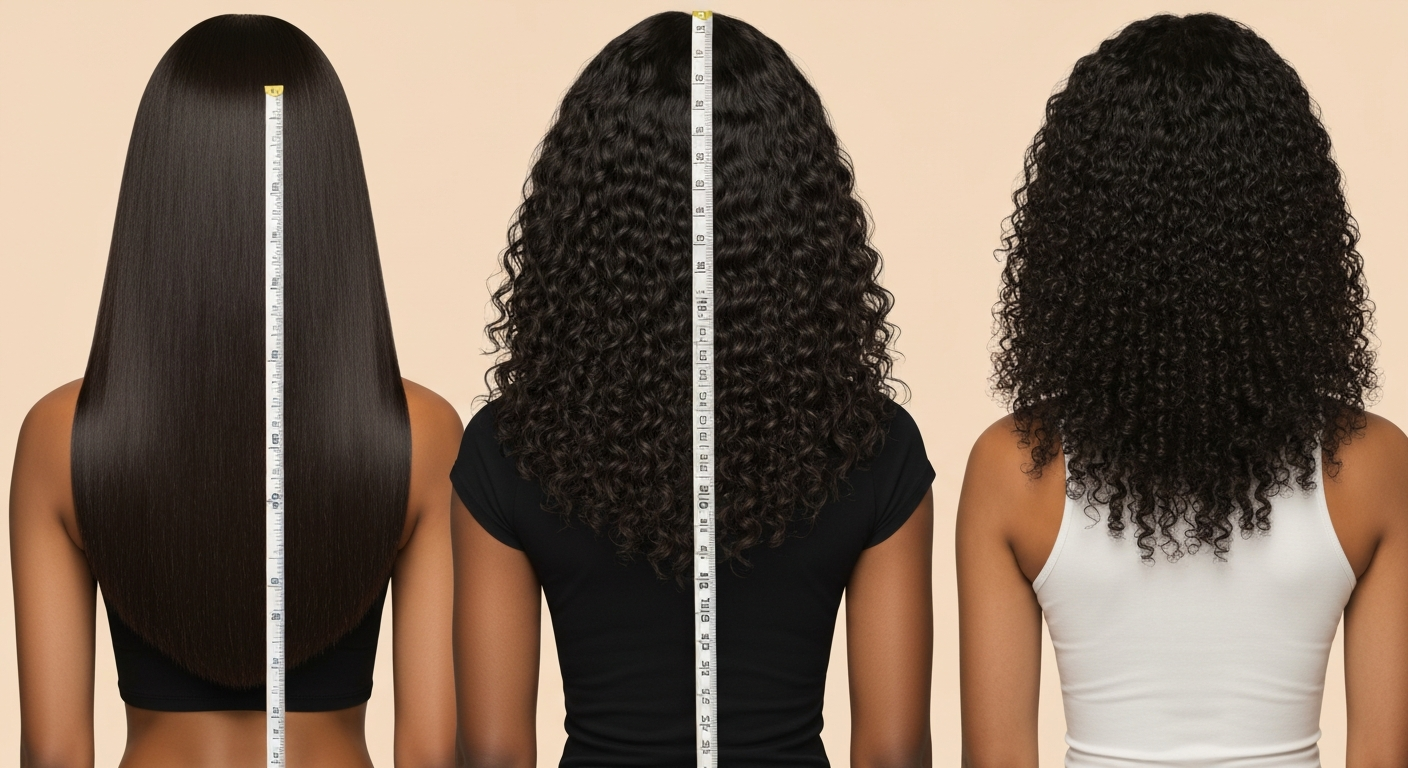
Before you start any hair growth program, take a proper baseline measurement. The most consistent method is to part your hair at the center, hold a flexible tape measure at the scalp at the crown (not the top of your head), and measure straight down to the ends of your longest layer. Do this at the same time each month, ideally in the morning before washing, and record it in a phone note or a simple spreadsheet. Photos from the same angle in the same lighting are genuinely useful here. I track mine against a measuring tape taped to the back of a door, same spot every time.
After two or three months of tracking, you'll have a real sense of your personal growth rate. Divide the new centimeters gained by the number of months. If you're growing 0.9 to 1.2 cm per month consistently, that's normal. If you're seeing less than 0.6 cm per month over several months, that's worth investigating. You can also get a rough estimate of whether you're approaching your terminal length: if your hair has been at the same length for more than 12 months despite proper care and no major breakage, you may be hitting your natural ceiling, which is a separate issue from what most people face.
Realistic timelines: hip, bum, and beyond
These timelines assume average growth rates, minimal breakage, and decent general health. They're meant to give you a ballpark, not a promise. Individual variation is real. Hair texture, protein intake, hormonal status, styling habits, and a dozen other factors shift these numbers. Think of them as the optimistic-but-not-unrealistic scenario.
| Starting length | Target: Hip (~30 in / 76 cm) | Target: Bum (~36 in / 91 cm) | Target: Knee (~22 in below hip / ~54 cm further) |
|---|---|---|---|
| Ear length (~6 in) | 5–8 years | 6–10 years | 9–14 years |
| Shoulder (~12 in) | 3–6 years | 4–8 years | 7–12 years |
| Collarbone (~15 in) | 2.5–5 years | 3.5–7 years | 6–11 years |
| Armpit / BSL (~20 in) | 1.5–3.5 years | 2.5–5 years | 5–9 years |
| Waist (~26 in) | 0.5–1.5 years | 1.5–3 years | 4–7 years |
The wide ranges account for differences in growth rate (roughly 8.6 to 12.6 mm per month across hair types) and breakage. Someone with coily hair who is meticulous about moisture and protective styling might hit the shorter end of the range; someone with chemically processed hair dealing with chronic breakage might land closer to the longer end. Reaching bum length and knee length are extensions of the same journey, just with more time and more consistent care required. The closer you get to those lengths, the more the age and condition of your ends matters.
Get the basics right: medical checks and nutrition first
Before you spend money on serums and supplements, rule out the most common and fixable internal causes of slowed or stalled growth. Diffuse shedding (telogen effluvium) is frequently tied to low iron stores, low vitamin D, or thyroid dysfunction, and these are all detectable with a simple blood panel. I'd strongly recommend asking your doctor for a baseline check if you're noticing increased shedding alongside slow growth. The four tests worth prioritizing are: ferritin (a measure of iron stores, not just hemoglobin), serum 25-hydroxyvitamin D, TSH (thyroid-stimulating hormone), and a complete blood count.
Meta-analyses consistently link low ferritin to nonscarring hair loss in women, with pooled data showing significantly lower ferritin levels in women with diffuse shedding compared to controls. Vitamin D also shows up repeatedly in telogen effluvium research, with lower 25-hydroxyvitamin D levels associated with increased shedding. Meta‑analyses report lower serum 25‑hydroxyvitamin D and ferritin in telogen effluvium cases compared with controls Meta‑analyses report lower serum 25‑hydroxyvitamin D and ferritin in telogen effluvium cases compared with controls.. For ferritin, many trichologists aim for levels above 40 to 70 ng/mL for hair health, which is above the bottom of standard lab reference ranges (labs like LabCorp flag deficiency at lower thresholds, but hair practitioners typically want higher). Vitamin D sufficiency is generally considered 30 ng/mL and above, though optimal levels for hair specifically are still debated.
Protein and calories matter more than most people realize
Hair is almost entirely protein (keratin), so chronically low protein intake will slow growth and increase shedding. Most adults doing fine on a balanced diet hit adequate protein without trying, but people on very low-calorie diets, strict vegans without careful planning, or anyone under significant physical stress can fall short. A general target of 0.8 to 1.2 grams of protein per kilogram of body weight per day is a reasonable baseline. Crash dieting is a particularly reliable way to trigger a telogen effluvium shed about 3 months after the restriction, that delay is what makes people miss the connection.
What about biotin?
Biotin has good evidence for hair loss caused by actual biotin deficiency, which is rare and usually tied to specific medical conditions (biotinidase deficiency or holocarboxylase synthetase deficiency). For everyone else, the evidence from randomized controlled trials just isn't there. Reviews of biotin supplementation for hair growth in non-deficient individuals consistently note a lack of robust RCT support. That doesn't mean it can't help some people, but it shouldn't be your first move. One practical note: high-dose biotin (above 10 mg/day) can interfere with thyroid and cardiac lab tests, so if you're having bloodwork done, mention any biotin supplements to your doctor.
Supplements: what the evidence actually supports
The supplement market for hair is enormous and the quality of evidence is, to be honest, pretty uneven. Systematic reviews and meta-analyses of oral nutraceuticals for hair growth show that some formulations (complex multi-ingredient supplements, marine protein/collagen blends, pumpkin seed oil in isolated trials) can produce modest improvements in hair density or quality in select studies, but the effects are usually small, the trial quality is heterogeneous, and results aren't universal. Here's how I'd think about it:
| Supplement | Evidence level | Who it helps | Suggested dose range | Caution |
|---|---|---|---|---|
| Iron (ferrous sulfate or bisglycinate) | Strong — when deficient | Anyone with low ferritin confirmed by labs | Guided by doctor based on labs | Can cause GI upset; don't supplement without confirmed deficiency |
| Vitamin D3 | Moderate — when deficient | Anyone with confirmed low 25-OH vitamin D | 1,000–2,000 IU/day (or as prescribed) | Toxicity possible at very high doses long-term |
| Marine collagen/hydrolyzed peptides | Weak-to-moderate | Some improvement in hair thickness in small RCTs over 3–6 months | 5–10 g/day in trials | Mostly low risk; limited long-term data |
| Pumpkin seed oil | Weak (single RCT) | Androgenetic alopecia (especially men) | 400 mg/day in the one trial | More research needed; generally safe |
| Biotin | Weak — unless deficient | Only those with confirmed biotin deficiency | Up to 2.5 mg/day if supplementing | Interferes with lab tests at high doses |
| Zinc | Insufficient evidence | May help only in deficiency | Avoid megadoses | Excess zinc can worsen copper status and hair loss |
| Vitamin C | Supportive role only | Helps iron absorption when taken with iron | 100–500 mg with iron-rich meals | Very safe at normal doses |
One genuinely useful supplement category is marine-sourced collagen peptides. Randomized trials have reported modest but real improvements in hair thickness and quality over 3 to 6 months. The effects aren't dramatic, but they're consistent enough that I think they're worth considering if your diet is low in collagen-forming amino acids. The key word is modest, don't expect transformation, expect incremental support. For most people, fixing an identified deficiency (ferritin, vitamin D) will do more for hair growth than any stack of supplements.
Scalp care and topical treatments
A healthy scalp is the foundation of long hair. Follicles that are clogged with product buildup, inflamed from dandruff, or under chronic tension are going to underperform. The basics: wash frequently enough that sebum and buildup don't accumulate (this varies by person, but most scalps do well with 1 to 3 washes per week), use a gentle sulfate-free or low-sulfate shampoo if your scalp is sensitive, and address dandruff or seborrheic dermatitis proactively with a zinc pyrithione or ketoconazole shampoo if needed.
Scalp massage
Scalp massage has a surprisingly interesting evidence base. A 24-week randomized trial using a standardized 4-minute daily massage protocol found increased hair thickness at the massaged area, attributed to mechanical stretching forces on dermal papilla cells. The catch: no significant change in hair count or growth rate was observed. So massage may improve shaft thickness, which is absolutely useful for retention and appearance, but it's probably not going to speed up how fast your hair grows. Still, 4 minutes a day of fingertip massage at the scalp, working in small circles, is a low-cost habit with some evidence behind it and no real downside. I've done it as part of my morning routine for years.
Peptide serums and other topicals
Copper peptide serums (GHK-Cu) and Redensyl are increasingly popular, and there's some early-stage research behind them, but RCT evidence is limited compared to what we have for minoxidil. They're reasonable to try and generally safe, but I'd categorize them as supplementary rather than primary treatments. Caffeine-based topicals have similar early data but no strong head-to-head comparison with minoxidil.
Minoxidil: what it does and who it actually helps
Topical minoxidil is the most evidence-backed topical treatment for hair growth available without a prescription. It works by prolonging the anagen phase and increasing blood flow to follicles. The evidence is clearest for androgenetic alopecia (pattern hair loss), but it can also support growth in people with diffuse thinning from other causes. The 5% formulation is generally more effective than 2%, and the 5% foam once daily in women is non-inferior to the 2% solution twice daily, making it a more convenient option. Meaningful clinical improvement typically appears by 12 to 24 weeks, with continued gains up to about 48 to 52 weeks.
- Who benefits most: people with androgenetic alopecia, diffuse thinning, or follicles that appear miniaturized
- Who it's less clearly useful for: people with normal density and no pattern loss who just want to grow longer
- How to use it: apply to a dry scalp (not the hair shaft), let it dry before styling, use consistently — daily
- Side effects to know: initial shedding in the first 4 to 8 weeks (this is normal and temporary), scalp irritation, and facial hair growth in women who get product runoff onto their face
- The discontinuation reality: if you stop using it, the benefits reverse within a few months — this is a long-term commitment if it works for you
If you're growing hair primarily for length rather than density, minoxidil may not be the first tool you need. But if you've noticed thinning or a widening part alongside your length goals, it's worth a serious look and a conversation with a dermatologist.
Protective styling and breakage prevention
This is where most people make or break their length journey, literally. Breakage is the reason so many people plateau at a certain length for years. Your hair could be growing at a perfectly normal rate and you'd still see zero progress if the ends are snapping off at the same rate. Protective styling reduces manipulation, mechanical damage, and environmental exposure, which are the three main causes of breakage in long hair.
Low-tension styles and gentle accessories
Tight ponytails, buns, and braids worn regularly are one of the fastest ways to cause traction alopecia and breakage at the hairline and along the shaft. The solution isn't to avoid these styles entirely, but to rotate them, keep tension light, and use accessories that don't snag. Satin or silk scrunchies, spiral hair ties, and claw clips (used without excessive twisting) all create far less friction than traditional elastic bands. Sleeping on a satin pillowcase or wearing a satin bonnet is not a gimmick, cotton creates significant friction against the hair shaft overnight, and at hip length, your ends are rubbing against fabric all night.
Banding for stretched styles
Banding is particularly useful for textured hair types. You place loose, non-damaging bands along sections of hair from root to end while damp, which stretches the hair as it dries without heat. This reduces tangling and single-strand knots, which are two of the biggest sources of breakage in coily and kinky hair. The key is using bands that are loose enough not to indent the shaft.
Protective style examples by hair type
| Hair type | Recommended protective styles | Key breakage risks to avoid |
|---|---|---|
| Straight (Type 1) | Loose braids, low buns, soft twists, sleeping with hair loosely tied | Tight elastics, sleeping on cotton, daily heat styling |
| Wavy (Type 2) | Two-strand twists, low braids, pineapple up-do at night | Rough towel-drying, high-tension buns, skipping detangling |
| Curly (Type 3) | Braids with extensions (rested, not constantly), twist-outs, braid-outs, finger coiling | Dry detangling, tight styles without slip, low-moisture maintenance |
| Coily/Kinky (Type 4) | Box braids (with breaks), flat twists, bantu knots, two-strand twists, wigs over cornrows | Manipulation while dry, heavy tension on edges, skipping moisturize-and-seal |
The protective style itself isn't magic, what matters is that you're reducing daily manipulation and keeping your ends tucked away from friction and dryness. No protective style should be worn so long that your natural hair underneath becomes matted or dry, which is a common mistake. Two to six weeks is a typical safe window for most braided styles, followed by a period of rest and deep conditioning.
Washing, conditioning, and moisture
Moisture retention is non-negotiable for length retention, especially in curly and coily hair where the natural oils from the scalp have a harder time traveling down the curved shaft. Deep conditioning every 1 to 2 weeks with a protein-moisture balanced conditioner keeps the cortex hydrated and reduces elasticity loss (the kind that causes snapping when you stretch the strand). For high-porosity hair, whether from heat damage, chemical processing, or just genetics, a light protein treatment once a month can help temporarily patch gaps in the cuticle layer.
When detangling, always start from the ends and work upward. Use a wide-tooth comb or your fingers on wet or damp hair with plenty of slip (conditioner or a detangling product). Detangling dry is the single most damaging thing a lot of people do to their length regularly, especially at type 3 and 4 textures.
Heat and chemical damage: the long-game rules
You can grow hip-length hair and still use heat occasionally, this isn't an all-or-nothing situation. But the cumulative damage from frequent high-heat styling is real: it degrades the disulfide bonds in the cortex, permanently alters the cuticle, and increases hygral fatigue over time. A practical rule for long-length goals is to use direct heat no more than once a week, always with a heat protectant, and keep temperatures at or below 365°F (185°C) for fine or processed hair, up to 400°F (205°C) for coarser textures.
Chemical processing, relaxers, bleach, and high-lift color, is the hardest on long-term length goals because each treatment weakens the shaft permanently. That doesn't mean you can never color or relax, but spacing out treatments, doing root-only applications where possible, and doing intensive treatments between chemical services all extend the life of your ends. At hip length, your ends could be 4 to 8 years old; they need proportionally more care than your roots.
Trimming strategy: managing ends without losing length
This is probably the most argued topic in long hair communities, so let me be clear about what trimming does and doesn't do. Trimming does not make your hair grow faster, growth happens at the follicle, not the ends, and trimming the ends has no biological effect on the scalp. What trimming does do is remove split ends before they travel up the shaft and cause mid-shaft breakage, which would cost you more length than the trim would.
For most people growing for length, small search-and-destroy trims (snipping individual visible splits rather than taking off a blanket half-inch) done every 6 to 8 weeks are more length-preserving than a standard quarter-inch blunt trim every 8 weeks. Reserve blunt trims for when your ends are genuinely ragged, uneven, or past the point that search-and-destroy can manage. If you're growing hair past a certain length for the first time, this shift in trimming strategy alone can make a meaningful difference to your rate of visible progress.
Your practical weekly and monthly routine
Weekly habits
- Scalp massage 4 minutes daily (fingertips or a soft massage brush, gentle circular motion)
- Wash and condition 1 to 3 times per week based on your scalp type (oily scalps generally need more frequent washing)
- Apply a leave-in conditioner or moisturizing spray to the lengths after washing, focusing on the mid-shaft and ends
- Wear a protective or low-manipulation style for at least 4 to 5 days of the week
- Sleep on satin or silk, or use a satin bonnet or pillowcase every night
Monthly habits
- Deep condition for 20 to 30 minutes under heat (a hooded dryer or a shower cap works) once every 1 to 2 weeks
- Measure your length on a set date each month and record it
- Do a search-and-destroy trim for visible split ends
- Assess your protein-moisture balance: if hair feels gummy or stretchy when wet, add protein; if it feels dry and brittle, add moisture
- Review your supplement and nutrition habits — are you consistently hitting protein targets and taking any prescribed supplements?
Troubleshooting: stalled growth, thinning, and special circumstances
If your hair has been at the same length for more than a year despite good care, the most likely culprit is breakage matching your growth rate, not a true terminal length issue. Audit your routine: are you using heat frequently? Wearing tight styles? Skipping deep conditioning? Detangling dry? Any one of those can create enough chronic breakage to cancel out 10 mm of monthly growth. Fix the retention issue before concluding you've hit your biological ceiling. For a playful in‑game analogy about length limits and retention, see rdr2 how to grow hair past 7. For practical strategies on pushing beyond a perceived ceiling, see how to grow hair past terminal length.
Postpartum shedding is one of the most disorienting experiences for people growing their hair. The dramatic shed that often begins around 3 to 4 months postpartum is a normal hormonal telogen effluvium, caused by the drop in estrogen after birth. Most people regain their density by 12 months postpartum without any special intervention, though supporting ferritin and vitamin D levels (which can drop during pregnancy and breastfeeding) helps. The regrowth hairs will be shorter than your existing length for a while, that's expected.
Certain medications reliably cause hair shedding: anticoagulants, some blood pressure medications (especially beta-blockers), retinoids, and some hormonal contraceptives can all trigger telogen effluvium in some people. If your shedding began within 3 to 4 months of starting a new medication, that's worth a conversation with your prescribing doctor. Do not stop any medication on your own because of hair shedding, talk to your doctor first.
When to see a dermatologist or trichologist
Most hair growth journeys don't require a specialist, but there are specific signs that warrant one. See a dermatologist or trichologist if you notice a widening part or visible scalp in areas where it wasn't before, shedding above 150 to 200 hairs per day consistently for more than 3 months, patchy loss, scalp tenderness, itching, or scaling that isn't resolving, or if your labs have come back normal but your hair continues to thin. A specialist can perform a trichoscopy (dermoscopy of the scalp) and, if needed, a scalp biopsy to diagnose scarring versus non-scarring alopecia, a distinction that changes the treatment approach entirely.
Maintaining hip-length hair once you get there
Reaching hip length is genuinely exciting, but maintaining it is its own skill set. For readers aiming even higher, see our detailed guide on how to grow floor length hair for extended strategies and timelines. At that length, your ends are several years old and are the most fragile hair on your head. Protective styling becomes more important, not less. You'll also find that detangling and washing take longer, and that tangling increases, especially outdoors or at night. For step-by-step guidance on pushing past hip length toward knee length, see how to grow your hair to your knees. Keeping the length in loose braids or a bun on windy days, using lightweight oils on the ends daily, and doing more frequent protein treatments (every 3 to 4 weeks if your hair is prone to damage) all help sustain your length without the constant snipping that can feel like running in place.
If your goal goes beyond hip to bum length or eventually knee length, the same principles apply with even more emphasis on retention. For a deeper, step-by-step plan on how to grow knee length hair, see this focused guide. The difference between hip and knee-length hair isn't just more growth, it's years more of protecting incredibly fragile, aged ends. Every strategy in this guide matters more the longer your hair gets.
FAQ
What determines how long your scalp hair can grow (terminal length)?
Terminal length is mainly set by the anagen (active growth) phase duration for each follicle: longer anagen = longer possible hair. Growth rate (mm/day) varies by individual and hair type and affects how fast length accumulates, but anagen length is the primary limiter.
What realistic growth rates and timelines should I expect?
Average daily growth varies by population and hair texture and commonly falls between ~0.25–0.42 mm/day (≈7.5–12.6 mm/month). Using these rates, adding 30 cm (hip length from chin) takes many years — typically 3–5+ years depending on starting length and personal growth rate. Expect measurable changes in months, major length milestones over years.
How can I calculate roughly how long hip‑length hair will take from my current length?
Measure current length and desired length difference. Divide the required centimeters by your estimated monthly growth (use 0.8–1.2 cm/month as a practical range). Example: needing 60 cm and averaging 1.0 cm/month → ~60 months (~5 years). Adjust for your hair type and likely breakage (add extra time if breakage is uncontrolled).
Which medical checks should I do before starting a long‑hair program?
If you have unexplained thinning or shedding or want baseline data, get: CBC (to screen anemia), ferritin/iron studies, TSH (± free T4), and 25‑hydroxyvitamin D. Hormone tests (testosterone, DHEA‑S, SHBG) are useful if signs of androgen excess. Correcting deficiencies can stop or reverse diffuse shedding and improve retention.
What nutritional changes reliably support hair growth?
Target a well‑balanced diet with adequate protein (including leucine‑containing sources), iron if deficient, and vitamin D if deficient. Ensure sufficient calories and varied micronutrients; severe energy or protein restriction worsens shedding. Use supplements only to correct documented deficiencies rather than routine blanket supplementation.
Should I take biotin or other over‑the‑counter supplements?
Only take biotin if you have documented biotin deficiency (rare). High‑quality trials show benefit mainly when correcting deficiencies. Some multi‑ingredient supplements and collagen/hydrolysed protein supplements have modest positive trial results for hair thickness in specific studies, but evidence is heterogeneous. Prioritize correcting iron and vitamin D deficiencies and use other supplements cautiously.
Next Articles
How to Grow Hair Past Terminal Length: A Practical Plan
Learn what terminal hair length means and how to prevent breakage, shedding, and scalp issues to keep growing longer.

How to Grow Hair Past Shoulders: Step-by-Step Plan
Step-by-step routine to grow shoulder-length hair past shoulders: prevent breakage, trim right, protect styles, scalp ca
Tips on How to Grow Your Hair Out: A Step by Step Guide
Step-by-step tips to grow hair out: stop breakage, build scalp routine, nutrition, safe actives, and track progress.