
Growing hair past your shoulders comes down to one thing more than anything else: keeping the hair you already grow. Your scalp is almost certainly producing new hair at roughly 1 cm per month, which means you're generating around 12 cm of new length every year. The reason that length never seems to show up is breakage, not a lack of growth. Fix the breakage, protect the ends, and support your scalp, and shoulder-length hair can become mid-back hair within a realistic timeframe.
How to Grow Hair Past Shoulders: Step-by-Step Plan

Marcus Holloway
29 Jun 2026

Why hair gets stuck at shoulder length
Hair grows in cycles: an active growth phase (anagen) lasting 2 to 6 years, followed by short transition and resting phases before the strand sheds. During anagen, the average growth rate is about 0. 35 mm per day, roughly 1 cm per month. At that pace, shoulder-length hair should keep going.
If you want to grow your hair to your knees, the real goal is to prevent breakage from outrunning growth so length can keep building past shoulder level shoulder-length hair should keep going. The problem is that the tips of shoulder-length hair are often the oldest, most fragile part of the strand, and they take constant friction from clothing, collars, and rough handling.
When breakage at the ends matches the rate of new growth at the root, length stays frozen.
For people with curly or coily natural hair textures, this effect is amplified. Each curl bend is a mechanical stress point, moisture escapes faster from a tightly coiled strand, and detangling done carelessly snaps entire lengths off at once. But straight and wavy hair hits the same wall for similar reasons: heat styling, chemical processing (bleaching, perms, relaxers), and simple neglect of the ends all tip the balance toward breakage. If your hair has been at shoulder length for a year or more, you are almost certainly breaking off roughly as much as you grow.
It's also worth knowing that a small number of people do have a genuinely short anagen phase, which sets a 'terminal length' ceiling that no routine can fully override. If you suspect you are truly hitting a terminal length ceiling, the same breakage-prevention and scalp-care steps still apply, but you may need to adjust expectations. If you've addressed every care factor and length still won't move, that's a separate conversation about hair cycles. But for most people, the ceiling is a care problem, not a biology problem.
Audit your current routine before changing anything
Before adding anything new, look honestly at what you're currently doing. Most length-retention problems trace back to a handful of habits, and adding a supplement or deep conditioner on top of damaging practices won't move the needle.
Washing and conditioning
Are you applying conditioner after every shampoo? The American Academy of Dermatology (AAD) is clear on this: conditioner after shampoo is not optional for people trying to retain length. It smooths the cuticle, reduces friction during detangling, and provides a layer of protection against grooming damage. If you're skipping it even occasionally, that's step one to fix. For very dry or highly textured hair, consider co-washing (washing with conditioner only) between shampoo sessions to avoid stripping moisture repeatedly.
Detangling
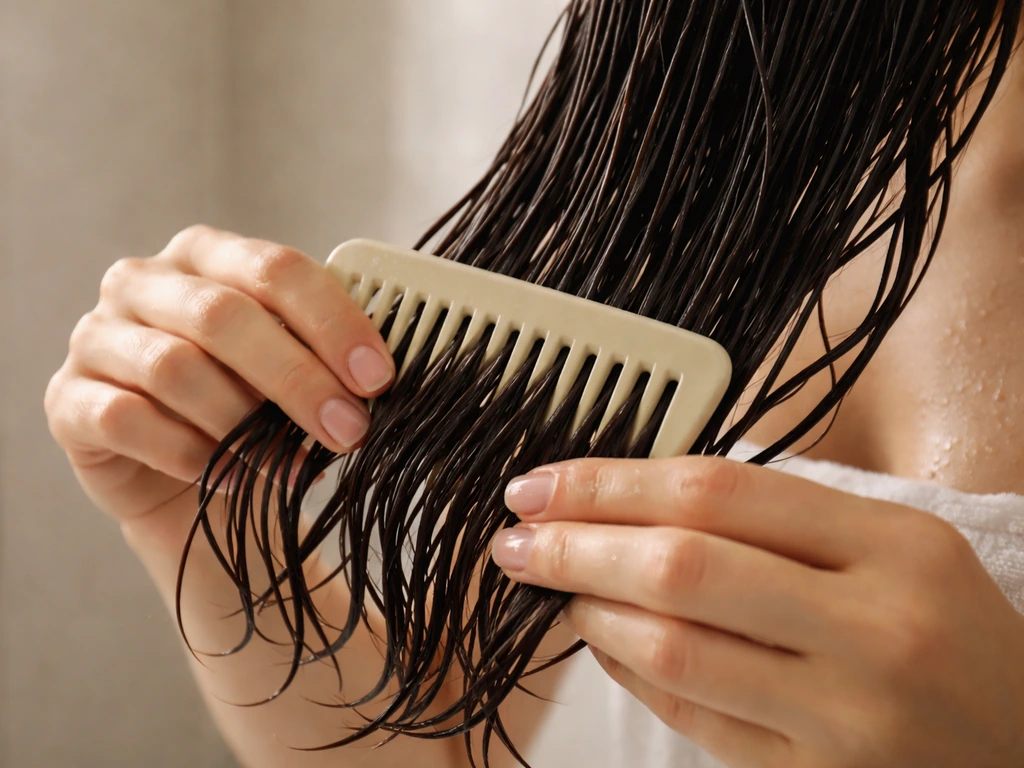
Wet hair is at its most fragile. The AAD specifically recommends using a wide-tooth comb on wet hair rather than a brush, starting at the ends and working upward toward the roots, never the reverse. If you're ripping a brush through soaking wet hair, you're snapping strands off by the dozen without realizing it. Work through tangles in small sections with a leave-in conditioner or detangler applied first, and be patient. Slow detangling is one of the highest-return habits you can build.
Heat and chemical treatments
Research on curling-iron treatments confirms that heat styling alters hair fiber structure at the microscopic level, increasing breakage risk. Bleaching and chemical waving disrupt the protein bonds in the hair fiber, reducing its tensile strength significantly. This doesn't mean you can never use heat or color, but if you're using high heat daily or processing your hair frequently while wondering why it won't grow, those two things are directly connected. Drop heat tool temperatures below 180°C (350°F), always use a heat protectant, and space out chemical services as much as possible.
Hairstyling tension
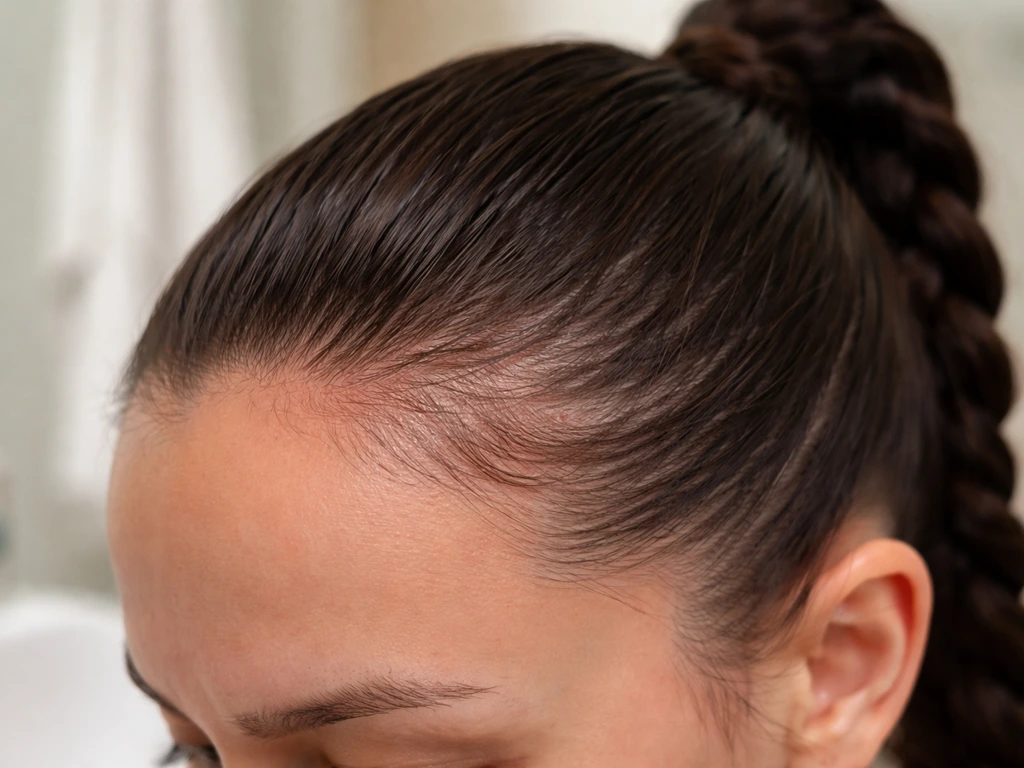
Tight ponytails, braids, weaves, and buns placed in the same spot day after day create traction on the follicle. The AAD warns that hairstyles that pull repeatedly can lead to traction alopecia, a form of hair loss that is preventable by simply switching things up. Vary where you place elastics, use fabric-covered hair ties rather than rubber bands, and avoid styles that feel tight at the hairline or part. Protective styles like braids and twists are genuinely useful for length retention, but only when they aren't installed too tightly or left in so long that they cause matting and breakage on removal.
The length-retention strategy that actually works
Once you've fixed the major damage habits, build a consistent routine around these four pillars: moisture, sealing, scalp care, and breakage prevention at the ends.
Moisture and sealing
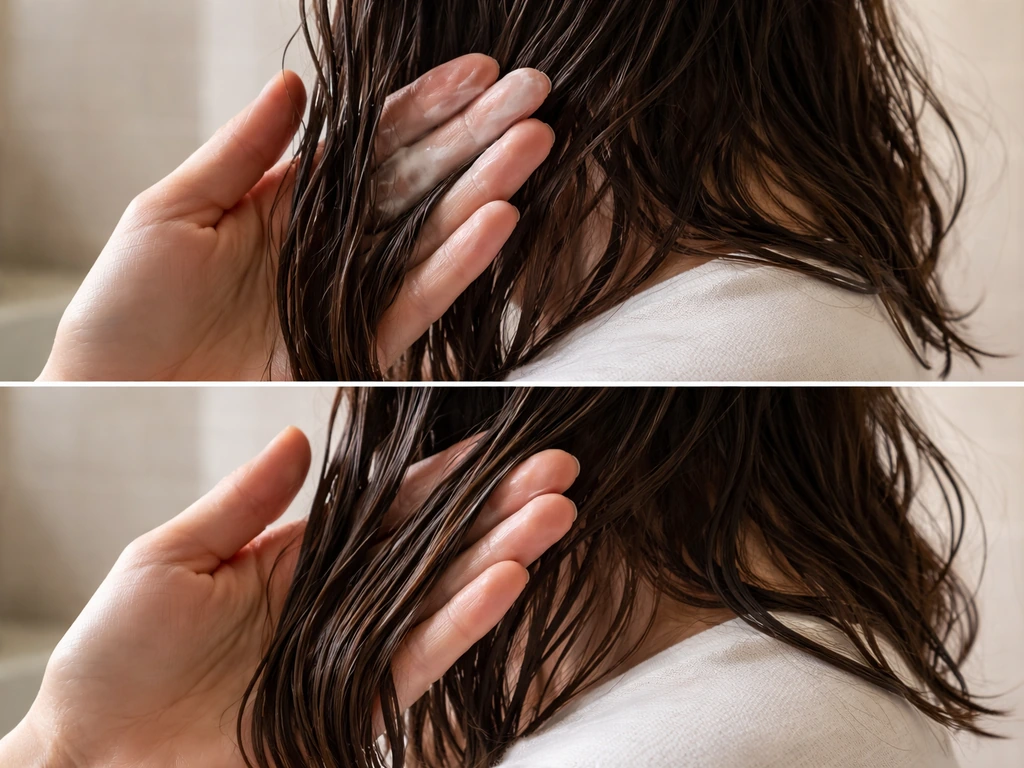
Dry hair breaks. Simple as that. For most hair types, the foundation is a rinse-out conditioner after every wash plus a leave-in conditioner or detangler applied while hair is still damp. The AAD recommends leave-in products specifically for reducing breakage and split ends. For natural, coily, or very dry hair, many people add a light oil or butter over the leave-in to seal moisture in, a method often called the LOC (liquid, oil, cream) or LCO sequence. The specific order matters less than the consistency of doing it. Focus extra product on the ends, which are the oldest, driest part of the strand.
Scalp care
A healthy scalp is the foundation of healthy growth. Buildup from products, excess sebum, or inflammatory conditions like dandruff and seborrheic dermatitis can clog follicles and create an environment that slows or disrupts the growth cycle. Clarify with a gentle clarifying shampoo once or twice a month if you use heavy products. If you have visible flaking, itching, or redness, address it directly rather than layering conditioner on top of an irritated scalp.
Protective styling and end protection
Protective styles tuck the ends of your hair away so they don't rub against collars, get tangled in scarves, or dry out in the wind. Braids, twists, buns, and updos all work. The key rules: keep them loose enough that there's no tension on the hairline, moisturize before installing them, and don't leave any style in for so long that you can't detangle cleanly on removal. Wearing a silk or satin pillowcase or sleeping in a satin bonnet also makes a real difference for curly and coily hair, reducing the friction that causes overnight breakage.
Supporting growth from the inside
Your routine handles retention, but nutrition handles the raw material your follicles use to build hair. The good news is that most healthy adults eating a reasonably varied diet are getting enough. The bad news is that certain deficiencies are surprisingly common and directly affect hair quality and shedding.
Iron, vitamin D, and zinc
Iron deficiency is one of the most common nutritional deficiencies globally, and it consistently shows up in people experiencing hair shedding. Vitamin D deficiency is also widespread, and low serum vitamin D levels have been observed in people with androgenetic alopecia, though supplementation alone isn't a proven fix. Zinc deficiency can cause hair loss in susceptible groups. If your hair is shedding more than usual and you haven't had bloodwork recently, ask your doctor to check ferritin (not just hemoglobin), vitamin D (25-OH), and zinc. Supplementing these when you're genuinely deficient can meaningfully reduce shedding, giving your growth a better chance of converting to length.
Protein and hydration
Hair is made of protein, but Harvard Health is direct about this: protein deficiency is very uncommon in healthy adults who eat a typical diet, and adding extra protein is unlikely to help if you're not protein-malnourished. Focus on consistently getting adequate protein from whole foods rather than worrying about high-protein supplements. Hydration matters too, though it affects the texture and flexibility of your hair more than the rate of growth.
What about biotin?
Biotin is heavily marketed for hair growth, but the evidence doesn't support taking it if you're not deficient. A systematic review found insufficient human evidence to recommend biotin supplementation for hair loss in people without a proven deficiency, and biotin deficiency is genuinely rare in the US. There's also a real safety consideration: high-dose biotin supplements can interfere with certain lab tests, including thyroid tests and cardiac troponin assays, potentially producing falsely abnormal results. If you do take biotin, tell your doctor before any bloodwork. It's not dangerous in the conventional sense, but it's also not the magic growth ingredient it's marketed as.
Topical options and natural remedies for your scalp
Growing past shoulder length is primarily a retention game, but if you're dealing with scalp issues that are actively disrupting the growth cycle, addressing those topically makes sense.
For dandruff or seborrheic dermatitis
If you have persistent flaking, itching, or scalp redness, ketoconazole 2% shampoo is one of the best-studied options. Systematic review evidence shows it improves scaling, itching, and redness compared with placebo, and one large trial reported excellent results in 88% of subjects. The typical approach is twice weekly for at least four weeks. This is worth doing because an inflamed, flaky scalp is not an optimal environment for healthy hair cycling.
Natural ingredients with some evidence
Aloe vera has been studied in double-blind trials for seborrheic dermatitis and has some legitimate evidence for reducing scalp inflammation, though it's not equivalent to medicated antifungals. Tea tree oil has also been proposed to reduce Malassezia (the yeast linked to dandruff), but evidence quality varies. Both are reasonable additions to your routine for general scalp health, particularly if you prefer a more natural approach or have mild symptoms. Use diluted tea tree oil (a few drops in a carrier oil or your shampoo) and look for leave-in products or rinses with aloe vera.
Minoxidil: when to consider it
If your hair is actively thinning or shedding well beyond normal (normal is roughly 50 to 100 strands per day), topical minoxidil is the most evidence-backed over-the-counter option available. It takes 2 to 6 months of consistent daily use before results are visible, and benefits stop when you stop using it. It's not a length-retention tool for someone with normal shedding, but if excessive shedding is the reason your length isn't advancing, it's worth discussing with a dermatologist. The FDA has also cleared low-level laser devices for hereditary hair loss in both men and women, which is another option in that category.
Trimming: don't skip it even when you're trying to gain length
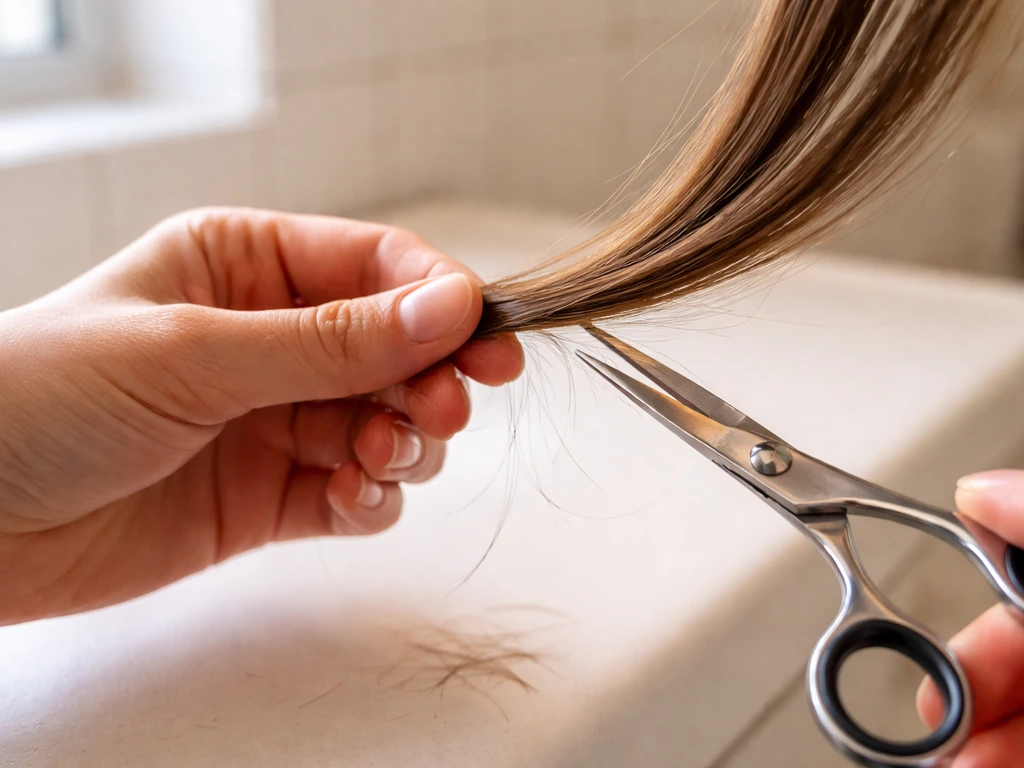
This feels counterintuitive but it's one of the most important points: trimming does not make hair grow faster. What it does is remove split ends before they travel up the shaft and cause breakage further from the tip, which would cost you more length than the trim itself. A split end left alone doesn't heal. It travels upward and eventually the strand snaps, taking with it centimeters of length you could have kept.
The goal is to trim as little as possible, as often as necessary. For most people actively growing out shoulder-length hair, a light dusting (3 to 6 mm) every 10 to 12 weeks is enough to remove splits without sacrificing meaningful length. If your ends are heavily damaged, one slightly bigger trim to get ahead of the damage and then maintain with small trims is a smarter approach than avoiding scissors entirely while breakage gets worse. You can ask your stylist for a 'search and destroy' trim, where they identify and snip only the visibly split or frayed ends rather than cutting across the whole length.
Realistic timeline and what to do when progress stalls
What to actually expect
At 1 cm per month average growth, and assuming you retain most of it, you can expect to add roughly 10 to 12 cm of net length per year once your routine is dialed in. Shoulder length to mid-back is typically 15 to 25 cm of additional length depending on your height and where your 'shoulder length' actually sits, so you're realistically looking at 18 months to 2.
If your goal is longer than shoulder length, you will usually need a targeted length plan that includes gentler detangling and consistent end protection, which overlaps with how to grow floor length hair mid-back. 5 years of consistent effort. That sounds like a long time, but the people who don't reach their goal usually quit the routine after a few weeks rather than plateauing because of biology.
Track your progress by taking a back photo on the first of each month in the same position and lighting. Changes can be invisible week to week but obvious across two or three months.
Troubleshooting when it stalls
If you've been consistent for three to four months and see no progress at all, work through this checklist before assuming your hair just won't grow:
- Check for hidden breakage: look at the ends closely after washing. If they're white-tipped, frayed, or thin, you're still breaking off roughly as much as you grow. Revisit your detangling and heat habits first.
- Get bloodwork done: ask for ferritin, vitamin D (25-OH), and a full thyroid panel. Thyroid imbalances are a common and frequently missed cause of diffuse hair shedding across all ages.
- Evaluate scalp health: persistent itching, flaking, or tightness indicates an active scalp issue that needs targeted treatment, not just more conditioner.
- Reassess your protective styles: if you're in the same tight style constantly, or if your ends are tucked but completely dry, the style is doing more harm than good.
- Consider life stage: postpartum hair loss typically peaks 2 to 4 months after delivery as hair shifts out of the growth phase in a group. It resolves on its own, but knowing it's happening prevents panic and unnecessary product changes.
- For men: androgenetic alopecia (male pattern thinning) affects the growth cycle itself and won't respond to routine changes alone. If your hairline or crown is thinning, the conversation about length retention is secondary to addressing the underlying condition with a dermatologist.
- If you've genuinely addressed all of the above and hair still won't pass a certain length, you may be approaching your natural terminal length, which is set by the duration of your anagen phase. This is less common than routine-related plateaus but it does happen.
Natural hair textures: a quick note
If you have 4C or tightly coiled natural hair, the same principles apply but the margin for error is smaller. Shrinkage means your actual length is often much longer than it looks, so measure stretched length for accurate tracking. Moisture retention is harder with tight curl patterns, so weekly deep conditioning is more critical than for other hair types.
Protective styles work especially well for natural hair, but make sure every install starts with thoroughly moisturized, detangled hair, and plan a careful takedown with plenty of slip from a conditioner or detangler. Anyone pursuing very long lengths beyond mid-back or toward waist and beyond will find similar principles apply, just with even more emphasis on end care as the hair ages further from the scalp.
The simple version if you want a starting point today
| Habit | What to do | How often |
|---|---|---|
| Wash and condition | Gentle shampoo + rinse-out conditioner, detangle wet with wide-tooth comb | 2 to 3 times per week (adjust for hair type) |
| Leave-in and seal | Apply leave-in conditioner while damp, seal with light oil on ends | Every wash day |
| Deep conditioning | Use a moisturizing deep conditioner under heat for 20 to 30 minutes | Weekly (natural/dry hair) or every 2 to 3 weeks (other types) |
| Protective styling | Loose braids, twists, or updos that tuck the ends away | Most days, rotating placement |
| Heat styling | Keep below 180°C, always use heat protectant | Occasional, not daily |
| Scalp care | Clarify monthly, treat dandruff/flaking if present | Monthly clarify + as needed |
| Trims | Light dusting of 3 to 6 mm to remove split ends | Every 10 to 12 weeks |
| Nutrition check | Get ferritin, vitamin D, and thyroid checked if shedding is high | Once, then follow up |
FAQ
Can I wear my hair up every day and still grow it past my shoulders?
Yes, but the key is how you handle it. If you braid, twist, or put hair up, stop when hair feels tight at the hairline. Avoid daily slicking down with tension, and switch the direction of parts or placement every few days to reduce the same follicles being pulled repeatedly.
Why does my hair look like it is not growing past shoulder length, even when it seems longer?
Track length using the same method each time. Instead of measuring when hair is dry and shrunken, measure stretched length every month (especially for curly or coily hair) or use consistent “dry flat” measurements with the same technique so your progress is real, not just appearance.
How often can I use a flat iron or curling iron if I am trying to grow past my shoulders?
Use heat sparingly and treat it like a “breakage tool” rather than a style tool. Even with a heat protectant, daily high heat increases snapping, so set a hard limit (for example, no more than 1 to 2 times per week) and lower the temperature to the minimum that still gives your desired result.
How frequently should I clarify my hair when I am using conditioners, oils, or heavier products?
If you clarify, do it strategically. Once or twice a month is typically enough, then go right back to conditioning. Over-clarifying can make hair feel coated but actually more porous, which can increase tangling and breakage at the ends.
Should I trim more often if my ends keep breaking?
If your ends are breaking, a “more trimming” approach can help temporarily. Ask for a focused split-end removal (“search and destroy”) first, then maintain with small trims. A big reset trim is more useful when damage is clearly visible and extending up the shaft.
Do I need protein treatments to grow hair longer than my shoulders?
Protein can help if your hair is actually under-protein or has high elasticity loss, but it can also worsen brittleness for hair that is already dry or over-processed. Instead of guessing, do a stretch test after washing (if it stretches and snaps quickly, consider a protein step; if it feels stiff and rough, focus on moisture and conditioning).
What is the safest way to detangle shoulder-length hair (especially if it tangles easily)?
Yes, but only if it is done gently. Detangle in sections with wet, slippery hair and start at the ends, working upward. If you can’t detangle without force, apply more conditioner or a detangler, then come back after a few minutes rather than pulling through tangles.
If I shed more after switching my products, does that mean my hair will not grow past my shoulders?
More shedding right after starting or changing a routine usually is not instant “growth failure,” it can be normal shedding plus breakage catching up. Give scalp and hair a few months to stabilize, and differentiate by checking whether you are seeing short broken pieces (breakage) or full-length hairs from the root (shedding).
How do I tell whether I am dealing with a terminal length ceiling versus breakage?
Be realistic about “terminal length.” If you have followed retention basics (end protection, gentle detangling, reduced tension, scalp control) for several months and still see length freeze plus consistent, severe end breakage, you may be hitting a biological limit. In that case, a dermatologist can help confirm whether the issue is hair cycle timing versus ongoing breakage.
What should I do if my hair is thinning while I try to grow it past my shoulders?
Yes. When hair thinning is part of the problem, length retention alone won’t fix it. Pay attention to widened parts, visible scalp more often, and ongoing increased shedding. If shedding is clearly above your baseline for more than 6 to 8 weeks, discuss evaluation with a clinician before focusing only on trims and conditioning.
How long can I keep protective styles like braids or buns before it hurts growth?
Protective styles can help, but timing matters. If your style causes matting, hard tangles, or you have to yank to remove it, it is set too long or installed too tightly. Plan takedowns early enough that you can detangle with slip and minimal force.
What is the quickest checklist to troubleshoot if my shoulder-length hair will not gain length after a few months?
If your hair is not progressing after 3 to 4 months, focus on “ends and scalp” first. Common misses are brushing wet hair, skipping conditioner after washes, sleeping without satin protection, and leaving tension styles in one place too long. If those are addressed and shedding is excessive, get scalp and lab evaluation (especially ferritin, vitamin D, and zinc).
Next Articles
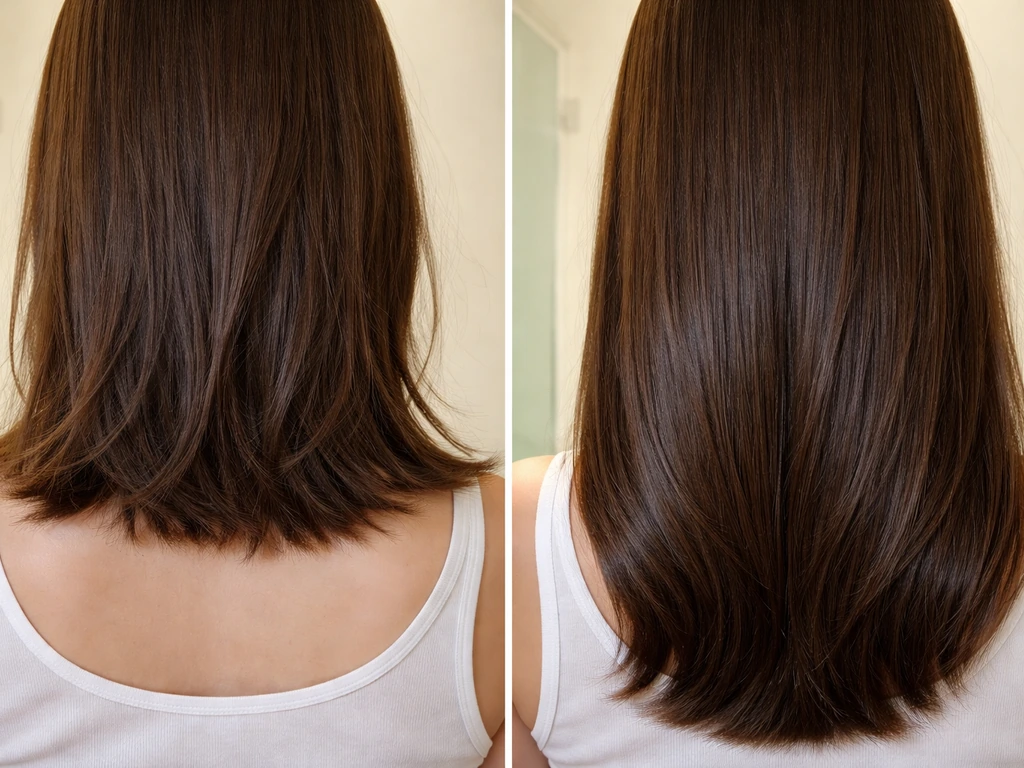
Tips on How to Grow Your Hair Out: A Step by Step Guide
Step-by-step tips to grow hair out: stop breakage, build scalp routine, nutrition, safe actives, and track progress.
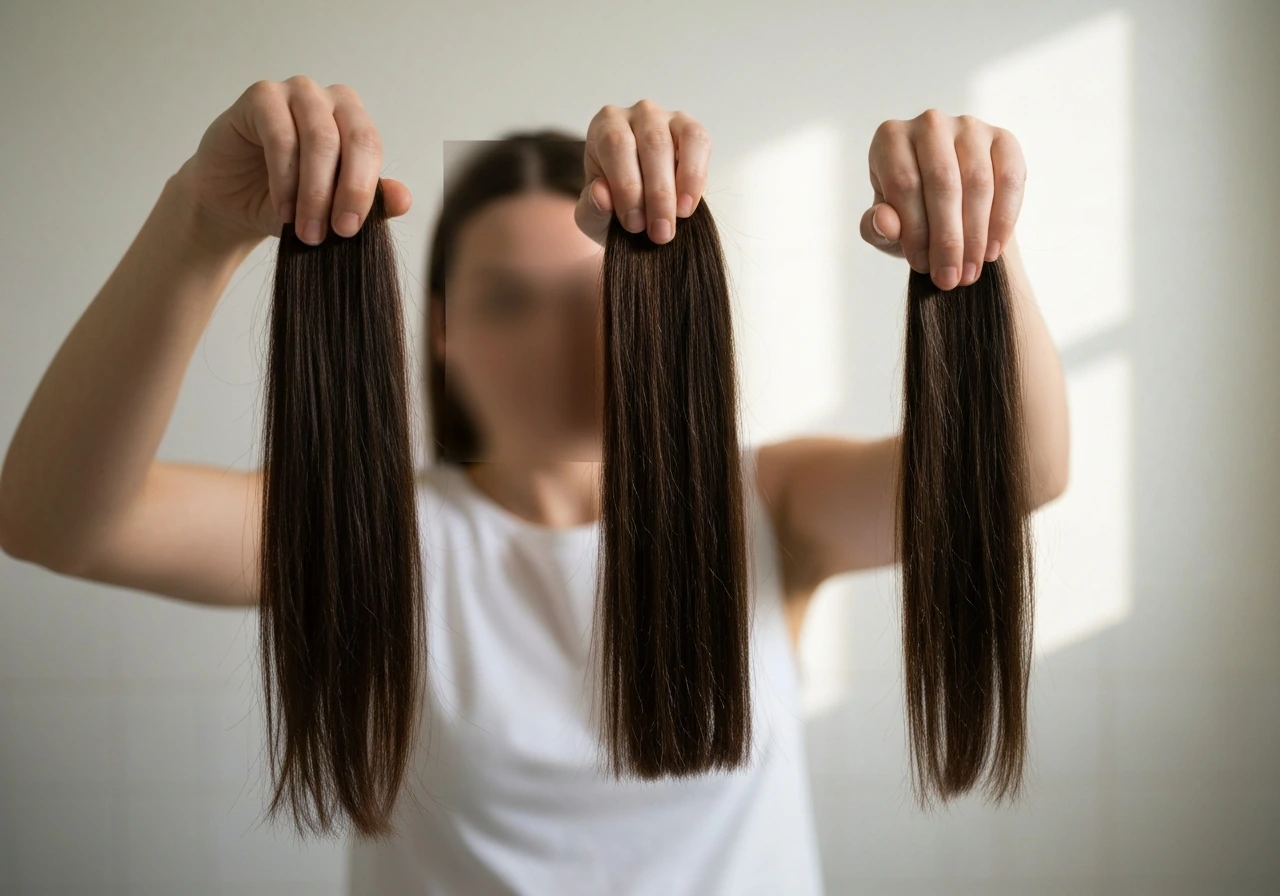
Grow Hair Long Tips: Step-by-Step Routine to Reach Length
Step-by-step grow hair long tips: boost scalp health, cut breakage, improve diet, and track progress for length.
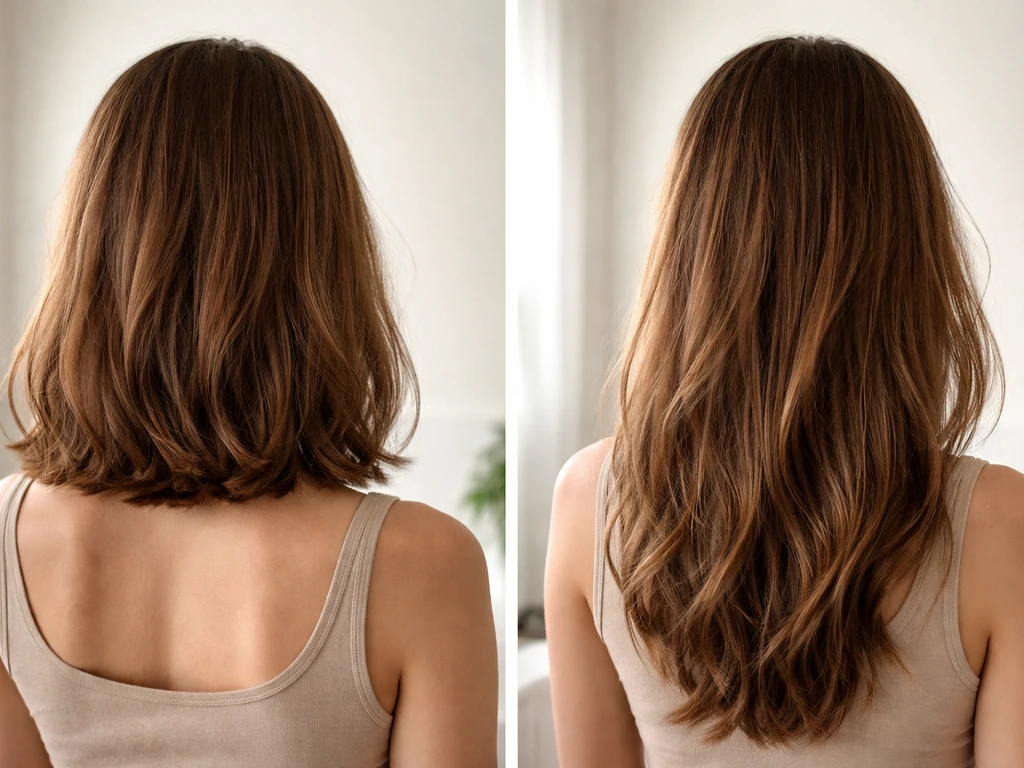
Tips for How to Grow Long Hair: A Practical Guide
Actionable tips to grow long hair naturally: care routine, scalp habits, nutrition and breakage prevention for healthy l