
You almost certainly cannot grow hair past its true biological terminal length, but here is the thing: most people who think they have hit their terminal length have not. What they have actually hit is a breakage ceiling, a shedding problem, or a scalp issue that keeps strands snapping off or falling out before they ever get close to their genetic maximum. True terminal length is set by how long your follicles stay in the active growth phase, and for scalp hair that is anywhere from 2 to 8 years. At roughly 1 cm of growth per month, that puts your theoretical maximum somewhere between 24 cm and nearly a meter. If your hair is stalling well below that, the biology of your follicle is almost never the limiting factor.
How to Grow Hair Past Terminal Length: A Practical Plan

Marcus Holloway
4 Jul 2026
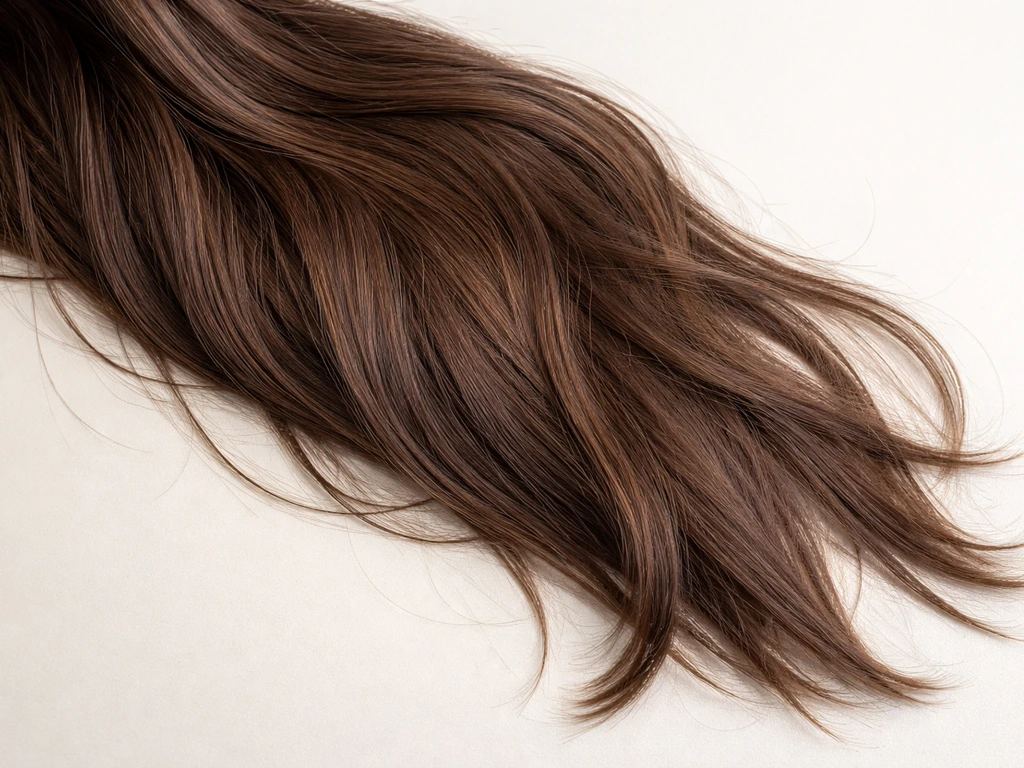
What terminal length actually means
Each hair follicle cycles through three phases: anagen (active growth), catagen (a short transition of about two weeks), and telogen (resting, lasting roughly two to three months). Anagen is the phase that determines how long a single hair can ever get. Scalp follicles typically spend somewhere around 1,000 days in anagen, but the range is wide, from about 2 years on the short end to 6 to 8 years on the long end. Multiply 1 cm per month by the number of months your follicles stay in anagen, and that is your personal terminal length. It is mostly genetic, and there is no proven way to dramatically extend anagen beyond what your biology already does.
Minoxidil is the one widely used tool that genuinely works by prolonging the anagen phase, which is why it can increase thickness and length in people with androgenetic alopecia or certain shedding conditions. But it is not a magic bullet for someone whose follicles are already cycling normally. The more common and more solvable problem is that hair is not staying on your head long enough to reach its terminal length in the first place. If you want to grow floor length hair, that means focusing on the causes of slow retention like breakage, shedding, inflammation, and traction.
Why most people never reach their terminal length
There are two completely different reasons hair stops getting longer, and mixing them up is the single biggest mistake people make when trying to grow longer hair. If you want to grow hip length hair, the key is to address both growth time and length retention so you can actually reach your terminal length. One is a growth problem (the follicle is not producing hair for as long as it should). The other is a retention problem (hair is growing fine but breaking or shedding before it accumulates length). Retention problems are far more common, and they are almost always fixable.
Breakage
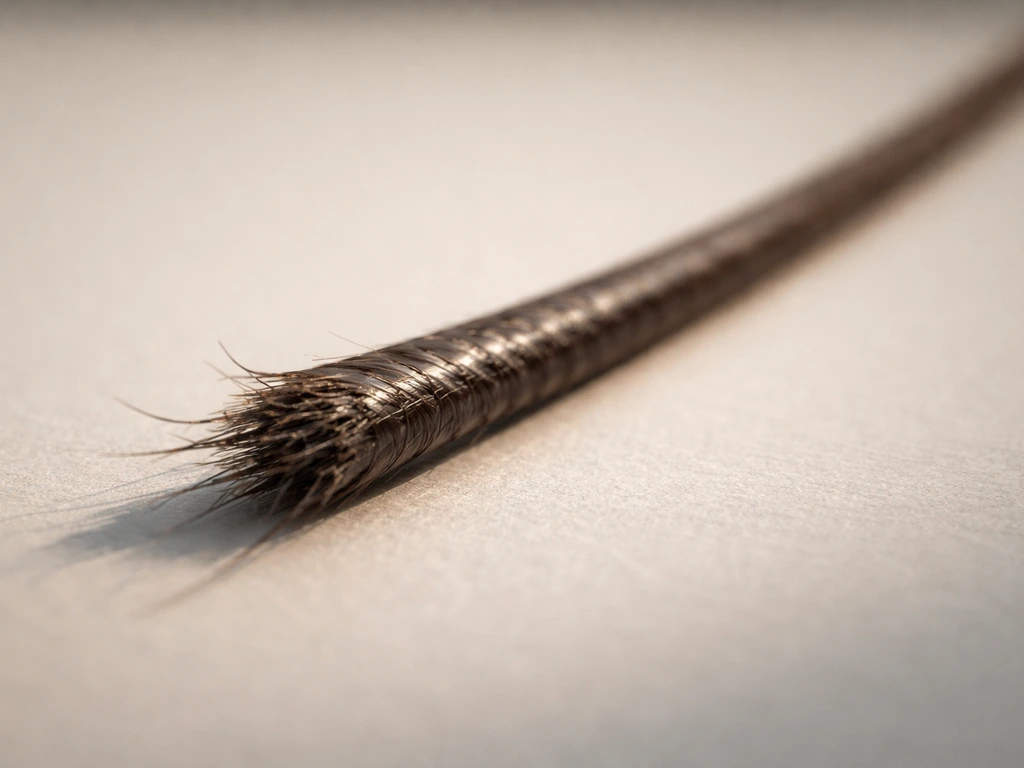
Breakage happens at the hair shaft, not the root. The cuticle, which is the outer protective layer of each strand, gets worn down by mechanical abrasion from brushing, friction from pillowcases and styling tools, and chemical treatments like bleaching, perming, and relaxing. Once the cuticle is compromised, the cortex underneath is exposed and the strand becomes brittle and prone to snapping. This is why heavily processed hair or hair that sees a lot of heat tends to stall at a certain length: new growth comes in, but the ends keep breaking off at roughly the same rate.
Shedding (telogen effluvium)
Shedding is different. Here, the follicle prematurely shifts from anagen into telogen, and the hair falls out from the root with a characteristic small white or pale club at the base. Telogen effluvium is the clinical term for this kind of excessive shedding, and it is typically triggered by a stressor like illness, surgery, significant weight loss, hormonal shifts, or nutritional deficiency. Crucially, shedding usually starts two to four months after the triggering event because the hair sits in the resting phase before it finally falls. Acute telogen effluvium typically resolves within six months once the trigger is addressed.
Scalp inflammation and traction
Conditions like seborrheic dermatitis and scalp psoriasis create chronic inflammation around the follicle that can disrupt the growth environment and, if left untreated for a long time, contribute to hair thinning. Traction from tight hairstyles, extensions, or braids puts sustained mechanical stress on the follicle and can cause traction alopecia, which in severe cases can permanently damage follicles. These are upstream problems: fix the scalp environment and reduce tension, and length retention usually improves.
How to figure out what is actually happening to your hair
Before you change anything, you need to know whether you are dealing with breakage, shedding, or a genuine growth limitation. The good news is that you can get a pretty clear answer at home with just a little attention.
The shed hair check
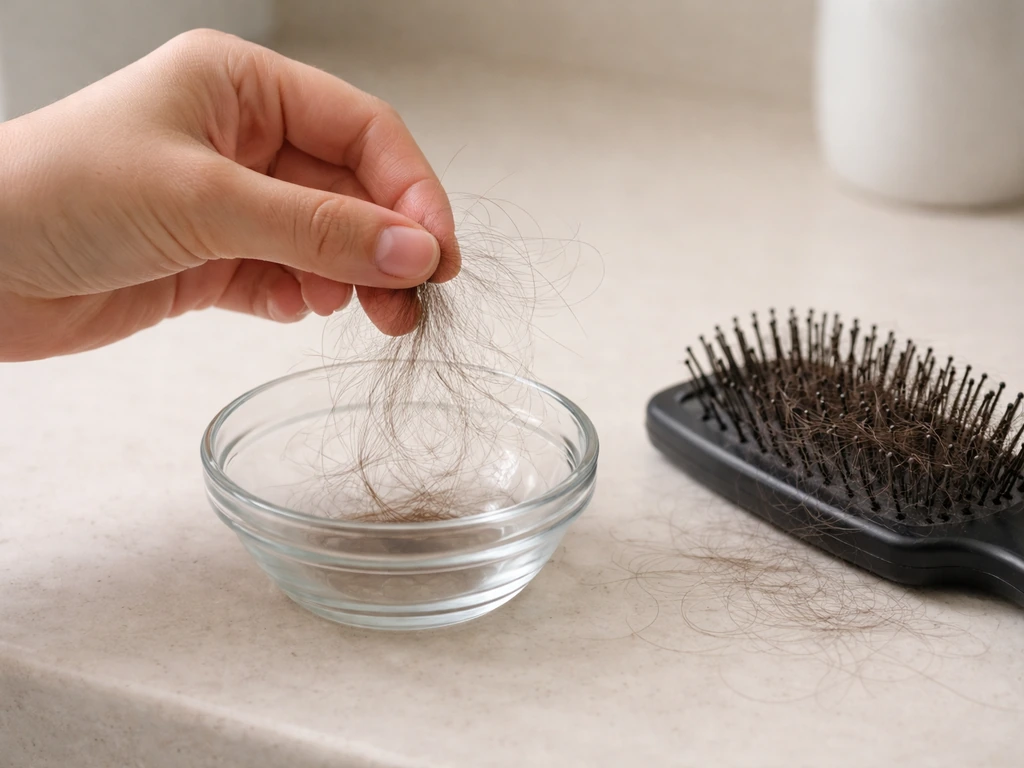
Collect the hairs you lose in a day from your brush, shower drain, and pillow. Look at the ends. Shed hairs that have fallen from the root will have a tiny club or bulb at one end, sometimes whitish or pale. Breakage hairs will be shorter fragments with no bulb at either end, often with split or rough tips. Losing 50 to 100 hairs a day with intact clubs is normal. If most of what you are finding are short pieces without bulbs, breakage is your main issue. If you are losing long strands with bulbs at rates clearly above 100 per day, shedding is the problem.
The pull test
Grab a small section of clean, dry hair close to the scalp and gently run your fingers down it with light tension. If more than four to six hairs come out easily in a single pull, that is a positive pull test and a sign of active excessive shedding. If nothing or just one or two hairs come out, shedding is likely not the main problem.
The length-progress check
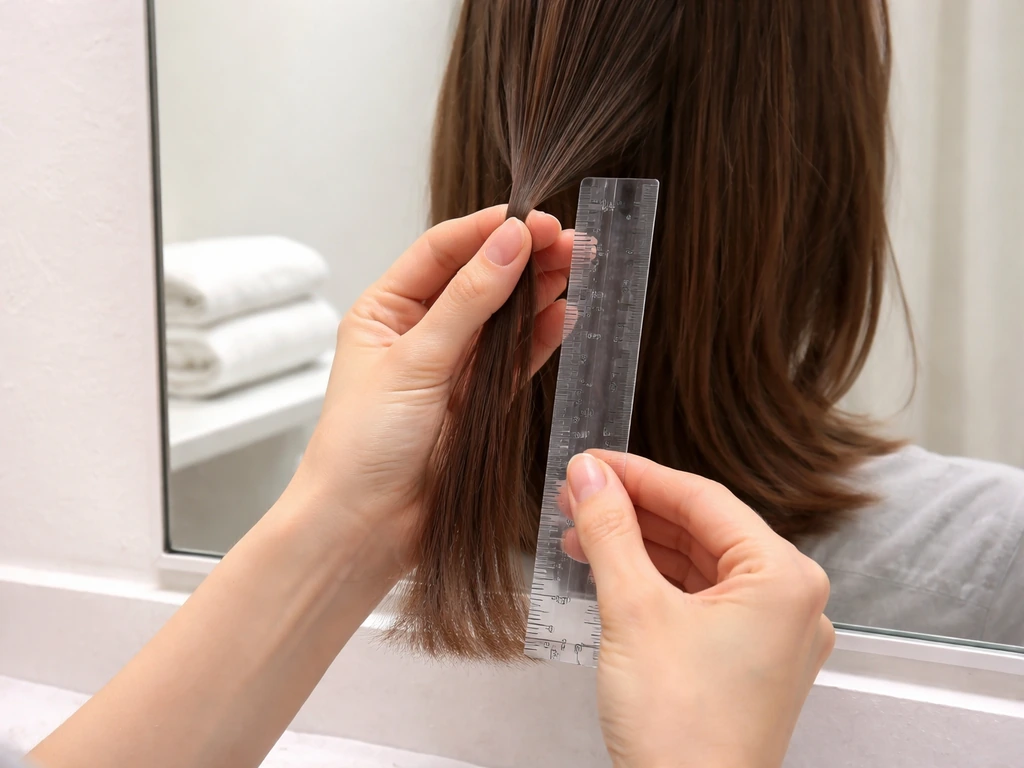
Measure a specific section of hair (the same section each time) on the same day each month. Take a photo. If your length is not changing at all over three to four months, you are either breaking as fast as you grow or your follicles are genuinely not in anagen. If your length is growing but slowly, retention is the issue. This monthly measurement is more useful than any amount of product research because it tells you whether your approach is actually working. If you are aiming for hair that grows down to your bum, this monthly check helps you see whether breakage, shedding, or a real growth limitation is stopping your progress hair down to your bum.
A scalp care routine that actually supports length
Your scalp is where growth starts, so neglecting it while focusing entirely on your ends is working backwards. A healthy scalp routine does not need to be complicated, but it does need to be consistent.
Washing frequency and product choice
How often you wash depends on your scalp type and hair texture, but a common mistake is either washing too rarely (which allows product buildup and Malassezia yeast overgrowth) or too aggressively (which strips natural oils and dries out the scalp). If you have seborrheic dermatitis, washing at least twice a week is important because less frequent cleansing allows the Malassezia fungus that drives the condition to proliferate. For dandruff and seborrheic dermatitis specifically, shampoos with 2% ketoconazole, pyrithione zinc, or 2.5% selenium sulfide have the strongest evidence behind them. These are not just cosmetic products, they address the actual microbial cause of scalp inflammation.
Keeping the scalp balanced
Outside of treating specific conditions, the goal is a clean, moisturized, non-inflamed scalp. Use a gentle sulfate-free or mild shampoo if your scalp tends toward dryness or sensitivity. Focus shampoo on the scalp, not the lengths. Follow with a conditioner on the mid-lengths and ends. Avoid scratching, which causes mechanical damage and can worsen inflammation. If you use medicated shampoos, leave them on for at least five minutes before rinsing so the active ingredients actually have time to work.
Addressing inflammation
If OTC antifungal shampoos do not bring your scalp under control within four to six weeks of consistent use, see a dermatologist. Prescription options like ciclopirox or topical ketoconazole are available, and uncontrolled scalp inflammation is one of those upstream problems that will keep undercutting your length retention no matter what you do to your ends.
Nutrition and supplements: what actually helps
The honest take on nutrition and hair growth is this: if you are deficient in something your follicles need, fixing that deficiency will help. If you are not deficient, adding more of that thing will not speed up growth or push you past your terminal length. Supplementing your way to longer hair without addressing an underlying deficiency is mostly wishful thinking.
The nutrients worth knowing about
- Iron (specifically ferritin): Low ferritin is one of the most commonly identified nutritional contributors to diffuse shedding in women. If you are experiencing significant hair loss, getting your ferritin checked is one of the most useful tests you can do. Target levels for hair health are often cited higher than the threshold for anemia alone.
- Protein: Hair is mostly keratin, so severe protein deficiency does cause hair loss. But if you are eating a reasonably varied diet, extra protein shakes are unlikely to change anything. Protein supplementation only helps if you are genuinely protein-malnourished.
- Vitamin D: Low vitamin D has been associated with non-scarring alopecias including telogen effluvium, though the research is not fully settled on causality. If you are deficient, correcting it makes sense. Universal supplementation without testing is less justified.
- Zinc: Deficiency can impair follicle cycling. Oysters, red meat, seeds, and legumes are good dietary sources. Over-supplementing zinc can actually interfere with copper absorption and cause other problems.
- Omega-3 fatty acids: Anti-inflammatory effects may support scalp health; dietary sources like fatty fish, flaxseed, and walnuts are the best approach.
- Thyroid hormones: Hypothyroidism is a well-established cause of diffuse shedding. If you have other thyroid symptoms (fatigue, cold intolerance, weight changes), ask your doctor for a TSH test.
What to be careful with
High-dose biotin supplementation is popular but comes with a real catch: it can interfere with certain lab tests, including thyroid function tests, causing false results. The FDA has specifically warned about this. If you are taking biotin and need bloodwork done, tell your doctor or pause supplementation beforehand. Excess vitamin A is another one to watch: high-dose preformed vitamin A or retinoid supplements can actually cause hair loss, which is the opposite of what you want. The principle throughout is to get tested, correct what is actually deficient, and be skeptical of any supplement promising to extend your terminal length.
Topical habits and length-retention strategies that work
Length retention is about keeping the hair you grow on your head long enough to accumulate. If you want knee-length hair, focus on retention first, then make sure the scalp environment supports healthy growth retain length. This means reducing every source of damage that chips away at your ends before they can get long.
Conditioner and moisture
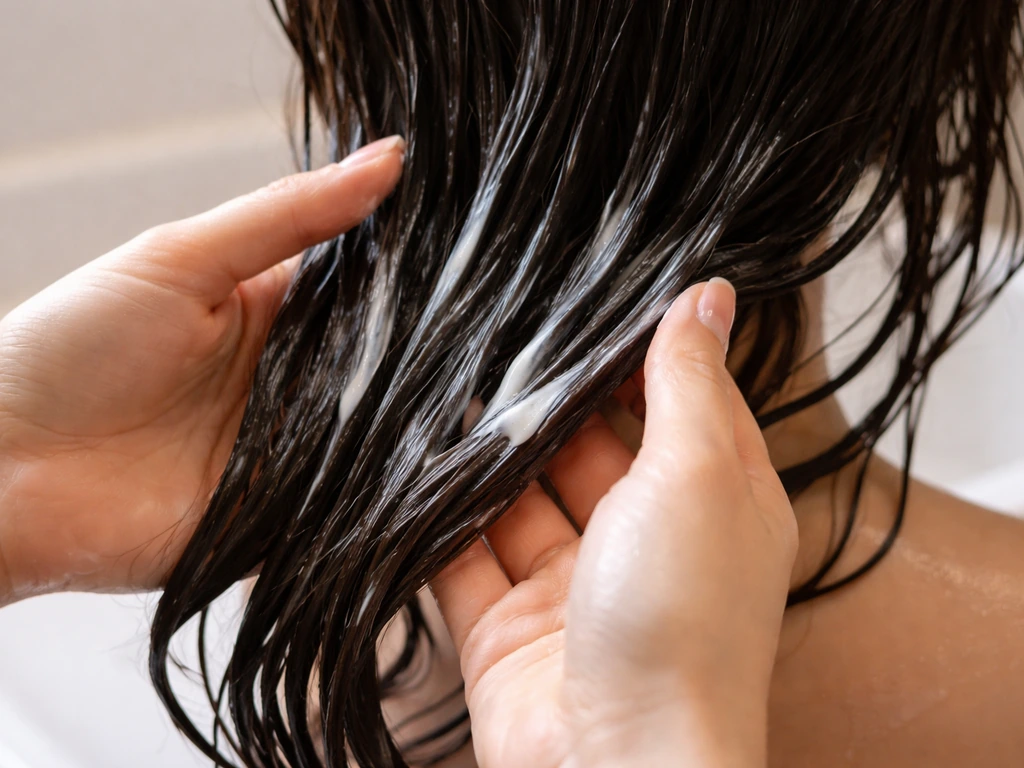
Conditioner is not optional for anyone trying to retain length. It temporarily smooths the cuticle, reduces friction during handling, and significantly lowers breakage during detangling. Use it every wash, focused on the mid-lengths and ends. A weekly deep conditioning treatment adds another layer of protection, especially if your hair is color-treated or heat-styled regularly. Leave-in conditioners and lightweight oils (argan, jojoba, camellia) can seal in moisture between washes and reduce mechanical damage from everyday handling.
Detangling the right way
Detangling is one of the highest-breakage moments in any hair routine. Always start from the ends and work upward toward the roots, never drag a comb from root to tip through a knot. For tightly coiled or curly textures, detangling on wet, conditioner-coated hair with a wide-tooth comb tends to cause significantly less breakage than dry detangling. For finer, straight hair, some people find that damp detangling works better than fully saturated. Pay attention to what your own hair responds to.
Heat and chemical damage
Heat styling and chemical processing are the two fastest routes to a breakage ceiling. If your hair is stalling at a certain length and you are using heat regularly without a heat protectant, that is worth addressing before anything else. Reducing heat temperature, using a thermal protectant every single time, and air drying when you can are simple changes with measurable impact. Chemical processes like bleaching, relaxing, and perming all remove or structurally alter the cuticle. You can still grow long hair with chemically treated strands, but the margin for error on breakage is much smaller, so moisture and gentle handling become even more important.
Protective styles and friction reduction

Sleeping on a silk or satin pillowcase (or using a silk bonnet) reduces the overnight friction that gradually degrades your ends. Loose protective styles that tuck away the ends and reduce manipulation can add up to meaningful length retention over months. The key word is loose: tight braids, ponytails, and extensions that put traction on the scalp and hairline work against you.
Trimming strategy
Trimming does not make hair grow faster, but it does remove split ends before they travel up the shaft and cause more extensive breakage. If your ends are badly split, they will eventually snap off higher up the strand anyway. A small trim every eight to twelve weeks to remove damaged ends is better for length retention than waiting until the damage is severe. Think of it as protecting the length you already have, not sacrificing it.
Realistic timelines and how to track progress
At roughly 1 cm per month, it takes about six months to grow 6 cm and a full year to grow around 12 cm. If you are aiming for goals like shoulder length, hip length, or even longer, you are looking at multi-year timelines even with everything working perfectly. For specifics on extending growth in a game context, you can also look up RDR2 hair growth tips for getting past 7. Expecting significant changes within a few weeks is the fastest route to frustration and abandoning a routine that is actually working.
The most practical tracking method is monthly photos from the same angle and lighting, paired with a tape measure on a consistent section of hair. If you want to grow your hair to your knees, use these same measurements to see whether length is actually increasing over time how to grow your hair to your knees. Track both your overall length and the condition of your ends. If your ends are getting progressively more transparent, dry, or split, your retention strategy needs work even if your overall length is growing. Improvements from scalp care, better nutrition, and reduced breakage typically become visible over three to six months, not days.
| Milestone | Approximate time at 1 cm/month |
|---|---|
| 2 cm (noticeable growth) | 2 months |
| Ear length from a buzz cut (~10 cm) | ~10 months |
| Shoulder length from ear length (~15–20 cm) | ~15–20 months |
| Bra strap from shoulder (~15 cm more) | ~15 more months |
| Hip/waist length from bra strap (~25–30 cm more) | ~25–30 more months |
These timelines assume you are retaining most of what you grow. The difference between someone who retains 80% of their growth and someone who retains 50% is enormous over two or three years. Length retention is where the real work happens. Goals like growing past shoulder length, to hip length, or even longer are genuinely achievable for most people, but only if breakage and shedding are addressed consistently along the way. If you want to grow hair past your shoulders, focus first on retention issues like breakage and shedding, then support scalp health consistently grow hair past shoulder length.
When to see a dermatologist
Most of what has been covered here is something you can manage at home. But there are real red flags that mean it is time to get professional eyes on your scalp and hair rather than experimenting further on your own.
- Sudden, dramatic shedding that started within the past few months and is clearly above your normal baseline, especially if accompanied by fatigue, weight changes, or other systemic symptoms (thyroid, iron, and hormonal workups are often the first step).
- Shedding that has continued for more than six months without improvement, which goes beyond what acute telogen effluvium typically does.
- Patchy hair loss rather than diffuse thinning, which can indicate alopecia areata or other conditions that need specific diagnosis and treatment.
- Scalp pain, burning, tenderness, or visible scarring with hair loss, because scarring alopecias can cause permanent follicle damage if not treated promptly.
- Dandruff or seborrheic dermatitis that has not responded to consistent OTC antifungal shampoo use after four to six weeks.
- Any hairline recession that is progressing steadily, as early treatment for androgenetic alopecia is significantly more effective than late intervention.
A dermatologist can run targeted bloodwork (ferritin, CBC, TSH, vitamin D) and examine your scalp and shed hairs in ways that take the guesswork out of what is actually driving your hair problem. If you have been doing everything right for six months and your hair is still not retaining length or growing the way it should, professional evaluation is not a last resort. It is just the logical next step.
FAQ
What if my measurements show my hair length is staying the exact same, how do I know why?
If your monthly photos and a consistent tape-measure show zero net growth for 3 to 4 months, the most common causes are either breakage that offsets new growth or shedding that is removing hairs as they emerge. A quick way to separate them is to do the shed vs breakage look: bulb present at one end suggests root-shed, no bulb and rough/split tips suggests breakage.
How can I tell if the problem is true slow growth or just ends failing first?
Hair can look like it is “growing slowly” because the ends get drier, more tangled, and more split, which increases breakage even if the scalp is producing normal new hair. If you are seeing overall growth on the scalp side but the ends get progressively thinner, focus on friction control (conditioner every wash, detangle gently, satin sleep) and heat/chemical reduction rather than trying to force more growth at the root.
My shedding started weeks after a stressful event, is that normal?
Telogen effluvium often starts 2 to 4 months after the trigger, so the timeline can feel disconnected. If you had a clear event like major illness, surgery, a crash diet, or a postpartum period, note the date and count forward 8 to 16 weeks, then reassess your shedding pattern with both the daily hair count and the pull test.
Is losing more hair in the shower ever “normal,” and how do I distinguish it?
Yes, but the pattern matters. Normal shedding includes hairs with intact clubs, but breakage fragments will be short pieces without bulbs. If you are losing large amounts and they look like intact long hairs (with bulbs), think shedding, and if the pieces are mostly fragments, think breakage from processing, rough detangling, or friction.
If the pull test is negative, does that rule out retention problems?
Not reliably. You can have a normal-looking pull test early on but still be losing length due to breakage, especially if your ends are heat-processed or chemically treated. That is why monthly photos plus end condition (split, dryness, tangling) are more useful than a one-time pull test.
How long should telogen effluvium last before I should see a dermatologist?
If the shedding is acute and linked to a trigger, acute telogen effluvium often improves within about six months after addressing the cause. If you have persistent shedding beyond that, scalp symptoms, or visible thinning, it is worth escalating to a dermatologist rather than continuing to tweak routines indefinitely.
What is the most common reason dandruff or seborrheic dermatitis products “don’t work”?
For ongoing seborrheic dermatitis or psoriasis, consistency matters as much as product choice. Medicated shampoos generally need to be used on schedule for weeks, and they should be left on the scalp long enough for active ingredients to work, then rinsed thoroughly to avoid buildup that can worsen irritation.
Should I change everything at once, or is there a better approach?
Use a simple rule, change one variable at a time for a reasonable trial window. For example, if you introduce medicated shampoo, do not simultaneously change diet supplements, heat frequency, and multiple new stylers. One change at a time makes the monthly measurement interpretable and reduces the chance you blame the wrong factor.
What bloodwork issues should I know about if I take biotin or other supplements?
Yes. Biotin can distort certain blood test results, so if you have labs planned, tell your clinician you take biotin and ask whether to pause before the test. Also avoid stacking high-dose supplements on top of each other, since excess vitamin A from retinoid-like products can contribute to hair loss.
Can an overly aggressive wash routine make my retention worse even if my scalp feels clean?
A scalp that is “clean but irritated” can still undermine retention. Look for redness, burning, and increased shedding after washing or after introducing a new product. If that happens, reduce irritation first by using gentler cleansing, spacing medicated products appropriately, and getting evaluation if symptoms persist.
How do I know if my protective hairstyle is actually helping or causing traction?
If you are doing protective styling, keep the tension truly low. The key edge case is that the style may feel comfortable but still create traction on the hairline or follicles, especially with tight edges or frequent pulling during removal. Watch for a pattern of thinning around the hairline or tenderness, and stop the style if those signs show up.
If trimming does not make hair grow faster, why do some people still see improvements?
In general, trimming helps retention by preventing splits from traveling upward, it does not lengthen the growth rate. If you are newly shedding and you trim without improving breakage, you can still get the illusion that trimming “did nothing,” so pair trims with friction and heat control and reassess over 3 to 6 months.
What situation suggests it is time for labs instead of more product experimentation?
If your ends are healthier but overall length still does not increase, shedding or a growth-phase limitation becomes more likely. That is when targeted labs and a scalp exam become the highest value, since bloodwork like ferritin and thyroid markers can reveal issues that routines cannot fix quickly.
Next Articles

How to Grow Hair Past Shoulders: Step-by-Step Plan
Step-by-step routine to grow shoulder-length hair past shoulders: prevent breakage, trim right, protect styles, scalp ca
Tips on How to Grow Your Hair Out: A Step by Step Guide
Step-by-step tips to grow hair out: stop breakage, build scalp routine, nutrition, safe actives, and track progress.
Grow Hair Long Tips: Step-by-Step Routine to Reach Length
Step-by-step grow hair long tips: boost scalp health, cut breakage, improve diet, and track progress for length.