
Fine hair can absolutely grow long, but the biggest obstacle usually isn't slow growth at all. It's breakage quietly stealing the length you've already grown. Most people with fine hair are growing around half an inch per month (about 6 inches a year), which is completely normal. The problem is that fine strands are thinner, weaker, and more prone to snapping before they ever reach your shoulders. Fix that, support your scalp, clean up your routine, and you'll start to see real length within a few months.
How to Grow Fine Hair Long: Step-by-Step Length Retention

Marcus Holloway
29 May 2026
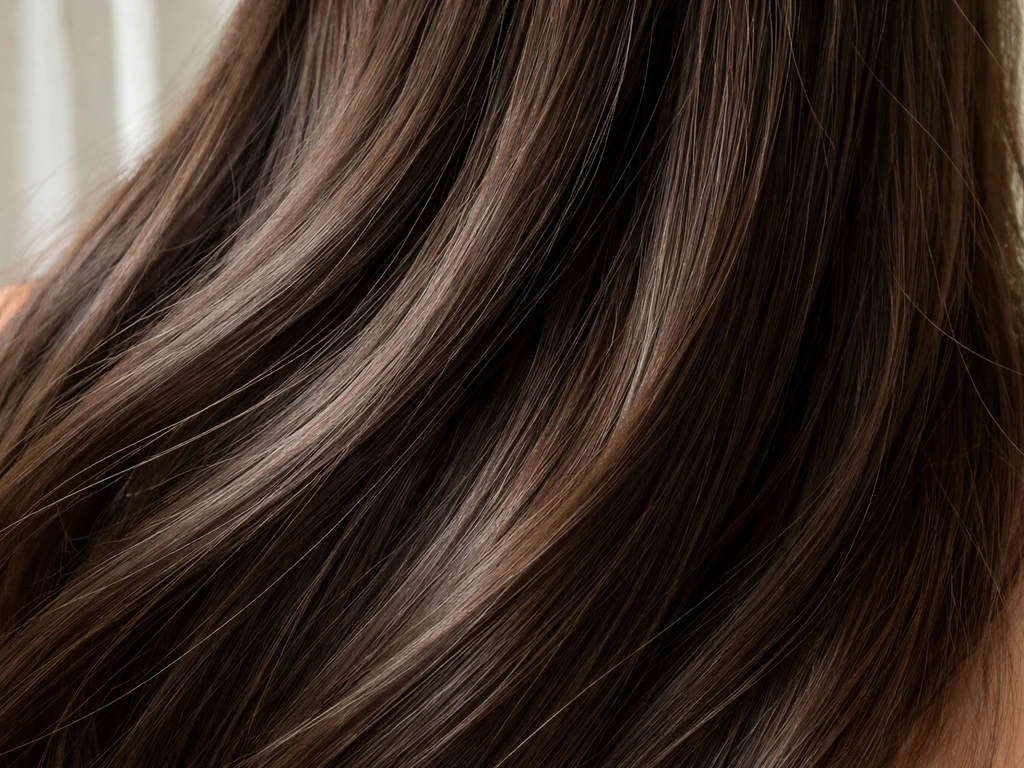
Why fine hair doesn't always look long (growth vs. breakage)
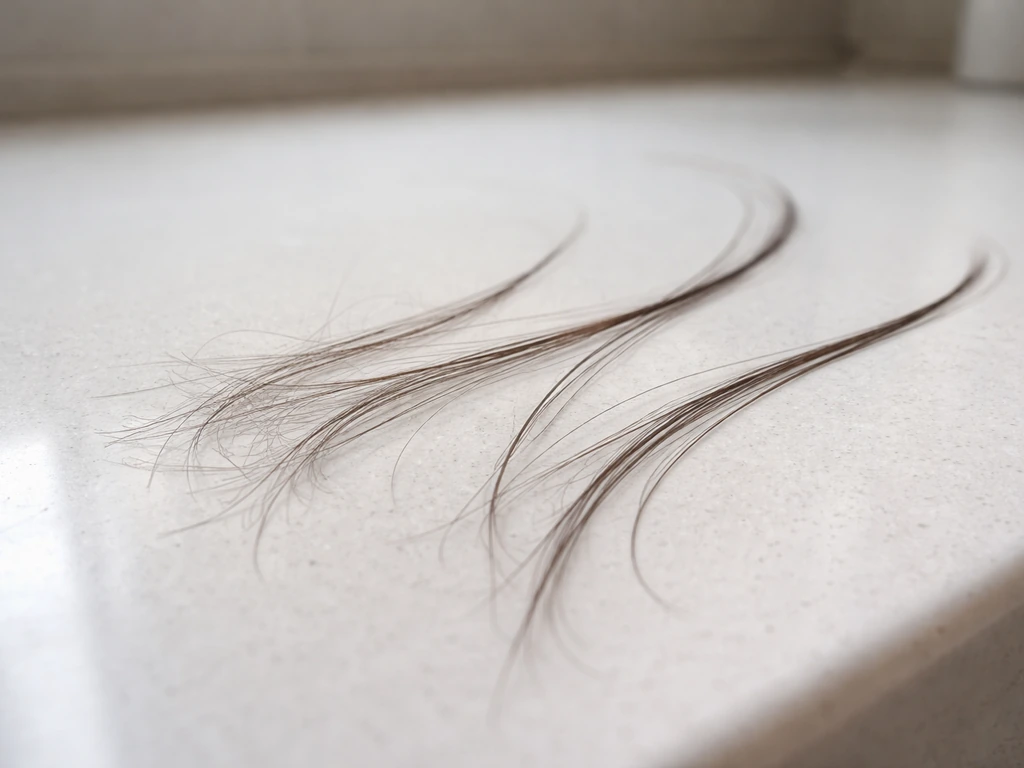
Here's the thing most people miss: your hair is probably growing right now. The reason it's not getting longer is that it's breaking at roughly the same rate it's growing, so you're stuck at the same length for months or even years. Fine hair is structurally thinner than coarse hair, which means less protein mass per strand, less elasticity, and a lower threshold for snapping under mechanical stress like brushing, heat, and tight styles.
There's also a more specific scenario worth knowing about. If your hair has become progressively finer over time, especially at the temples or crown, that can be a sign of follicle miniaturization linked to androgenetic alopecia. Miniaturized follicles produce increasingly thin, fragile hairs with shorter active growth phases, so the hairs shed sooner and never reach their full potential length. That's a different problem from simply having naturally fine hair, and it's worth flagging because the solution goes beyond just a gentler routine. For growing long hair in general, though, the core strategy is the same for almost everyone: protect what you're already growing. For the best way to grow long hair, keep your focus on protecting your existing strands while also supporting healthier scalp function.
How to support faster, healthier growth from your scalp
Think of your scalp as the soil your hair grows out of. If it's inflamed, congested with product buildup, or dealing with a chronic issue like seborrheic dermatitis or psoriasis, your follicles aren't working at their best. You don't need a complicated routine, but you do need a clean, healthy scalp environment.
Wash frequency matters more than people realize. Washing too infrequently allows oil, dead skin, and product residue to build up, which research links to a higher prevalence of dandruff and seborrheic dermatitis. Both conditions can cause low-grade scalp inflammation that disrupts the follicle environment. For most people with fine hair, washing every 2 to 3 days is a reasonable starting point. Fine hair also tends to go flat quickly with oil, so many fine-haired people actually benefit from washing more frequently, not less.
If you have visible flaking, itching, or redness, that's worth addressing directly. Ketoconazole shampoos (available over the counter at 1%) are well-studied for seborrheic dermatitis and can meaningfully reduce scaling within about 4 weeks. Zinc pyrithione (0.1 to 0.25%) and selenium sulfide (1%) are also FDA-recognized active ingredients for dandruff and seborrheic dermatitis, and they're easy to find in drugstore shampoos. Use one of these medicated shampoos two to three times per week until symptoms clear, then scale back to maintenance use. If your scalp condition doesn't improve, or if you're dealing with something that looks more like psoriasis (thick silvery scale, well-defined patches), see a dermatologist before trying to self-manage it long-term. The American Academy of Dermatology also recommends medicated shampoos and topical treatments for active scalp psoriasis, with in-office options like corticosteroid injections for more severe flares.
Scalp massage is low-risk and worth adding to your routine. There's some early clinical data suggesting regular scalp massage may help with hair thickness over time, and at minimum it increases blood circulation to the follicles. Spend 3 to 5 minutes massaging your scalp with your fingertips (not nails) when you shampoo. You can also do a dry massage a few times a week.
Gentle routine: washing, conditioning, detangling, and styling for length retention
This is where most of the actual length retention happens. You can have perfect scalp health and solid nutrition, but if you're rough with your hair during washing and styling, you'll keep breaking off more than you grow. You can also review the gentler wash, conditioning, detangling, and styling steps in the same guide, since they strongly affect whether hair stays long and healthy how to grow hair long and healthy. Fine hair in particular is vulnerable because there's less structural resilience to absorb friction or heat.
Washing
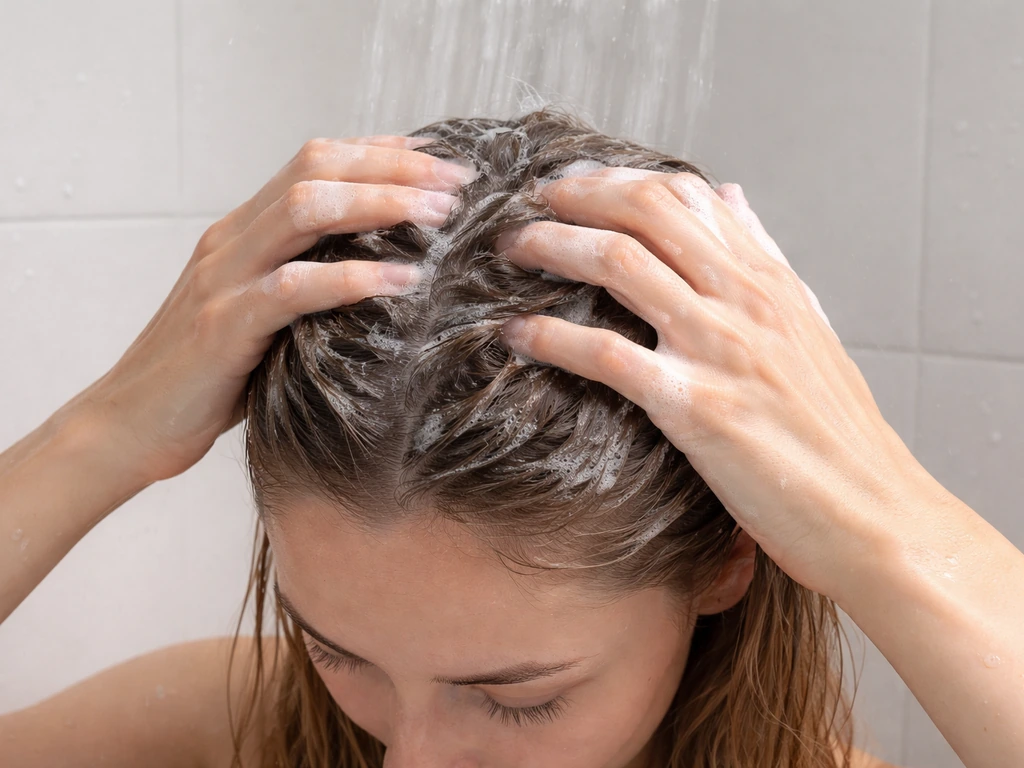
Use a sulfate-free or gentle shampoo and focus the product on your scalp, not your ends. Your ends are the oldest, most fragile part of the hair shaft, and they don't need aggressive cleansing. Let the rinse water carry diluted shampoo through them. Avoid piling your hair on top of your head to lather, which causes tangling and breakage. Instead, work in downward strokes along the hair shaft.
Conditioning
Fine hair often gets weighed down by heavy conditioners, so people skip conditioning altogether, and that's a mistake. Fine hair still needs moisture and slip to reduce friction. The key is applying conditioner mainly from the mid-lengths to the ends, not the roots. A lightweight rinse-out conditioner after every wash is non-negotiable for reducing breakage. Leave-in conditioners or detangling sprays can also help on days between washes when you need to style or comb through.
Detangling
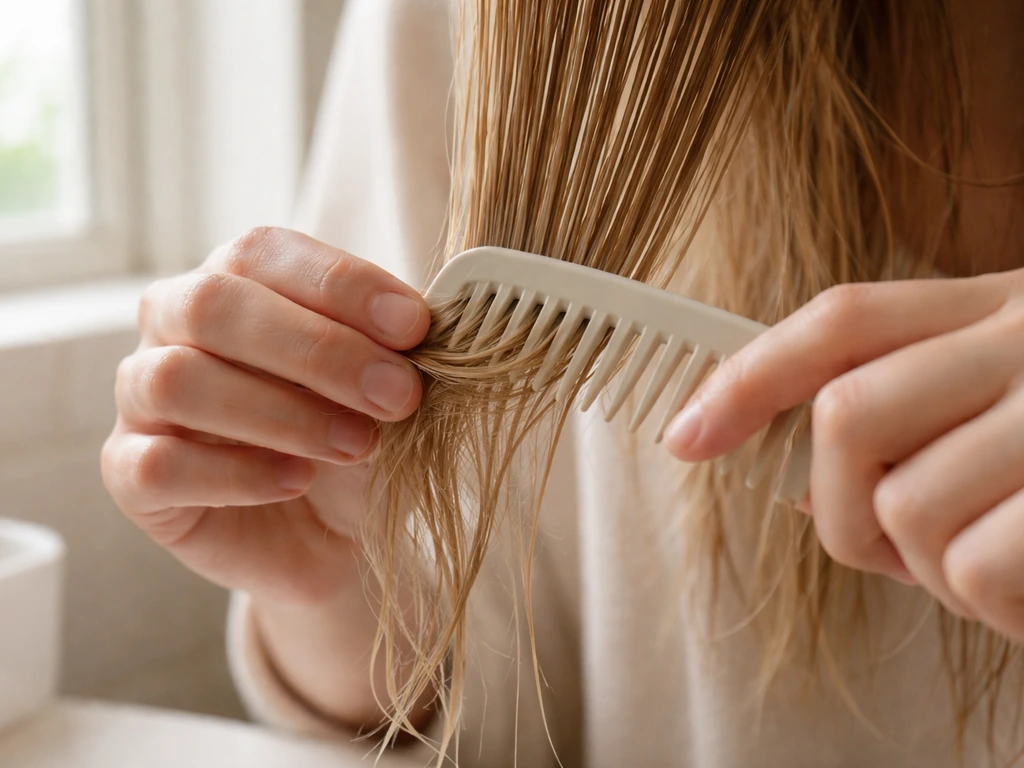
Always detangle gently, starting from the ends and working upward toward the root. A wide-tooth comb or a wet brush works better than a regular brush on wet hair. Wet hair is significantly more elastic and prone to snapping under tension, so be slow and deliberate. If you hit a knot, hold the hair above it to avoid pulling on the root, and work through it gently rather than yanking.
Styling and heat
Heat is one of the biggest enemies of length retention for fine hair. If you use a blow dryer, flat iron, or curling iron regularly at high temperatures, you're causing cumulative structural damage that makes strands brittle and prone to snapping. If you can't give up heat styling entirely, use a heat protectant every single time, keep temperatures below 350°F (177°C) for fine hair, and try to air dry at least a few days a week. Reducing heat use from daily to two or three times a week can make a noticeable difference in breakage over a few months. Tight hairstyles like high ponytails, tight braids, and buns create repeated tension at the same points along the shaft and at the hairline, which also contributes to breakage. Opt for loose styles, silk or satin scrunchies, and change up your part line to avoid constant pressure in the same spots.
Products that help fine hair grow longer (and what to avoid)
The right products for fine hair focus on protecting the strand without weighing it down. Here's a practical breakdown of what actually helps versus what to skip.
| Product Type | What to Look For | What to Avoid |
|---|---|---|
| Shampoo | Sulfate-free or gentle cleansers; medicated options (ketoconazole, zinc pyrithione) if scalp issues present | Harsh sulfates (SLS) on fine or fragile strands used daily; heavy moisturizing shampoos that weigh hair flat |
| Conditioner | Lightweight rinse-out formulas; hydrolyzed protein + moisture balance; detangling slip | Heavy, creamy deep conditioners at the roots; silicone-loaded formulas that build up without regular clarifying |
| Leave-in / Detangler | Lightweight sprays or serums with slip; heat protectants with film-forming agents | Heavy oils or butters applied root-to-tip; alcohol-heavy sprays that dry out fine strands |
| Styling | Volumizing mousses or light-hold sprays; silk/satin accessories | Elastic rubber bands; tight metal clips; heavy waxes or pomades |
| Scalp treatments | Scalp serums with actives like niacinamide, zinc, or caffeine; ketoconazole or zinc pyrithione for dandruff | Occlusive heavy oils applied directly to the scalp if prone to buildup or dandruff |
A word on dry shampoo: it's a useful tool for extending time between washes, and the AAD acknowledges it can help fine hair look fuller between wash days. But it's easy to overuse. If you notice any itching, burning, or irritation, that's a signal to stop. Dry shampoo residue can accumulate on the scalp and contribute to the kind of buildup that causes scalp issues over time, so use it as a bridge, not a replacement for real washing.
Nutrition and supplements for hair growth (what actually matters)
Your hair is made of protein and grown by follicles that are some of the most metabolically active cells in your body. What you eat genuinely affects how your hair grows. You don't need exotic supplements, but a few nutritional factors consistently show up in the research as important.
Protein
Hair is almost entirely keratin, a protein. If you're undereating protein, your body will deprioritize hair growth. Most adults need around 0.8 to 1 gram of protein per kilogram of body weight per day at minimum, and people who are very active may need more. If you've noticed increased shedding after a period of restrictive dieting or low protein intake, that's almost certainly part of the picture. Focus on whole food protein sources: eggs, lean meats, legumes, Greek yogurt, fish.
Iron and ferritin
Low iron is one of the most common and most underdiagnosed causes of increased hair shedding in women. Research has linked serum ferritin levels at or below 30 ng/mL with telogen (resting phase) hair loss in women without other underlying conditions. The frustrating thing is that you can have iron deficiency affecting your hair without being overtly anemic, and standard iron panels don't always include ferritin. If you're a woman experiencing significant shedding or stalled length, ask your doctor to include a ferritin test. If it's low, correcting it (through diet and potentially iron supplementation with medical guidance) can meaningfully reduce shedding over 3 to 6 months.
Biotin: the reality check
Biotin is heavily marketed for hair growth, but the evidence is much weaker than the advertising suggests. True biotin deficiency is rare in people eating a varied diet, and supplementing above your actual needs hasn't been shown to grow more hair in people who aren't deficient. There's also a legitimate safety consideration: high-dose biotin supplements (anything above 5,000 mcg, which is common in hair supplement stacks) can interfere with certain blood tests, including thyroid function tests and cardiac troponin assays, potentially producing falsely normal or falsely abnormal results. The FDA has flagged this as a patient safety issue. If you're taking biotin and need lab work done, tell your doctor. A standard multivitamin or a biotin dose under 300 mcg is plenty if you just want baseline coverage.
Zinc
Zinc deficiency can contribute to hair loss, and zinc is involved in protein synthesis and follicle function. But more is not better. The tolerable upper intake level for zinc is 40 mg per day for adults, and chronic excess zinc can actually cause copper deficiency, which itself causes hair problems. A multivitamin that includes zinc (typically 8 to 11 mg) is usually sufficient. Don't take a separate high-dose zinc supplement unless you have a confirmed deficiency.
Vitamin D, omega-3s, and hydration
Vitamin D receptors are present in hair follicles, and deficiency is common. Getting your vitamin D level checked and correcting a deficiency is a reasonable, low-risk step. Omega-3 fatty acids support the scalp's lipid barrier and have some evidence behind them for hair density and reduced shedding. You can get them from fatty fish (salmon, mackerel, sardines), walnuts, and flaxseed, or from a fish oil or algae-based supplement. Hydration is simple but real: chronic dehydration affects hair shaft quality over time. Drink enough water. Most adults need roughly 2 to 3 liters daily, more if you're active.
Topical treatments and natural remedies (evidence, how to use, expectations)
If you want to go beyond routine care and actively stimulate growth, there are a few options with real evidence behind them, and a few natural remedies with limited but honest clinical data worth knowing about.
Minoxidil
Minoxidil is the most evidence-backed topical option for hair growth and the only one with FDA approval for this purpose. Cochrane reviews confirm it's more effective than placebo for female pattern hair loss, with a meaningful proportion of users seeing at least moderate regrowth. It works by extending the anagen (active growth) phase and increasing follicle size. You can get 2% or 5% over-the-counter solutions or foam. Dermatologists often recommend the 5% foam for women because it tends to cause less scalp irritation than the liquid. For men, 5% is standard. Apply it to a dry scalp twice daily (or once daily with the foam formulation, per product instructions) and expect to wait at least 4 to 6 months before judging whether it's working. It has to be used continuously, because stopping it will cause the new hair to shed within a few months.
Rosemary oil
Rosemary oil is probably the most credible natural option in this space. One randomized trial directly compared rosemary oil to 2% minoxidil in androgenetic alopecia and found comparable hair count improvements at 6 months, though with more scalp itching in the minoxidil group. It's not a slam-dunk study, and rosemary oil hasn't been tested against 5% minoxidil, but it gives a legitimate reason to try it if you want a lower-intervention starting point. To use it, dilute a few drops of rosemary essential oil in a carrier oil like jojoba or coconut (about 2 to 3 drops per teaspoon of carrier), massage into the scalp, leave for at least 30 minutes or overnight, then shampoo out. Do this 2 to 3 times per week. Don't apply essential oil directly to the scalp undiluted, as it can cause irritation.
Caffeine topicals
Caffeine has shown some promise for hair growth in lab studies and a few clinical trials. One randomized multicenter study compared a 0.2% caffeine liquid to 5% minoxidil in men with androgenetic alopecia and found comparable hair-cycle outcomes at 6 months by trichogram analysis. That's genuinely interesting data, though more research is needed before caffeine topicals can be confidently recommended alongside minoxidil. If you want to try a caffeine shampoo or scalp serum, it's low risk and reasonably inexpensive.
Microneedling
Scalp microneedling (using a dermaroller) has been studied as an adjunct to minoxidil. In a pilot randomized study, weekly microneedling with a 1.5 mm dermaroller combined with twice-daily 5% minoxidil produced better results than minoxidil alone over 12 weeks. The theory is that microneedling triggers wound-healing signals that activate follicle growth pathways. Home dermarollers in the 0.25 to 0.5 mm range are commonly used for scalp care (the 1.5 mm needles in clinical studies require professional administration). If you try at-home microneedling, keep the device clean, limit use to once a week, and don't use it if you have active scalp inflammation or infection.
Timeline, tracking progress, and when to see a dermatologist
Patience is genuinely the hardest part of growing fine hair long, but having a realistic timeline helps you stay the course instead of abandoning a working routine too early.
| Timeframe | What to Expect |
|---|---|
| Weeks 1–4 | Scalp health improvements if treating dandruff or seborrheic dermatitis; reduced itching and flaking with medicated shampoos |
| Weeks 4–8 | Less visible breakage if you've cleaned up your heat and mechanical damage habits; hair may feel stronger and less prone to snapping |
| Months 2–3 | First noticeable length if breakage is under control; roughly 1 to 1.5 inches of new growth visible |
| Months 3–6 | Visible results from minoxidil or rosemary oil if used consistently; measurable length gain of 3 inches or more from starting point |
| Months 6–12 | Significant length progress if all factors are working together; about 5 to 6 inches of cumulative growth potential |
| Beyond 12 months | Continued compounding length gains; fine hair at shoulder length or longer is realistic with sustained routine |
To track progress without getting discouraged by slow day-to-day changes, take a photo monthly in the same lighting and position, and measure a specific strand or the length from a consistent reference point (like the top of your ear to the ends). This gives you data instead of feelings, which matters when you're several months in and wondering if anything is working.
It's also worth noting that some hair shedding spikes aren't happening in real time. Telogen effluvium, which is sudden diffuse shedding often triggered by stress, illness, crash dieting, or hormonal changes, typically shows up 2 to 3 months after the trigger and can last around 6 months. If you're seeing a lot of shedding and you had a major stressor a few months back, that's likely the explanation. It usually resolves on its own. But if shedding is heavy, persistent beyond 6 months, or paired with visible thinning at the crown or hairline, that's the time to see a dermatologist.
A dermatologist (ideally one with trichology experience) can order the right blood work (ferritin, thyroid, vitamin D, full iron panel), diagnose pattern hair loss, scalp psoriasis, or other conditions that a routine alone won't fix, and discuss prescription treatments if appropriate. Don't wait years to get a professional opinion if something feels off. Earlier intervention almost always gets better results than waiting.
Growing fine hair long is genuinely achievable, but it's a slow game won mostly through consistency rather than any single miracle product. The people who get there are the ones who stop damaging what they have, support their scalp and nutrition, and give their routine enough time to actually work. If you have curly hair, you can still follow these same length-retention and growth-support steps while tailoring them to reduce tangles and snapping. Start with the protective habits first, because that's where most of the progress will come from, and layer in growth-supporting treatments once the basics are solid. If you want a simple plan, start with the protective routine first, then add targeted growth support based on your scalp and nutrition growth-supporting treatments.
FAQ
How can I tell if my fine hair issue is mostly breakage versus slow growth?
Do a quick check on a few strands. If most of what you lose looks like short, snapped pieces with no root, that points to breakage. If you see full-length strands shedding from the scalp end, that points more toward shedding or telogen effluvium. Also compare your total length over 3 to 4 months while keeping your routine and heat styling consistent, since breakage makes length stall even when growth rate is normal.
Should I trim my hair to grow it longer?
Yes, in most cases trimming helps you keep the length you already gained by preventing split ends from traveling up the shaft. A common approach is a small trim every 8 to 12 weeks while you are actively trying to retain length. If your ends are fairly healthy, you can stretch trims to every 3 to 4 months to avoid overcutting.
What wash interval is best if I have fine hair but also dandruff or itching?
Start with the medicated plan described in your scalp-section (usually 2 to 3 times per week) and keep the rest of your washes gentle. If symptoms flare with more frequent washing, it can still be worth keeping the medicated shampoo on a consistent schedule because the goal is reducing inflammation, not only oil control. If itching worsens after starting a medicated shampoo, stop and get evaluated, since sensitivity or an incorrect diagnosis can mimic dandruff.
Can I use dry shampoo if I am trying to grow fine hair long?
You can, but treat it as an extension tool, not a permanent replacement for regular washing. If you notice scalp burning, increased flaking, or persistent itching, cut back and return to real cleansing. A practical limit is to use it only on days you truly need it, then do a full wash the next day to remove residue thoroughly.
How often should I deep condition or use masks on fine hair without weighing it down?
Use them less frequently than your everyday conditioner, typically once every 1 to 2 weeks. Keep the mask off your scalp, focus from mid-lengths to ends, and rinse thoroughly. If your hair feels coated or flat within a day or two, reduce frequency or switch to a lighter rinse-out formula, since buildup is a common reason fine hair gets worse even when conditioning is “supposed to help.”
Do I really need a leave-in conditioner if I already use a rinse-out conditioner?
Not always, but it can help on days between washes when you comb or style. The main value is added slip to reduce friction and detangling stress. If your hair looks greasy quickly, skip leave-in and use only a small amount on the ends, or choose a detangling spray designed for fine hair that dries down lighter.
Is it okay to brush fine hair while it is dry?
Often it’s better to detangle when hair is damp and conditioned, since wet hair is more elastic and regular brushing while dry increases snapping. If you must brush dry hair, use a gentle method, small sections, and a brush designed for detangling with minimal tugging. Avoid aggressive backcombing or repeated passes through knots, since those are major breakage triggers for fine strands.
How do I set my heat limits if I style regularly?
Keep temperatures as low as you can while still getting the look, and do one or two passes instead of repeatedly going over the same section. Use heat protectant every time, and prioritize air-drying or lower-heat drying when possible. If you are using high heat frequently, a useful strategy is to reduce frequency first (for example, from daily to a few times per week) before trying to change the entire style routine at once.
Can tight hairstyles still be used if I only wear them occasionally?
Yes occasionally is different from habitual. The issue is repeated tension in the same areas of the shaft and near the hairline, which adds cumulative stress even if each individual style seems “not that bad.” For best length retention, use looser versions, switch placement, and avoid keeping the same tight style for long stretches each day.
What does it mean if my hair is getting progressively finer over time?
Progressive thinning, especially at the crown or temples, can indicate follicle miniaturization rather than simply “naturally fine hair.” That pattern often needs more than a gentler routine, since growth-phase support and medical evaluation may be necessary. If you notice widening parts, visible scalp, or a steady shift in hair texture over months, schedule a dermatologist visit sooner rather than waiting for length to catch up.
How long should I try minoxidil or rosemary oil before deciding it is not working?
Plan for at least 4 to 6 months before you judge results, because changes occur on the hair growth cycle, not day-to-day. If you start a treatment and stop early, you may lose any new hairs that were in the process of transitioning to longer growth. Also track shedding and length with monthly photos to avoid making decisions based on normal fluctuations.
Do I need to take supplements to grow fine hair long?
Usually not if your diet is solid, but targeted supplementation can help when deficiencies are present. The highest-yield step is checking labs if shedding is significant or length is stalled, especially ferritin and thyroid-related tests. Avoid high-dose biotin or zinc unless your clinician recommends it, since excess can interfere with blood tests or cause other nutrient imbalances.
If I have sudden heavy shedding, how do I know if it is telogen effluvium?
Look for a trigger 2 to 3 months earlier, such as major stress, illness, surgery, crash dieting, or hormone changes. Telogen effluvium typically causes diffuse shedding and improves within about 6 months. If shedding is heavy and persists beyond 6 months, or if you also see pattern thinning at the crown or hairline, get a dermatologist evaluation rather than assuming it will resolve on its own.
When should I stop self-managing and see a dermatologist?
Make an appointment if you have persistent scalp symptoms despite medicated shampoos, ongoing shedding beyond 6 months, visible thinning at the crown or hairline, or signs of inflammation like thick scale, redness, or persistent itch. A specialist can confirm whether the issue is pattern loss, scalp disease, or nutrient or thyroid-related shedding, and discuss prescription options that a standard routine cannot address.
Next Articles
Best Way to Grow Long Hair: Routine, Nutrition, and Fixes
Do today plan to grow long, healthy hair with scalp routine, breakage fixes, nutrition, and evidence-based supplements
How to Grow Long Hair for Curly Hair: Healthy Tips
Step-by-step guide to grow long, healthy curly hair with less breakage, proper care routines, and realistic timelines.
How to Grow Hair Long and Healthy: Step-by-Step Guide
Step-by-step plan to grow hair long and healthy: scalp care, breakage control, nutrition, safe supplements, and troubles