
Growing curly hair long comes down to two things: supporting healthy growth from the scalp, and keeping the length you've already grown from breaking off. Most people with curly hair aren't struggling with slow growth, they're losing inches to breakage and shrinkage before they ever get to enjoy them. Fix that, and you'll see real progress within a few months.
How to Grow Long Hair for Curly Hair: Healthy Tips

Marcus Holloway
15 May 2026
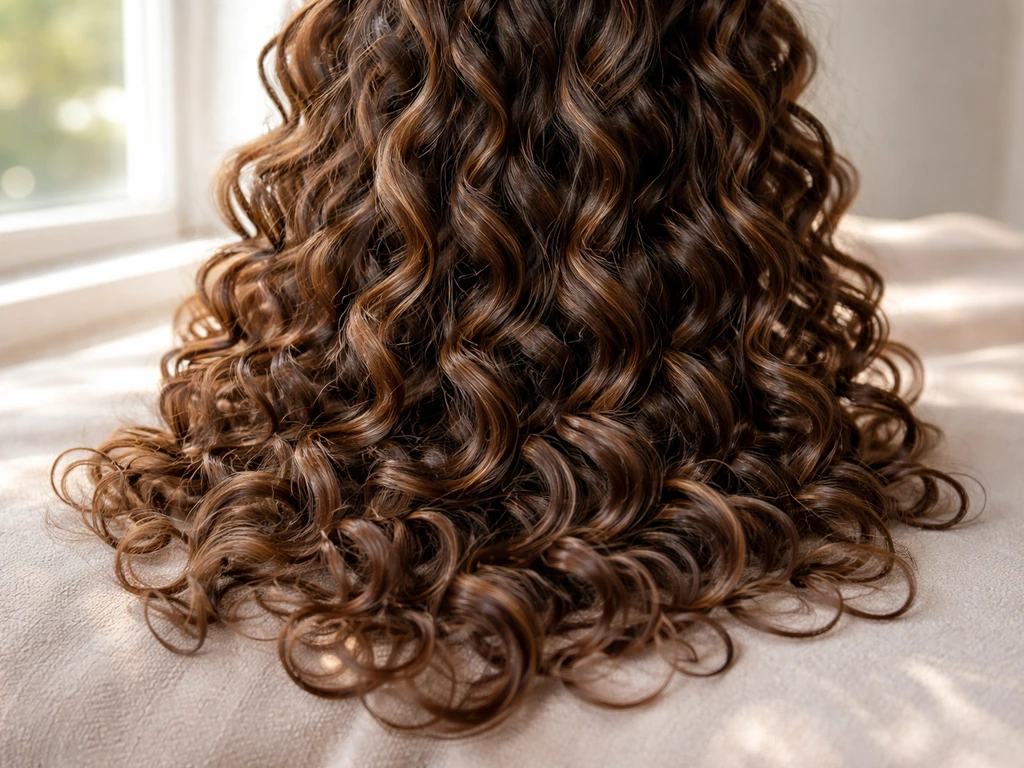
Why curly hair seems to grow slowly (it's usually not the growth)
Hair grows from the scalp at roughly 0.5 inches (about 1.25 cm) per month for most people, which works out to around 6 inches a year. That rate applies to curly hair too. So if your hair doesn't seem to be getting longer, the culprit is almost never the follicle itself. It's shrinkage and breakage.
Shrinkage is what happens when curly hair contracts into its natural coil shape after washing. A curl that's 10 inches long stretched out might sit at your ear when dry. That's not damage, that's just how curls work. The fiber literally has to uncurl against its own mechanical tension just to show its full length. It can make progress feel invisible, which is why measuring stretched length matters more than eyeballing your hair in the mirror.
Breakage is the real enemy. When the hair shaft is dry, brittle, or over-manipulated, strands snap off before they can reach your length goals. This is different from shedding, where the whole strand (root and all) falls out. Breakage produces short, uneven pieces, not bulbed strands, and it can mimic thinning so convincingly that people assume they have a growth problem when they actually have a retention problem. Distinguishing between the two changes your entire approach.
The foundation: nutrition, hydration, and scalp health

Before you optimize your wash routine or buy a new deep conditioner, make sure your body has what it needs to grow hair in the first place. Hair is not a vital organ, so it's one of the first places your body cuts resources when something is off nutritionally.
Nutrients that actually matter
Iron is the one most worth checking. Iron deficiency is a well-documented trigger for increased shedding (telogen effluvium), and it's common enough, especially in women with heavy periods, that it's worth getting a ferritin blood test if your hair is shedding more than usual. Serum ferritin is the most useful marker. Zinc is also worth noting: zinc deficiency has been shown to cause hair loss that improves when the deficiency is corrected. Getting both through diet (red meat, legumes, nuts, seeds, leafy greens) is the most reliable approach.
Biotin gets a lot of marketing attention, but the honest picture is that biotin deficiency is very rare, and there's limited clinical evidence that supplementing biotin helps hair grow faster or longer in people who aren't actually deficient. If you're eating a varied diet, you're almost certainly getting enough. Protein matters more day-to-day. Hair is made of keratin, which is a protein, and chronically low protein intake can push follicles into a resting phase early. Aim for adequate protein across your meals rather than worrying about any single supplement.
Scalp care as a growth foundation
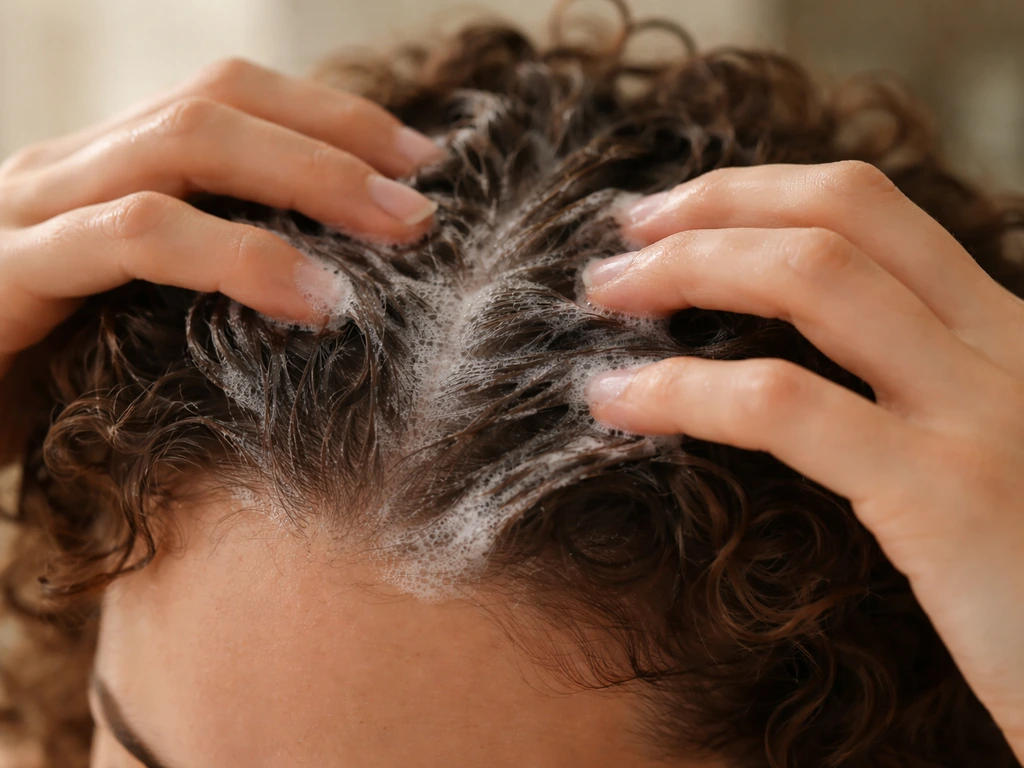
A healthy scalp is the soil your hair grows from, and curly hair can make scalp care trickier because the coil structure slows natural oil distribution down the shaft. Gentle scalp massages during washing stimulate blood flow to follicles and help loosen buildup without mechanical damage. Wash your scalp thoroughly enough that buildup doesn't block follicles, but avoid aggressive scrubbing that causes physical damage to fragile strands. If you're dealing with dandruff, seborrheic dermatitis, or persistent scalp irritation, address those directly because ongoing inflammation at the scalp level can interfere with healthy hair production.
UV exposure is another scalp and hair factor people underestimate. Long-term UV irradiation causes real structural damage to the hair shaft, including thinning of the cuticle layer and increased brittleness. If you spend a lot of time outdoors, a UV-protectant hair product or a wide-brimmed hat does more than most people realize.
Building a curly-hair routine that actually retains length
How often to wash
Wash frequency should match your scalp, not a calendar. People with oilier scalps may need to wash every few days. Curly and coily hair tends to be drier because the natural oils from the scalp struggle to travel down a spiral shaft, so most people with curly hair do well washing once a week or every five to seven days. Overwashing strips the natural oils that keep the shaft flexible and less prone to snapping. Underwashing leads to buildup that can irritate the scalp. Pay attention to how your scalp and strands feel and adjust from there.
Washing and conditioning the right way
Use a gentle, sulfate-free or low-sulfate shampoo and focus application on the scalp, not the lengths. Rough scrubbing along the shaft causes mechanical damage. When you apply conditioner, work it from mid-shaft to ends, which are the oldest and most fragile parts of the hair. Leave it on for a few minutes to allow absorption. After rinsing, follow up with a leave-in conditioner or a detangling product while hair is still wet. The AAD specifically recommends this step to reduce breakage, split ends, and frizz, and for curly hair it's not optional, it's the baseline.
Detangling without wrecking your strands
Curly hair is most vulnerable to breakage when it's dry and tangled. Detangle when hair is wet and saturated with conditioner or a detangling product, starting from the ends and working upward toward the root. Use a wide-tooth comb or your fingers. Avoid fine-tooth combs on curly hair entirely. Research on hair fracture patterns confirms that the way you apply tension during combing affects where breakage occurs along the shaft, which is why slow, section-by-section detangling from ends to roots distributes force more safely than raking through from root to tip.
Getting moisture-protein balance right
Curly hair needs moisture to stay elastic and flexible, and protein to stay strong. Too much moisture without protein makes strands mushy and weak. Too much protein without moisture makes them stiff and brittle. If your hair snaps easily and feels rough, it might need more moisture. If it stretches too far before breaking and feels limp, it may need a protein treatment. Most people with healthy curly hair do well with a moisturizing deep conditioner weekly and a light protein treatment every four to six weeks, but this varies based on your hair's porosity, texture, and the products you use. Pay attention to how your hair responds after treatments and adjust.
Protective styling and preventing damage
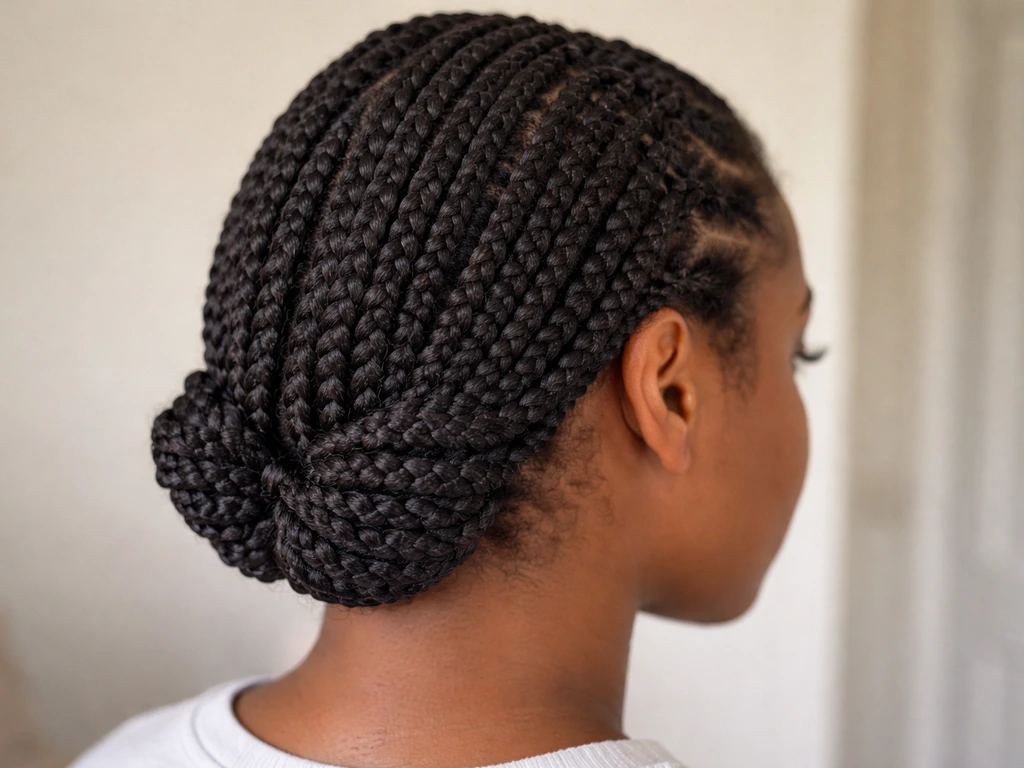
Styles that protect your length
Protective styles tuck your ends away and minimize how much your hair is manipulated day to day. Braids, twists, buns, and updos all count. The goal is to reduce repeated friction, tension, and exposure to environmental damage. Protective styling isn't about leaving your hair untouched forever but about reducing the daily mechanical wear that causes length to quietly snap off over time. Keep protective styles in for two to eight weeks at most, moisturize underneath while they're in, and take them down gently.
Heat damage
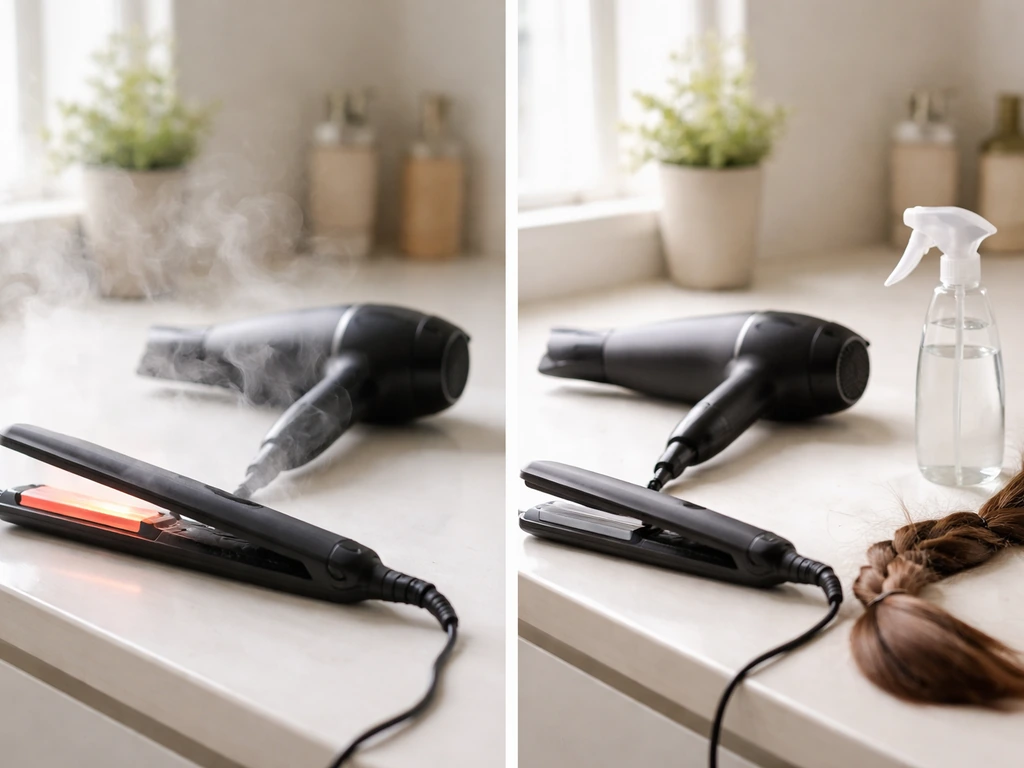
Heat is one of the fastest ways to turn curly hair brittle. If you use a blow dryer or flat iron, keep temperatures under 350°F (about 175°C). The AAP flags this as the safe upper threshold even for textured hair straightening, and even then, damage can happen with repeated use. Always apply a heat protectant before any heat styling, keep the dryer moving constantly rather than holding it in one spot, and let hair air dry whenever possible. Repeatedly straightening curly hair with high heat doesn't just damage the cuticle temporarily, it can alter the curl pattern permanently over time.
Chemical damage
At-home coloring, perming, relaxing, and chemical straightening all compromise the hair shaft's structural integrity and increase dryness and breakage risk significantly. The AAD recommends limiting or stopping these at home entirely if your goal is length retention. If you color or chemically treat your hair professionally, space out appointments, always follow with intensive conditioning, and be especially gentle during the weeks immediately after a chemical service when the shaft is most vulnerable.
Friction and sleep
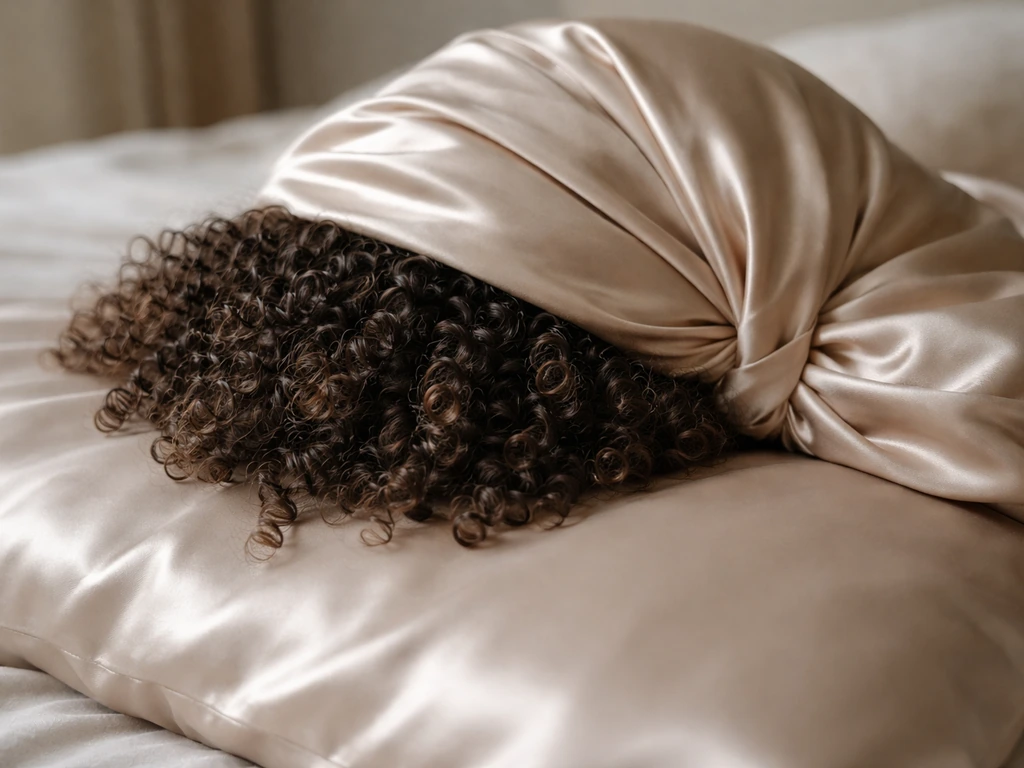
Cotton pillowcases create enough friction against curly hair to cause real, cumulative breakage over months. Switching to a silk or satin pillowcase (or wrapping your hair in a silk bonnet or scarf at night) reduces that friction dramatically. The evidence here is consistent: silk and satin's smooth surface reduces friction-related breakage and frizz compared to standard cotton. It's a simple swap with a surprisingly meaningful impact on retention, especially for the oldest, most fragile parts of your hair.
If your curly hair is fine: extra strategies for fragile strands
Fine curly hair faces a specific challenge: each strand is thinner in diameter, which means less structural resilience against breakage forces. The curl pattern also means fine strands tangle more easily, compounding the problem. If this sounds like your hair, here's how to adjust the standard approach.
- Use lightweight, moisture-rich products rather than heavy butters or oils that can weigh strands down and cause breakage from tension
- Prioritize protein treatments slightly more frequently than you would for coarser curly hair, since fine hair loses structural integrity faster with moisture overload
- Be even more deliberate with detangling: finger-detangling only when possible, and never rush through knots
- Avoid heavy styles that pull on the scalp (tight buns or braids at the root) because the follicle attachment is the weakest point for fine strands
- Consider trimming split ends every eight to twelve weeks rather than waiting longer, since splits travel up the shaft faster on fine hair and cause more breakage higher up
- Wash in sections and handle hair gently even when wet, since fine curly hair is most fragile when saturated
Fine curly hair can absolutely grow long, but it requires more patience and a lighter hand throughout the entire routine. The same principles that apply to growing fine straight hair long apply here, with the added layer of curl-pattern care layered on top.
Growing curly hair long and straight: how to get length without wrecking it
Some people want long curly hair that they can also wear straight, or they're growing out a relaxer and managing two textures at once. This is one of the higher-risk situations for breakage, so it needs a careful approach.
If you're straightening curly hair occasionally for styling, follow the heat guidelines above (under 350°F, heat protectant every time, low-manipulation handling). Give hair at least two to three weeks between heat-straightening sessions and deep condition before and after. Repeated straightening without this buffer leads to gradual cuticle destruction and eventually changes or eliminates the curl pattern, which is called heat damage rather than straightening.
If you're transitioning from a chemical relaxer to natural curly hair, the line of demarcation (where new growth meets chemically treated hair) is the most vulnerable point on the strand. Treat that section with extreme gentleness: avoid tension there, deep condition consistently, and consider trimming the relaxed ends gradually rather than one big chop if you want to preserve as much length as possible through the transition. Both textures behave very differently and need different levels of moisture and handling.
If your goal is simply having naturally long curly hair that you also stretch or blow out occasionally, the safest approach is low-manipulation stretching methods like banding, twist-outs, or roller sets rather than direct heat. These techniques lengthen the curl without the thermal damage, giving you the visual length without the cuticle cost.
How to measure progress, realistic timelines, and troubleshooting
Measuring length the right way
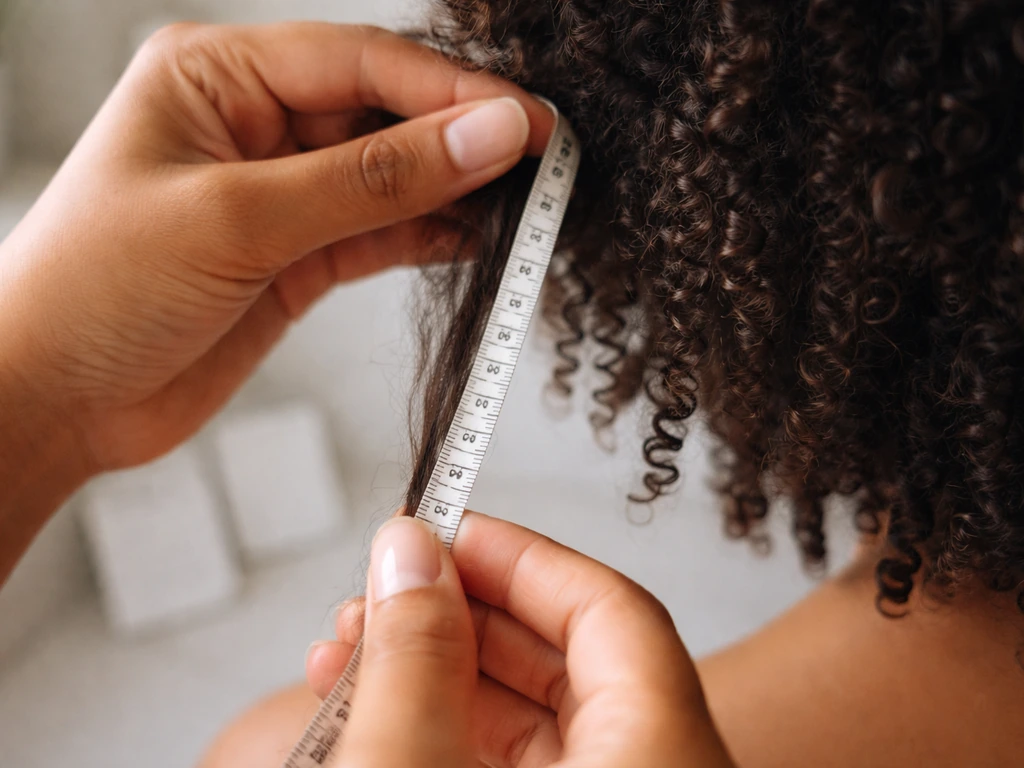
Don't measure curly hair in its natural state unless you're tracking curl health specifically. To track actual length, gently stretch a section straight and measure from root to tip with a soft measuring tape. Take measurements at the same section every month (a small section at the crown or nape works well) under similar conditions: same hydration, same product load, same degree of stretching. This is the only reliable way to see that half-inch of growth each month that shrinkage otherwise hides.
What a realistic timeline looks like
At roughly half an inch per month, you're looking at about six inches of new growth in a year. With good retention (minimal breakage), that should translate to visible length gains. Most people starting a new length-retention routine notice the difference after three to four months. Significant length milestones (shoulder, bra strap, waist) from a shorter starting point can take two to four years depending on your starting length and how well you're retaining what grows. This is not fast, and anyone promising otherwise isn't being straight with you.
Troubleshooting common setbacks
| Problem | Likely Cause | What to Do |
|---|---|---|
| Hair breaking constantly | Dryness, protein overload, or over-manipulation | Increase deep conditioning, check moisture-protein balance, reduce handling and heat |
| Lots of shedding (full strands with root) | Nutritional deficiency, hormonal change, or stress | Check ferritin and zinc levels with a doctor; evaluate diet protein intake |
| No visible length gain after 6+ months | Breakage matching growth rate | Audit routine for heat use, manipulation frequency, and protective style consistency |
| Scalp itching or flaking | Buildup, dandruff, or seborrheic dermatitis | Clarify scalp regularly, try an antifungal shampoo; see a dermatologist if persistent |
| Curl pattern changing or loosening | Heat damage or chemical damage to the cuticle | Stop heat completely for several months; heavily condition; damaged sections may need trimming |
| Hair feeling perpetually dry | Under-moisturizing, hard water, or high-porosity hair | Deep condition weekly, use a leave-in consistently, consider a water filter if in a hard water area |
When to talk to a professional
If you've genuinely tightened up your routine, improved your diet, and are still seeing significant shedding or no growth after three to four months, see a dermatologist. Scalp conditions, hormonal imbalances, thyroid issues, and nutritional deficiencies all show up as hair problems and need to be diagnosed properly rather than managed with products. A dermatologist can examine your scalp and hair, order relevant bloodwork, and distinguish between breakage and true hair loss, which changes the treatment path entirely.
Your next steps starting today
- Audit your current routine for the biggest breakage risks: heat frequency, detangling method, cotton pillowcase, and how often you're manipulating your hair
- Switch to a silk or satin pillowcase or bonnet tonight (low effort, real impact)
- Commit to a weekly deep conditioning session for the next eight weeks and assess how your hair responds
- Start measuring your stretched length now so you have a baseline for tracking progress
- Look at your diet honestly: are you getting enough iron, zinc, and protein? If you're shedding heavily, get ferritin and zinc checked
- Pick one protective style you'll actually wear consistently and incorporate it for at least two weeks a month
- Set a three-month check-in date to reassess length, breakage levels, and scalp health before making any other major changes
Growing long curly hair is genuinely achievable for almost everyone. The biology works in your favor: your hair is growing right now. The work is in building a routine that stops length from disappearing before you get to enjoy it. Patience, consistency, and gentle handling will get you further than any single product or supplement ever will. A consistent length-retention routine is often the best way to grow long hair, especially for curly hair. If you focus on healthy growth and retention, you’ll learn how to grow hair long and healthy.
FAQ
How do I tell if my hair is breaking versus shedding, when I am unsure what I am seeing?
Look at what falls out and what snaps. Shed hair usually comes out as an intact strand with a small white bulb at one end. Breakage creates shorter, uneven pieces without the bulb. Also note where the losses happen, if you are losing mainly from the ends or mid-shaft, that points to breakage rather than follicle shedding.
Should I trim my curly hair to grow it longer, or will trims slow growth?
Trims do not change how fast hair grows from the scalp, but they can improve retention by removing split ends that keep splitting and traveling upward. If you are seeing frequent splits or tangling that leads to snags, schedule small, regular trims (for example every 8 to 12 weeks) instead of waiting for severe damage.
How much protein and moisture should I use, and how do I avoid going too far in either direction?
Use the feel test rather than the label. If your hair stretches a lot and then breaks suddenly, you likely need more protein. If it feels gummy, mushy, or limp and loses shape quickly, you likely need less protein and more moisture. Many people do better rotating a weekly moisturizing deep conditioner with a lighter protein step every 4 to 6 weeks, then adjusting based on response.
What is the safest way to detangle curly hair if I cannot finger-detangle smoothly?
Work in small sections, saturate with conditioner or a detangling product, and start from the ends. Use a wide-tooth comb and keep tension low, if you feel strong resistance, add more slip and reapply product rather than forcing through. Gentle, end-to-root detangling reduces where fractures begin.
Does trimming or changing my wash routine affect my curl length measurements?
Yes, both can change how your hair stretches and how much shrinkage you see. If you measure stretched length, measure under the same product load and stretching method each month. If you switch products or start blow-drying more often, your measurements may look better or worse even if growth stayed the same.
How do I handle hair growth issues caused by a scalp problem, like dandruff?
If your scalp is flaky, itchy, or inflamed, addressing buildup and irritation becomes part of hair retention, not an optional extra. Persistent seborrheic dermatitis or dandruff often requires targeted treatment, keep styling friction low, and consider a dermatologist if symptoms do not improve after a few weeks of consistent scalp care.
Can I grow long curly hair if I swim regularly or sweat a lot?
Yes, but retention needs an added chlorine or pool maintenance step. Rinse hair promptly after swimming, then follow with a gentle cleanse and a deep conditioner to restore elasticity. Salt water can be drying too, a pre-rinse and post-swim conditioning help reduce brittleness and breakage.
How often should I use a deep conditioner versus leave-in conditioner for length retention?
A common baseline is deep conditioning once weekly for moisture and elasticity, then using leave-in or detangling product during wash days to keep hair protected while wet and detangled. If your hair dries quickly or feels rough between washes, slightly increase moisture frequency, but keep protein in a balanced rotation to avoid mushiness.
Is it okay to sleep with my hair loose if I do not have a silk bonnet?
Loose hair on cotton increases friction, so if you do sleep loose, expect more tangling and breakage over time. If you cannot get silk or satin right away, loosely braid or twist to reduce movement, then cover with a smooth scarf or use any available satin-lined option. The goal is limiting end-to-surface rubbing.
What protective styles are best for length retention without causing new breakage?
Styles that reduce manipulation and keep ends contained usually work best, braids, twists, buns, and updos. The key caveat is tension, avoid tight installations and take protective styles down gently. Keep them in for a limited window (often 2 to 8 weeks) and moisturize underneath, buildup and dryness under styles can cause hidden breakage.
How can I grow long hair for curly hair if I heat-style for special events?
Minimize frequency and protect the cuticle every time. Use heat protectant, keep temperatures at or below the guideline your hair tolerates (under 350°F is a safer upper threshold), and do not hold heat in one spot. Plan a buffer of weeks between straightening sessions and include deep conditioning before and after, if you notice curl loosening or brittleness, stop and switch to non-heat stretching.
When should I stop trying to change products and see a dermatologist?
If you have clear shedding, rapid thinning, scalp pain, or no visible length or retention improvement after about 3 to 4 months of consistent gentle handling and basic nutrition. A dermatologist can distinguish breakage from true hair loss and check for hormonal issues or deficiencies that supplements alone cannot fix.
Next Articles

How to Grow Hair Long and Healthy: Step-by-Step Guide
Step-by-step plan to grow hair long and healthy: scalp care, breakage control, nutrition, safe supplements, and troubles
How to Grow Hair Long and Thick: A Step-by-Step Plan
Step-by-step plan to grow longer, thicker hair with nutrition, scalp care, safe topicals, and less breakage.

How Do I Grow Long Hair: Steps, Timelines, and Breakage Tips
Learn how to grow long hair with timelines, breakage prevention, scalp care, nutrition tips, and routine troubleshooting