
Growing long hair with Ayurveda comes down to three pillars: nourishing the scalp with the right oils and herbs, supporting digestion so your body can actually build healthy hair tissue, and protecting the hair you already have from breakage. Done consistently, most people can expect roughly 15 cm (6 inches) of new growth per year, the same biological rate as anyone else, but with noticeably stronger, thicker, less-breakage-prone strands within 3 to 6 months of a proper Ayurvedic routine.
How to Grow Long Hair Ayurveda: Step-by-Step Natural Guide

Marcus Holloway
16 Jul 2026
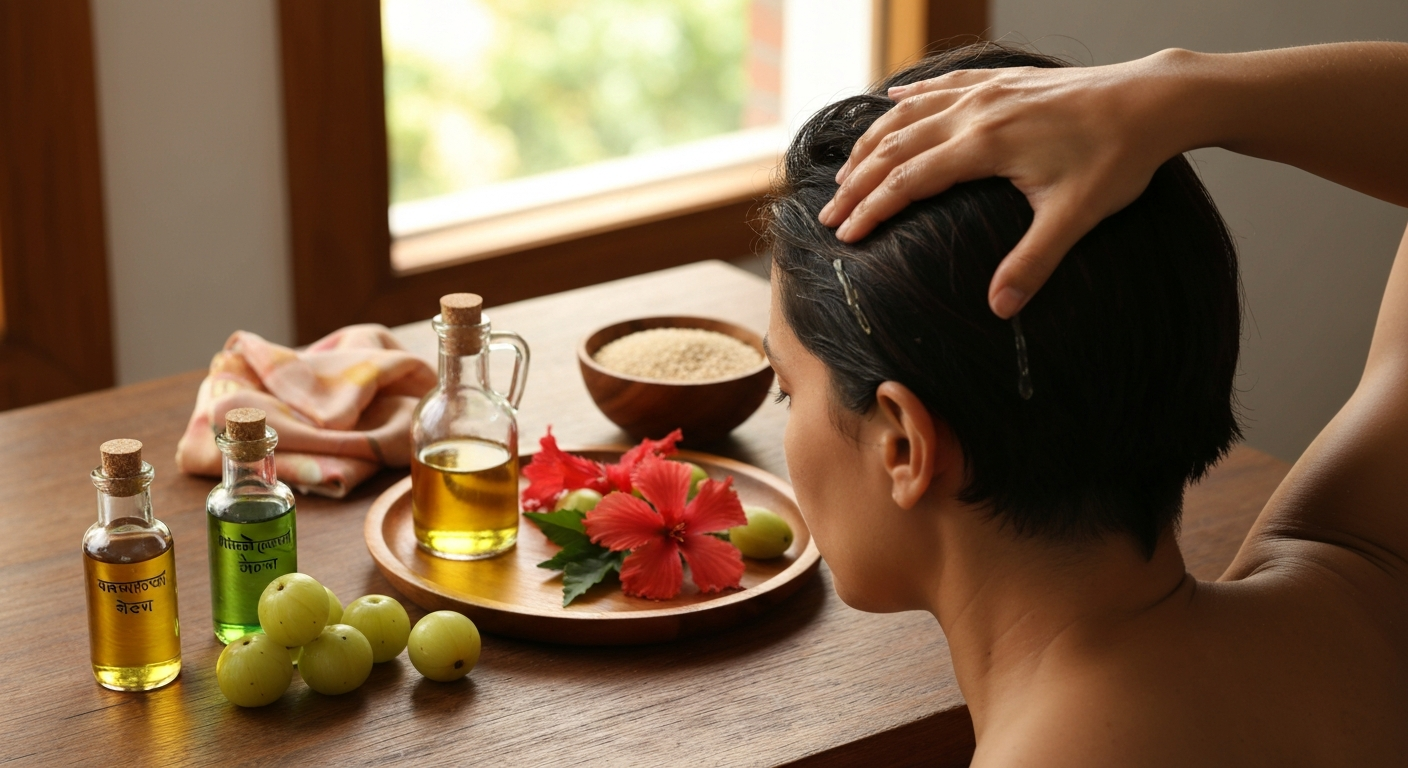
What this Ayurvedic plan actually delivers (and who it's for)
This guide is for anyone who wants to grow longer, thicker hair using time-tested Ayurvedic principles alongside what current research actually supports. That includes women and men, people of South Asian heritage wanting to deepen a family tradition, readers covering their hair for religious reasons (including Muslim readers wearing hijab), and anyone who has simply tried conventional products and wants something more holistic. It works across hair types, fine, coarse, wavy, tightly coiled, chemically treated, because the core logic targets the scalp environment and internal nourishment rather than a single product.
What you can realistically expect: reduced shedding and breakage within 4 to 8 weeks of consistent oiling and scalp massage; visibly improved shine and manageability within 6 to 12 weeks; measurable length retention (hair that used to break before reaching shoulder length finally reaching it) within 3 to 6 months; and, if you address nutrition gaps, improvements in hair density over 6 to 12 months. Ayurveda does not re-grow hair where follicles have been permanently scarred or destroyed, if you are experiencing rapid, unexplained hair loss, please see a dermatologist before or alongside this plan.
How hair actually grows (the biology behind the Ayurvedic logic)
Your hair follicle cycles through four phases. Anagen is the active growth phase, a single follicle can stay in anagen for 2 to 7 years, and the length of this phase is the single biggest determinant of how long your hair can grow. Catagen is a brief 2-to-3-week transition. Telogen is the resting phase, lasting roughly 3 months, during which the old hair sits in the follicle before shedding in the exogen phase. Losing 50 to 100 hairs a day is normal during exogen. Where Ayurvedic practices genuinely help is in protecting follicles from inflammation, nutrient deprivation, and mechanical stress, all of which can shorten anagen or push follicles prematurely into telogen.
Hair thickness is determined by follicle size and the local signaling environment inside the scalp, androgens, Wnt proteins, bone morphogenetic proteins (BMPs), and prostaglandins all play roles. Scalp massage, anti-inflammatory herbs, and a nutrient-dense diet can support a favorable signaling environment, though they cannot override strong genetic programming. Understanding this is important: Ayurveda can optimize what your genes allow; it is not a workaround for androgenetic alopecia.
Core Ayurvedic concepts that actually matter for hair
Ayurveda describes hair (keśa, Hindi: केश) as a by-product of bone tissue formation, specifically an upadhātu (secondary tissue) arising from the asthi dhātu (अस्थि धातु, bone tissue) pathway described in classical texts like the Charaka Samhita and Ashtanga Hridayam. This means that in the Ayurvedic model, your hair reflects the health of deeper tissue-building processes, not just what you put on your scalp.
Agni (अग्नि), or digestive fire, is the engine that converts food into dhātus (body tissues). When agni is strong, nutrients are absorbed and processed efficiently; when it is weak or disturbed (called mandāgni, मंदाग्नि), the downstream dhātus, including the tissue pathway that feeds hair, receive poorer nourishment. This maps surprisingly well onto modern findings: iron deficiency and poor gut absorption are among the most common correctable causes of hair thinning.
Ojas (ओजस) is Ayurveda's concept of vital essence, the refined output of all seven dhātus working well. Strong ojas is associated with healthy hair, skin, and immunity. Practically, building ojas means reducing chronic stress, sleeping adequately, eating whole foods, and avoiding excessive fasting or overexertion, advice that aligns with modern stress-hair biology (chronic cortisol elevation is a known trigger for telogen effluvium).
The tridosha framework, Vata (वात), Pitta (पित्त), and Kapha (कफ), describes constitutional tendencies that affect hair. Excess Vata tends to produce dry, brittle, frizzy hair prone to breakage. Excess Pitta often shows as premature graying, hair fall, and scalp inflammation. Excess Kapha can lead to oily scalp, sluggish growth, and heaviness. Most Ayurvedic hair treatments use cooling, oleating (oil-based) approaches because modern life pushes many people toward Vata and Pitta imbalance. Srotas (स्रोतस) are the body's channels; the hair follicles are nourished through the romakupa srotas (रोमकूप स्रोतस). Keeping these channels unblocked, through cleansing, light massage, and avoiding heavy product buildup, is a core Ayurvedic principle.
What the evidence actually says about Ayurvedic herbs and practices
I want to be upfront here: the research base for Ayurvedic hair practices is real but thin. Most studies are small, uncontrolled, or conducted in animals. That does not mean the practices are ineffective, it means we cannot yet quantify exactly how much they help or for whom. Here is an honest snapshot of what we know.
| Herb / Practice | Evidence level | What it shows | Key limitation |
|---|---|---|---|
| Bhringraj (Eclipta alba) | Preclinical + small human trials | Anti-inflammatory, antioxidant, possible 5α-reductase modulation; small trials report reduced shedding | No large, high-quality RCTs in humans |
| Amla (Emblica officinalis) | Preclinical + formulation studies | High vitamin C and polyphenols; scalp/oil preparations may reduce hair fall in small studies | Large standardized human RCTs lacking |
| Coconut oil (topical) | Moderate cosmetic science evidence | Measurably reduces protein loss from hair shaft vs. mineral or sunflower oil; penetrates shaft | Evidence is for damage reduction, not regrowth |
| Scalp massage | Small pilot + retrospective survey | 24-week pilot (n=9) showed increased hair shaft thickness; large survey reported perceived stabilization | Very small sample; survey is self-reported and uncontrolled |
| Castor oil | Anecdotal + narrative review | Cosmetic sheen; no high-quality RCTs proving regrowth; allergic contact reactions reported | No controlled clinical evidence for regrowth |
| Iron / Ferritin optimization | Systematic review + meta-analysis | Low ferritin associated with nonscarring alopecia in women; correcting deficiency supports hair | Relationship is associative; optimal ferritin level debated |
| Vitamin D optimization | Systematic review + meta-analysis | Lower serum vitamin D associated with multiple non-scarring alopecias | Causality unclear; direct regrowth evidence varies |
A 2024 evidence synthesis found that several plant extracts including amla and bhringraj show preliminary signals, but controlled human RCT evidence remains limited and heterogeneous in quality. A systematic review (Pathophysiology, conventional treatments, and evidence‑based herbal remedies of hair loss, systematic review (PMC)) reported that rosemary, certain polyherbal formulations, amla, and bhringraj show preliminary signals but high‑quality controlled human RCT evidence is limited and heterogeneous Pathophysiology, conventional treatments, and evidence‑based herbal remedies of hair loss — systematic review (PMC). The honest takeaway: these herbs and practices are very low-risk, have a long history of traditional use, and have enough early biological plausibility to justify trying them, just do not expect the same certainty as, say, topical minoxidil for pattern hair loss. If your hair loss is significant, combine this plan with a dermatologist's assessment.
Setting goals and measuring progress realistically
Human scalp hair grows at roughly 1 to 1.5 cm (about half an inch) per month on average, that is 12 to 18 cm per year. Ayurvedic practices will not change this ceiling, but they can help you retain more of that growth by reducing the breakage that makes it seem like hair is not growing. A person who loses 3 cm to breakage for every 6 cm that grows will see apparent stagnation. Reduce breakage and that same biological rate becomes visible progress.
For density goals, expect a genuine improvement in how full the hair looks within 3 to 6 months if the primary issue is telogen effluvium driven by a correctable cause (nutrition, stress, hormonal fluctuation). Pattern hair loss (androgenetic alopecia) will not reverse with Ayurvedic herbs alone and requires clinical input.
A simple way to measure progress: take a baseline photo of your hairline and part under consistent lighting on day one, then repeat monthly. Measure a specific strand from root to tip and note it. Weigh your shed hair loosely (a kitchen scale works) for one week per month to track whether shedding is reducing. These three data points, photo, length, shed count, will tell you more than mirror-checking daily.
The key herbs and oils: what they are, how to use them
Before jumping into routines, it helps to understand what you are working with. These six ingredients form the backbone of most Ayurvedic hair practices and are widely available in South Asian grocery stores, health food shops, and online.
Amla (आंवला, Indian gooseberry)
Amla is the cornerstone of Ayurvedic hair care. It is exceptionally high in vitamin C (one of the richest plant sources) and polyphenols that support collagen synthesis in the scalp. You can use it as a powder mixed into oil, as a fresh or frozen fruit, or as an amla-infused oil. For internal use, 1 to 2 teaspoons of amla powder in warm water daily, or eating 2 to 3 fresh amlas, is a common approach. For topical use, mix amla powder with a carrier oil and apply to the scalp.
Bhringraj (भृंगराज, Eclipta alba)
Often called the 'king of hair herbs' in Ayurveda, bhringraj has the most preclinical data behind it among Ayurvedic hair herbs. It is typically used as a medicated oil (bhringraj taila, भृंगराज तेल) applied to the scalp, or as a powder consumed internally. Buy it as a pre-made oil or make your own by simmering dried bhringraj leaves in sesame or coconut oil for 30 to 45 minutes on low heat, then straining.
Hibiscus (गुड़हल)
Hibiscus flowers and leaves are used topically to condition hair, add slip, and support scalp health. The mucilage in hibiscus provides natural conditioning, and traditional use describes it as cooling for Pitta-type scalp inflammation. A simple hibiscus hair mask, blending fresh or dried flowers with coconut oil, is one of the most effective DIY treatments for reducing frizz and breakage in dry or coarse hair types.
Fenugreek (मेथी, Methi)
Fenugreek seeds are rich in protein, nicotinic acid, and lecithin, compounds associated with hair strengthening. They are used as a hair mask (soaked overnight, blended into a paste) and internally as a spice or supplement. If you are on blood-thinning medication or have a hormone-sensitive condition, check with your doctor before taking fenugreek supplements, as it has mild hormonal and anticoagulant activity.
Neem (नीम)
Neem is the scalp-health herb. Its antifungal and antibacterial properties make it valuable for dandruff-prone, itchy, or inflamed scalps. Use neem-infused oil or a few drops of neem oil diluted in a carrier (1 to 2% dilution, neem is strong-smelling and potent) as part of your oiling routine. Do not use undiluted neem oil on the scalp. Internally, neem leaf tea is used in traditional practice for systemic detoxification, but evidence here is sparse; stick to topical use as your primary approach.
Brahmi (ब्राह्मी, Bacopa monnieri or Centella asiatica)
Brahmi is valued in Ayurveda for its calming, adaptogenic properties that target stress-related hair loss. It is most commonly used as a scalp oil (brahmi oil) or internally as a supplement. The stress-reduction pathway is probably its most plausible mechanism for hair benefits, chronic stress is a well-documented trigger for telogen effluvium, and reducing it supports normal anagen cycling.
Carrier oils: which to choose and why it matters
Not all oils behave the same on your hair. Research using confocal microscopy has shown that different oils penetrate the hair shaft to different degrees, affecting how well they protect against protein loss and hygral fatigue (the swelling-and-shrinking damage that happens when hair repeatedly absorbs and loses water). Coconut oil stands out because it is the only common oil that has been shown to measurably reduce protein loss from both damaged and undamaged hair in cosmetic science studies, a finding that gives it a meaningful advantage over mineral or sunflower oil for most hair types. Sesame oil (til ka tel, तिल का तेल) is traditionally dominant in Ayurvedic formulations for its warming properties and penetrating ability. Olive oil and cashmere (castor) oil sit on top of the shaft rather than penetrating, providing surface conditioning and sheen without deep shaft benefits.
| Oil | Penetrates shaft? | Best for | Ayurvedic dosha association | Notes |
|---|---|---|---|---|
| Coconut oil | Yes (well) | All hair types; reducing protein loss; pre-wash treatment | Pitta-cooling | Best evidence for damage reduction; can cause buildup on very low-porosity hair |
| Sesame oil | Yes (moderate) | Dry, Vata-type hair; cold climates; overnight treatments | Vata-balancing, warming | Traditional base oil in most Ayurvedic formulations |
| Bhringraj oil (in sesame/coconut base) | Yes (via carrier) | Scalp treatment for hair fall; general growth support | Tridoshic (balances all) | Most recommended Ayurvedic hair oil |
| Castor oil | No (surface) | Adding sheen; mixing with lighter oils; edges and temples | Kapha-increasing | No RCT evidence for regrowth; thick, use sparingly |
| Neem oil | Partial | Dandruff, scalp inflammation, itching | Pitta-cooling, Kapha-clearing | Always dilute to 1-2%; strong smell |
Your daily Ayurvedic hair routine
Morning actions
- Drink a glass of warm water with 1 tsp amla powder or fresh amla juice—this supports agni and delivers antioxidants to the scalp-building tissue pathway.
- Eat a nutrient-dense breakfast that includes protein (eggs, lentils, yogurt, paneer, or nuts) and iron-supporting foods (spinach, seeds, legumes). Pair iron-rich plant foods with vitamin C for better absorption.
- If your hair is not freshly washed, do a 3 to 5 minute scalp massage with your fingertips (not nails)—use firm rotational pressure across the full scalp. The pilot study data suggest this may increase hair shaft thickness over weeks of consistent practice. You do not need oil for a morning massage.
- Detangle gently with a wide-tooth comb starting from the ends, working upward. Never drag through tangles from the root—this is where most mechanical breakage happens.
- If you cover your hair with a hijab, dupatta, or other head covering, opt for a loose, breathable style underneath. Tight braids or ponytails under coverings create traction stress on follicles over time. A satin or cotton undercap reduces friction significantly.
Evening actions
- On non-wash days, apply a small amount (3 to 5 ml) of your chosen hair oil to the scalp and massage for 5 to 10 minutes using circular movements. This is your abbreviated abhyanga (अभ्यंग) for the scalp.
- Eat a balanced dinner with adequate protein and include a cooked vegetable with healthy fat to support fat-soluble nutrient absorption (vitamins A, D, E, K all matter for scalp tissue).
- Wind down stress intentionally—brahmi tea, 10 minutes of pranayama, or simple breathwork signals your nervous system to shift away from the cortisol-dominant state that pushes hair follicles toward telogen.
- Sleep on a silk or satin pillowcase, or wrap your hair in a silk scarf, to reduce friction and moisture loss overnight. Cotton pillowcases absorb oil from the hair shaft and create micro-breakage over time.
- Aim for 7 to 9 hours of sleep—this is when growth hormone is secreted and tissue repair (including hair matrix cell division) is most active.
Diet and nutrition: feeding hair from the inside
Ayurveda's emphasis on agni and dhātu nourishment is, at its core, a nutritional argument: strong digestion converts good food into healthy tissues. Modern hair science agrees, iron deficiency (low ferritin) is associated with nonscarring alopecia and telogen effluvium in systematic reviews, and lower vitamin D levels are consistently found in people with multiple types of non-scarring hair loss. These are correctable. Before spending money on herbal oils and supplements, get a blood test checking ferritin, vitamin D (25-OH), zinc, and thyroid function (TSH). These are the most common correctable nutritional causes of hair thinning.
If you eat a vegetarian or vegan diet (very common in South Asian Ayurvedic practice), pay particular attention to iron and vitamin B12. Plant-based iron (non-heme iron) absorbs less efficiently than animal-based iron, so pair iron-rich foods, lentils, spinach, sesame seeds, pumpkin seeds, with vitamin C-containing foods at the same meal. Amla does double duty here: it provides vitamin C to boost iron absorption and is itself a hair-supportive herb.
Hair-supporting foods to prioritize
- Protein: lentils (dal), chickpeas, eggs, paneer, Greek yogurt, fish, chicken—hair is made of keratin protein, and inadequate dietary protein directly impairs hair synthesis
- Iron: spinach, methi (fenugreek leaves), black sesame seeds, lentils, tofu, jaggery—pair with vitamin C
- Zinc: pumpkin seeds, hemp seeds, chickpeas, cashews—zinc deficiency is associated with hair loss and is common in restricted diets
- Biotin (B7): eggs, sweet potatoes, almonds, sunflower seeds—genuine deficiency is rare but supplementation is popular; only supplement if deficient
- Vitamin D: fatty fish, egg yolks, fortified dairy/plant milks, sunlight exposure—get levels tested before supplementing
- Omega-3 fatty acids: walnuts, flaxseeds, chia seeds, fatty fish—support scalp sebum quality and anti-inflammatory environment
- Amla / Vitamin C: fresh amla, guava, citrus—critical for collagen synthesis in the scalp dermis
From an Ayurvedic dietary angle, favor warm, cooked, easily digestible foods over raw, cold, or heavily processed foods, this supports agni. Ghee (clarified butter) in moderate amounts is considered ojas-building and carries fat-soluble nutrients efficiently. Avoid skipping meals, which weakens digestive fire, and avoid eating heavy meals late at night, which impairs dhātu formation during the repair phase of sleep.
Your weekly and monthly routine
Weekly schedule
| Day | Morning | Evening |
|---|---|---|
| Monday | Warm amla water; 3-min scalp massage (dry) | Light scalp oil application + 5-min massage |
| Tuesday | Warm amla water; gentle detangle | Stress-reduction wind-down (brahmi tea/pranayama) |
| Wednesday | WASH DAY: Pre-wash oil treatment (see below) | Wash, condition; air dry or low-heat dry |
| Thursday | Warm amla water; 3-min scalp massage | Light oil application + 5-min massage |
| Friday | Warm amla water; gentle detangle | Overnight deep oil treatment (full abhyanga) |
| Saturday | WASH DAY: Wash out overnight oil; hair mask (fenugreek or hibiscus) | Scalp check (see checklist below); light styling |
| Sunday | Rest day; focus on nutrition and stress reduction | Early sleep; silk cap/scarf overnight |
Pre-wash oil treatment (do this before every wash)
- Warm 3 to 4 tablespoons of bhringraj oil (or plain coconut oil) gently—just above body temperature, not hot.
- Part your hair into sections and apply oil directly to the scalp using a dropper bottle or your fingertips.
- Work through the lengths of the hair as well to reduce protein loss during shampooing.
- Massage the scalp for 10 to 15 minutes using circular movements with the pads of your fingers.
- Leave for a minimum of 30 minutes; overnight is better for a weekly deep treatment.
- Shampoo out thoroughly—you may need two rounds of shampoo to fully remove the oil.
Monthly additions
- Month 1 to 3: Take your baseline photos, length measurement, and shed-count assessment on day 1 of each month
- Every 6 to 8 weeks: Trim split ends—split ends travel up the shaft and cause more breakage than the trim removes
- Monthly: Do a scalp examination using the checklist in the scalp care section below
- Every 3 months: Reassess your nutrition (consider re-testing ferritin and vitamin D if you started from a deficit)
- Every 3 months: Evaluate your dosha state—if stress has increased (Vata/Pitta aggravation), increase the frequency of brahmi oil use and stress-reduction practices
DIY recipes
Fenugreek hair mask: Soak 3 tablespoons of methi (fenugreek) seeds overnight in water. Drain and blend into a smooth paste. Add 2 tablespoons of plain yogurt and 1 tablespoon of coconut oil. Apply to scalp and lengths, leave for 30 minutes under a shower cap, then rinse and shampoo. Use once a week. This mask adds protein and conditions the scalp without stripping sebum.
Hibiscus-amla growth oil: Gently heat 100 ml of coconut oil with 8 to 10 dried hibiscus flowers and 2 tablespoons of amla powder on the lowest heat for 25 to 30 minutes, stirring occasionally. Allow to cool completely, then strain through a muslin cloth into a clean glass jar. Store at room temperature for up to 4 weeks. Apply as your regular scalp oil. The hibiscus adds slip and conditioning; the amla delivers its polyphenols into the oil.
Brahmi-neem scalp treatment for dandruff: Mix 50 ml of sesame oil with 1 teaspoon of brahmi powder, 1 teaspoon of neem powder, and 5 drops of tea tree essential oil. Apply to scalp only (not lengths), leave for 45 minutes, then shampoo thoroughly. Use once a week if dandruff is active, once a month for maintenance. Do a patch test first, apply a small amount to your inner wrist and wait 24 hours before full scalp application.
Scalp care fundamentals
Your scalp is where everything begins, and it is surprisingly easy to neglect. A healthy scalp has a slightly acidic pH (around 4.5 to 5.5), a balanced microbiome, and sebum production that lubricates the first few centimetres of the hair shaft without blocking follicles. Most common scalp problems, dandruff (खुश्की, khushki), itch, excess oiliness, and folliculitis, are manageable with the right combination of cleansing frequency, ingredient choices, and targeted treatments.
Dandruff is most commonly caused by an overgrowth of the Malassezia yeast that naturally lives on all scalps. It is aggravated by irregular cleansing, heavy oil buildup, and Pitta-type heat and inflammation. Neem oil, tea tree oil (diluted), and zinc-containing shampoos all have evidence for reducing Malassezia. If you use heavy oils regularly (which Ayurvedic practice encourages), make sure you are washing thoroughly, oil left on the scalp for more than 48 to 72 hours can feed yeast overgrowth.
For people who cover their hair daily, whether for religious observance or preference, scalp ventilation is reduced, which can increase moisture, heat, and Malassezia activity. Prioritize washing every 3 to 4 days if you cover, use breathable fabrics (cotton or bamboo undercaps rather than synthetic materials), and include a neem or anti-fungal rinse in your weekly routine.
Scalp examination checklist
Once a month, use a handheld mirror in good light and part your hair in several sections to examine your scalp directly. Check for the following:
- Flaking: white or yellow flakes suggest dandruff or seborrheic dermatitis—begin anti-fungal treatment
- Redness or pink patches: inflammation that does not respond to 2 to 4 weeks of neem/tea tree treatment needs clinical evaluation
- Follicle openings: they should appear as small dots evenly distributed—if an area shows no follicle dots, the skin looks smooth and shiny, or scarring is visible, see a dermatologist urgently (this may indicate scarring/cicatricial alopecia)
- Pustules or painful bumps: could be folliculitis—do not oil over an infected scalp; see a clinician
- Widening part or visible thinning at temples or crown: document with monthly photos; if progressing rapidly over weeks, seek dermatological evaluation
- Scaling at the hairline: may be seborrheic dermatitis or psoriasis—both need clinical management if persistent
- Itching without visible cause: persistent itch with normal-appearing scalp warrants investigation for contact dermatitis (possibly from an ingredient you are using)
When to see a clinician
Ayurvedic practices are genuinely supportive for healthy scalp maintenance and optimizing natural growth, but they are not a substitute for clinical care when hair loss is significant, rapid, or associated with other symptoms. See a dermatologist if: you are losing more than 150 hairs a day for more than 6 weeks; you notice patches of complete hair absence; your hairline is receding noticeably month-over-month; you have scalp pain, burning, or visible scarring; or hair loss is accompanied by fatigue, weight change, or hormonal symptoms. The British Association of Dermatologists and American Academy of Dermatology both recommend specialist assessment when diagnosis is unclear or loss is rapid. Evidence-based treatments like topical minoxidil have a much stronger evidence base for pattern hair loss than any herbal approach, and there is no reason you cannot combine a clinical treatment with an Ayurvedic supportive routine. The British Association of Dermatologists' patient leaflet 'BAD Patient Information Leaflet, Hair loss (male pattern)' states that approved treatments such as topical minoxidil and oral finasteride are evidence‑based options for male pattern hair loss and recommends specialist assessment when diagnosis is unclear or loss is rapid/severe BAD Patient Information Leaflet — Hair loss (male pattern).
Adapting the routine for your hair type and life
Fine or low-density hair
Fine hair is prone to weighing down with heavy oils. Use lighter amounts, 2 to 3 ml of oil applied only to the scalp, not the lengths. Coconut oil in small quantities as a pre-wash treatment works well; avoid castor oil on fine strands as it can mat them. Fenugreek masks can add volume-supporting protein without heaviness.
Coarse, thick, or tightly coiled hair
Coarse and coiled hair types have a higher surface area, lose moisture faster, and are more prone to hygral fatigue. These hair types benefit most from the generous oiling approach that Ayurveda prescribes. Use coconut oil as a pre-wash sealant, leave on for several hours or overnight, and follow with a moisturizing conditioner after washing. The hibiscus-amla oil recipe is particularly good for this hair type.
Chemically treated or heat-damaged hair
If your hair is bleached, permed, or regularly heat-styled, the outer cuticle is compromised and protein loss during washing is higher. Prioritize the pre-wash coconut oil treatment (its shaft-penetrating ability is especially beneficial here) and reduce heat styling frequency. A weekly fenugreek protein mask supports strength. Amla powder can temporarily stain light or bleached hair, do a strand test before applying.
For readers who cover their hair
If you wear a hijab, niqab, dupatta, or turban, the scalp environment under the covering is warmer and less ventilated than an uncovered scalp. Prioritize: washing every 3 to 4 days rather than weekly to prevent product and sebum buildup; using breathable cotton or bamboo undercaps rather than synthetic materials; incorporating neem into your weekly oil to maintain a healthy scalp microbiome; and wearing looser styles underneath to reduce traction. The Ayurvedic oiling tradition is entirely compatible with covering, just ensure oil is applied the evening before a wash day and fully washed out before covering, to prevent buildup-driven scalp issues. For more on culturally specific Indian hair practices, the guidance on Indian hair tips goes deeper into traditional family routines that map well onto this framework.
Safety, contraindications, and ingredient notes
- Always patch-test new topical preparations on your inner wrist for 24 hours before applying to the scalp—castor oil and neem oil in particular can cause allergic contact reactions in sensitive individuals
- Fenugreek supplements (not seeds as a spice) may interact with blood-thinning medications and have mild hormonal activity—consult your doctor if you are on anticoagulants or have a hormone-sensitive condition
- Brahmi (Bacopa monnieri) supplements can interact with certain medications and may cause digestive upset at high doses—stick to tea or food-grade preparations unless a qualified practitioner guides dosing
- Amla powder can temporarily stain light-colored or bleached hair a yellow-brown—do a strand test first
- Do not apply heavy oils to an actively infected or inflamed scalp—oil over pustules or open sores can worsen infection
- Pregnant and breastfeeding readers should consult their healthcare provider before starting any new herbal supplement regimen—some Ayurvedic herbs are contraindicated in pregnancy
- Children's scalps are more sensitive—dilute all herbal oil preparations further and avoid neem oil on young children without professional guidance
- If you source Ayurvedic herbal products, look for third-party tested brands or traditional suppliers with transparent ingredient sourcing—quality and standardization vary significantly
Pulling it all together
The most important thing I have learned working through Ayurvedic hair care is that consistency beats intensity. One overnight bhringraj oil treatment followed by weeks of nothing will not move the needle. But a simple, repeatable daily and weekly routine, warm amla water in the morning, a 5-minute scalp massage before bed, a thorough pre-wash oil treatment twice a week, a nourishing diet, and adequate sleep, compounds visibly over months. For step-by-step Indian tips on how to grow long hair, see our guide on how to grow long hair indian tips. The Ayurvedic framework is useful precisely because it asks you to tend to the whole system: digestion, stress, sleep, scalp health, and topical nourishment together. That is a harder sell than a single miracle oil, but it is also the reason people who stick with it tend to see results that last.
If you want to go deeper on the nutrition side, exploring the specific roles of iron, vitamin D, zinc, and biotin in detail will help you build the internal foundation this routine depends on. And if thickness rather than length is your main goal, the Ayurvedic approaches for growing thick hair share most of the same tools with some targeted differences in herb selection and massage technique worth exploring separately.
FAQ
What is the Ayurvedic view of hair health and how does it relate to modern hair biology?
Ayurveda: Hair (keśa) is an outcome of proper dhātu formation and balanced doshas; strong agni (digestive/metabolic fire) and intact nourishment of upstream dhātus are said to produce healthy, long hair. Classic texts link poor digestion, aggravated doshas, and depleted ojas to thinning, premature graying, and hair loss (sources: Ashtanga Hridaya/Charaka descriptions). Modern biology: Hair growth depends on hair‑follicle cycles (anagen, catagen, telogen, exogen). Anagen length largely determines maximum hair length; follicle size and local signaling (androgens, Wnt, prostaglandins) determine shaft thickness. Integrating both: use Ayurvedic practices to support systemic nourishment, scalp circulation, and local care while recognizing follicle biology and evidence‑based medical causes (sources: PubMed review on hair cycle; follicle genomics review).
What routine should I follow daily and weekly to encourage longer, thicker hair using Ayurvedic practices?
Daily: 1) Scalp abhyanga/oiling (10–20 minutes scalp massage with an appropriate oil before sleep or 30–60 minutes before washing); 2) Gentle scalp massage (5–10 minutes) to support local circulation—use fingertips, avoid aggressive pulling; 3) Maintain balanced meals to support digestion (agni) and regular bowel habits. Weekly: 1) Oil pack/longer abhyanga (1–2 hours or overnight) once or twice weekly depending on hair type and oiliness; 2) Herbal hair masks (amla, bhringraj, hibiscus blends) once weekly; 3) Gentle cleansing 1–3 times per week depending on sebum level and activity. Adjust frequency for very oily scalps (less oiling) or dry scalps (more moisturizing). Evidence note: scalp massage has small, low‑certainty evidence for improved thickness in pilot studies; routines aim to reduce mechanical/wash damage and support scalp environment (pilot scalp‑massage studies cited).
Which Ayurvedic herbs and oils have the strongest evidence or traditional support for hair growth, and how should I use them?
Priority herbs/oils: 1) Amla (Emblica officinalis) — traditional use for strength and color; contains vitamin C and polyphenols; used as oil infusions, powdered pastes, or in oils (e.g., amla oil). 2) Bhringraj (Eclipta alba) — classical remedy; preclinical and small clinical data support anti‑inflammatory and possible 5α‑reductase effects; used as oil or topical extract. 3) Hibiscus (Gudhal) — used as paste or oil for conditioning and reducing breakage. 4) Fenugreek (methi) — seed paste or oil for scalp conditioning and anti‑inflammatory effects. 5) Neem — for antimicrobial/scalp‑health uses (use diluted/limited for sensitive skin). 6) Brahmi (Bacopa monnieri) — scalp tonic in some traditions. Carrier oils: coconut oil shows lab evidence reducing protein loss; sesame/olive penetrate differently and suit different hair types. How to use: 1) Infused oil: heat oil (coconut, sesame, or a mix) gently and add dried herb powder or paste (1:4 herb:oil by weight), warm on low heat for 20–30 minutes, cool, strain, store in dark bottle. Apply to scalp, massage 10–20 minutes, leave 1–12 hours or overnight, then wash. 2) Powder masks: mix amla/bhringraj/hibiscus powders with water/yogurt to make a spreadable paste; apply 30–60 minutes then rinse. Safety: patch‑test for allergies (e.g., hibiscus, fenugreek); avoid concentrated fresh neem on broken skin. Evidence caveat: human RCT evidence is limited and heterogeneous; some small trials and preclinical work are promising for amla and bhringraj (reviews cited).
Can you give specific DIY recipes (oils, masks, rinse) with ingredient notes and timelines?
Recipe 1 — Basic Ayurvedic oil infusion: 100 ml coconut or sesame oil + 25 g dried amla or bhringraj powder. Warm oil in a double boiler, add herb, keep on low heat for 20–30 minutes (do not fry), cool, strain. Use 2–3× weekly: massage into scalp 10–20 minutes, leave 1–12 hours, wash. Recipe 2 — Strengthening paste: 2 tbsp amla powder + 1 tbsp fenugreek powder + enough yogurt or water for a paste. Apply to scalp and lengths, leave 30–60 minutes, rinse with mild shampoo; weekly. Recipe 3 — Conditioner/rinse: Boil hibiscus petals/leaf in water, cool, strain; use as a final rinse after shampoo to add conditioning. Ingredient notes: use food‑grade herbs or pharmacopeial Ayurvedic suppliers; store oil in dark glass, use within 3 months or refrigerate. Patch test new herbs for 48 hours. Adjust carrier oil by hair type: coconut for porous/damaged hair, sesame/olive for thick/coarse hair. These are traditional preparations; clinical evidence varies by herb (see research citations).
What dietary and supplement guidance matches Ayurvedic principles and modern evidence for hair growth?
Dietary (Ayurvedic-aligned and evidence‑aware): emphasize whole foods that support protein, iron, zinc, vitamin D, vitamin B12, biotin, and vitamin C for absorption. Include legumes, lean meats or plant proteins, leafy greens, nuts/seeds, whole grains, dairy or fortified alternatives, and vitamin C‑rich fruits (amla is a good source). Support agni: regular meals, warm cooked foods, spices that aid digestion (ginger, cumin, black pepper) in moderation. Supplements (when indicated and after testing): 1) Iron — test ferritin first; treat deficiency under clinician guidance (ferritin low linked to non‑scarring hair loss). 2) Vitamin D — test 25(OH)D and replete if low. 3) Biotin — only if deficiency suspected; routine high‑dose biotin not routinely recommended. 4) Zinc, B12, protein supplementation — use if laboratory deficiency or low intake. Ayurvedic herbs: oral amla supplements are common but choose standardized preparations and consult a clinician. Note: many supplements can interact or cause side effects — test and monitor (systematic reviews cited for iron and vitamin D links).
How should I care for my scalp and choose commercial products alongside Ayurvedic practices?
Scalp care principles: 1) Keep the scalp clean without over‑stripping — shampoo frequency 1–3× weekly depending on sebum and activity. 2) Use mild, sulfate‑free shampoos if hair is dry or treated; consider cleansing oils or co‑washing for very dry/coily hair. 3) Avoid high‑temperature styling and aggressive brushing when wet. 4) Use a conditioner and consider leave‑ins to reduce friction. Product selection: choose products with clear ingredient lists; prefer proven conditioning oils (coconut) or humectants (glycerin) suitable to your climate. For thinning hair, avoid heavy, pore‑clogging oils on scalp if prone to oiliness. If using medicated treatments (minoxidil, finasteride), follow dermatologist guidance. Patch test new Ayurvedic or herbal products; commercial “herbal” claims vary widely in quality. Evidence: coconut oil reduces protein loss in hair lab studies; oil penetration varies by oil type (reviews cited).
Next Articles
Tips on How to Grow Your Hair Out: A Step by Step Guide
Step-by-step tips to grow hair out: stop breakage, build scalp routine, nutrition, safe actives, and track progress.
Grow Hair Long Tips: Step-by-Step Routine to Reach Length
Step-by-step grow hair long tips: boost scalp health, cut breakage, improve diet, and track progress for length.
Tips for How to Grow Long Hair: A Practical Guide
Actionable tips to grow long hair naturally: care routine, scalp habits, nutrition and breakage prevention for healthy l