
Growing hair on the crown area is absolutely possible for most people, but the approach that works depends almost entirely on what is causing the thinning in the first place. If you have early androgenetic alopecia (pattern hair loss), topical minoxidil 5% applied twice daily has the strongest clinical evidence behind it for the vertex and crown, with meaningful terminal hair count increases visible by 16 to 24 weeks and maximal results around 48 to 52 weeks of continuous use. That is your starting point while you work through everything else in this guide.
How to Grow Hair on Crown Area: Evidence-Based Plan for All

Marcus Holloway
11 Aug 2026
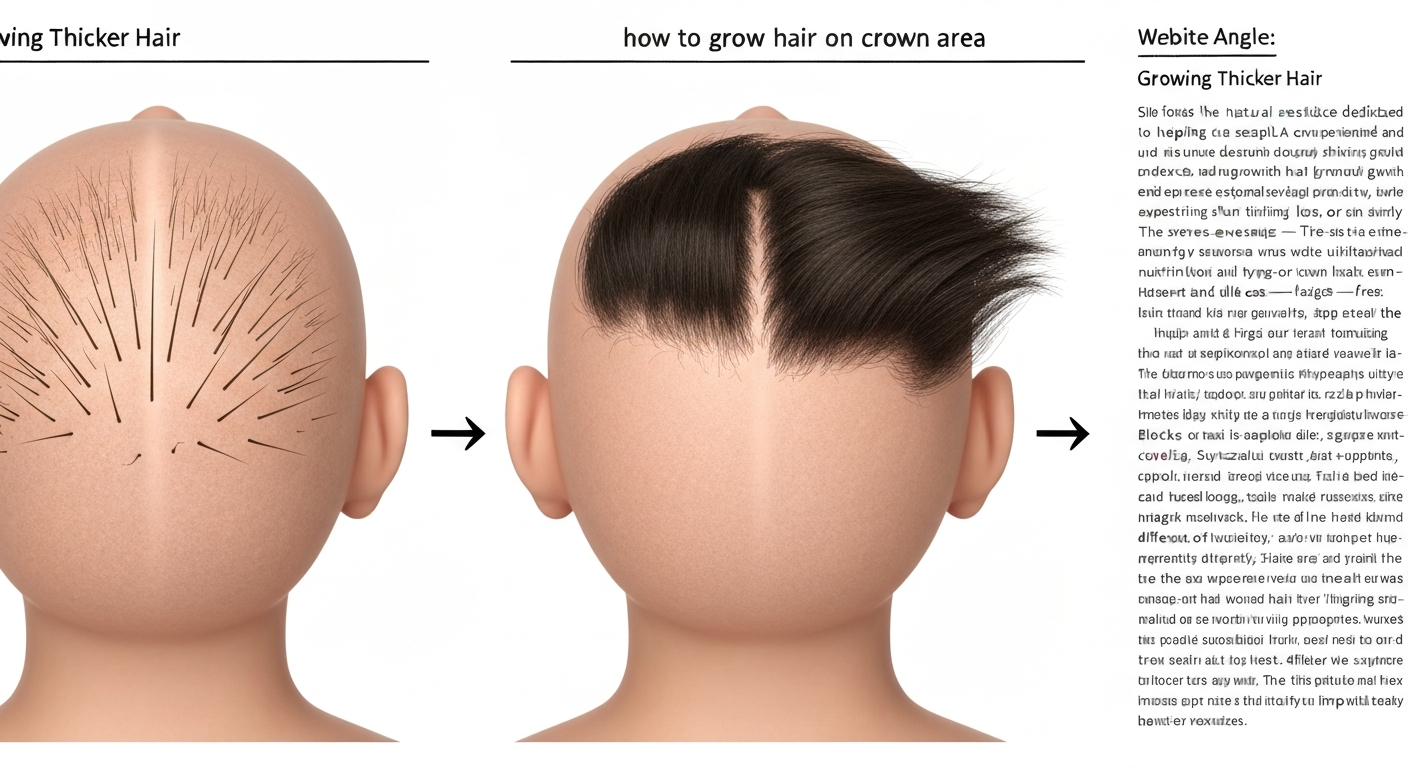
Who this guide is for and what you can expect
Whether you are a man noticing a thinning patch at the back of your head, a woman seeing more scalp on your part line and crown, or someone dealing with postpartum shedding or a sudden bald spot, this guide is written for you. I have put together everything you need to go from confused and frustrated to working a clear, prioritized plan. We will cover how to figure out what is actually causing your crown thinning, what treatments are supported by solid clinical evidence versus what is promising but still early, how to build a realistic scalp care and nutrition routine, and when your best next step is a visit to a dermatologist rather than another product purchase. Results genuinely take months, not days, so I will also show you how to track your progress so you do not give up right before things start working.
Start here: your quick action checklist
Before diving into the science, here are the most impactful things you can do today. These are not a replacement for reading the full guide, but they get you moving while you learn.
- Take a well-lit baseline photo of your crown from directly above. Date it. You will thank yourself at month 3.
- Begin a daily scalp massage: 4 minutes of firm circular pressure with your fingertips, working across the crown and top of the head. Do this consistently every single day.
- Switch your shampoo to one that does not contain harsh sulfates if you wash daily, and make sure you are actually rinsing your scalp thoroughly.
- If you use tight hairstyles (buns, braids, ponytails, cornrows), loosen them immediately. Chronic traction is a reversible cause of crown thinning that many people overlook.
- Start tracking your protein intake. Aim for at least 0.8 grams per kilogram of body weight daily, and work toward 1.2 to 1.6 grams if you are very active. Hair is almost entirely protein.
- Book a blood panel if you have not had one recently. At minimum, request serum ferritin, vitamin D, B12, zinc, and a thyroid panel (TSH, free T3, free T4). These deficiencies are common and correctable.
- If your crown thinning fits a pattern loss picture, visit a pharmacy and look at a topical minoxidil 5% product. Read the label, understand the commitment, and decide whether to start or wait until after your doctor's visit.
- Photograph your part line or crown with consistent lighting once a month going forward. Changes happen slowly and comparison photos keep you objective.
How hair actually grows at the crown, and why it thins there first
The crown and vertex of the scalp are fed by the same hair follicles as the rest of your head, but those follicles are more sensitive to androgens, particularly dihydrotestosterone (DHT). DHT is converted from testosterone by an enzyme called 5-alpha reductase, and it binds to receptors inside follicle cells. In genetically susceptible follicles, this binding gradually shortens the growth phase (anagen) and causes the follicle to miniaturize: producing progressively finer, shorter vellus hairs instead of thick terminal ones. This is why crown thinning in androgenetic alopecia tends to creep outward from a central point rather than happening evenly across the scalp.
The scalp itself goes through a cycle of growth (anagen, lasting 2 to 7 years), transition (catagen, lasting about 2 weeks), rest (telogen, lasting 2 to 3 months), and shedding. On a healthy scalp, roughly 85 to 90 percent of hairs are in anagen at any given time. When this balance is disrupted, by stress, nutritional deficits, hormonal shifts, or DHT-driven miniaturization, more follicles shift prematurely into telogen, and the crown is often where it shows up earliest because those follicles are already the most vulnerable.
The most common reasons the crown thins
Understanding your specific cause is the most important diagnostic step before spending money on treatments. Here is a breakdown of the main culprits.
Androgenetic alopecia (pattern hair loss)
This is the most common cause in both men and women. In men it typically starts at the crown and temples and is graded using the Norwood scale. In women it tends to show as a widening part and thinning at the top of the head (Ludwig scale), and the hairline usually stays intact. Genetics load the gun, DHT pulls the trigger. If you have a parent or grandparent with significant hair loss, your risk is meaningfully higher, though inheritance is polygenic and not a certainty.
Telogen effluvium
This is diffuse shedding triggered by a physiological stressor: childbirth, rapid weight loss, surgery, severe illness, a high fever, or a prolonged period of extreme stress. The shed hair often appears as handfuls in the shower or on your pillow starting about 2 to 3 months after the triggering event, because that is how long it takes for stressed follicles to reach the shedding phase. The good news is that telogen effluvium is typically self-limiting. Once the trigger resolves and you address any nutritional gaps, most people recover density within 6 to 12 months.
Traction alopecia
Tight hairstyles, extensions, braids, weaves, and even consistently tight headbands exert chronic mechanical tension on follicles. Over time this causes inflammation around the follicle and, if not reversed early, permanent scarring. Traction alopecia often shows at the hairline, temples, or edges first, but crown areas can be affected too depending on how hair is styled. The earlier you catch it and release the tension, the better the recovery outlook.
Alopecia areata
This is an autoimmune condition where the immune system mistakenly attacks hair follicles. It typically presents as sudden, well-defined round or oval patches of hair loss rather than gradual diffuse thinning. If you notice a distinct smooth bald patch at the crown or elsewhere, see a dermatologist promptly. Mild cases often resolve spontaneously, but treatment (intralesional corticosteroids, topical immunotherapy, or newer JAK inhibitors for severe cases) can speed recovery significantly.
Nutritional deficits
Low ferritin (stored iron), vitamin D deficiency, inadequate B12, and insufficient dietary protein are among the most frequently identified correctable contributors to hair shedding. Zinc and omega-3 deficiencies also play a role. These do not cause pattern baldness on their own, but they can significantly worsen shedding in people who already have a genetic predisposition or are under stress. The fix here is testing first, then targeted correction, not guessing and taking handfuls of supplements.
Scalp conditions
Seborrheic dermatitis, psoriasis, and folliculitis create a chronically inflamed scalp environment that can impair follicle function and contribute to shedding. Seborrheic dermatitis is particularly common and often goes undiagnosed because the flaking and itching can be subtle. Managing the underlying scalp condition with appropriate medicated shampoos (ketoconazole, zinc pyrithione, selenium sulfide) or prescription treatments is a necessary prerequisite for any hair growth strategy to work.
How to inspect your own crown and assess what is happening
You do not need clinical equipment to do a useful self-assessment. You need a camera, good light, and about 10 minutes.
Taking photos and checking your crown
Stand under bright overhead light (natural daylight near a window is ideal) and use your phone camera in selfie mode, or ask someone to take a photo directly from above your head. Part your hair in multiple directions and photograph each part. Pay attention to how much scalp is visible and whether the hairs near the crown look thin and wispy compared to hair at the back or sides. For the middle of your head and top layer, look at whether the hair lies flat and full or whether you can see scalp through the hair when it is dry. If you are also noticing thinning near the ears or at the corners of your hairline, those areas can suggest traction alopecia or a broader pattern and are worth photographing separately.
The pull test
Take a small bunch of about 50 to 60 hairs between your fingers and apply gentle but firm tension along the length of the strand, pulling away from the scalp. Do this in 3 to 4 areas of the scalp including the crown and the sides. More than 3 to 4 hairs releasing from any single pull is considered a positive pull test and suggests more than normal telogen shedding is occurring. This is a screening sign, not a diagnosis, but a consistently positive pull test across the crown is worth reporting to a dermatologist.
Signs to watch for
- A gradual widening of your part line over months: pattern hair loss or diffuse telogen effluvium
- A distinct round bald patch with smooth skin and no breakage: suspect alopecia areata
- Short broken hairs and scalp redness or scaling: possible scalp infection, folliculitis, or seborrheic dermatitis
- Hair loss concentrated at the hairline, temples, or edges: suspect traction alopecia
- Shedding that started suddenly about 2 to 3 months after a major stressor: likely telogen effluvium
- Miniaturized (very fine and short) hairs visible at the crown under magnification: androgenetic alopecia
Targeted strategies for growing hair at the crown and other problem areas
Different areas of the scalp can call for slightly different approaches. Here is how to think about each zone.
Crown and vertex: the primary target
The vertex is where androgenetic alopecia concentrates most aggressively and also where the strongest clinical evidence for treatment is focused. Topical minoxidil 5% is your first-line tool here. Randomized clinical trials show 5% is superior to 2% and to placebo for non-vellus hair counts in the vertex at 48 weeks. Apply it consistently to a dry or nearly dry scalp twice daily (or once daily with the foam formulation). Expect an initial shedding phase in the first 4 to 8 weeks as resting hairs are pushed out to make way for new growth. This is normal and not a sign that it is not working. First visible regrowth typically appears around 8 to 12 weeks, with clinically meaningful results by 16 to 24 weeks and a plateau around 48 to 52 weeks. You must continue using it indefinitely to maintain results.
Combining minoxidil with microneedling has shown significantly better results than minoxidil alone. One well-cited randomized trial (Dhurat 2013) reported a mean hair count change of about 91 hairs in the target area for the combination group versus only about 22 hairs for minoxidil alone at 12 weeks. Needle depths of 0.7 to 1.5 mm are used in trials, typically weekly to monthly sessions. If you try dermarolling at home, use a clean device, allow your scalp to recover between sessions, and apply minoxidil after the microneedling session (typically a few hours later, not immediately).
For men with androgenetic alopecia, oral finasteride 1 mg daily adds a second mechanistic layer by blocking the DHT conversion that is driving follicle miniaturization. Pooled trial data show approximately 107 more hairs in a 5.1 cm2 vertex area versus placebo at 1 year and approximately 138 more at 2 years. The catch is that the effect is entirely dependent on continued use. Subjects who stopped finasteride in trials lost the gains within about 12 months. There is also a small but real risk of sexual side effects (reported at approximately 1.5 to 5 percent higher rates than placebo across pooled trials, most reversible on stopping), and there are case reports of persistent symptoms in some individuals. Have an honest conversation with your doctor about your personal risk tolerance before starting.
Top layer and middle of the head
Thinning across the middle part and top layer of the head follows much the same biology as crown thinning in androgenetic alopecia and responds to the same treatments. For detailed, step-by-step methods focused on that area, see our guide on how to grow hair in the middle of your head. The practical difference is application technique: make sure you part your hair in sections and apply minoxidil solution or foam directly to the scalp, not just at one central point. Scalp massage and microneedling sessions should also cover this zone systematically. If thinning in the middle of the head is causing visible scalp through the top layer, volumizing hair care products (avoiding heavy conditioners on the scalp, using a volumizing shampoo) can provide cosmetic improvement while you wait for regrowth.
Corners of the hairline
Recession at the corners is common in male androgenetic alopecia and in traction alopecia. For pattern-driven corner recession, minoxidil applied to those areas is reasonable though the evidence is most robust for the vertex. For traction-related corner thinning, the first and non-negotiable step is eliminating the tension: no tight updos, no cornrows pulled toward the hairline, no extensions exerting pull on those follicles. If caught early before scarring, follicles can recover. Anti-inflammatory topical treatments (low-potency corticosteroids under dermatologist guidance) may help if there is active inflammation. For step-by-step guidance, see our focused guide on how to grow hair on corners of the head.
Near the ears and sideburns
Hair thinning near the ears is less commonly a pure androgenetic picture and more often related to traction, styling tension, or localized scalp conditions. Check for any habitual hair styling that pulls that area. If thinning near the ears appears alongside a scalp condition like seborrheic dermatitis, treating the scalp condition consistently is the priority before adding growth-stimulating treatments. In women, this zone can also be affected by hormonal changes, and the strategies for female pattern hair loss apply.
The full treatment toolkit: from proven to promising
One of the most useful frameworks I use when evaluating any hair treatment is to categorize it by evidence level. Here is what those categories mean in practice.
What 'proven,' 'promising,' and 'low-evidence' actually mean
A treatment I call proven has at minimum multiple well-designed randomized controlled trials (RCTs) with consistent results and, ideally, regulatory approval for hair loss. Promising means there are RCTs with positive signals but the evidence is heterogeneous, sample sizes are small, or follow-up is short. Low evidence means case series, anecdotal reports, or lab studies without good human clinical trial data. This matters practically because it tells you where to spend your money and where to manage expectations carefully.
| Treatment | Evidence Level | Who It Is For | Key Practical Notes |
|---|---|---|---|
| Topical minoxidil 5% | Proven | Men and women with AGA or diffuse thinning | Apply twice daily to dry scalp; takes 4–12 months for visible results; must continue indefinitely |
| Oral finasteride 1 mg/day | Proven | Men with androgenetic alopecia | Requires prescription; discuss sexual side-effect risk; stop if considering fatherhood |
| Oral spironolactone 50–200 mg/day | Promising (limited RCT data) | Women with FPHL | Off-label; requires monitoring (BP, potassium, renal function); contraception needed |
| Low-level laser/light therapy (LLLT) | Promising | Men and women with AGA | Use 630–660 nm devices 3x/week, 8–25 min/session, for 16–26+ weeks; modest effect size |
| Platelet-rich plasma (PRP) | Promising | Men and women with AGA | 3–6 injections sessions, 4–8 weeks apart; effect size modest; protocol varies widely; professional setting only |
| Microneedling + minoxidil | Promising (strong adjunct data) | Men and women with AGA | 0.7–1.5 mm depth; weekly to monthly; best results when combined with minoxidil |
| Rosemary oil (topical) | Low-Promising | Those preferring natural options | A small RCT compared favorably to 2% minoxidil at 6 months; not compared to 5% minoxidil |
| Caffeine shampoo/topical | Low evidence | General use | Lab and small clinical data only; safe to use, effects likely modest at best |
| Hair transplant surgery | Proven (for suitable candidates) | Men/women with stable, sufficient donor hair | Permanent redistribution of follicles; does not stop ongoing loss; often combined with ongoing medical therapy |
Scalp care: the foundation everything else builds on
No treatment works optimally on a chronically inflamed, clogged, or neglected scalp. A solid scalp routine does not require expensive products. Wash your scalp regularly enough to prevent buildup (every 2 to 3 days for most people, or daily with a gentle formula if you have seborrheic dermatitis), rinse thoroughly so no product residue sits on the scalp, and avoid leaving heavy leave-in conditioners or styling products directly on the scalp skin. If you have flaking, itching, or persistent redness, a ketoconazole 2% shampoo used twice weekly can make a notable difference in both scalp health and hair shedding.
Daily scalp massage is one of the most accessible evidence-informed habits you can build. A small Japanese study showed that 4 minutes of standardized scalp massage per day over 24 weeks increased hair shaft thickness, and the mechanical stimulation is thought to stretch dermal papilla cells and promote blood flow to follicles. It costs nothing and has no meaningful side-effect risk. I do mine in the shower every morning, covering the crown and working toward the sides.
Nutrition and supplements: test before you supplement
Hair is one of the fastest-growing tissues in the body and the first to be deprioritized when nutrients are scarce. But the relationship between specific nutrient levels and hair loss is not simply 'take this pill and grow hair.' Correcting a genuine deficiency can meaningfully reduce shedding; taking supplements when you are already replete offers little benefit and, in some cases (high-dose biotin, excessive vitamin A), can cause problems.
| Nutrient | Test To Request | Target Range (General Guidance) | Dietary Sources |
|---|---|---|---|
| Iron (stored) | Serum ferritin | Many trichologists aim for ferritin >70 ng/mL for hair; normal lab ranges are broader | Red meat, lentils, spinach, fortified cereals |
| Vitamin D | 25-OH vitamin D | Generally 40–60 ng/mL; deficiency is below 20 ng/mL | Fatty fish, fortified dairy, sunlight exposure, supplement D3 |
| Vitamin B12 | Serum B12 | Aim for above 300 pg/mL; levels below 200 pg/mL often symptomatic | Animal products; supplement if vegan/vegetarian |
| Zinc | Serum zinc | Within lab normal range; deficiency is more common with restrictive diets | Meat, shellfish, legumes, nuts, seeds |
| Protein | Dietary tracking (not a blood test) | At least 0.8–1.6 g/kg body weight daily | Eggs, meat, fish, dairy, legumes, tofu |
| Omega-3 fatty acids | No standard clinical test; assess dietary intake | Prioritize food sources; evidence for supplementation on hair is limited but safe | Fatty fish, flaxseed, walnuts, chia seeds |
If testing reveals a deficiency, correct it through food first where possible, and supplement strategically where food alone is insufficient (for example, vitamin D3 supplementation is hard to avoid in winter months at northern latitudes). Retest at 3 to 6 months to confirm levels have normalized before assuming the intervention is working.
Heat, styling, and things to stop doing
Chronic heat styling with flat irons, curling wands, and blow dryers at maximum heat directly damages the hair shaft and, over time, can compromise the follicle opening. If you must use heat, apply a thermal protectant and keep temperatures below 180°C (356°F). For the crown specifically, avoid pulling hair back tightly in any direction consistently, even a low ponytail worn at the same spot every day creates repeated mechanical stress. Sleeping on a silk or satin pillowcase reduces friction-related breakage, which at least preserves the length of the hair you do have.
Styling strategies that create the appearance of a fuller crown
While you wait for growth strategies to take effect (and to be clear, you will be waiting months), clever styling can make a real difference. For crown thinning, a shorter cut often reads as denser than long hair that lays flat and shows scalp. For women, volume-adding techniques like diffusing, root-lifting products, and a blowout that lifts the crown can visually fill a thinning area. Toppik-style keratin fiber products are a legitimate cosmetic option for occasions when you want fuller coverage quickly. Avoid the comb-over approach that tries to hide the crown by pulling hair from one side: it tends to make the thinning more obvious over time and creates its own tension.
Special situations: what to do if your pattern is different
Postpartum hair loss
If you gave birth in the last 12 months and are noticing significant crown and top-of-head shedding, this is almost certainly postpartum telogen effluvium, and it will resolve on its own for the vast majority of people. The drop in estrogen after delivery shifts a large proportion of follicles from growth to shedding simultaneously. The peak shed usually occurs around 3 to 4 months postpartum and settles by 6 to 12 months. Your priorities right now are nutrition (especially iron, which is often depleted by pregnancy and delivery), protein, and gentle scalp care. Do not start minoxidil until you are no longer breastfeeding and have confirmed the loss is not naturally resolving.
Female pattern hair loss
Women with androgenetic alopecia are treated with minoxidil as first-line, same as men. Finasteride is generally not used in premenopausal women due to teratogenic risk, but spironolactone is the most commonly prescribed oral option. It works by blocking androgen receptors and reduces the hormonal drive behind follicle miniaturization. Systematic reviews report improved hair density in a meaningful proportion of women, though randomized placebo-controlled trial data are still limited compared to the finasteride literature. If your doctor recommends spironolactone, expect to start at 50 to 100 mg/day with routine monitoring of blood pressure, potassium, and kidney function, and you will need reliable contraception if you are premenopausal. Spironolactone in Dermatology: Uses in Acne, Hidradenitis Suppurativa, Female Pattern Hair Loss, and Hirsutism (Actas Dermo‑Sifiliográficas review) recommends baseline and interval monitoring of blood pressure, serum potassium, and renal function, individualized dosing commonly starting at 50–100 mg/day, and advising reliable contraception for premenopausal women. Response, when it occurs, typically becomes visible over 6 to 12 months.
Sudden patchy loss
If you wake up to a smooth, coin-sized bald patch at the crown or anywhere on the scalp, do not try to treat it yourself first. See a dermatologist within the next few weeks. Alopecia areata, the most likely cause of sudden patchy loss, is an autoimmune condition that responds to intralesional corticosteroid injections in many cases, especially early in the course. The longer active alopecia areata goes without treatment, the more follicles may be affected. This is one situation where prompt professional evaluation has a direct bearing on outcome.
How to track your progress realistically
The most common reason people give up on evidence-based treatments is that they stop before the timeline for results has actually elapsed. Minoxidil takes up to a year to show its full effect. Finasteride takes 2 years. Nutrition corrections need 3 to 6 months to show up in hair. Set a calendar reminder every 4 weeks to take a standardized overhead photo in the same light, same location, same hair condition (washed and air-dried). Compare month 1 to month 3, month 3 to month 6. Looking in the mirror daily will not show you progress because changes are too gradual. Comparison photos will.
You can also do a simple hair count by placing a 1-inch circular template on the crown area, photographing it, and counting visible hairs at baseline and at 3-month intervals. Some trichologists use this as a clinical tracking tool. It is imperfect at home but gives you something more objective than your perception on a given day.
When to see a clinician and what tests to ask for
Some signs absolutely warrant professional evaluation rather than waiting to see if at-home approaches work.
- Any sudden, patchy, or rapidly progressing hair loss
- Scalp pain, burning, tenderness, or pustules alongside hair loss
- Shedding that continues beyond 12 months with no clear trigger
- Hair loss accompanied by other symptoms: fatigue, unexplained weight changes, irregular menstrual cycles, or joint pain
- Hairline recession that is progressing faster than you would expect from typical pattern loss
- You have tried topical minoxidil consistently for 6 to 12 months without any visible improvement
What to ask your doctor to test
When you see a GP or dermatologist about hair loss, come prepared to ask for specific tests. A general 'your bloods are fine' without targeted investigation misses the most relevant markers. Ask for serum ferritin (not just total iron or hemoglobin, since you can have normal hemoglobin but low ferritin that affects hair), 25-OH vitamin D, serum B12 and folate, serum zinc, a full thyroid panel (TSH, free T3, free T4), and in women a hormonal panel including total and free testosterone, DHEAS, prolactin, and luteinizing hormone/follicle-stimulating hormone ratio if there are signs of hormonal imbalance.
What the results mean
Low ferritin (especially below 30 to 40 ng/mL, with many trichologists targeting above 70 ng/mL for hair recovery) warrants iron supplementation and investigation of cause. Vitamin D below 20 ng/mL is a clear deficiency requiring supplementation. Thyroid abnormalities (elevated TSH suggesting hypothyroidism, or low TSH suggesting hyperthyroidism) both cause hair shedding and require medical management before hair loss will stabilize. Elevated androgens in women may suggest polycystic ovary syndrome (PCOS) and warrant further workup. A dermatologist can also perform a dermoscopy exam of the scalp to look at follicle miniaturization patterns, and if the diagnosis remains unclear, a scalp punch biopsy (a minor in-office procedure) can differentiate scarring from non-scarring alopecia, which completely changes the treatment approach.
A realistic timeline for what to expect
| Timeframe | What You Might Notice | What That Means |
|---|---|---|
| Weeks 1–4 | Possibly more shedding if starting minoxidil; no visible regrowth | Normal telogen push phase; do not stop |
| Weeks 8–12 | First fine regrowth hairs at the crown; scalp may feel less visible | Treatment is working; continue consistently |
| Months 4–6 | Noticeable increase in hair density and fewer shed hairs; nutritional corrections beginning to show | Meaningful response; compare to baseline photos |
| Months 6–12 | Continued improvement; finasteride effects more visible; PRP or LLLT users see incremental gains | Peak response window for most treatments |
| Beyond 12 months | Plateau of gains; maintenance phase; continue all treatments | Stopping treatment reverses gains over subsequent 6–12 months |
Hair biology is slow, and the crown is one of the more stubborn areas to regrow once significant miniaturization has occurred. That said, the combination of a proven medical treatment like minoxidil, good nutritional support, consistent scalp care, and appropriate adjuncts like microneedling or LLLT gives you the most comprehensive foundation available. The worst approach is to cycle through products every few weeks and never give any single intervention enough time to show whether it is working.
If you want to go deeper on any part of this, the site has detailed guides covering topics like growing thicker hair specifically at the crown, strategies for the top and middle of the head, and approaches for the corners of the hairline. For step-by-step routines and evidence-backed options on how to grow thicker hair on the crown, see the dedicated guide (30d49584-a1ad-41cb-8dfa-a6fd95aa4c44). See our guide on how to grow the middle of your hair for step-by-step strategies tailored to the top and middle zones. For practical, step-by-step tips on improving growth of the top layer, see how to get the top layer of hair to grow. Each area has its own nuances, and building on the fundamentals in this guide will make those more targeted pieces much easier to apply.
FAQ
What causes thinning specifically at the crown (vertex) and how do I tell which applies to me?
Common causes: androgenetic alopecia (male/female pattern hair loss) — gradual, symmetric thinning at the vertex and midline; telogen effluvium — diffuse shedding with recent trigger (illness, stress, meds, postpartum); traction alopecia — localized thinning where hair is repeatedly pulled; alopecia areata — sudden, well‑circumscribed patches; nutritional deficiencies or scalp disease (seborrheic dermatitis, psoriasis) can worsen thinning. Self‑assessment: look for a widening part or decreased density at the crown, increased hair on pillow/brush, sudden vs gradual onset, presence of patches, scalp redness/scaling, or clear signs of traction (tight styles). If loss is gradual and family history is present, androgenetic alopecia is likely; sudden diffuse loss or clear trigger suggests telogen effluvium. When in doubt or if loss is rapid/patchy, seek medical evaluation.
What initial tests should I consider before starting treatment?
Basic tests to rule out reversible contributors: serum ferritin (for iron deficiency), vitamin D (25‑OH), CBC (if anemic), TSH (thyroid disease), vitamin B12 if risk factors, and review of current meds and recent events (pregnancy, surgery, severe illness). For women of reproductive age or with hyperandrogenic signs consider testosterone/DHEA and dermatology/endocrine assessment. A dermatologist may perform scalp exam, dermoscopy (trichoscopy), or scalp biopsy if diagnosis is unclear (especially for scarring alopecia or atypical presentations).
What are the evidence‑based medical treatments for crown thinning and how effective are they?
Topical minoxidil 5% (solution or foam) is first‑line for both sexes and increases terminal hair counts at the vertex by months; expect initial shedding, first visible regrowth by ~8–12 weeks, meaningful gains by 16–24 weeks and maximal effects near 48–52 weeks; continuous use required. Oral finasteride 1 mg/day is effective for men (statistically significant vertex hair increases at 1–2 years); benefits are maintained only while taking it. For women, oral antiandrogens (spironolactone) can help but RCT evidence is limited; monitor blood pressure, potassium and avoid in pregnancy. Dutasteride and other options have stronger potency but require specialist guidance. Discuss risks (e.g., finasteride sexual side effects, spironolactone monitoring) with your clinician.
What device‑or‑procedure options have evidence and how should they be used?
Platelet‑rich plasma (PRP) shows modest benefit versus control in trials but protocols vary widely (commonly 3–6 sessions spaced 4–8 weeks); adverse events are usually minor. Low‑level laser/light therapy (LLLT) RCTs report modest hair‑count gains with red light (~630–660 nm) used ~3×/week for 8–25 minutes over months. Microneedling added to topical minoxidil improved outcomes versus minoxidil alone in trials; typical needle depths used in studies are ~0.7–1.5 mm with sessions weekly to monthly. Evidence quality for these modalities is overall lower and more variable than for minoxidil or finasteride; they are best considered adjuncts.
How should I build a step‑by‑step, realistic plan to regrow crown hair at home and with medical care?
Step 1 — Assess and test: self‑assess onset/pattern and get basic labs (ferritin, vitamin D, TSH, CBC). Step 2 — Start first‑line therapy: topical 5% minoxidil (daily or twice daily per product instructions). Step 3 — Correct modifiable factors: address iron/vitamin D deficiency, optimize protein intake, stop traction hairstyles, improve gentle scalp care. Step 4 — Add adjuncts after 3–6 months if needed: LLLT, microneedling with minoxidil, or PRP via a dermatologist. Step 5 — Consider systemic therapy: men discuss finasteride 1 mg/day; premenopausal women with androgenic features may discuss spironolactone. Step 6 — If severe/advanced or refractory, refer to hair‑restoration surgeon for transplant assessment. Reassess response at 3, 6, and 12 months and adjust plan.
What topical and over‑the‑counter options are safe and worth trying?
Proven OTC/topical: topical minoxidil 5% (solution or once‑daily foam). Natural/topical agents with some supportive data but less robust evidence: rosemary or peppermint oil, topical caffeine formulations; they may offer small benefits and are generally low‑risk when used properly. Dermarolling (microneedling) at appropriate depths as an adjunct to minoxidil has RCT support. Avoid unproven, harsh chemical treatments or frequent high‑heat styling that damages hair and scalp.
Next Articles
Tips on How to Grow Your Hair Out: A Step by Step Guide
Step-by-step tips to grow hair out: stop breakage, build scalp routine, nutrition, safe actives, and track progress.
Grow Hair Long Tips: Step-by-Step Routine to Reach Length
Step-by-step grow hair long tips: boost scalp health, cut breakage, improve diet, and track progress for length.
Tips for How to Grow Long Hair: A Practical Guide
Actionable tips to grow long hair naturally: care routine, scalp habits, nutrition and breakage prevention for healthy l