
You can encourage hair to grow on your scalp, beard area, eyebrows, or any patchy spot by addressing the root cause first, then layering evidence-backed treatments on top: fixing nutritional deficiencies, applying topical minoxidil consistently, supporting a healthy scalp environment, and, where needed, adding medical or procedural options like finasteride, microneedling, or PRP. There is no single magic step, but there is a clear sequence that actually works, and this guide walks you through it, location by location. For targeted, location-specific advice on how to make hair grow where it doesn't, see this focused guide.
How to Grow Hair Anywhere: Evidence-Based Steps & Timeline

Marcus Holloway
22 Jul 2026
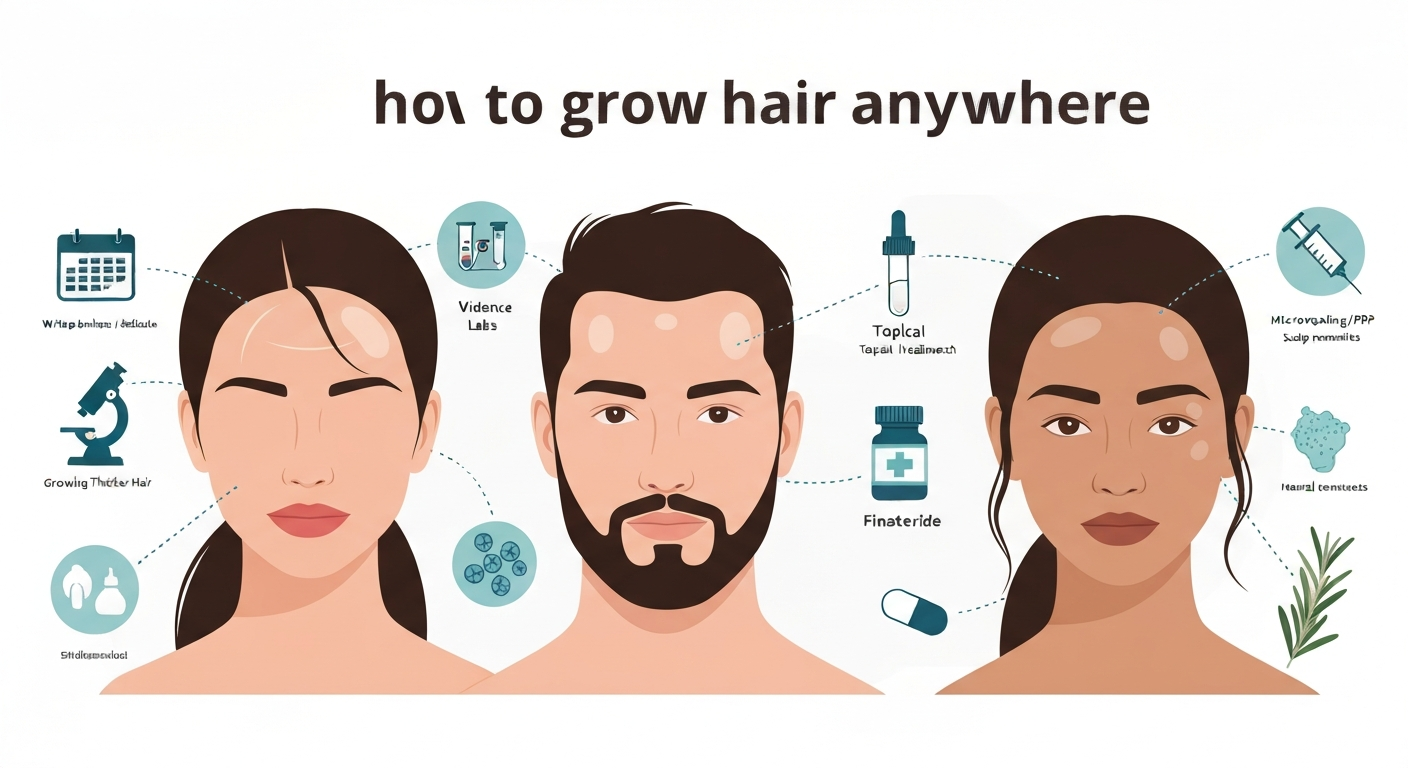
What 'grow hair anywhere' actually means, and who this is for
When people search for how to grow hair anywhere, they usually mean one of a few different things: a thinning scalp, a patchy beard, sparse or over-plucked eyebrows, a small bald spot that appeared out of nowhere, or areas where hair has always grown slowly or never really filled in. The advice for each situation overlaps more than you might think, but the details matter, eyebrow regrowth has different tools than beard regrowth, and diffuse scalp thinning calls for a different approach than a clearly scarred patch.
This guide is for anyone who feels like their hair has stopped cooperating. That includes men noticing a receding hairline or thin crown, women dealing with widening part lines or overall fine hair, people with patchy brows after years of tweezing, and anyone who has always had slow-growing or sparse hair. If you are wondering whether the problem is permanent or fixable, what actually has evidence behind it, and what order to try things in, you are in the right place.
A quick primer on how hair grows (and why location changes everything)
Every single hair on your body, scalp, brow, beard, body, grows from a tiny structure called a follicle that sits below the skin surface. The follicle is essentially a miniature organ. It cycles through three phases: anagen (active growth), catagen (a short transition), and telogen (resting and eventual shedding). Scalp hairs stay in anagen for two to six years, which is why your scalp hair can grow very long. Eyebrow hairs have an anagen phase of only about four to six months, which is why brows stay short even if you never trim them. Beard hairs fall somewhere in between and respond differently to hormonal signals than scalp hair does.
The most important thing to understand is that hair growth is driven by the follicle, not the skin surface. You cannot stimulate growth from outside unless the follicle below is alive and capable of responding. A miniaturized follicle (one that has been shrinking due to hormones) can often be revived. A follicle destroyed by scarring cannot. That distinction shapes everything about which treatments are worth trying.
Why hair won't grow, the real reasons
Most cases of slow, thinning, or absent hair come down to a handful of causes, and knowing yours changes what you should do first.
- Genetics and androgenetic alopecia: The most common cause of scalp hair loss in both men and women. The hormone dihydrotestosterone (DHT) gradually miniaturizes genetically susceptible follicles, shortening their growth cycles until they stop producing visible hair. This is progressive without treatment.
- Hormonal imbalances: Thyroid dysfunction (both hypo and hyperthyroidism), polycystic ovary syndrome (PCOS), postpartum hormone shifts, and menopause can all trigger significant shedding or slow growth. These causes are often overlooked until bloodwork is done.
- Nutritional deficiencies: Low ferritin (stored iron), low vitamin D, low zinc, and inadequate protein intake are among the most commonly identified deficiencies in people presenting with diffuse hair thinning. Caloric restriction and crash dieting are also well-documented triggers.
- Telogen effluvium: A reactive type of shedding where a large percentage of follicles are pushed into the resting phase by a physical or emotional stressor — illness, surgery, fever, extreme stress, or rapid weight loss. Shedding typically starts two to three months after the trigger and resolves on its own, though it can be prolonged.
- Scarring (cicatricial) alopecia: Conditions like lichen planopilaris, frontal fibrosing alopecia, and central centrifugal cicatricial alopecia destroy the follicle itself and leave scar tissue behind. Hair cannot regrow in truly scarred areas, so early diagnosis and stopping progression are the goals.
- Medical conditions and medications: Autoimmune conditions (alopecia areata causes patchy loss), certain chemotherapy agents, blood thinners, antidepressants, and blood pressure medications can all contribute to hair loss. Always check your medication list.
- Breakage versus shedding: Sometimes hair is growing but snapping before it gets long. Over-processing, heat damage, tight styling (traction alopecia), and severe dryness cause breakage that mimics no growth. You can tell the difference: breakage produces short, uneven pieces; true shedding produces hairs with a white bulb attached at the root.
How to quickly assess your own situation
Before you spend money on treatments, spend ten minutes doing a basic self-check. Pull your hair back in good light and look at your part line, is it widening? Look at your hairline temples, are they gradually receding in a predictable pattern? Run your fingers through your hair and look at what comes out: a white bulb at the root means a shed hair; a broken end without a bulb means breakage. Try the pull test: take about 40 hairs between your fingers and pull gently but firmly. Losing more than five or six hairs is considered a positive test, suggesting active shedding.
There are a few red flags that mean you should see a dermatologist before trying any at-home protocol. These include patches of complete smooth baldness (possible alopecia areata), any area where the scalp looks shiny, scarred, or lacks visible pores (possible scarring alopecia), hair loss that came on very suddenly and rapidly, scalp pain, burning, or itching around thinning areas, and loss that is accompanied by fatigue, weight change, or other systemic symptoms. In these cases, diagnosis matters more than treatment speed.
Realistic timelines: what to expect at 4, 12, and 24 weeks
One of the most frustrating things about growing hair is how slow it is. Scalp hair grows roughly half an inch per month on average, and follicle-level changes take even longer to show. I always tell people: if you expect to see results in two weeks, you will quit every treatment that could actually help you. Here is a practical framework based on the clinical evidence.
| Timepoint | What is actually happening | What you might notice |
|---|---|---|
| Weeks 1–4 | Follicles beginning to respond to treatment; some shedding may increase temporarily (especially with minoxidil, which is normal and expected in the first 2–6 weeks) | Possibly more shedding initially — do not panic; this is a sign follicles are cycling |
| Weeks 8–12 | New vellus (fine, short) hairs may begin emerging; nutritional corrections start improving hair shaft quality | Fine baby hairs appearing along the hairline or part; slightly less daily shedding |
| Weeks 16–24 | Terminal hairs thickening from vellus; minoxidil clinical data shows meaningful hair count changes by 24 weeks in many patients; eyebrow and beard regrowth often visible by now with consistent topical use | Noticeable new growth, especially in areas treated consistently; texture improving |
| Months 6–12 | Full assessment point for topical minoxidil (Cochrane review notes response best assessed at ~6 months, with full effect often by 12 months); finasteride benefit typically clear by 12 months | Visible density improvement, reduced hair loss; photos from week 1 will show the contrast clearly |
| Months 12–24 | Continued improvement with sustained treatment; hair transplant results also maturing by this point (grafts shed first, regrow over 6–12 months) | Maximum results from most pharmacological treatments; regrowth stabilized |
The single most important habit you can build is taking monthly photos in the same lighting, same angle, same location. Your eye adapts to gradual change and you will genuinely not notice improvement without a baseline. I have seen people quit minoxidil at month three because they thought it was not working, their month three photos showed clear regrowth they had simply stopped seeing.
Reversible versus permanent loss: choosing your treatment path
This is the most important decision point in any hair growth plan, because it determines which treatments have any chance of working. Reversible hair loss means the follicle is still alive and capable of producing a normal hair, it may be miniaturized, dormant, or temporarily disrupted by hormones, stress, or nutritional factors. Permanent (scarring) hair loss means the follicle has been replaced by fibrous tissue and is truly gone.
Androgenetic alopecia is technically progressive but largely reversible-in-direction if caught early enough. Telogen effluvium almost always resolves on its own. Alopecia areata can resolve spontaneously or with treatment. Scarring alopecias, deeply established alopecia areata, and areas where there has never been any hair follicle (like a scar from an old wound) are the situations where regrowth is either impossible or requires surgical transplantation. If you are not sure which category you are in, a dermatologist can usually tell within a short consultation, sometimes with a dermoscopy exam of the scalp surface.
| Type of loss | Follicle status | Treatment potential | Recommended track |
|---|---|---|---|
| Androgenetic alopecia (genetic thinning) | Miniaturized but alive | High with early, consistent treatment | Topical minoxidil, oral options, microneedling |
| Telogen effluvium (stress/illness shed) | Normal, temporarily displaced into resting phase | Usually self-resolving; nutrition/stress support helps | Identify and fix the trigger; nutritional support |
| Alopecia areata (autoimmune patches) | Alive but suppressed by immune attack | Moderate to high depending on extent | Dermatologist-guided; corticosteroids, JAK inhibitors, PRP |
| Traction alopecia (early) | Stressed but intact if caught early | Good if tension is removed promptly | Stop the traction immediately; minoxidil may help |
| Scarring alopecia | Destroyed by fibrosis | Very limited for regrowth; stop progression is the goal | Urgent dermatology referral; possible transplant after stability |
| No prior follicles (scar tissue, smooth skin) | Absent | None without transplant | Hair transplant consultation if cosmetically significant |
What the evidence actually says, ranked by strength
Not all hair growth treatments are created equal. Here is an honest look at where the evidence stands, organized by strength. I think it is important to separate what is well-proven from what sounds compelling but lacks strong data.
Strong evidence
- Topical minoxidil (2% and 5%) for scalp androgenetic alopecia: Multiple randomized controlled trials and a Cochrane review confirm efficacy. The 5% solution produces larger increases in terminal hair counts than 2%, and is the preferred strength for men and often used off-label in women who tolerate it. Must be used continuously — stopping causes loss of gains.
- Oral finasteride 1 mg daily for male pattern hair loss: FDA-approved, well-studied across multiple 12-month trials. Clinical improvement is typically assessable at 3–6 months, with clear benefit shown by 12 months in most studies. Not approved or generally recommended for women of childbearing potential due to teratogenicity risk.
- Microneedling as an adjunct to minoxidil: Multiple randomized trials show greater hair count gains with combined microneedling plus minoxidil versus minoxidil alone. Needle depth appears to matter — trials using 1.0–1.5 mm needles in clinical settings showed better results than shallow home rolling. A 2024 systematic review found mixed results with shallow (~0.5 mm) devices, so home rollers carry more uncertainty.
- Correcting confirmed nutritional deficiencies: Restoring iron, vitamin D, zinc, and adequate dietary protein to normal levels reliably improves hair cycling in people who are actually deficient. This is not a universal solution, but it is a high-value first step.
Moderate evidence
- Oral minoxidil (low-dose, off-label): Network meta-analyses rank oral minoxidil among the most efficacious systemic agents for increasing hair counts at 24 weeks. Increasingly used in dermatology practice, but requires medical supervision due to systemic effects (fluid retention, unwanted hair growth elsewhere, cardiovascular considerations).
- Dutasteride (off-label for hair loss): Meta-analyses show greater hair count increases compared to finasteride at 24 weeks. Not FDA-approved for pattern hair loss in all countries but widely used off-label. Carries the same class of adverse effects as finasteride (sexual side effects, teratogenicity) and has a much longer half-life.
- PRP (platelet-rich plasma) injections: Pooled randomized trial data show modest increases in hair density versus placebo (mean difference often around 20–30 hairs per square centimeter). The catch is massive heterogeneity in how PRP is prepared and delivered — there is no single standardized protocol, which makes comparing studies difficult. Results are real but inconsistent across clinics.
- Topical minoxidil for beard and eyebrow growth: Smaller RCTs and observational studies suggest benefit in some patients, but the high-quality evidence base is much thinner than for scalp AGA. Still, the biological plausibility is solid and it is a reasonable first try before escalating.
Limited or mixed evidence (but worth knowing about)
- Topical bimatoprost (0.03%) for eyebrow hypotrichosis: Randomized double-blind trials show increased eyebrow hair density and diameter versus vehicle. FDA-approved for eyelash hypotrichosis (Latisse), with eyebrow use supported by RCTs but technically off-label. Main concerns are skin hyperpigmentation and potential iris color change if it contacts the eye.
- Rosemary oil: One small RCT found it comparable to 2% minoxidil at 6 months for scalp hair count. The evidence is preliminary and the study was small, but it is the only home remedy with a direct comparison trial. Worth trying if you are looking for a natural adjunct, not a replacement for proven treatments.
- Caffeine topicals: Some in-vitro and small human study data. Not enough high-quality evidence to recommend as a primary treatment.
- Biotin supplementation: Only shows benefit in people with confirmed biotin deficiency (rare). Does not improve hair growth in people with normal biotin levels despite heavy marketing claims.
- Saw palmetto: Some evidence as a mild DHT blocker, but effect size is considerably smaller than finasteride. May be relevant for people who want a non-prescription option with minimal risk profile.
Step-by-step protocols by situation
Scalp thinning and diffuse slow growth
This is the most common situation and the one with the most treatment options. Whether you are a man with a receding hairline, a woman with a widening part, or someone who feels their hair has been gradually getting finer for years, this is your protocol.
- Rule out the fixable causes first. Get bloodwork done: ferritin (aim for above 70 ng/mL for hair growth, not just the low end of 'normal'), complete thyroid panel (TSH, free T4), vitamin D, zinc, and a complete blood count. If anything is low, fix it before assuming you need medication. Nutritional corrections alone can produce meaningful regrowth when deficiency is the driver.
- Start topical minoxidil. For men, 5% foam or solution once or twice daily is the standard starting point. For women, 2% solution twice daily or 5% foam once daily are both used; start with the lower strength if you are prone to scalp sensitivity. Apply to a dry scalp, let it absorb before touching your hair, and commit to six months before evaluating. An initial increase in shedding in the first two to six weeks is normal — it is a sign follicles are cycling, not a sign it is making things worse.
- Do not use minoxidil on broken, irritated, or inflamed scalp, and avoid it if you are pregnant or breastfeeding. Systemic absorption is low but not zero, and the safety profile in pregnancy has not been fully established.
- Add scalp care basics. A mild, sulfate-free shampoo used two to three times per week keeps the scalp clean without stripping. If you have dandruff or seborrheic dermatitis (flaking, redness, itching), treat it: ketoconazole shampoo 1–2% used twice weekly is evidence-backed and also shows modest anti-androgenic effects at the follicle level. An inflamed, flaking scalp is not an optimal environment for hair growth.
- Consider adding microneedling in-clinic at 3 months if minoxidil alone is not showing results. Clinical sessions using 1.0–1.5 mm needles monthly or every few weeks, combined with continued minoxidil use, have shown better outcomes in multiple randomized trials than minoxidil alone. Be cautious with at-home dermarollers — shallow depth and sterility concerns make them less predictable, and the FDA has flagged infection and scarring risks with home devices.
- For men with clear androgenetic alopecia and no contraindications, discuss finasteride 1 mg daily with your doctor at the three to six month mark if topical minoxidil alone is insufficient. Sexual side effects (decreased libido, erectile dysfunction) are statistically elevated versus placebo in pooled RCT data, though absolute rates are low. The decision is personal and worth a frank conversation. Dutasteride is an off-label alternative with stronger hair count data but a longer half-life and the same class of concerns.
- If conservative measures fail after twelve months of consistent use, ask for a dermatology referral to discuss PRP injections or low-level laser therapy as adjuncts. PRP is not a first-line treatment due to cost, variable protocols, and inconsistent results — but it has real randomized trial support and can be a useful addition for patients who have plateaued.
- Hair transplant surgery (follicular unit extraction or follicular unit transplantation) is the only option for truly restoring density in areas with no viable follicles. It requires stable donor supply, no active scarring alopecia, and is a permanent cosmetic decision. Results continue maturing for 12–18 months post-procedure.
Patchy beard growth
Patchy beard growth is extremely common and is usually caused by a combination of genetics, uneven follicle distribution, and androgenic sensitivity. For men who want beard hair to lie downward rather than splay outward, see our guide on how to make hair grow down instead of out (male). It is not the same as scalp hair loss, and the solutions are slightly different. The evidence base is thinner here, but there is a practical approach.
- First, determine whether the patches have ever had any hair at all. Scattered light hairs in a patch suggest underactive follicles. Completely smooth, featureless skin with no pores visible may indicate scarring or absent follicles that will not respond to topicals.
- Apply topical minoxidil 2% or 5% to the patchy areas once or twice daily. Small RCTs and observational studies support this approach. Results take longer to appear than on the scalp — expect to wait at least three to four months before judging. Keep the skin clean and dry before applying. Avoid contact with eyes and mouth.
- Be patient with the process. Beard growth responds more slowly than scalp hair in many people. Some men see meaningful improvement at four to six months; others take longer. Stopping too early is the most common mistake.
- If topical minoxidil alone does not produce enough change after six months, a dermatologist can discuss oral minoxidil at low doses (typically 2.5–5 mg daily off-label) or finasteride if there is an androgenic component. These are medical decisions with systemic effects and should not be self-initiated.
- Beard transplants are an option for men who want permanent, fully filled results. The procedure uses follicles harvested from the scalp and transplanted into the beard area. Results are natural-looking but the same timeline applies: expect 12–18 months for full maturation.
Sparse or thinning eyebrows
Eyebrow loss has a few common causes: over-tweezing over many years (which can gradually cause follicle miniaturization), thyroid dysfunction (a very common culprit, always check thyroid levels when brows thin), alopecia areata affecting the brows, or simply genetics. Because the brow anagen cycle is naturally short (four to six months), brow regrowth is measured in those shorter cycles rather than years.
- Check your thyroid first. Thinning of the outer third of the eyebrow is a classic sign of hypothyroidism. If this describes your pattern, bloodwork is the first step — not topicals.
- Stop all tweezing or waxing for at least four to six months and map your natural brow growth. Many people who think they have permanently thin brows actually have suppressed follicles that recover when manipulation stops.
- Apply a small amount of topical minoxidil 2% solution to the brow area once daily using a cotton swab or fingertip. Evidence is from smaller trials, but the mechanism is sound and the risk is low when applied carefully. Avoid getting it in your eyes. Some people find the liquid easier to control precisely than the foam in this area.
- Bimatoprost 0.03% (sold as Latisse for lashes) has randomized double-blind trial evidence showing increased brow hair density and diameter. It requires a prescription and careful application — potential side effects include skin darkening at the application site and, if it contacts your eye repeatedly, possible iris pigmentation changes. If you are interested, ask a dermatologist.
- Eyebrow transplants are highly effective for people with permanent loss (from over-tweezing, scarring, or medical causes) and have excellent cosmetic outcomes. Because brow hairs naturally grow at a specific angle and direction, transplant precision matters more here than in scalp work — choose a surgeon with specific eyebrow transplant experience.
Breakage masquerading as no growth
If your hair feels like it grows to a certain length and then stops, or if the ends always seem thin and see-through, breakage is likely the real issue rather than follicle failure. This is incredibly common in people with chemically treated, heat-styled, or naturally dry hair textures, and it is also seen in tightly coiled hair types that are especially vulnerable to mechanical stress.
- Reduce heat styling frequency and always use a heat protectant spray when you do apply heat. Aim for the lowest effective temperature — most styling is done at far higher temperatures than necessary.
- Do a protein treatment once monthly if your hair is chemically processed or frequently heat-styled, but balance it with moisture: protein-heavy routines without adequate hydration cause brittleness.
- Avoid tight, repeated-tension styles (tight ponytails, braids with heavy extensions, high buns pulled taut) especially at the hairline. Traction alopecia along the temples and edges is preventable but hard to reverse if the follicle is repeatedly stressed over years.
- Trim split ends every eight to twelve weeks to prevent splits traveling up the shaft and causing mid-strand breakage.
- Switch to a silk or satin pillowcase and use a microfiber towel or an old T-shirt to dry hair instead of a rough terry cloth towel. These are small changes that meaningfully reduce daily friction and breakage over time.
Nutrition and supplements: what to eat and what to skip
Diet matters more than most people realize for hair growth, but it works through deficiency correction rather than supercharging a healthy system. If your diet is already balanced and your labs are normal, adding hair-specific supplements is unlikely to produce dramatic results. If you are deficient, correcting the gap can make a real difference fairly quickly.
| Nutrient | Why it matters for hair | Best food sources | Supplement note |
|---|---|---|---|
| Iron (ferritin) | Low ferritin is one of the most common lab findings in women with diffuse shedding; iron is essential for the rapidly dividing cells in the hair matrix | Red meat, lentils, spinach, fortified cereals | Only supplement if bloodwork confirms low ferritin; excess iron is harmful |
| Vitamin D | Vitamin D receptors are present in hair follicles; deficiency is associated with alopecia areata and general shedding | Fatty fish, egg yolks, fortified foods, sunlight | Widely deficient; safe to supplement at 1,000–2,000 IU daily if levels are low |
| Zinc | Involved in protein synthesis and follicle cell division; deficiency causes diffuse shedding | Oysters, meat, pumpkin seeds, legumes | Excess zinc also causes hair loss — get levels checked before supplementing |
| Protein | Hair is made of keratin (a protein); inadequate daily protein intake impairs hair shaft production | Eggs, meat, fish, legumes, dairy | Aim for at least 0.8–1g per kg body weight daily; more if active |
| Biotin | Essential for keratin synthesis — but deficiency is rare in people eating a normal diet | Eggs, nuts, seeds, salmon | No benefit shown for people with normal biotin levels; widely oversold |
| Omega-3 fatty acids | Some evidence for reducing hair shedding and improving hair density from fish oil supplementation | Fatty fish, flaxseed, walnuts | Reasonable addition if diet is low in oily fish; not a primary hair growth treatment |
A practical starting point is to eat enough protein at every meal (eggs, meat, fish, legumes), include iron-rich foods daily especially if you menstruate, get your vitamin D checked annually, and take a broad-spectrum multivitamin if your diet is restrictive. Skip the expensive 'hair, skin, and nails' formulas unless you have reviewed the ingredients and are specifically deficient in what they contain.
Home remedies: what is worth trying and what is not
I get asked about home remedies constantly, and my honest answer is: a few have real (if preliminary) evidence, most have none, and none will outperform medical treatments for significant hair loss. That said, if you want to try natural options as a low-risk starting point or as an add-on, here is where the evidence actually lands.
- Rosemary oil: The most evidence-backed natural option. One small RCT found it comparable to 2% minoxidil for hair count at six months. Mix a few drops in a carrier oil (like jojoba) and massage into the scalp a few times per week. Low risk, low cost, worth trying.
- Scalp massage: One 24-week study found standardized daily scalp massage increased hair thickness. The mechanism is thought to involve mechanical stretching of follicle cells. It is free, relaxing, and has zero downside. Four minutes daily is the studied protocol.
- Castor oil: No clinical trial evidence for hair growth. It is thick and heavy and can actually cause matting and mechanical breakage if used excessively. Fine as an occasional deep conditioner on the hair shaft, but not a growth treatment.
- Onion juice: One small study showed regrowth in alopecia areata patches, but the control group had no treatment, making it hard to attribute improvement. The smell alone makes adherence challenging.
- Egg masks, avocado treatments, hot oil treatments: These condition the hair shaft and can reduce breakage, which indirectly helps with length retention. They do not stimulate follicles directly.
- Essential oils (peppermint, cedarwood blends): Some mouse studies and one small human pilot; not enough evidence to recommend over proven treatments but unlikely to harm when diluted properly.
When to see a dermatologist or hair restoration specialist
Most scalp thinning and slow growth can be managed with the steps above without ever needing a clinic visit. But there are clear situations where professional evaluation is the right first move, not the last resort. See a dermatologist if: your hair loss came on suddenly and rapidly; you have smooth, shiny, pore-free patches of scalp (scarring alopecia symptoms); you have patchy, complete bald spots that may be alopecia areata; you have tried consistent topical minoxidil for six months with no response; your bloodwork is normal but you are still losing significant hair; or you are a woman with hair loss plus acne, facial hair, or irregular periods (possible hormonal evaluation needed).
A hair restoration specialist (trichologist or hair transplant surgeon) is worth consulting specifically if you are considering surgical options, if you have a clearly defined area of permanent loss that is cosmetically significant, or if you want an expert assessment of your donor hair supply and candidacy for transplantation. You do not need to wait until all other options have failed, an early consultation helps you plan realistically and often saves time and money.
Safety and contraindications: what to watch for
Hair growth treatments are generally safe when used correctly, but a few important warnings apply across the board. Minoxidil should not be applied to broken, inflamed, or infected scalp, it can increase systemic absorption in those conditions. Do not use it if you are pregnant or breastfeeding without explicit medical guidance; systemic absorption and effects on the developing baby have not been fully ruled out. Finasteride and dutasteride are not for use in women who are or may become pregnant due to serious teratogenic risk (they can cause birth defects in male fetuses). Bimatoprost near the eyes requires care to avoid corneal exposure and the small but real risk of permanent iris pigmentation change. With microneedling, always use sterile, single-use needles in clinical settings; at-home rollers carry risks of infection, scarring, and unpredictable results that the FDA has specifically flagged.
If you experience unusual scalp pain, crusting, persistent redness, or spreading loss after starting any new treatment, stop using it and consult a dermatologist. And if you are on any prescription medications, check for known interactions before adding topical or oral hair growth treatments, some blood pressure medications, anticoagulants, and hormone therapies can interact or compound effects.
Putting it all together: a practical starting framework
The best approach to growing hair anywhere is not finding one magic treatment, it is stacking the right strategies in the right order for your specific situation. Start with the basics that have the highest impact and lowest risk: fix any nutritional gaps, clean up your scalp environment, stop breakage, and begin consistent topical minoxidil if androgenetic loss or general thinning is your main issue. Add microneedling in clinic at month three if needed. Bring in medical options (finasteride, oral minoxidil, bimatoprost) with a doctor's guidance if topicals alone plateau. A blank" rel="noopener noreferrer">JAMA Dermatology network meta‑analysis of minoxidil and 5‑alpha reductase inhibitors in AGA ranked dutasteride 0.5 mg/day and oral minoxidil among the most efficacious systemic agents for increasing hair counts at 24 weeks, with topical 5% minoxidil and finasteride 1 mg also showing effectiveness. Reserve procedural options (PRP, transplant) for when conservative measures are not enough or the situation calls for it from the start. blank" rel="noopener noreferrer">Systematic review and meta‑analysis: PRP as therapy for androgenic alopecia (RCTs pooled) found modest increases in hair density (roughly 20–30 hairs/cm²) versus placebo but highlighted significant heterogeneity in PRP preparation, activation, injection frequency, and outcome measures.
Hair growth is measured in months, not weeks. The people who see real results are the ones who commit to a consistent protocol, track their progress with photos, and resist the urge to abandon something at the four-week mark just because they do not see overnight transformation. If you are wondering about more specific challenges, like growing hair in areas where there is none at all, dealing with hair that just will not seem to grow past a certain point, or figuring out what to do when standard advice is not working for you, those more focused situations are worth exploring in their own right, because the details genuinely change the approach. See what to do when your hair won't grow for a concise, step-by-step checklist you can follow when standard advice isn't helping. For a focused plan on how to grow hair that doesn't grow, see our detailed guide on targeted strategies and timelines. For a focused, evidence-based plan on how to grow hair where there is no hair, see our detailed guide.
FAQ
What are the common reasons hair won’t grow in a given area (scalp, beard, eyebrows, patchy spots)?
Causes include genetics (androgenetic alopecia), hormone imbalances (DHT, thyroid problems), autoimmune disease (alopecia areata), scarring from trauma/inflammation (cicatricial alopecia), chronic traction or breakage from styling, nutritional deficiencies, certain medications, and local skin disease (fungal, dermatitis). Determining cause requires history, exam, and sometimes blood tests or scalp/skin biopsy. Treatment success depends on cause — scarring alopecia often needs early specialist care because follicles can be permanently lost.
What realistic timelines and expectations should I have when trying to regrow hair anywhere?
Expect 3–4 months to see early changes, with meaningful improvement often assessed at 6 months and maximum benefit commonly at 9–12 months for medical/topical therapies. Procedural gains (PRP, microneedling) typically need multiple sessions spaced weeks apart and are assessed at 3–6 months, with full benefit by 9–12 months. Hair regrowth is gradual; maintenance therapy is required for many treatments (e.g., topical minoxidil, oral finasteride) to keep gains. Set realistic goals: density increase or thicker hairs rather than instant full restoration, and surgical grafting may be required for permanent, dense coverage.
How does topical minoxidil work and how should I use it for different areas (scalp, beard, eyebrows)?
Minoxidil prolongs the anagen (growth) phase and increases hair diameter in responsive follicles. For scalp androgenetic alopecia, 5% solution/foam has stronger evidence than 2% and is typically assessed at 6–12 months; early shed in weeks 2–6 can occur. For facial hair and eyebrows, evidence is smaller but shows benefit in some studies. Typical protocol: apply to clean, dry skin once or twice daily depending on formulation; follow product label for dosing. Continue long term to maintain results. Avoid use on inflamed or broken skin and in pregnancy/lactation.
What are the main safety issues and contraindications for minoxidil and how to handle them?
Local irritation/contact dermatitis, unwanted facial/body hair, and initial increased shedding are common. Systemic absorption is small but systemic effects (rare hypotension, tachycardia) are reported; avoid if you have cardiovascular instability. Do not apply to open wounds or inflamed skin. Pregnant or breastfeeding people should generally avoid minoxidil unless advised by a clinician. If irritation occurs, reduce frequency, switch vehicle (foam vs solution), try lower concentration, or stop and see a dermatologist.
When are prescription systemic treatments appropriate (finasteride, dutasteride, oral minoxidil) and what are their risks?
Finasteride 1 mg daily is approved for male pattern hair loss and usually assessed at 3–6 months with clear benefits by 12 months. Dutasteride often shows larger effects but has off‑label or variable regulatory status and similar risks. Oral minoxidil at low dose is used off‑label for hypotrichosis but has systemic blood‑pressure effects. Risks for 5‑alpha reductase inhibitors include sexual side effects (low absolute risk but documented), and teratogenicity — women who are or may become pregnant must not use or handle crushed tablets. Choose systemic therapy after diagnosis, discuss risks, and monitor adverse effects with a clinician.
What procedural options help regrow hair (microneedling, PRP, grafting) and what should I expect?
Microneedling: effective as an adjunct to topical minoxidil in many RCTs when performed with appropriate needle depth (commonly 1.0–1.5 mm in clinic); home rollers carry higher infection and efficacy uncertainty. PRP: pooled RCTs show modest increases in hair density; protocols vary widely in PRP preparation and injection schedules. Surgical grafting (FUE/FUT): best for permanent replacement where follicles are permanently lost (e.g., advanced androgenetic alopecia, scars); provides immediate density but requires donor hair and surgical evaluation. Expect multiple PRP/microneedling sessions (often monthly ×3–6) and realistic, incremental improvement; surgical options give more immediate, durable density but with surgical recovery.
Next Articles
How to Grow Hair Where There Is No Hair: Step-by-Step Plan
Step-by-step plan to regrow hair in bald spots, identify the cause, use scalp care, nutrition, and safe treatments.
How to Make Hair Grow Down Instead of Out Male
Learn why male hair puffs up, then follow simple wash, care, and training steps for straighter downward lay.
Tips on How to Grow Your Hair Out: A Step by Step Guide
Step-by-step tips to grow hair out: stop breakage, build scalp routine, nutrition, safe actives, and track progress.