
Whether you're looking at a bare patch, a widening part, or a hairline that keeps creeping back, you can often regrow hair in areas where it looks like nothing is growing, but only if the follicles underneath are still alive. That's the single most important thing to understand: the follicle is the factory, and as long as it isn't permanently destroyed, there's a real path to getting hair back. If it is scarred, the picture changes. This guide will help you figure out which situation you're in, then give you a clear, realistic action plan from today. If you are specifically trying to make hair grow where it doesn't, start by checking whether your follicles are still alive and non-scarring.
How to Grow Hair Where There Is No Hair: Step-by-Step Plan

Marcus Holloway
1 Jul 2026
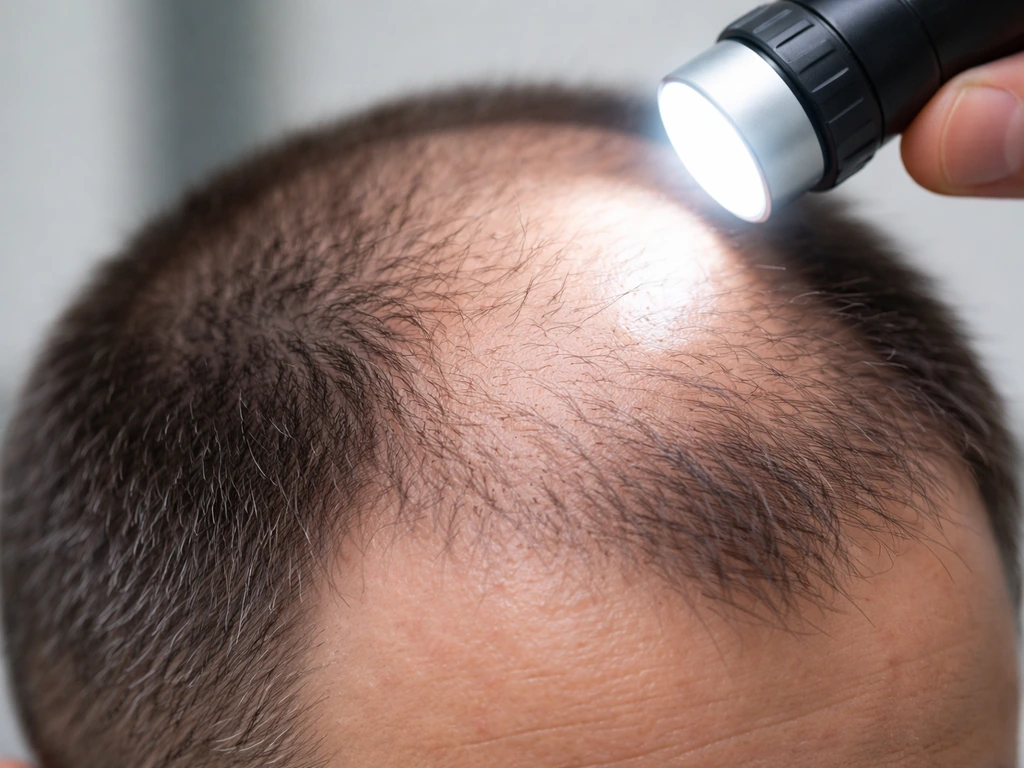
What 'no hair' actually means, and why it matters
Not all bare areas are created equal. When people say they have a spot where hair won't grow, they usually mean one of a few different things: a patch that appeared suddenly, a gradually thinning crown or temples, a widening center part, or an area that feels smooth and empty compared to the rest of the scalp. Each of those descriptions points to a different root cause, and the cause matters a lot because it determines what will actually work.
The most common culprit is androgenetic alopecia (pattern hair loss). In this case, hair follicles gradually miniaturize over years, producing thinner and shorter hairs until they eventually produce nothing visible. In men this typically starts at the temples or crown; in women it tends to show as a widening center part and diffuse thinning on the top, usually with the frontal hairline preserved. The follicles are still technically there, just suppressed by the hormone DHT.
Telogen effluvium is another common cause. This is a temporary, diffuse shedding triggered by something that happened two to three months earlier, like a high fever, surgery, rapid weight loss, or prolonged stress. The shedding phase lasts roughly six months in acute cases before the follicles reset and regrow on their own. It can feel alarming, but it almost always resolves once the trigger is removed.
Alopecia areata looks different from both of those. It produces smooth, coin-shaped patches that can appear anywhere on the scalp, sometimes in a band-like pattern around the back of the head (called ophiasis). It's an autoimmune condition where the immune system attacks the follicle, but the follicle itself usually survives, which is why regrowth is possible. Traction alopecia comes from repeated tension on the hair, from tight braids, ponytails, or extensions. Early on it's reversible; if the tension continues long enough to cause scarring, it becomes permanent.
Then there are the scarring alopecias, such as lichen planopilaris and folliculitis decalvans. These conditions destroy the follicle itself, and once that happens, natural regrowth isn't possible in those spots. Tinea capitis (scalp ringworm) is a fungal infection that causes patchy loss with broken-off hairs and scaling and needs oral antifungal medication to clear. Nutritional deficiencies in iron, vitamin D, or zinc can also drive shedding that looks dramatic but responds well to correction.
Quick self-checks: how to read your own scalp
Before you start any treatment, spend five minutes actually examining the area and answering a few questions. This isn't a diagnosis, but it will help you decide how urgently you need a dermatologist and what to try in the meantime.
Look at the pattern
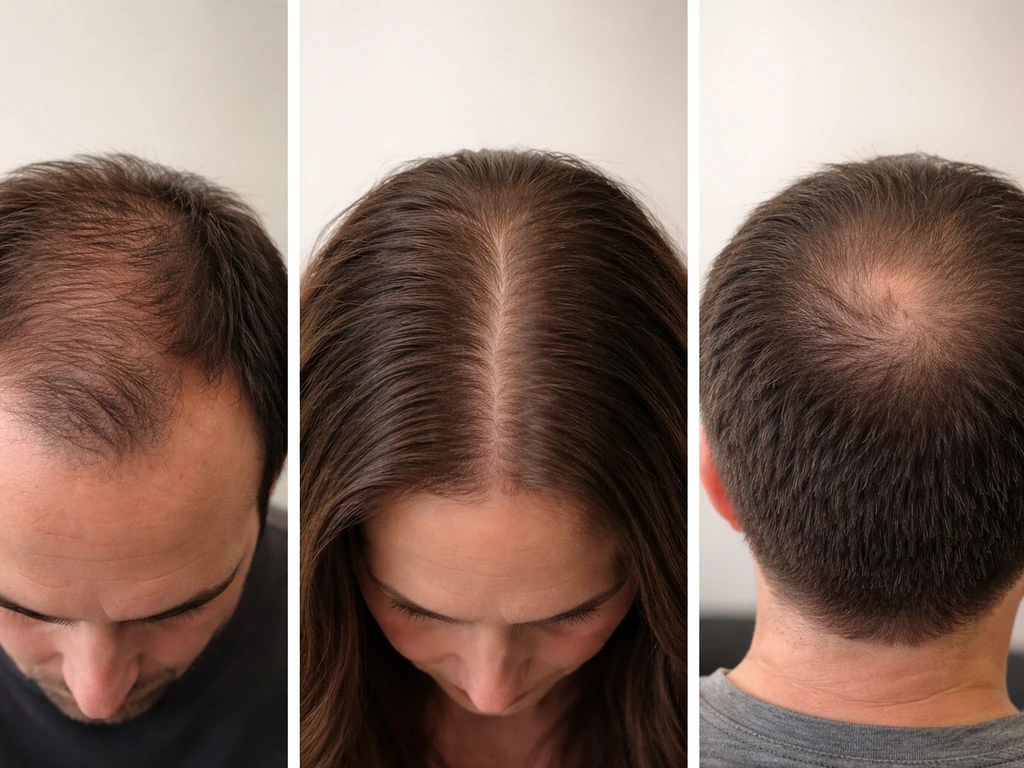
Is the thinning in a classic pattern, like receding temples and a thinning crown in men, or a widening part in women? That points strongly to androgenetic alopecia. Is it one or more distinct patches with sharp edges on an otherwise healthy scalp? Think alopecia areata or tinea capitis. Is the hairline pulling back only at the edges or temples, particularly if you wear tight styles? That's traction alopecia territory. Is it diffuse all over, with hair coming out in your brush and shower? Likely telogen effluvium.
Check the scalp skin itself
This is where a lot of people find the most useful clues. Look at the bare area closely in good light. If you can still see small pore-like openings (follicular ostia), that's a good sign the follicles are still present. If the skin looks smooth, shiny, and featureless with no pore openings visible at all, that's a sign of scarring alopecia and you should see a dermatologist promptly, because follicle destruction is irreversible and early intervention can stop progression. Also look for redness, pustules (small pus-filled bumps), honey-colored crusting, or tufts of multiple hairs coming out of a single follicle. Those can indicate folliculitis decalvans or other inflammatory scarring conditions. Flaking, scaling, or a "black dot" pattern of broken-off hairs suggests tinea capitis.
Do a simple pull test
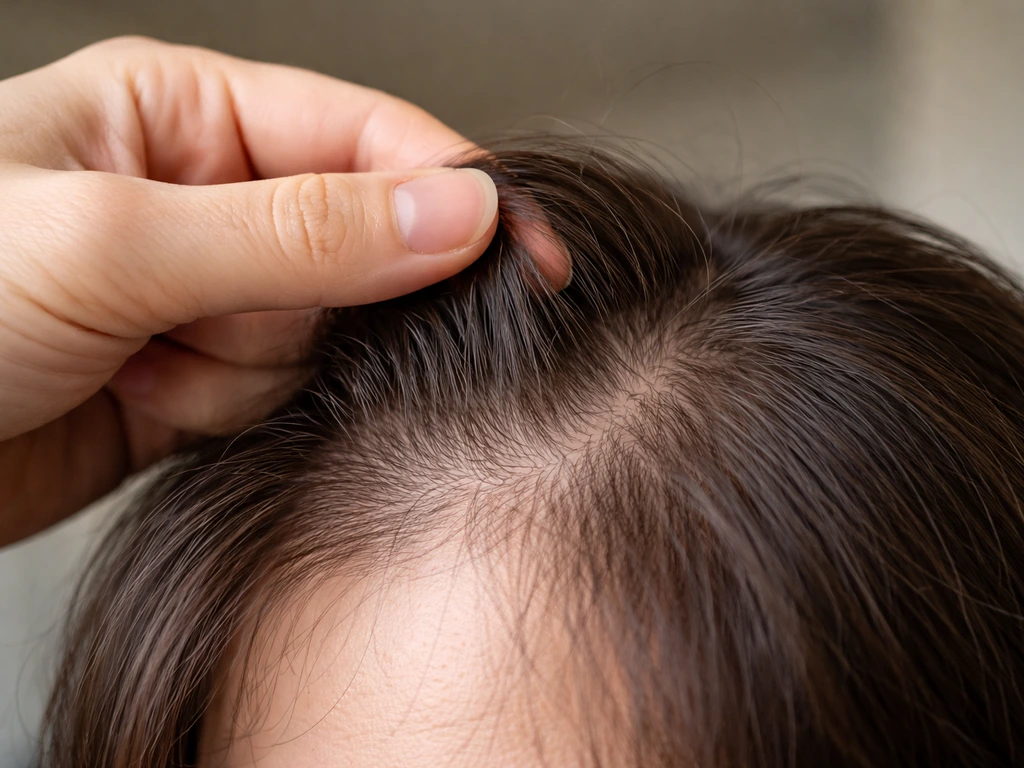
Gently grasp a small section of about 40 to 60 hairs near the edge of a thinning area and pull firmly but not aggressively. If more than roughly 10% of those hairs come out easily, that suggests active shedding, which can indicate telogen effluvium or active androgenetic alopecia. This is a rough screening tool, not a definitive test, but it gives you useful real-time information.
Red flags that mean see a doctor now
- Smooth, shiny scalp skin with no visible follicle openings in the bare area
- Pustules, discharge, or crusting around hair follicles
- Burning or significant pain in the scalp (not just itching)
- Rapid or widespread loss over a few weeks
- Loss that includes eyebrows, eyelashes, or body hair
- Nail pitting (small dents in the nail surface) alongside patchy scalp loss
- Patches with scaling, broken-off hairs, or inflammation in a child
Build a daily scalp and growth routine that actually works

If your self-check suggests non-scarring hair loss, a consistent daily routine is the foundation of any regrowth effort. There's no single magic product. What works is layering a few evidence-supported habits and sticking with them long enough to see results, because hair cycles are slow. Here's what a practical daily routine looks like.
Keep the scalp clean and the environment healthy
Wash your scalp regularly enough to prevent buildup of sebum, product residue, and any low-grade inflammation. For most people this means every two to three days. If you have seborrheic dermatitis or dandruff alongside thinning (common in androgenetic alopecia), using a 2% ketoconazole shampoo a couple of times per week can genuinely help. Clinical trials have shown it addresses scalp inflammation and flaking, and a healthier scalp environment gives follicles a better chance. Leave it on for a couple of minutes before rinsing.
Add scalp massage
Daily scalp massage, four to five minutes, is one of the most accessible things you can do. It increases blood flow to the follicles and may help with dermal papilla cell stimulation. Use the pads of your fingers (not nails) and work in small circles across the scalp, spending extra time over thinning areas. You can do it dry, or apply a few drops of a carrier oil like jojoba or castor oil before massaging. It won't reverse androgenetic alopecia on its own, but as part of a routine it's genuinely useful and costs nothing.
Apply minoxidil consistently
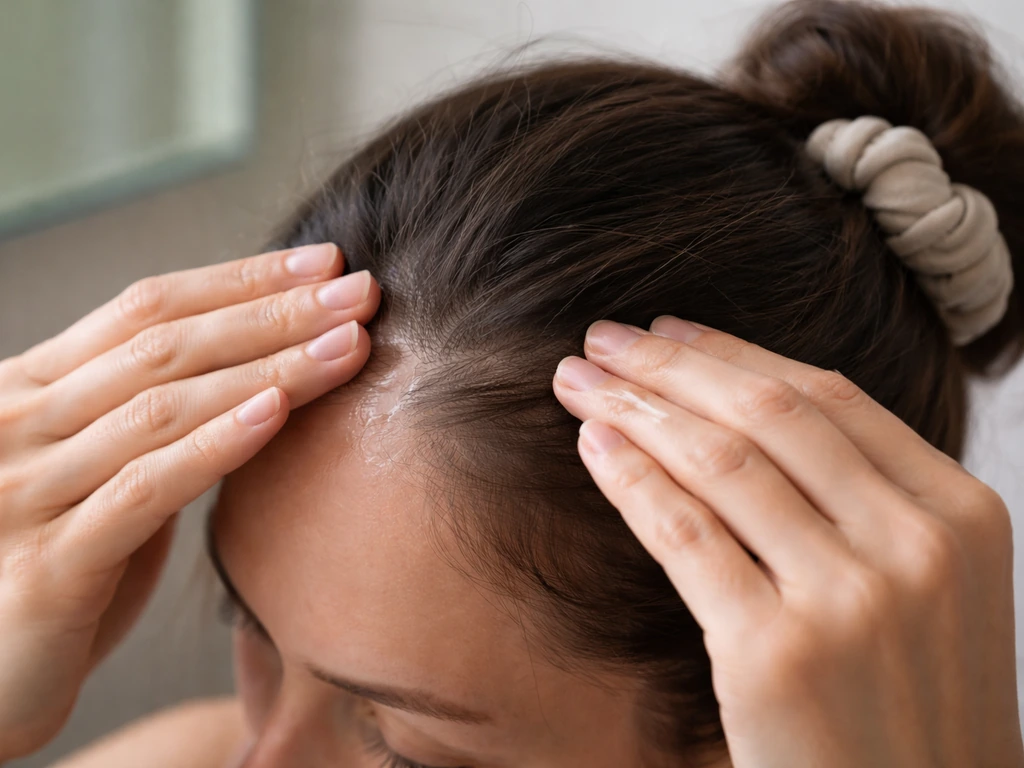
Topical minoxidil is the most evidence-supported over-the-counter treatment for regrowing hair in thinning areas. It works by prolonging the anagen (active growth) phase and improving blood flow around the follicle. The 5% concentration is generally recommended for men; women typically start with 2% though 5% foam is also used. Apply it directly to the bare or thinning scalp, not the hair shafts, and don't apply other skin products to the same area right after. Use it twice daily for the solution, or once daily for the foam version. One thing to warn you about: in the first four to eight weeks, you may notice increased shedding. This is minoxidil-induced telogen effluvium, where older hairs are pushed out to make way for new growth. It's temporary and not a reason to stop. If you develop persistent scalp irritation or a rash, you may be reacting to the propylene glycol in the liquid formula, and the foam version is usually tolerable in those cases. Minoxidil should not be used during pregnancy.
Protect what you have
Minimize heat styling and tight hairstyles over areas you're trying to regrow. Chronic tension is one of the ways traction alopecia starts, and even in androgenetic or post-telogen-effluvium situations, added mechanical stress doesn't help. Sleep on a silk or satin pillowcase if hair breakage is a concern, and handle thinning areas gently when detangling.
Nutrition, supplements, and lifestyle: the inside-out part
Hair follicles are metabolically active and sensitive to nutritional status. If you're deficient in key nutrients, no topical treatment will work as well as it should. Getting your nutrition right isn't glamorous, but it's often the piece people skip.
The nutrients that matter most
Iron deficiency is one of the most common and underdiagnosed causes of hair shedding, especially in women. Low serum ferritin (stored iron) is consistently associated with telogen effluvium in research, and correcting it can meaningfully reduce shedding and support regrowth. Ask your doctor to test serum ferritin specifically, not just hemoglobin. A ferritin level under 30 to 40 ng/mL is often considered a contributing factor even if you're not technically anemic. Vitamin D is another one: lower levels have been found in people with telogen effluvium compared to controls. Zinc, while evidence isn't as strong, has also shown associations with hair loss conditions. Get bloodwork done before supplementing these, because over-supplementing some minerals (particularly zinc and iron) can cause problems.
Biotin gets a lot of attention in hair supplement marketing, but the honest picture is less exciting. Biotin deficiency does cause hair loss, but true deficiency is rare in people eating a varied diet. The FDA doesn't recommend routine biotin supplementation for hair loss and evidence of benefit is limited to people who are actually deficient. If you're taking a high-dose biotin supplement, be aware it can interfere with thyroid and other lab tests, which matters if you're getting blood work to evaluate your hair loss.
Protein is the building block of hair (it's mostly keratin). If you're eating very low protein or have been through a period of crash dieting, that can absolutely drive hair shedding. Aim for at least 0.7 to 1 gram of protein per pound of body weight if you're actively trying to regrow hair.
Lifestyle factors that hit the follicles hard
Chronic stress is a real driver of telogen effluvium. Sustained high cortisol can push follicles into a resting phase, which is why many people notice shedding two to three months after a particularly brutal period of stress, illness, or a major life event. Sleep deprivation, smoking, and significant caloric restriction have all been associated with worsened hair loss outcomes. None of this means stress management will regrow hair on its own, but if you fix everything topically while continuing to run on fumes and anxiety, results will be slower and less reliable.
Topical treatments and home remedies: the honest breakdown

Beyond minoxidil and ketoconazole shampoo, there's a range of options with varying levels of evidence. Here's a practical comparison to help you decide what's worth your time.
| Treatment | Evidence Level | Best For | Key Cautions |
|---|---|---|---|
| Minoxidil (2–5% topical) | Strong (gold standard OTC) | Androgenetic alopecia, general regrowth | Early shedding phase; avoid in pregnancy; skin irritation possible |
| Ketoconazole 2% shampoo | Moderate (scalp health) | Seborrheic dermatitis alongside hair loss | Possible itching/contact dermatitis; not a standalone regrowth treatment |
| Low-level laser therapy (LLLT) | Moderate (RCT support) | Androgenetic alopecia | Results take at least 16 weeks; devices vary in quality |
| Microneedling (dermaroller) | Emerging (pilot study data) | AGA, may enhance minoxidil absorption | Infection risk; never reuse needle cartridges; RF microneedling has serious reported risks |
| Rosemary oil | Preliminary | Mild androgenetic alopecia | Weak evidence; skin sensitivity possible |
| Castor oil | Anecdotal only | Scalp massage carrier | No clinical evidence for regrowth; fine as a moisturizing carrier |
| Biotin supplements | Weak (unless deficient) | True biotin deficiency only | Can skew lab results; unnecessary without deficiency |
A word on low-level laser therapy
LLLT devices, including helmet-style and comb-style tools, have randomized controlled trial support for androgenetic alopecia. A 16-week trial found meaningful increases in hair density and thickness in the treatment group compared to sham controls. They're non-invasive, safe for home use, and don't interact with topical treatments. The downside is cost and the time commitment of consistent use over months. If budget allows and you want to layer treatments, it's a reasonable addition.
What to avoid
Be cautious with at-home microneedling. While there's emerging evidence that dermarolling can improve hair density in androgenetic alopecia (a pilot study assessed changes at 12 weeks), the FDA has raised safety concerns about at-home microneedling devices, particularly around infection risk and the unsafe practice of reusing needle cartridges. Radiofrequency microneedling has an FDA safety communication from October 2025 citing serious complications including burns, scarring, and nerve damage. These are clinic procedures, not DIY tools. Don't try them unsupervised.
When natural regrowth isn't possible: scarring vs. non-scarring
This is the part most people don't want to hear, but it's important. If your hair loss is scarring (cicatricial) alopecia, the follicles in the affected area have been permanently destroyed. No topical treatment, no supplement, and no home remedy will regrow hair there. If you are looking for how to grow hair that doesn't grow, the first step is figuring out whether the follicles are truly alive or already destroyed No topical treatment, no supplement, and no home remedy will regrow hair there.. What matters at that point is stopping the spread to follicles that are still alive.
Scarring alopecias like lichen planopilaris, frontal fibrosing alopecia, and folliculitis decalvans require a dermatologist, often a dermatologist who specializes in hair. Diagnosis typically involves a scalp biopsy to identify the specific condition and guide treatment. The smooth, shiny, pore-free appearance of scarred scalp skin is the clinical giveaway, but a biopsy confirms it. Dermoscopy is often used to find the best biopsy site and identify activity markers. Treatment focuses on suppressing the inflammation that's destroying remaining follicles, using topical or intralesional corticosteroids, oral antibiotics, or other immunosuppressants depending on the type.
For non-scarring conditions that haven't responded to the treatments above, prescription and procedural options go further. Finasteride (oral or topical) for men with androgenetic alopecia blocks DHT more directly than minoxidil and is prescription-only. Spironolactone is often used in women with AGA. For alopecia areata, intralesional corticosteroid injections are often the first-line treatment for patchy cases, with initial regrowth typically visible within four to eight weeks of injections, and most patients seeing meaningful improvement within about three months. For more severe alopecia areata (involving more than 50% of the scalp), oral JAK inhibitors like baricitinib have become an important option and require specialist management. Hair transplant surgery is an option for androgenetic alopecia where there's sufficient donor hair, but it requires stable, non-scarring hair loss and realistic expectations about coverage.
Realistic timelines and how to track your progress
Hair grows slowly, about half an inch per month, and hair cycles mean that even when a treatment is working, you won't see the results until the new anagen (growth) phase produces enough length to be visible. This is probably the most common reason people give up on treatments that would have worked if they'd continued.
For minoxidil, expect to wait at least three to four months before you see any meaningful change, and up to six months or more for the full effect. LLLT studies show measurable density changes at 16 weeks. Microneedling outcomes were assessed at 12 weeks in pilot studies. Alopecia areata treatments with steroid injections can show initial regrowth in four to eight weeks, with more substantial results at three months. Telogen effluvium, which is self-limiting, typically resolves and begins regrowing within six months of the trigger being removed. The key message: give any treatment a minimum of three to six months of consistent use before concluding it isn't working.
How to track progress without driving yourself crazy
Take a baseline photo in consistent lighting (natural light, same angle) of the thinning area on day one. Repeat monthly. Phones are fine for this. You're looking for early vellus (tiny, fine) hairs appearing in previously bare spots, density changes in adjacent areas, and less shedding in the brush or shower. Don't compare weekly, because hair growth in any given week is not visible to the naked eye. Monthly photos are the most practical tracking tool, and they're genuinely motivating when things are working because you're comparing to a baseline rather than yesterday.
If you're three to four months into a consistent routine with minoxidil, a clean scalp practice, solid nutrition, and no underlying medical issues addressed, and you're seeing no change at all, that's the right time to see a dermatologist. If you have been stuck wondering what to do when your hair won't grow, asking for the right diagnosis is the fastest way to narrow down the right next steps. A pull test, dermoscopy, and blood panel (at minimum CBC, TSH, and ferritin) can identify what's being missed. It's not giving up; it's leveling up your information. Some causes of hair loss genuinely won't budge without prescription treatment, and the earlier you get the right diagnosis, the better the outcome.
If what you're dealing with is specifically hair that seems to grow outward rather than downward, or hair that feels like it "won't grow" past a certain length, those are different problems with their own solutions around moisture retention, breakage prevention, and styling. For men who want their hair to grow down instead of out, the same regrowth principles still apply, but you'll also want to address breakage, curl or wave behavior, and styling habits grow outward rather than downward. And if your situation is more about encouraging growth in areas that have always been thin versus areas that were once full, the approaches overlap heavily with what's covered here but may need to be adjusted based on your hair type and history.
FAQ
How can I tell if my “no hair” area is reversible vs scarred before I see a dermatologist?
Look for follicular ostia (tiny pore-like openings) and hair tufts that can be pulled gently at the border. If the skin is completely smooth, shiny, and pore-free with no ostia, that strongly suggests scarring. Also check for signs of active inflammation like crusting, pustules, or clusters of broken hairs, and don’t wait if you see those.
Is it normal to get more shedding after starting minoxidil?
Yes, especially in the first 4 to 8 weeks. The extra shed is often minoxidil-triggered telogen shift, meaning older hairs are clearing out for new growth. What is not normal is persistent burning, hives, or a rash that keeps coming back, in which case switch formulations (liquid vs foam) or stop and get evaluated.
What’s the safest way to use minoxidil if I have sensitive skin or dandruff?
Use it only on the scalp where it’s intended, keep other scalp products off the same area for a few hours after, and treat dandruff separately if it’s present. If you get irritation with the liquid form (often due to additives like propylene glycol), foam versions are frequently better tolerated, but you should stop if irritation becomes persistent.
Can I regrow hair if the area has been bald for years?
Sometimes, but it depends on whether follicles are still alive. Long duration makes miniaturized follicles more likely to be inactive, and scarring conditions can destroy follicles even earlier than you notice. The practical next step is to assess ostia and inflammation signs, then consider a dermatologist visit if the area looks smooth and pore-free.
Will supplements like iron, vitamin D, or zinc fix hair loss if my levels are normal?
Usually not. Iron and zinc especially can cause issues if taken unnecessarily. The better approach is to get bloodwork (at minimum CBC, TSH, and ferritin) before supplementing, then correct only what is truly low, while still following a consistent scalp and hair routine.
Do I need to stop hair loss treatments once regrowth starts?
Often yes to a point for reversible shedding causes, but not automatically for androgenetic alopecia. Many people need ongoing maintenance because follicles can re-miniaturize when treatment stops. A dermatologist can guide how to taper based on your pattern, how long it’s been stable, and what you are using (for example, minoxidil vs anti-androgen prescriptions).
How long should I try a treatment before deciding it’s not working?
Use a minimum window of 3 to 6 months for most options. Minoxidil usually needs 3 to 4 months for meaningful change and up to 6 months for the full effect. Prescription injectable regimens for alopecia areata may show early change within 4 to 8 weeks, but best assessment is typically around 3 months.
What’s the best way to take progress photos so I can actually measure change?
Take photos once per month using consistent lighting, same angle, and include a fixed reference (like a marked spot on the scalp). Don’t judge by day-to-day shedding. Instead, track emergence of finer vellus hairs in bare zones and density changes at the border of the thinning area.
If my bald patch appeared suddenly, what should I do first?
Treat it as a timing clue. Sudden onset with coin-shaped smooth patches often points toward alopecia areata, while scaling, broken hairs, or “black dot” patterns suggest tinea capitis. If it’s rapidly spreading or you see scaling, pustules, or broken hairs, get evaluated promptly rather than starting multiple overlapping treatments at home.
Can traction from hairstyles still cause damage even if I stop the hairstyle now?
Yes, especially if tension has been ongoing long enough to cause scarring. Early traction alopecia can improve after you reduce tension, but continued aggressive pulling can lead to permanent follicle loss. If the area looks smooth and pore-free after you change hairstyles, a dermatologist assessment is important.
Is microneedling at home ever worth it?
If you’re considering it, the key risk is safety, infection, and technique. At-home devices have raised concerns, and stronger procedures like radiofrequency microneedling are not DIY-safe. If you want this route, it’s usually more reliable to discuss options with a hair-focused dermatologist who can assess inflammation, scarring risk, and device safety.
When should I stop trying self-care and seek a dermatologist right away?
Go sooner if the scalp looks smooth and pore-free (possible scarring), if there are pustules, honey-colored crusts, or redness with tenderness, or if the loss is progressing quickly. Also seek care if you’ve followed a consistent routine for 3 to 4 months with no change at all, because you may need a targeted prescription diagnosis and treatment plan.
Next Articles
How to Make Hair Grow Down Instead of Out Male
Learn why male hair puffs up, then follow simple wash, care, and training steps for straighter downward lay.
Tips on How to Grow Your Hair Out: A Step by Step Guide
Step-by-step tips to grow hair out: stop breakage, build scalp routine, nutrition, safe actives, and track progress.
Grow Hair Long Tips: Step-by-Step Routine to Reach Length
Step-by-step grow hair long tips: boost scalp health, cut breakage, improve diet, and track progress for length.