
If you want to grow less hair, you're most likely looking for one of two things: either a way to reduce or eliminate unwanted body or facial hair, or, if you've landed here from a hair-health search, you're dealing with something like slow scalp growth, stunted strands, or genetically short hair, and the phrasing just led you here. Both are completely valid starting points, and I want to make sure you're in the right place before we go any further. This article is primarily about reducing unwanted hair, from temporary fixes like shaving and waxing all the way to long-term options like laser and electrolysis, but it also flags when the real problem is something else entirely, like a hormonal condition or scalp issue that needs its own approach.
How to Grow Less Hair: Safe, Effective Options & Tips

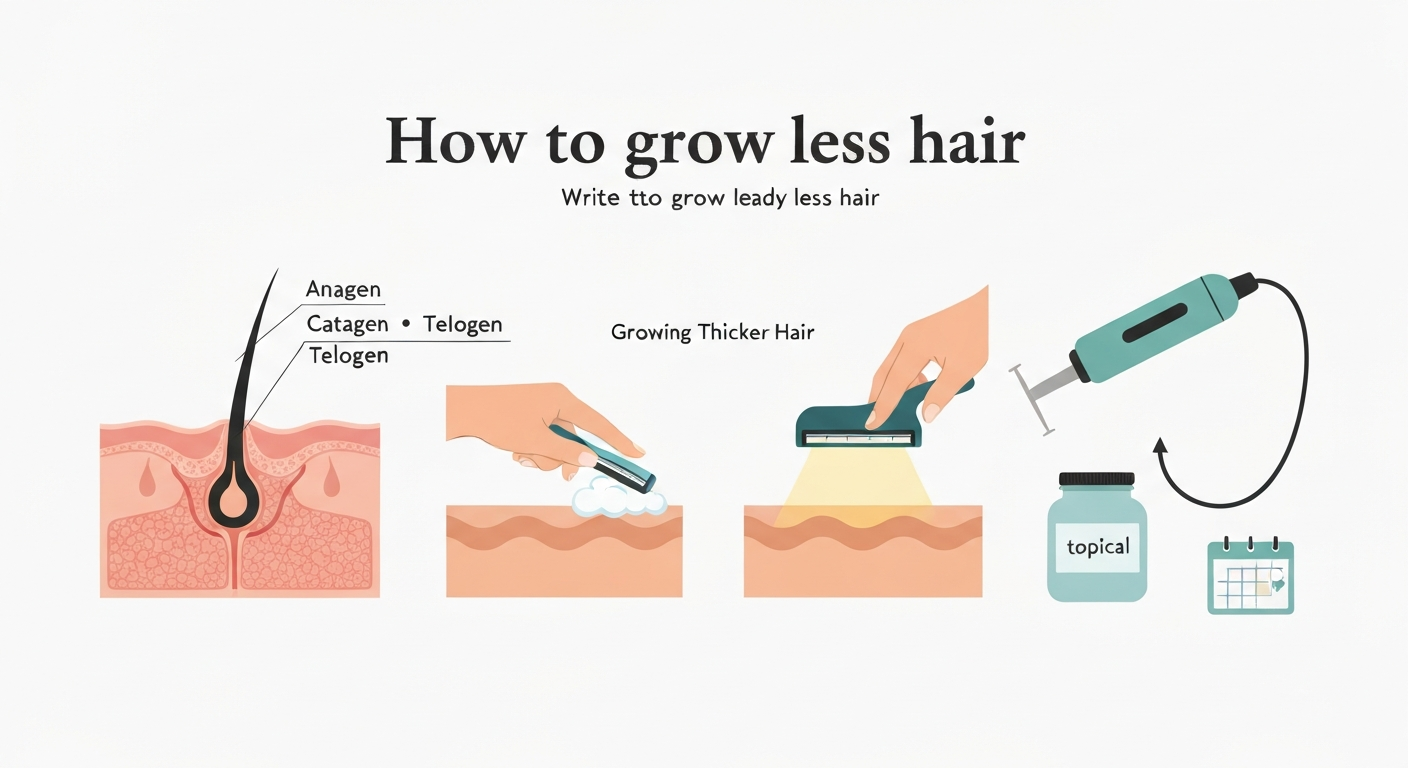
What people actually mean when they search 'how to grow less hair'
The phrase "grow less hair" gets used for at least three distinct problems, and mixing them up leads to the wrong solutions. The most common intent is straightforward: you have more body or facial hair than you want, and you'd like to reduce it, ideally with something that lasts. A second intent comes from people who feel their hair grows back too quickly after removal and want to slow that regrowth cycle down. A third, and probably the most common source of confusion on a site like this one, comes from people who typed the phrase when they actually meant something closer to the opposite: their scalp hair won't grow long, grows slowly, or seems to stall out, and they're wondering if there's something biologically 'off' with their follicles.
That third group is worth pausing on. If what's frustrating you is that your scalp hair doesn't seem to grow, or stops at a certain length, or grows much more slowly than you'd expect, you're dealing with a fundamentally different problem. Scalp hair that seems stunted or maxes out at a short length is often tied to genetics, damage, or the hair's growth cycle, not to the same biology that drives unwanted facial or body hair. Topics like slow-growing or stunted hair, and what it means to have genetically short hair, are worth exploring separately. For practical tips on how to grow stunted hair, see our separate guide on how to grow stunted hair. If you meant slow-growing scalp hair, see our separate guide on how to grow slow growing hair for targeted tips on boosting length and reducing breakage. For focused advice on how to grow genetically short hair, see our separate guide on that topic.
How to figure out which problem you're actually dealing with
Before doing anything else, ask yourself one direct question: is the hair you're concerned about somewhere you don't want hair at all (legs, upper lip, back, bikini line), or is it on your scalp where you want more, longer, or healthier hair? If it's the former, keep reading, this guide is built for you. If it's the latter, the issue is almost certainly about growth rate, breakage, or your hair's natural anagen phase rather than excessive follicle activity.
A third scenario that often gets tangled into both searches is ingrown hairs. These aren't a hair-reduction problem or a slow-growth problem, they're a redirection problem, where a removed hair curls back into the skin instead of growing outward. Ingrown hairs have their own prevention and treatment logic, and I cover them in a dedicated section below.
| Your concern | What it probably is | Where to focus |
|---|---|---|
| Unwanted hair on body or face | Excess terminal or vellus hair, possibly hormonal | Hair reduction methods (this article) |
| Scalp hair won't grow past a certain length | Short anagen phase, breakage, or genetics | Slow-growing or stunted scalp hair guidance |
| Hair grows back too fast after shaving/waxing | Normal follicle regrowth; possibly coarse terminal hair | Semi-permanent or long-term reduction methods |
| Bumps or loops under skin after removal | Ingrown hairs | Ingrown hair prevention section below |
| Sudden increase in body/facial hair | Possible hormonal change (hirsutism) | Medical evaluation section below |
A quick primer on hair biology (why body hair and scalp hair behave so differently)
Every hair on your body goes through the same three-phase cycle: anagen (active growth), catagen (transition), and telogen (rest/shedding). What varies enormously is how long each phase lasts depending on where on your body the follicle is. Scalp follicles stay in anagen for roughly two to eight years, which is why scalp hair can grow several feet long if left alone. Most body and facial follicles, by contrast, have anagen phases measured in weeks to a few months at most, then spend comparatively longer in telogen. That short active-growth window is literally why leg hair stops growing at a few centimeters, it's programmed to.
Hair follicles also come in different types. Vellus hairs are the fine, short, lightly pigmented ones you see on most of your body's surface. Terminal hairs are longer, coarser, and more pigmented, the kind you find on the scalp, underarms, and pubic area, and the kind that appears in areas like the face or back when androgen levels rise. This distinction matters enormously when you're choosing a removal method: most long-term techniques work best on pigmented terminal hairs because they target melanin. Treating light or vellus hair requires different or additional approaches.
Hormones, particularly androgens like testosterone and DHT, are the primary drivers of terminal hair growth on the body. Androgen receptors in follicles vary by body site, which is why some people grow significant facial or back hair and others don't, even with similar hormone levels. This receptor sensitivity is largely genetic. Estrogen, by contrast, tends to prolong the anagen phase and is part of why many people notice hair changes during pregnancy, menopause, or when starting or stopping hormonal contraception.
Realistic expectations: what genetics and hormones mean for permanent reduction
I want to be honest with you here, because a lot of marketing around hair removal oversells what's achievable. Truly permanent removal, where the follicle is permanently destroyed and the hair never returns, is really only achievable with electrolysis, and even then it's dependent on treating every single follicle individually, which takes significant time and cost. Laser and IPL can produce what's called 'long-term hair reduction,' meaning many treated follicles produce finer, lighter, or no hair for years, but some regrowth is common and maintenance sessions are usually needed.
Your genetics set a kind of floor for what's possible without medical intervention. If you have a strong genetic predisposition to terminal hair growth in a particular area, reducing it to zero without professional treatment is unlikely. Hormonal factors also shift the picture: if your androgen levels are elevated (either from a medical condition or from natural variation), hair will continue to grow back more robustly even after reduction, because new follicles are being recruited. This is why treating the underlying hormonal cause, not just the hair itself, is important in conditions like polycystic ovary syndrome (PCOS).
When you need a medical evaluation first
Most people asking how to grow less hair don't need a doctor before they start. But there are specific patterns that are worth taking seriously and getting checked before you invest time and money in removal treatments.
Hirsutism, the medical term for excess terminal hair growth in women following a male-distribution pattern (chin, upper lip, chest, lower abdomen, inner thighs), is evaluated using the Ferriman-Gallwey (mFG) scoring system. Clinicians score hair growth across nine body areas; the threshold for what counts as hirsutism varies by ethnicity, but scores of roughly 8 or higher in many Western populations typically prompt further evaluation. It's worth knowing that a small amount of localized unwanted hair in a woman who has regular periods and no other symptoms does not automatically warrant androgen testing, the Endocrine Society specifically recommends against routine biochemical testing in that scenario.
What does warrant prompt attention is rapid-onset or rapidly progressing hair growth, especially if accompanied by voice deepening, clitoral enlargement, or significant male-pattern scalp hair loss. These can be signs of a virilizing androgen-secreting tumor, which is rare but serious, and needs expedited hormonal testing and specialist referral. The Endocrine Society Clinical Practice Guideline, Evaluation and Treatment of Hirsutism (JCEM, 2018) specifically lists rapid-onset or rapidly progressive virilization (voice deepening, clitoromegaly, severe male-pattern balding), very high mFG scores, or rapid progression as red flags requiring expedited endocrine evaluation for possible androgen‑secreting neoplasm Endocrine Society Clinical Practice Guideline — Evaluation and Treatment of Hirsutism (JCEM, 2018). Similarly, if you have known PCOS, adrenal conditions, or are taking medications that affect androgens, getting a proper workup before starting cosmetic treatment makes sense. For anyone in these categories, a visit to a dermatologist or endocrinologist is the right first step, not a waxing appointment.
Temporary removal: shaving and trimming
Shaving is the most widely used hair removal method in the world, and for good reason: it's fast, cheap, painless when done carefully, and requires no recovery time. A sharp razor cuts the hair at the skin surface, leaving the follicle entirely intact. This means regrowth begins almost immediately, you're typically seeing visible stubble within one to three days for most areas, depending on your growth rate and hair color. The myth that shaving makes hair grow back thicker or darker is just that, a myth. The blunt cut end of a regrown hair feels coarser and may look darker because the tapered tip has been removed, but the follicle itself is unchanged.
For safety, always shave with a sharp blade, go with the grain on sensitive areas like the bikini line or face to reduce irritation and ingrown hair risk, and use a moisturizing shave gel or foam. Trimming with an electric trimmer is an even lower-risk option if you want to reduce length without skin contact, and it's particularly useful for areas like underarms, chest, or perianal skin where a razor can be tricky to use safely.
Temporary removal: chemical depilatories
Depilatory creams work by breaking down the disulfide bonds in the keratin structure of the hair shaft, dissolving it at or just below the skin surface. Because they remove slightly more of the hair than a razor does, regrowth can feel slightly smoother for a few days longer than shaving, typically five to seven days before noticeable regrowth in most areas. They don't affect the follicle at all, so this is firmly in the temporary category.
The risks are primarily chemical irritation or allergic contact dermatitis, which is why patch testing on a small area 24 to 48 hours before full use is not optional, it's essential. Depilatories should never be used on broken skin, sunburned skin, the face (unless the product specifically states it's formulated for facial use), or sensitive mucous membranes. Leave-on time matters: going beyond the recommended window significantly increases the risk of chemical burns. If you feel significant burning before the time is up, rinse immediately.
Semi-permanent methods: waxing, sugaring, threading, and epilators
These methods all work on the same basic principle: pulling the hair out from the root rather than cutting it at the surface. Because the entire hair shaft and bulb are removed, regrowth takes longer, typically three to six weeks, depending on the area and your individual growth rate. With repeated use over months, some people notice hair growing back finer and sparser, because repeated trauma to the follicle can gradually reduce its activity, though this varies considerably from person to person.
Waxing uses a warm or cold resin applied to the skin and stripped away with cloth strips or hardened wax. Hot wax can cause burns if applied too warm, especially on sensitive areas. Sugaring uses a paste of sugar, lemon, and water, it's gentler on many skin types because it adheres to hair rather than skin, and leftover paste is water-soluble and easier to clean up. Threading uses a twisted cotton thread to trap and pull hairs and is commonly used for facial hair and eyebrows; it's precise, low in chemical risk, and generally well-tolerated even on sensitive skin.
Epilators are handheld electrical devices that mechanically pull multiple hairs simultaneously. They're convenient for home use but can be uncomfortable, particularly on sensitive areas, and the pinching action can increase ingrown hair risk if not followed by proper exfoliation. For all root-removal methods, the main safety considerations are infection risk (open follicles immediately post-treatment are vulnerable, especially in bikini and perianal areas), and hyperpigmentation risk on darker skin tones. Always exfoliate gently in the days before treatment and moisturize afterward, but avoid applying wax or sugar to actively irritated, broken, or sunburned skin.
Long-term hair reduction: laser and IPL
How they work and who's a good candidate
Laser and intense pulsed light (IPL) devices work through a process called selective photothermolysis: they deliver energy at wavelengths absorbed preferentially by melanin in the hair follicle, generating heat that damages the follicle's ability to produce terminal hair. The key word is melanin, both methods work best when there's a strong contrast between the pigment in the hair and the pigment in the surrounding skin. Classically, this means dark hair on light skin gives the best results. Light, blonde, red, or grey hair contains little melanin and responds poorly to most laser or IPL devices.
Different device types have different wavelength profiles and safety considerations. Alexandrite lasers (755 nm) tend to show strong efficacy for hair reduction and are widely used, but they carry higher risk for people with darker skin tones because the shorter wavelength is more likely to be absorbed by epidermal melanin rather than the follicle. Long-pulsed Nd:YAG lasers (1064 nm) are generally preferred for Fitzpatrick skin types IV through VI (medium brown to dark skin) because the longer wavelength penetrates deeper and is less absorbed by surface melanin, reducing burn and pigmentation risk. Diode lasers fall in between. IPL, which uses a broad spectrum of light rather than a single wavelength, is generally less precise and less effective per session than laser, though newer filtered IPL devices have improved. A systematic review and meta-analysis published in the Journal of the European Academy of Dermatology and Venereology found that alexandrite was often superior to IPL for hair count reduction, but Nd:YAG was the safer choice for darker skin.
Session schedule, effectiveness, and realistic outcomes
Most people need between four and eight sessions spaced roughly four to eight weeks apart, depending on the body area and the hair's growth cycle. This spacing is deliberate: treatment is only effective on follicles in or near the anagen phase, and since not all hairs in an area are in anagen at the same time, multiple sessions are needed to catch different cohorts of follicles. After a full course of treatment, most people see significant long-term hair count reduction, and some follicles are permanently destroyed. But 'permanent' is not guaranteed for all treated hairs, and hormonal shifts (puberty, pregnancy, PCOS flares, menopause) can stimulate new follicle activity in the years following treatment, making occasional maintenance sessions useful.
Pre-treatment preparation matters. In the weeks before each session, you should avoid sun exposure and self-tanner on the treatment area, shave the area one to two days before (removing surface hair while keeping the follicle intact), and avoid plucking or waxing (which removes the follicle target). Post-treatment, expect redness and mild swelling for 24 to 48 hours. Avoid heat, friction, and sun exposure on treated skin, and apply SPF 30 or higher consistently. Risks include burns, blistering, hyperpigmentation, and hypopigmentation, risks that are significantly higher with inadequately trained operators, incorrect wavelength selection, or tanned/darker skin treated with inappropriate devices. The FDA classifies hair-removal lasers as regulated medical devices, and major laser societies recommend that treatments be performed by or under the direct supervision of a clinician with appropriate training. This is not a case where 'the cheaper the better' applies.
Permanent removal: electrolysis
Electrolysis is the only method that is genuinely capable of permanently destroying individual hair follicles, regardless of hair color or skin type. A fine probe is inserted into each follicle individually, and an electrical current (galvanic, thermolytic, or a blend of both) destroys the follicle's growth cells. Because it works follicle by follicle rather than in sweeping energy pulses, it's slow and labor-intensive, treating a small area like the upper lip might take multiple sessions of 15 to 30 minutes each over months, while a larger area like the legs could require years of regular appointments.
The evidence base for electrolysis is thinner than for laser in terms of large randomized trials, but it's well established in clinical practice, and its theoretical advantage over laser, color independence, makes it the go-to option for people with fair, grey, or red hair that laser can't target. Results are highly operator-dependent, so finding a licensed, experienced electrologist matters. Risks include temporary redness and swelling, and with poor technique or inadequate sterilization, infection and scarring are possible. It can also be uncomfortable, particularly on sensitive areas, and some people use a topical anesthetic cream before sessions. Cost-wise, electrolysis for a large area often ends up more expensive than laser, and it requires significantly more patience.
Prescription topical option: eflornithine (Vaniqa)
Eflornithine 13.9% cream (sold under the brand name Vaniqa) is the only FDA-approved topical treatment specifically for reducing unwanted facial hair in women. It works by irreversibly inhibiting an enzyme called ornithine decarboxylase inside the follicle, which slows the hair growth rate. It does not remove hair, you still need to use a separate removal method, but it means hair grows back more slowly and often more finely over time. Clinical trials showed measurable improvement in most users after about 24 weeks of twice-daily use, though marked improvement was seen in a minority of participants. The effect fades if you stop using it, typically within a few weeks to months.
Side effects are generally mild and local: stinging, burning, skin irritation, and occasional acne-like breakouts at the application site. Because it requires a prescription, you'll need to discuss it with a dermatologist or your GP. It's most useful as an adjunct to laser or IPL, the combination of a topical slowing agent with energy-based removal tends to produce better and faster results than either approach alone. It's approved for facial use only, so don't apply it to body areas expecting the same effect.
Hormonal and oral medical therapies
For women whose excess hair growth is driven by elevated androgens, whether from PCOS, congenital adrenal hyperplasia, or idiopathic hyperandrogenism, treating the underlying hormonal driver alongside physical hair removal produces meaningfully better results than hair removal alone. The primary systemic options are combined oral contraceptives (COCs) and antiandrogen medications.
Combined oral contraceptives reduce circulating free androgens by increasing sex hormone-binding globulin and suppressing ovarian androgen production. A Cochrane review found COCs reduce hirsutism compared to placebo, and they're considered a first-line systemic option for women not seeking pregnancy. Benefits build over months, typically three to six months before significant hair reduction is apparent. They're not appropriate for everyone: contraindications include a history of blood clots, certain migraines with aura, and specific cardiovascular risk factors, so a prescriber will review your medical history.
Antiandrogens like spironolactone block androgen receptors in follicles, reducing terminal hair growth. Spironolactone is widely used off-label for hirsutism and has a reasonable evidence base. Because it's a potassium-sparing diuretic, monitoring of serum electrolytes and kidney function is recommended, particularly in people with renal impairment or those taking other medications that raise potassium levels. Critically, antiandrogens, including finasteride, which inhibits the conversion of testosterone to DHT, must not be used in pregnancy or without effective contraception in people of childbearing potential, because of teratogenic risks to a male fetus. Flutamide, another antiandrogen, was historically used for hirsutism but is no longer recommended by the Endocrine Society due to serious hepatotoxicity risk. Cyproterone acetate is available in some countries but not in the US. All of these are prescription-only medications requiring specialist oversight.
Combining treatments and building a realistic maintenance plan
No single method handles everything, and for most people reducing unwanted hair is a layered process. A practical approach might look like this: start with temporary removal (shaving or waxing) while you're evaluating longer-term options; if you're a good laser candidate, commit to a full course of laser treatment (six or more sessions) while keeping treated areas shaved between appointments; use eflornithine on the face if you're dealing with facial hair and want to slow regrowth between laser sessions; and if a hormonal condition is driving regrowth, work with your doctor on systemic treatment concurrently.
Even after a full laser course, most people benefit from one or two maintenance sessions per year, particularly if hormonal shifts occur. Electrolysis is a good option for mopping up residual hairs, especially lighter ones, that laser missed. The time and cost tradeoffs are real: laser requires fewer sessions than electrolysis for large areas but more upfront cost than waxing; electrolysis is slow but truly permanent for each treated follicle; medical therapies require monitoring and ongoing prescriptions but address the root hormonal cause.
| Method | Duration of effect | Best for | Approximate sessions/timeline | Key limitation |
|---|---|---|---|---|
| Shaving/trimming | 1–3 days | Quick, low-cost maintenance | Daily or every few days | Very short effect; blunt regrowth |
| Chemical depilatories | 5–7 days | Quick at-home removal | Every 1–2 weeks | Irritation/burn risk; chemical smell |
| Waxing/sugaring | 3–6 weeks | Legs, bikini, face | Every 3–6 weeks | Painful; ingrown hair risk |
| Threading | 3–6 weeks | Facial hair, eyebrows | Every 3–6 weeks | Limited to smaller areas |
| Epilator | 3–4 weeks | Legs, arms | Every 3–4 weeks | Uncomfortable; ingrown risk |
| Laser/IPL | Months to years (with maintenance) | Dark hair on lighter skin; large areas | 4–8+ sessions, 4–8 weeks apart | Poor results on light/grey hair; pigmentation risk on dark skin |
| Electrolysis | Permanent per follicle | All hair/skin colors; light/grey hair | Many sessions over months–years | Very slow for large areas; costly |
| Eflornithine cream | Slows regrowth while using | Facial hair in women (adjunct) | Twice daily, ongoing | Does not remove hair; prescription only |
| Anti-androgens/COCs | Ongoing while taking | Hormonal hirsutism | 3–6+ months for visible effect | Prescription; contraindications; monitoring needed |
Preventing and treating ingrown hairs
Ingrown hairs happen when a removed hair, instead of growing straight out from the follicle, curls back into the surrounding skin or gets trapped under it. This causes a raised, sometimes red or pus-filled bump that can be itchy, tender, and easily confused with a pimple or folliculitis. People with curly or coarse hair are particularly prone to ingrowns, and any method that removes hair at the root (waxing, epilating, sugaring) or close to the surface creates the conditions for them.
Prevention is more effective than treatment. Gentle exfoliation with a soft scrub or chemical exfoliant (like a low-concentration salicylic acid product) every few days between removal sessions helps keep follicle openings clear. Shaving with the grain rather than against it, using a sharp blade, and avoiding pulling the skin taut while shaving all reduce ingrown risk. Moisturizing the skin post-removal keeps it pliable and reduces the likelihood of hairs getting trapped.
For treating existing ingrowns, a warm compress applied for several minutes can help bring the hair closer to the surface. If the hair tip is visible just under the skin, a sterile needle or tweezers can gently tease it out, but avoid digging into the skin or squeezing aggressively, which risks infection and scarring. Topical products containing salicylic acid, glycolic acid, or a mild retinoid can speed resolution and prevent new ones. If you're seeing widespread, recurrent, or infected-looking ingrowns, particularly in the bikini or perianal area, it's worth getting a dermatologist's input, as folliculitis (bacterial infection) can look similar and needs different treatment.
What the evidence actually says about 'natural' remedies
I'll be direct: the evidence base for most natural or home remedies for reducing hair growth is very thin. Turmeric pastes, spearmint tea, saw palmetto, lavender oil, and various DIY scrubs circulate widely on blogs and social media, but none of them have high-quality clinical trial data supporting meaningful hair reduction in humans.
Spearmint tea is probably the most discussed option with any plausible mechanism, small studies have shown it can modestly reduce free testosterone levels in women with PCOS, and a couple of pilot trials showed slight improvements in self-reported hirsutism scores. But the studies are small, short, and not designed to measure actual hair count. Turmeric pastes applied topically are sometimes described as breaking down hair or weakening the follicle, but there's no peer-reviewed human trial evidence for this effect at concentrations achievable in a home paste. Saw palmetto has weak evidence as a 5-alpha reductase inhibitor, but clinical data for hirsutism specifically is essentially absent.
None of this means these remedies are harmful, most aren't, used sensibly. But if you're spending significant time and money on natural approaches expecting the results of laser or electrolysis, you'll be disappointed. Think of them as lifestyle additions with possible minor supportive benefits, not as replacements for proven methods. If you're curious about slow-grow minimizers that are marketed commercially as hair growth inhibitors, it's worth approaching those claims with similar skepticism and looking for evidence of actual follicle-level effect rather than moisturizing benefits. If you're curious about commercial products marketed as slow grow hair minimizer, see the slow grow hair minimizer (internal resource 6173e080-f911-4988-940b-4d4de36c82bb) for a closer look at claims and evidence.
Should you DIY, see an aesthetician, or see a dermatologist? A practical checklist
Knowing who to see, or whether to see anyone at all, depends on what you're dealing with and what you're aiming for. Here's a simple way to think through it:
- DIY at home: shaving, trimming, at-home epilating, depilatory creams, or over-the-counter exfoliants for ingrown hairs — all fine to do yourself if you follow safety guidelines and patch test as needed.
- See a licensed aesthetician or electrologist: professional waxing, sugaring, threading, salon IPL, or electrolysis — these are safe in trained hands and appropriate for cosmetic goals without any medical complexity.
- See a dermatologist: if you want professional laser hair removal (always recommended over unregulated devices), have darker skin and need wavelength guidance, have significant ingrown hair issues or folliculitis, or want a prescription for eflornithine.
- See a dermatologist or endocrinologist: if your hair growth pattern is consistent with hirsutism (male-distribution pattern in a woman), if you have irregular periods or other signs of hormonal imbalance, if hair growth has changed rapidly, or if you're considering anti-androgen or other hormonal therapy.
- Seek urgent evaluation: if you have rapid-onset virilizing symptoms (voice change, clitoromegaly, significant male-pattern scalp hair loss alongside facial/body hair growth) — these warrant prompt investigation to rule out a hormone-secreting tumor.
Follow-up care and long-term skin health after hair removal
Whatever method you use, post-removal skin care is not optional, it's part of getting good results and avoiding problems. After any form of removal, the skin is temporarily more sensitive and vulnerable to irritation, infection, and sun damage. Avoid applying deodorant, fragrance, or exfoliants to freshly waxed or lasered skin for at least 24 to 48 hours. Use a gentle, fragrance-free moisturizer to calm the area.
Sun protection is critical after laser or IPL treatments, UV exposure on recently treated skin significantly increases the risk of post-inflammatory hyperpigmentation (PIH), particularly for people with darker skin tones. Apply a broad-spectrum SPF 30 or higher to any treated area that might see sun exposure, and reapply regularly. This isn't just for immediately after treatment, for the full course of laser sessions and ideally for several weeks afterward, protecting treated skin from UV is a non-negotiable part of the protocol.
Monitor treated areas over time. Some PIH fades on its own over weeks to months; persistent or worsening pigmentation after laser should be reviewed by a dermatologist. Scarring from laser or electrolysis, while uncommon with proper technique, can also be addressed, topical silicone, retinoids, or in-office treatments are options, but is far easier to prevent than to treat. Track your results over sessions: if you're not seeing progressive reduction after four or five laser sessions with proper intervals, discuss whether your device, parameters, or treatment plan need adjusting.
Special considerations by area and population
Facial hair
Facial skin is more sensitive and more visibly exposed than most body areas, so the stakes for scarring or pigmentation are higher. Threading and dermaplaning are low-risk options for lighter facial hair. Laser on the face carries a higher PIH risk on darker skin tones, so choosing the right wavelength and working with an experienced provider is essential. Eflornithine cream is specifically approved for facial use and is a useful addition. Upper-lip laser, in particular, can be very effective but may require more sessions than body areas due to the hormonal sensitivity of facial follicles.
Bikini and perianal areas
These areas have high ingrown hair rates, particularly with shaving and waxing, and are prone to folliculitis. Exfoliation and loose clothing post-removal are important preventive steps. Laser in these areas is effective and commonly done, but the skin here is more sensitive, and folliculitis or skin infections post-treatment need prompt management. If you're prone to recurrent infections in this area, talk to a dermatologist before committing to a laser course.
Darker skin tones
People with Fitzpatrick skin types IV through VI face meaningfully higher risks of burns and pigmentation changes with many laser and IPL devices. This does not mean laser is off the table, it means the right laser (typically long-pulsed Nd:YAG at 1064 nm), the right settings, and an experienced operator who regularly treats skin of color are essential. Lower fluences, longer pulse durations, and proper cooling are part of the protocol. Never let anyone treat darker skin with an alexandrite or short-wavelength IPL without very careful parameter adjustment and test patches. If a provider doesn't discuss skin type and wavelength selection with you before treatment, that's a red flag.
Pregnancy and breastfeeding
Laser hair removal is generally avoided during pregnancy due to unknown fetal risk from heat and light energy, and most clinics will not treat pregnant patients. Chemical depilatories are also best avoided due to potential skin absorption of chemicals, though evidence of harm is limited. Shaving and threading are the safest options during pregnancy. All hormonal treatments, COCs, anti-androgens, finasteride, are contraindicated during pregnancy, with finasteride and anti-androgens carrying specific teratogenic risks to male fetuses. Finasteride is contraindicated in women who are or may become pregnant because exposure can cause abnormalities of the external genitalia in male fetuses (Finasteride, MotherToBaby / NCBI Bookshelf summary (safety in pregnancy)) Finasteride — MotherToBaby / NCBI Bookshelf summary (safety in pregnancy). Eflornithine is classified as a category C drug (animal studies showed some risk; human data insufficient) and should not be used during pregnancy without specific medical guidance.
What to expect at a dermatologist or endocrinologist visit
If you're going to see a specialist about unwanted hair, particularly if there's a possible hormonal component, it helps to know what you're walking into. A dermatologist or endocrinologist will typically start with a detailed history: when the hair growth started or changed, where it's located, your menstrual cycle history (for women), any medications you're taking, family history of similar concerns, and whether you have other signs like acne, scalp hair loss, or weight changes.
A physical examination will assess the distribution and severity of hair growth, this is where the Ferriman-Gallwey scoring comes in. Depending on your history and score, they may order blood tests including total and free testosterone, DHEA-S (a marker of adrenal androgen production), prolactin, and sometimes thyroid function. LH and FSH ratios can be informative if PCOS is suspected. An ultrasound of the ovaries may be arranged. In cases where rapid virilization raises concern, imaging to look for an adrenal or ovarian source may be ordered urgently.
Come prepared with a clear description of when changes started, any photos if you have them documenting progression, a list of current medications and supplements, and your goals, whether you're primarily looking for cosmetic improvement, a diagnosis, or both. The more specific you are, the more useful the visit will be.
Choosing your path: a safe, evidence-based plan for reducing unwanted hair
The most sensible approach to growing less hair is the one that matches your goals, your budget, your skin type, and whether there's an underlying medical driver. If your concern is purely cosmetic and localized, starting with a semi-permanent method like waxing or sugaring while you research laser options is completely reasonable. If you have the budget and the right hair/skin profile for laser, a full course of professional treatments offers the best combination of effectiveness and durability for most people. If your hair growth pattern suggests hormonal involvement, getting that evaluated before investing heavily in removal makes both medical and financial sense, treating the cause alongside the symptom will give you better long-term results.
One last thing worth repeating: patience is part of every method here. Even the most effective laser course takes months to complete, and hormonal therapies take three to six months before visible hair changes appear. There's no shortcut that bypasses hair biology, but there are genuinely effective tools, and picking the right one for your situation is the whole game. Start with honest expectations, build a layered plan, and don't hesitate to bring a professional in when the situation calls for it.
FAQ
What do people mean when they search for “how to grow less hair” — what different intents are there?
Users usually mean one of: (a) reduce or remove unwanted body or facial hair (temporary to permanent); (b) slow regrowth after hair removal; (c) ask about slow or stunted scalp hair growth (a different problem); or (d) manage ingrown hairs or coarse vellus/terminal hair. Clarify your goal (temporary vs permanent, body site, sex/reproductive plans) before choosing treatments.
Quick primer: how does hair biology explain why scalp hair grows long but body hair doesn’t?
There are three follicle/hair types: lanugo (fetal), vellus (fine, short, non‑pigmented) and terminal (coarse, pigmented). Each follicle cycles through anagen (growth), catagen (transition) and telogen (rest). Scalp follicles have very long anagen phases (years), so hair can grow long; most body and facial follicles have short anagen phases (weeks–months), so visible hairs remain short even if they are terminal.
How should I decide whether I’m asking about unwanted hair removal versus a scalp growth problem?
If your concern is excess or dark hairs on face, chest, back, arms, or legs, you’re asking about hair reduction/removal. If the issue is hair that’s not growing long on the scalp, thinning, or patchy/stunted scalp growth, that’s a scalp/hair‑growth problem and needs different evaluation (nutrition, alopecia types, hormonal or medical causes). If unsure, note location, onset, pattern and any other symptoms (menstrual changes, acne, rapid onset) before seeking advice.
What temporary hair‑removal options exist and how do they work?
Shaving: cuts hair at skin level; immediate but regrowth in days. Depilatory creams: chemically dissolve keratin at skin surface; similar short timeline, possible irritation. Safety: watch for cuts, burns, allergic contact dermatitis; patch‑test depilatories; follow product instructions. Use when you want immediate, low‑cost short‑term removal.
What semi‑permanent methods are available (waxing, sugaring, threading) and what to expect?
Waxing/sugaring/threading remove hair from the follicle (anagen and telogen hairs) and delay regrowth for weeks because hair must re-enter anagen to be visible. Typical timeline: 3–8+ weeks depending on site and individual. Pros: longer smoothness than shaving; cons: pain, risk of skin trauma, pigment changes, temporary follicular damage but not permanent follicle destruction. Good for many body sites; avoid on inflamed or sunburned skin and learn proper technique or see a trained technician.
How do laser and IPL hair‑reduction treatments work, how effective are they, and what are the risks?
Lasers/IPL target melanin in hair shaft/follicle to thermally damage follicles and reduce hair counts. Effectiveness depends on hair color (best with dark hair) and skin type (device/wavelength chosen by provider). Typical course: multiple sessions (commonly 4–8+), spaced to match hair cycles (often 4–12 weeks by site). Many people achieve substantial long‑term reduction; some follicles may regrow over time. Risks: burns, blistering, scarring, pigment changes—higher risk with darker skin if device/parameters are inappropriate. Use trained clinicians, test patches, and devices suited to Fitzpatrick skin type.
Evidence-based plan to speed hair length and minimize thinning by reducing breakage, scalp issues, shedding drivers
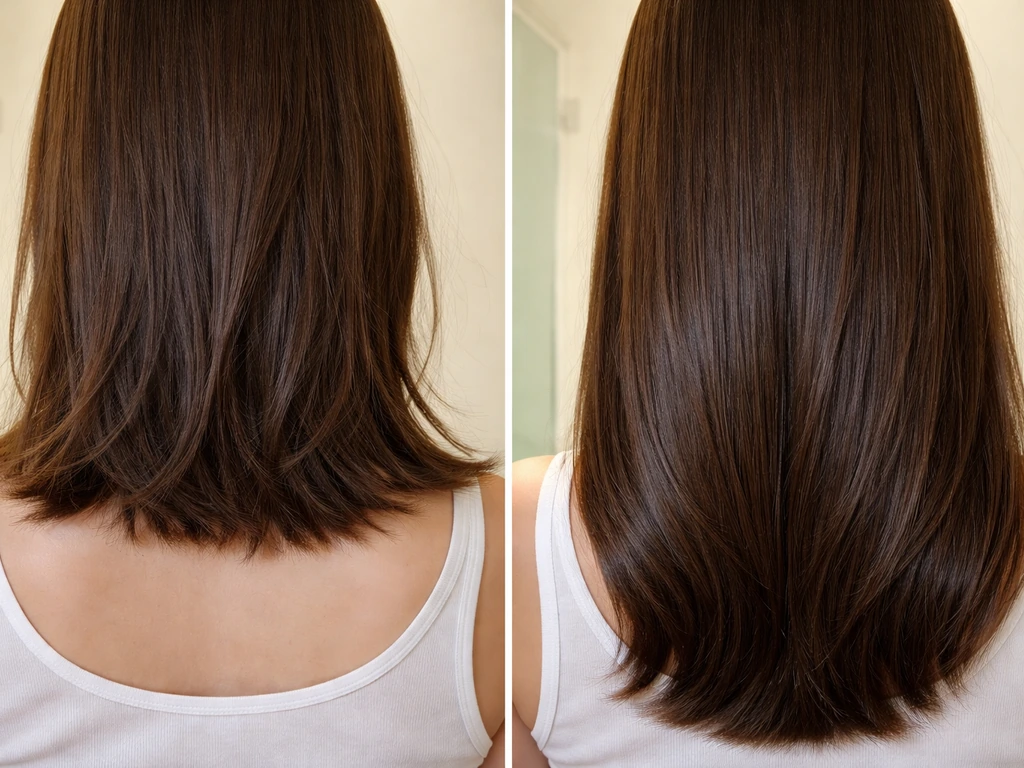
Step-by-step tips to grow hair out: stop breakage, build scalp routine, nutrition, safe actives, and track progress.
Step-by-step grow hair long tips: boost scalp health, cut breakage, improve diet, and track progress for length.