
Getting Ranbir Kapoor's long, textured Animal look is absolutely achievable, but it will take you somewhere between 12 and 24 months of dedicated growing depending on your current length, hair type, and how well you support the process. The style sits roughly shoulder-length, with loose waves, layered ends, and face-framing flicks. You can speed things up with the right scalp care, nutrition, and (if needed) clinical tools, but there are no shortcuts past basic hair biology. This guide walks you through everything, from what the cut actually looks like to month-by-month timelines, daily routines, evidence-backed treatments, and exactly what to tell your barber when you finally get there.
How to Grow Hair Like Ranbir in Animal: Timeline & Tips

Marcus Holloway
12 Aug 2026
Who this guide is for
This is for anyone, men or women, who wants to grow their hair to match Ranbir Kapoor's heavily discussed hairstyle from the 2023 film Animal. Whether you're starting from a short crop, dealing with thinning, or already mid-growth and just trying to refine the look, there's something here for you. I've tried to be realistic throughout, because I've seen too many guides promise miracle timelines that just aren't grounded in how hair actually grows. The plan here is built around what the research actually supports, with honest notes about individual variation at every step.
What the Animal hairstyle actually looks like
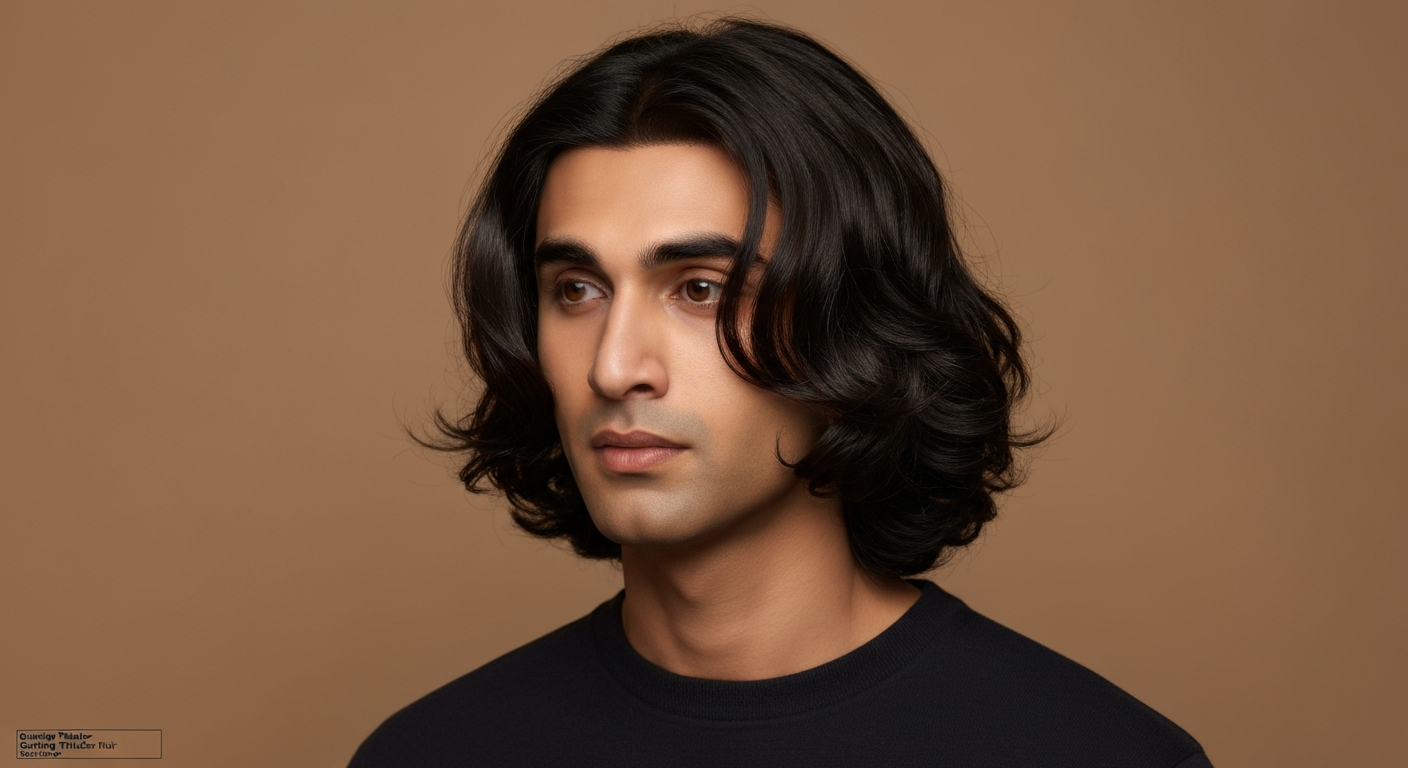
Celebrity hairstylist Aalim Hakim, who styled Ranbir throughout the film, publicly stated that the Animal look was inspired by Michael Jackson, and you can see that influence clearly once you know to look for it. The hair sits at approximately collar-to-shoulder length, long enough to tuck behind the ear or fall loose across the forehead, but not quite reaching the mid-back. The cut is heavily layered through the mid-lengths and ends, which gives the hair its signature airy, slightly undone texture rather than a blunt, heavy fall.
The texture throughout the film reads as loose natural waves with some deliberate curl definition, particularly noticeable in the face-framing sections. The ends are softly textured rather than blunt-cut, which reduces bulk and lets the layers move. The color sits in Ranbir's natural dark-brown-to-black range with no visible highlights, though the lighting in several scenes adds a warm, slightly reddish undertone. Styling appears to involve a light hold product, either a cream or a lightweight wax, that defines the wave pattern without creating stiffness. The overall impression is controlled dishevelment, clean but lived-in.
Key visual details to note
- Length: collar to shoulder, roughly 5–7 inches from the top of the ear
- Cut type: long layers throughout, heavier at the crown, lighter and more textured through the ends
- Parting: loose center-to-slightly-off-center, not rigidly set
- Texture: natural wave with defined curl movement, not pin-straight and not tightly curled
- Color: deep natural brown-black, no artificial highlights
- Styling: low-hold, low-shine product to enhance wave without crunch
Hair biology basics: what you're actually working with
Before you plan your timeline, it helps to understand what's happening under the scalp. Each hair follicle cycles independently through three phases: anagen (active growth), catagen (transition), and telogen (resting and shedding). At any given time, roughly 85–90% of your scalp follicles are in anagen, which is why you're always growing a mix of hairs at different stages. The length of your anagen phase is largely genetic, and it determines your maximum possible hair length, the point at which hair stops growing and sheds before it can get longer.
The well-established average growth rate for healthy adults is around 1 cm per month, which works out to roughly 10–15 cm per year. Peer-reviewed data shows the actual range is wider than that, somewhere between 0.6 and 1.4 cm per month depending on age, sex, ancestry, and individual biology. Research on ethnic variation is relevant here: people with East Asian hair ancestry tend to have slightly faster linear growth rates and larger fiber diameters on average. People with tightly coiled or kinky hair textures tend to show lower linear growth rates in published studies, around 0.8 cm per month in some datasets, partly because the curl pattern means the hair grows in a helix rather than a straight line, so length appears to accumulate more slowly even when the follicle is producing at a normal rate.
Androgenetic alopecia (pattern hair loss), telogen effluvium triggered by stress, illness, or nutritional deficiency, and scalp inflammation can all arrest or slow visible length gain, sometimes significantly. If you've been growing your hair for months and aren't seeing the length you'd expect, that's worth investigating with a dermatologist rather than just throwing more supplements at it.
Realistic timeline to reach Animal length
The Animal cut is roughly 13–18 cm from the scalp at its longest points. If you're starting from a short cut of about 2–3 cm, you're looking at growing out a meaningful length. Here's how that maps out using the average 1 cm/month rate, with notes for slower and faster growers. Keep in mind that trimming for shape during the grow-out (which you will need to do, more on that below) means your net monthly gain will be slightly less than the raw growth figure.
| Month | Approximate length gained (avg. 1 cm/month) | What to expect | Key focus |
|---|---|---|---|
| 1–3 | 1–3 cm | Awkward phase begins; top grows faster than sides if layered | Start scalp care routine, nutrition audit |
| 4–6 | 4–6 cm | Hair starts to sit over the ears; wave/curl pattern becomes more visible | Light shaping trim, product experimentation |
| 7–9 | 7–9 cm | Approaches collar length; layering begins to matter | First proper shaping visit; ask for loose layers only |
| 10–12 | 10–12 cm | Collar-length on most people; texture and volume become manageable | Texture cut, face-framing layers added |
| 13–18 | 13–18 cm | Entering the Animal length zone | Full Animal cut with layering and texturizing |
| 18–24 | 18–24 cm | Shoulder-length and beyond; full look achievable | Ongoing maintenance trims every 8–10 weeks |
If you have naturally curly or coiled hair, you may find your visual length lags behind the cm figures above by 20–30% because the curl compresses the actual strand. Stretching or blow-drying on a low setting will reveal your true length. The good news is that textured hair can actually carry the Animal look beautifully, because the wave and curl movement is already built in.
Daily scalp and hair-care routine
This is the part most people overlook in favor of supplements and treatments, but a clean, well-circulated scalp is genuinely the foundation of healthy growth. I'd say it's responsible for more of the day-to-day quality of your growth than any supplement you'll read about later in this guide.
Washing frequency and product choice
Wash your scalp every 2–3 days if you have normal to oily skin, or every 3–4 days if your scalp is drier or you have coarser, naturally drier hair. Overwashing strips the scalp's lipid barrier and can trigger compensatory sebum production, which paradoxically makes oil buildup worse. Use a sulfate-free shampoo for daily washing and rotate in a 2% ketoconazole shampoo once or twice a week. A 2020 systematic review found ketoconazole shampoo has directionally positive effects on hair-shaft diameter and the ratio of actively growing follicles compared to control, likely because it reduces scalp inflammation and has mild anti-androgenic activity. Leave it on for 3–5 minutes before rinsing. It's not a dramatic treatment, but it's a low-effort, low-risk addition.
Scalp massage
A 4-minute daily scalp massage has been studied in a small but interesting Japanese pilot trial and was associated with increased hair thickness after 24 weeks, likely through mechanical stimulation of follicle stretching and improved local circulation. I do mine in the shower before applying shampoo, using fingertip pressure in small circular movements across the entire scalp. If you want to add a carrier oil like jojoba or rosehip, that's fine, but the massage itself is the active component, not the oil.
Conditioning and leave-in care
Apply conditioner from the mid-lengths to the ends every wash, and use a weekly deep conditioning mask if your ends are dry or prone to breakage. For the Animal look specifically, you want to preserve the wave pattern and avoid hygral fatigue (damage from excessive water absorption), so a light leave-in cream or curl-enhancing milk applied to damp hair helps define texture and reduce friction while drying. Avoid silicone-heavy formulas if you're using ketoconazole shampoo regularly, as silicone buildup can be harder to remove with gentle cleansers.
Nutrition and supplements that actually help
I want to be straightforward here: if your nutrition is adequate, adding more supplements will not make your hair grow faster. The evidence for supplements is primarily in people with documented deficiencies, not in people who are already eating well. That said, deficiencies are more common than most people realize, particularly iron and vitamin D, and they are a genuinely common, treatable cause of poor hair growth.
Test before you supplement
Ask your doctor for a full blood panel that includes serum ferritin (not just hemoglobin, because hair loss can occur with low ferritin even before you're formally anemic), vitamin D (25-OH), zinc, and thyroid function (TSH and free T4). A systematic review and meta-analysis on iron deficiency and nonscarring alopecia in women found a meaningful association between low ferritin and hair shedding. Most dermatologists recommend a target serum ferritin above 70 ng/mL for optimal hair cycling, even though the clinical anemia threshold is much lower. If your levels are below that, iron supplementation with vitamin C (to enhance absorption) is worth prioritizing. Supplement vitamin D if your levels are below 30 ng/mL, and consider a zinc bisglycinate supplement if your dietary zinc intake is consistently low (common in people eating little red meat or seafood).
Dietary foundations
Hair follicles are among the most metabolically active cells in the body, and they compete poorly for nutrients when your body is running low. Prioritize adequate protein (at least 1.2–1.6 g per kg of body weight daily), because hair is almost entirely keratin, a protein, and low protein intake directly slows growth and reduces strand diameter. Include biotin-rich foods like eggs, nuts, and legumes, though isolated biotin supplementation is only evidence-backed for people with a documented deficiency. Omega-3-rich foods (fatty fish, flaxseed, walnuts) support scalp lipid health and reduce inflammation, and there's early evidence for their role in hair density, though the effect sizes in studies are modest.
| Nutrient | Role in hair growth | Test first? | Food sources |
|---|---|---|---|
| Iron (ferritin) | Critical for follicle cell division and anagen maintenance | Yes, strongly recommended | Red meat, lentils, spinach, pumpkin seeds |
| Vitamin D | Regulates follicle cycling; low levels linked to several alopecia types | Yes | Fatty fish, egg yolks, fortified foods, sunlight |
| Zinc | Protein synthesis and sebum regulation | Yes if deficiency suspected | Oysters, beef, pumpkin seeds, chickpeas |
| Protein | Direct structural material for keratin | No, just eat enough | Eggs, chicken, legumes, Greek yogurt, fish |
| Omega-3 fatty acids | Scalp anti-inflammation, modest density support | No | Salmon, sardines, flaxseed, walnuts |
| Biotin | Only helpful if deficient; widely overhyped otherwise | Only if hair/nail symptoms suggest deficiency | Eggs, nuts, seeds, sweet potato |
Topical and clinical treatments worth knowing about
If your goal is purely length, you may not need any of these. But if you're dealing with thinning, slow growth despite good habits, or you want to maximize density to pull off the full volume of the Animal look, these are the options with actual evidence behind them.
Minoxidil (topical and oral)
Topical minoxidil at 2% or 5% concentration is one of the most robustly studied hair treatments available. Multiple RCTs and meta-analyses confirm it increases hair counts and terminal hair density versus placebo, with visible effects typically appearing at 3–6 months and maximum benefit at 12 months or more. One thing to prepare for: you may see increased shedding in the first 4–8 weeks as resting follicles are pushed into a new anagen cycle. This is normal and temporary. The 5% foam or solution is generally recommended for men; the 2% solution is commonly used for women, though 5% is also studied in women with good results. Apply to a dry scalp (not to the lengths) once or twice daily as directed.
Low-dose oral minoxidil (typically 0.25–2.5 mg/day) is gaining traction as a systemic option. A systematic review published on PMC found comparable hair-density gains to topical minoxidil, with a different side-effect profile that includes fluid retention, systemic hypotension, and hypertrichosis (unwanted body hair growth). This is an off-label use in most countries and requires a prescription and physician supervision. See 'Effect of Oral Minoxidil for Alopecia: Systematic Review, PMC' for RCT and meta-analysis evidence showing low‑dose oral minoxidil produces comparable hair‑density gains to topical minoxidil and describing systemic side effects (hypotension, fluid retention, hypertrichosis) and safety considerations requiring physician supervision Effect of Oral Minoxidil for Alopecia: Systematic Review — PMC. Do not self-prescribe it.
Finasteride and dutasteride (for men)
For men experiencing androgenetic alopecia, oral finasteride (1 mg/day) is approved and supported by European S3 and EADV guidelines as a first-line pharmacologic option. A network meta-analysis published in JAMA Dermatology found that oral finasteride and dutasteride generally produce larger terminal-hair increases than topical minoxidil alone. These are prescription medications with a known side-effect profile (sexual function changes in a minority of users) that require discussion with a doctor. Topical finasteride formulations are also available in some markets and appear to reduce systemic exposure while delivering local effect.
Microneedling
Microneedling creates micro-injuries in the scalp that trigger a wound-healing response and appear to enhance the absorption of topical treatments. A pilot RCT by Dhurat et al. found that combining microneedling with topical minoxidil improved hair counts significantly more than minoxidil alone. Clinical protocols typically use a 0.5–1.5 mm dermaroller once weekly. At-home dermarollers are available, but sterile technique matters: disinfect the roller before and after every use, and stop immediately if you develop persistent redness, crusting, or signs of infection. If you're not confident with the technique, this is better done in a clinic.
Low-level laser/light therapy (LLLT)
FDA-cleared LLLT devices (laser caps, combs, and helmets) have been studied in multiple RCTs and meta-analyses showing modest but statistically significant increases in terminal hair count and density in both men and women. These devices work best as an adjunct rather than a standalone treatment. The tradeoffs are cost (devices range from $200 to $800+) and time commitment (20–30 minutes, 3x per week). Results take 4–6 months to appear. If you're already doing everything else in this guide and want an additional non-pharmaceutical layer, LLLT is reasonable.
Platelet-rich plasma (PRP)
PRP involves drawing your blood, centrifuging it to concentrate growth factors, and injecting it into the scalp. An umbrella review on PRP for androgenetic alopecia found it can increase hair density versus control, but effect sizes and durability vary considerably depending on preparation protocol, platelet concentration, number of sessions, and individual response. An umbrella review of PRP for androgenetic alopecia, PubMed (umbrella review) summarizes that PRP can increase hair density versus control, with effect size and durability varying by preparation, platelet concentration, injection volume, and number/timing of sessions, and it supports an intensive course of at least three monthly sessions with repeat maintenance courses at about 3–6 months An umbrella review of PRP for androgenetic alopecia — PubMed (umbrella review). A typical intensive course involves three monthly sessions, followed by maintenance treatments every 3–6 months. Costs vary widely (roughly $500–$1,500 per session in major cities), and it is not covered by insurance in most markets. If you're considering PRP, look for a dermatologist or trichologist who can describe their specific preparation protocol rather than a generic 'PRP treatment.'
Quick comparison of clinical options
| Treatment | Evidence level | Visible results timeline | Key considerations |
|---|---|---|---|
| Topical minoxidil 5% | Strong (multiple RCTs, meta-analyses) | 3–6 months, max 12+ months | Daily application, initial shedding phase, must continue to maintain results |
| Oral finasteride (men only) | Strong (RCTs, guidelines) | 3–6 months, max 12+ months | Prescription required, sexual side-effect risk, not for use in women of childbearing age |
| Low-dose oral minoxidil | Growing (systematic review) | 3–6 months | Off-label, prescription required, systemic side effects including hypertrichosis |
| Microneedling + minoxidil | Moderate (pilot RCT + meta-analyses) | 3–6 months as adjunct | Sterile technique essential, best done clinically |
| LLLT devices | Moderate (multiple RCTs) | 4–6 months | High upfront cost, time commitment, modest effect size |
| PRP injections | Moderate (umbrella review) | 3–6 months per course | High cost, variable protocols, no standard preparation guidelines yet |
| Ketoconazole 2% shampoo | Limited but positive (systematic review) | Months of consistent use | Low risk, useful anti-inflammatory adjunct for scalp health |
Styling safely while you grow
One of the most common reasons people stall in their grow-out is mechanical breakage. The hair grows fine at the follicle but snaps off before it can accumulate length. Here's how to prevent that.
Heat styling
The Animal look doesn't need heavy heat. If you use a blow-dryer, use it on medium heat with a diffuser attachment to encourage the natural wave pattern rather than blasting it straight. If you want to define the curl or wave more precisely, a low-heat curling wand (below 180°C/356°F) on damp or heat-protected hair is fine occasionally, but daily heat above 200°C will degrade the hair's protein structure over time. Always apply a heat protectant spray or cream before any heated tool.
Brushing and detangling
Use a wide-tooth comb or a detangling brush on damp hair, starting from the ends and working upward. Never drag a fine-tooth comb through dry, tangled hair. For wavy and curly textures targeting the Animal look, a wide-tooth comb through conditioner in the shower (then no further combing when dry) is actually the gentlest approach and the one that best preserves the wave pattern.
Hair ties and overnight care
Use seamless, fabric-covered hair ties or loose scrunchies if you're tying your hair during exercise. Tight elastics cause mechanical stress at the point of contact and are a common source of breakage in the mid-growth phase. Sleep on a satin or silk pillowcase if your hair is long enough to rub against the pillow, as cotton creates significantly more friction and frizz-causing mechanical damage. If your hair is shoulder length or longer, a loose braid before bed reduces tangling substantially.
Color and chemical treatments
The Animal look is natural dark brown-black, so you don't need to color your hair to recreate it. If you do color for other reasons, be aware that bleaching or heavy permanent color significantly increases hair porosity and breakage risk, which will slow your effective length accumulation. If you color, use protein and bond-building treatments (like those containing bis-aminopropyl diglycol dimaleate) and deep condition weekly.
How to talk to your barber or stylist
The gap between the vision in your head and what you walk out with is almost always a communication problem, not a skill problem. Here's how to bridge it effectively.
What to say (and bring)
Bring reference photos, ideally from multiple angles. Aalim Hakim's own Instagram posts of Ranbir's look-test photos are the most accurate reference material available, and entertainment press photos from the Animal promotional cycle give you good side-profile and 3/4-view references. Tell your barber explicitly: 'I want long layers through the mid-lengths and ends, no blunt line at the bottom, and face-framing pieces that fall forward at the front.' Ask them to leave the crown heavier (for volume) and take weight out through the ends with point-cutting or texturizing shears rather than thinning shears, which can cause too much frizz on wavy hair.
Visiting during the grow-out
You'll need to visit a stylist every 8–12 weeks during the grow-out, even though you're trying to gain length. The goal of these visits is to remove split ends (which travel up the shaft and cause breakage if left) and to shape the growing length so it doesn't look formless or unbalanced. Tell your stylist explicitly: 'I'm growing it out, please take off no more than 1 cm, just dusting the ends and removing any splits.' Many stylists default to taking more than this unless you're clear.
The final cut: layering and texturizing
Once you reach the target length, the full Animal cut involves: long graduation layers (no shorter than chin length on the face-framing sections), interior point-cutting to remove bulk without shortening, and possibly razor-cutting through the ends for the softest possible finish on straight-to-wavy hair types. For very curly or coiled textures, razor-cutting can cause frizz and is not always recommended. Ask your stylist about dry-cutting the final shape so they can see the natural fall and curl of your hair before committing to each layer.
Adapting the look for different hair types and face shapes
The Animal look works across hair types but needs slight adjustments to suit each one. For straight hair, you'll need to either embrace your natural texture (the look reads differently but still works) or use a diffuser and curl-enhancing cream to build wave. For naturally wavy hair, this is arguably the most natural fit: your texture will do most of the work. For coily or tightly curled hair, the look translates beautifully with an extended wash-and-go or twist-out on the length, with layers cut to work with the shrinkage rather than against it.
For face shape: the Animal cut's face-framing layers soften strong jawlines and add length to rounder faces. If you have a very long face, ask your stylist to keep the face-framing layers slightly shorter to add width at the cheekbone level. If you have a square or wide jaw, longer face-framing pieces that fall past the jaw are your best friend. Round faces benefit from layers that start above the chin rather than at it, to avoid adding visual width.
Temporary alternatives while you grow
If you have an event, a shoot, or just want to see the look before committing to a year-plus of growing, there are some bridge options. Clip-in hair extensions can add length and volume instantly and are removable without damage to your natural hair. Quality human-hair clip-ins at the right color match are virtually undetectable at the lengths needed for the Animal look. Hair fibers and volumizing powders can add the appearance of density to a thinner grow-out. If you want a more dramatic temporary change, a full lace wig or integration unit styled to match the cut is a professional option. These alternatives also let you test whether the look suits your face before you've invested 18 months of growing time, which is genuinely useful information.
How this compares to other celebrity hair goals
It's worth knowing where the Animal look sits relative to other styles people commonly want. The Kabir Singh look (also Shahid Kapoor, also a long, textured Indian film style) is actually quite similar in length and layering to Animal, making it one of the easier comparisons to reference when you're at an in-between stage. The Arjun Reddy look leans slightly shorter and more undone, with more visible curl and less controlled volume. BTS-inspired hairstyles cover a much wider range but often involve softer, more uniform texture with less dramatic layering and more deliberate color work. For specific steps on creating softer, more uniform texture and color work, see how to grow hair like bts. SRK's longer hair phases have tended to be wavier and less layered than the Animal cut. For step-by-step tips on how to grow hair like SRK, see our how to grow hair like SRK guide. If any of those styles appeal to you as a progression point or a different destination, they represent a range of length and styling complexity that can help you calibrate your grow-out goal.
Troubleshooting slow growth and common setbacks
If you've been growing consistently for 6 months with good nutrition, a solid scalp routine, and minimal breakage, and you're still seeing less than 4–5 cm of net new length, it's time to get a blood panel. The most commonly missed culprits are low ferritin, vitamin D deficiency, and subclinical hypothyroidism, all of which are treatable and all of which genuinely suppress hair growth. A dermatologist who specializes in trichology can also assess your scalp with dermoscopy to identify early androgenetic alopecia, scalp inflammation, or other conditions affecting the follicle environment that won't respond to diet alone.
Breakage is the other major growth sabotager. If your length seems to plateau around a certain point (often the shoulder or just below the ear), take a close look at your ends under good lighting. If they look frayed, split, or thin at the tip, mechanical breakage is matching your growth rate. A trim, a protein treatment, and a stricter heat-free week can break that cycle within a few months.
Patience is genuinely the hardest part of this. I've spoken to so many people who abandoned a grow-out at month 4 or 5 because they hit the awkward mid-length phase and felt like nothing was working. The awkward phase is not a sign of failure; it's just the geometry of hair growing out from shorter layers. If you can get through months 5–9, when the hair is long enough to tuck or pull back but not yet long enough to sit properly, you're past the hardest part.
FAQ
What primary visual-reference questions should be answered to accurately describe Ranbir’s ‘Animal’ hairstyle?
Which official/still photos, high-resolution set images, red-carpet looks and hairstylist (Aalim Hakim) look-test posts show the hairstyle from multiple angles; what are the measured lengths at crown, nape, sides and fringe in centimeters (use pixel-to-cm scaling where possible); how is the hair parted, layered and texturized (layer lengths, point-cutting, razor work vs. scissor); what is the base color and any tonal highlights/grade and how does the on-set color vary by lighting/scene?
What source categories are needed to establish provenance and stylist intent?
Primary hairstylist interviews and social-media posts (stylist quotes, look-tests), official production stills and promotional photos, reputable entertainment reporting reproducing those primary materials, and licensed high-res image repositories for multi-angle analysis.
What hair-biology research questions must be investigated to set realistic expectations?
What are typical human scalp hair linear growth rates and their ranges (mm/day, cm/month, cm/year); how do anagen/catagen/telogen phases determine maximal achievable length and growth velocity; what demographic/age/sex/ancestry variations exist in growth rate, fiber diameter and anagen duration; and what medical/scalp conditions (androgenetic alopecia, telogen effluvium, inflammatory scalp disease) commonly reduce growth or increase shedding?
Which high-authority sources should be cited for hair growth biology and variability?
Textbook and peer‑reviewed clinical reviews (StatPearls/NCBI Bookshelf), dermatology review articles and consensus statements, population studies and ethnicity-specific reviews (PMC/peer‑reviewed journals), and meta-analyses quantifying growth-rate ranges.
What evidence-based timeline questions are essential for modeling how long to grow Ranbir’s length?
What target lengths correspond to the Animal look at various points (e.g., shoulder-length, collarbone) in cm; given mean and range growth rates, what are realistic time ranges to reach those lengths for different hair types/ancestries; how should trimming frequency (to maintain shape while encouraging length) be scheduled; and how do interventions (minoxidil, PRP, microneedling) typically shift timelines (expected onset and magnitude of effects)?
Which clinical sources quantify pharmacologic and procedural timeline and effect sizes?
Guidelines and evidence reviews for minoxidil and 5‑α reductase inhibitors (S3, AAD, EADV), network meta-analyses and RCTs for topical/oral minoxidil and finasteride/dutasteride, PRP umbrella reviews, microneedling RCTs, and LLLT meta-analyses.
Next Articles
Tips on How to Grow Your Hair Out: A Step by Step Guide
Step-by-step tips to grow hair out: stop breakage, build scalp routine, nutrition, safe actives, and track progress.
Grow Hair Long Tips: Step-by-Step Routine to Reach Length
Step-by-step grow hair long tips: boost scalp health, cut breakage, improve diet, and track progress for length.
Tips for How to Grow Long Hair: A Practical Guide
Actionable tips to grow long hair naturally: care routine, scalp habits, nutrition and breakage prevention for healthy l