
Growing a horse's mane, tail, forelock, or body coat longer and thicker is genuinely achievable for most horses, but it starts with fixing the underlying reason hair is struggling in the first place. For a step-by-step guide on how to grow horse's mane, see the dedicated section later in this article. Get the nutrition right, rule out parasites or skin disease, protect the hair you already have from breakage, and be patient: realistically, mane and tail hair grows around 1.9 to 2.6 cm per month under good conditions, so a 30 cm tail takes over a year to produce even when everything is going well.
How to Grow Horse Hair: Safe, Evidence-Based Guide - Mane & Tail

Marcus Holloway
29 Jul 2026
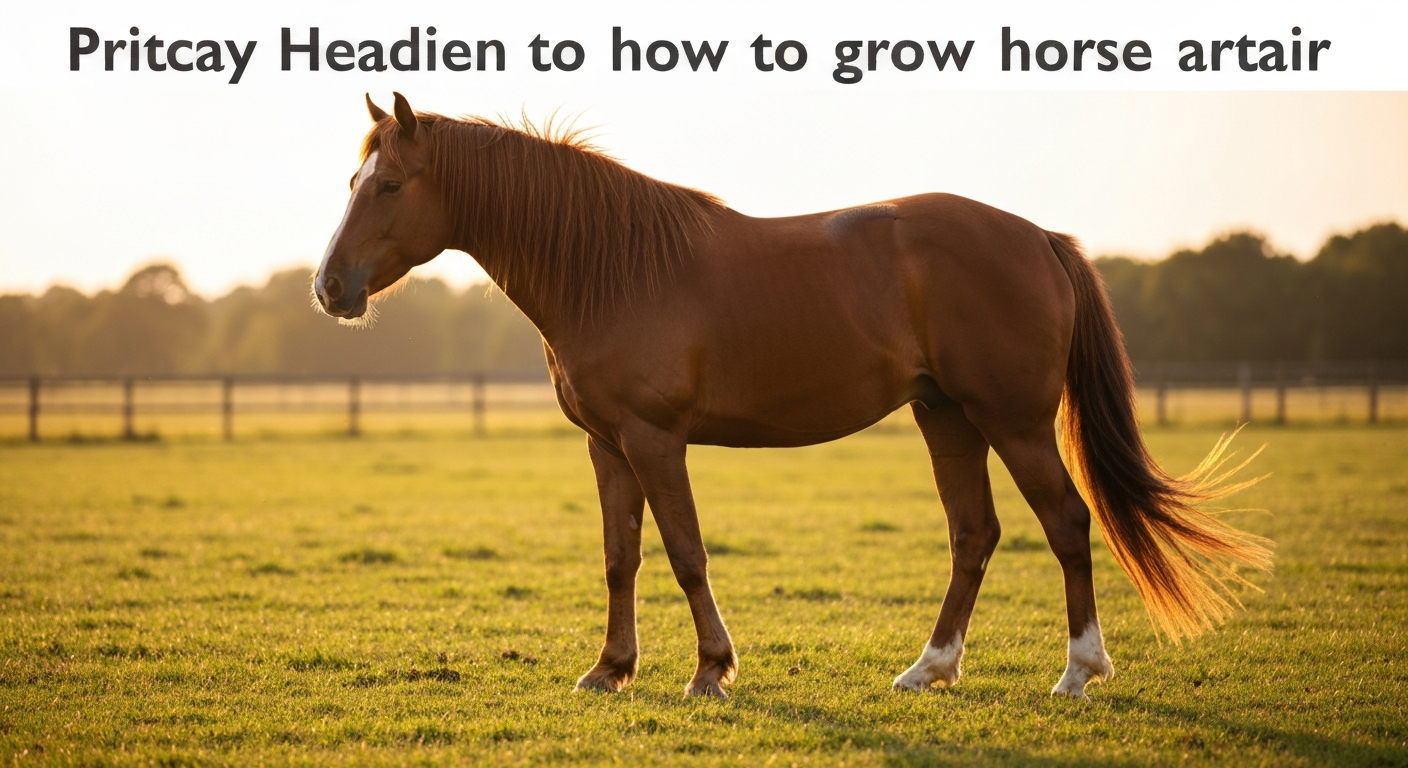
What this guide covers and what to expect
Whether you're trying to regrow a rubbed-out tail, fill in a patchy mane, or simply get your horse's coat looking its best for the show ring, the principles are the same. This guide walks through hair biology, a practical diagnostic checklist to find what's limiting your horse's growth, nutrition and supplement strategies backed by real research, and grooming techniques that protect length rather than snap it off. I'll also be honest about timelines, because the biggest mistake I see horse owners make is expecting dramatic results in four weeks and giving up on something that actually works.
How equine hair actually grows
Every hair on your horse, whether it's on the mane, tail, forelock, or body, follows the same three-phase follicular cycle: anagen (active growth), catagen (the follicle winds down), and telogen (the hair rests before shedding). The length of each phase determines how long a hair can grow and how quickly it turns over. For horses, photoperiod, meaning the ratio of daylight to darkness, is the primary driver of when follicles shift phases. Melatonin and prolactin are the hormonal messengers that carry the daylength signal to the follicles, which is why horses grow a thick winter coat as days shorten and shed it as days lengthen in spring. This biology is worth understanding because it explains why your horse's coat may feel stuck in winter and why some management tools like extended artificial lighting can actually influence coat development.
Measured mane and tail growth rates in domestic horses average roughly 0.63 to 0.88 mm per day, which works out to approximately 1.9 to 2.6 cm per month. Most equine researchers use about 2 cm per month as a practical working figure. Body coat hairs turn over much faster because their anagen phase is shorter, which is why a clipped patch grows back in weeks rather than months. Mane and tail hairs have a longer anagen phase, allowing them to reach greater lengths, but that also means damage accumulates slowly and repair takes time. Keep this in mind every time you pick up the scissors: every centimeter removed takes about two to three weeks to replace.
Checking off the causes: a stepwise diagnostic approach
Before you spend money on supplements or fancy conditioners, work through this checklist in order. I've seen owners invest months in biotin and oils when the real issue was a selenium deficiency from overfortified feed, or tail rubbing caused by pinworms. The most impactful intervention is almost always the one that removes the limiting factor, and that's rarely the first product someone recommends online.
- Nutrition: Is the horse's body condition score (BCS) below 5 out of 9? Are forage quality and quantity adequate? Is the diet balanced for protein, energy, and key micronutrients? Undernutrition is the most common and most correctable cause of dull, slow-growing coat.
- Parasites: Is the horse on an evidence-based deworming program with fecal egg counts? Pinworm (Oxyuris equi) infestation is a leading cause of tail rubbing and tail hair loss and will not show up on standard fecal egg counts without specific sampling.
- Skin disease: Check for ringworm (dermatophytosis), rain rot (dermatophilosis), sweet itch (Culicoides hypersensitivity), or mites. Any active skin infection or persistent itch will disrupt hair follicles and cause patchy or diffuse coat problems.
- Hormonal and endocrine issues: Older horses (typically over 15) with abnormally long, curly, or non-shedding coats should be screened for Pituitary Pars Intermedia Dysfunction (PPID). Hypothyroidism is rare in adult horses but can be ruled out with bloodwork.
- Grooming damage: Is the mane or tail being brushed dry, braided tightly, or subjected to rubber bands? Mechanical breakage is responsible for a surprising amount of apparent 'slow growth' because the hair is actually growing but breaking off at the same rate.
- Genetics and breed: Some horses are genetically predisposed to finer or thinner mane and tail hair. Quarter Horses and Thoroughbreds often have sparser manes than Friesians or Andalusians. You can optimize what your horse is capable of, but you can't override genetics entirely.
- Seasonal shedding: Is the timing consistent with a normal spring shed or winter coat coming in? Seasonal coat change is normal physiology. If shedding is incomplete, patchy, or delayed past late spring, that warrants further investigation.
When to call the vet and what to expect diagnostically
Some causes of poor hair growth require professional diagnosis and treatment, and pushing forward with supplements while an active infection or hormonal disorder goes untreated is both ineffective and potentially harmful. Here's when I'd pick up the phone rather than try another product.
Signs that warrant a vet call
- Patchy or circular areas of hair loss, crusting, or scaling (possible ringworm or rain rot)
- Intense tail rubbing that persists after worming for pinworms
- Diffuse coat thinning combined with weight loss, muscle wasting, or other systemic signs
- An older horse with a long, curly, non-shedding coat or delayed spring shed
- Any hair loss that is rapidly progressing or accompanied by skin lesions
Diagnostics your vet may recommend
For suspected skin infections, a skin scrape and fungal culture (DTM plate) will identify dermatophytes or mites. For tail rubbing with a negative standard fecal egg count, ask specifically about pinworm testing using a tape test or anal swabbing. For an older horse with coat abnormalities, basal plasma ACTH is the standard first-line screen for PPID, but the interpretation requires seasonally adjusted reference intervals because ACTH rises naturally in autumn, so a result that looks abnormal in October may be physiologically normal. If basal ACTH is equivocal, a TRH stimulation test improves diagnostic sensitivity. Thyroid hormone levels can be checked, but true primary hypothyroidism is genuinely uncommon in adult horses and is usually diagnosed only after more likely causes have been excluded. Hair (mane/tail) mineral concentrations can reflect dietary intake and exposure, but the paper "Evaluation of hair analysis for determination of trace mineral status and exposure to toxic heavy metals in horses in the Netherlands" notes important interpretation limits, between-lab variability, growth-site and pigment effects, so hair testing is best used for screening and must be interpreted alongside serum tests and the clinical context.
Common medical treatments
Ringworm is typically treated with topical antifungal washes (lime sulfur, enilconazole) applied to the whole horse, not just visible lesions. Rain rot responds to daily gentle removal of crusts and topical antiseptics. Pinworms require appropriate anthelmintic treatment (often fenbendazole or ivermectin) plus thorough disinfection of tail-rubbing surfaces. PPID is managed with pergolide mesylate, and many PPID horses show noticeable improvement in coat shedding within one to two shedding seasons of starting treatment. Your vet will guide dosing and monitoring.
A prioritized action plan: short, medium, and long term
One of the most useful things I can tell you is that not all interventions are equal in impact or speed. Trying to do everything at once also makes it impossible to know what's working. Here's how I'd prioritize if I were starting from scratch with a horse showing poor hair growth.
| Timeline | Priority Action | Expected Impact |
|---|---|---|
| Week 1–2 | Rule out and treat active skin disease, parasites, and tail rubbing causes | High: removes the direct cause of ongoing hair loss |
| Week 1–2 | Assess and improve body condition score if below 5/9 | High: hair quality drops sharply when energy is deficient |
| Week 2–4 | Evaluate and balance the diet (forage quality, protein, trace minerals) | High: foundational for all subsequent gains |
| Week 4–8 | Add targeted supplements (biotin, amino acids, EFAs) after diet is assessed | Moderate: meaningful benefit over months, not weeks |
| Ongoing | Implement protective grooming: detangle only when wet/conditioned, no rubber bands, limit tight braiding | High for length retention: stops breakage immediately |
| Month 3–6 | Reassess BCS, coat quality, and mane/tail length; adjust diet or supplements as needed | Tracks whether interventions are working |
| Month 6+ | Maintain good husbandry; consider phototherapy (light mask) if winter coat management is relevant | Moderate: useful for show horses needing early shedding |
Nutrition: the foundation of better hair growth
Hair is made of protein, and your horse cannot build it without adequate dietary protein and, critically, the right balance of essential amino acids. Lysine is the most commonly limiting amino acid in horse diets and is the one the NRC flags as the first priority for horses in growth and maintenance. A horse eating poor-quality hay with low digestible protein will have a dull, thin coat regardless of how many supplements you add on top. Get the base right first.
Evaluating forage and body condition
Forage should make up the bulk of any horse's diet, and its quality varies enormously. If you haven't had your hay tested, it's worth doing. A horse at a body condition score below 5 out of 9 is almost certainly in negative energy balance, and the body will divert resources away from hair and hooves toward vital organ function. Bringing a thin horse back to a BCS of 5 to 6 is often enough to visibly improve coat quality without adding a single supplement. For horses at a healthy BCS who still have poor coat quality, the issue is more likely to be protein or micronutrient adequacy rather than total calories.
Meeting protein needs
The NRC's Nutrient Requirements of Horses (2007) is the standard reference here. A typical 500 kg mature horse in light work needs roughly 630 to 700 g of crude protein per day, with lysine as the key limiting amino acid. Horses that are working harder, growing, pregnant, or lactating need more. Good-quality legume hay (alfalfa, clover) provides more protein and lysine than grass hay alone, and a modest alfalfa inclusion (a few kg per day) can meaningfully improve amino acid intake for horses on a sparse grass hay diet. If you're already feeding a fortified commercial concentrate at the recommended rate, protein is probably adequate, but check the label and compare it against the NRC targets for your horse's weight and work level.
Supplements with real evidence behind them
The supplement market for horses is enormous and full of products making broad claims with minimal evidence. I want to be straight with you about what the research actually supports, what's plausible but less proven, and what to avoid.
Biotin
Biotin is the most studied supplement for equine hair and hoof, and the controlled evidence for hoof horn quality is genuinely solid. A randomized trial found measurable improvement in hoof horn growth rate and hardness at doses of roughly 7. A randomized controlled trial (Effect of dietary biotin supplement on equine hoof horn growth rate and hardness) showed significant improvement in hoof horn growth rate and hardness at approximately 7.5–15 mg/day, evaluated over about 10 months. 5 to 15 mg per day, with effects evaluated over about 10 months. The honest caveat is that most of the controlled studies have measured hooves rather than mane or tail length directly. That said, hoof horn and hair are both keratin structures with similar nutritional dependencies, so the rationale for biotin supporting coat quality is reasonable even if the mane/tail-specific RCT evidence is thinner. A dose of 15 to 20 mg per day is commonly used and appears safe for long-term supplementation. Expect to evaluate results over at least 4 to 6 months.
Essential amino acids
Methionine is a sulfur-containing amino acid that appears in many commercial hoof and coat supplements, and it's a rational inclusion because keratin is sulfur-rich. Lysine, as the most commonly deficient essential amino acid in horse diets, is also worth supplementing if dietary protein quality is suspect. Some commercial products combine lysine, methionine, and threonine as a targeted amino acid blend. If your diet evaluation reveals a low-protein or low-lysine base diet, adding an amino acid supplement alongside better forage will likely give you more benefit than biotin alone.
Zinc, copper, and selenium
Trace minerals are incorporated directly into hair structure, and both zinc and copper deficiency can reduce coat quality and slow growth. Controlled supplementation studies have documented measurable changes in horse hair mechanical properties with zinc and copper supplementation, and the form of the mineral (organic chelates versus inorganic sulfates) can affect bioavailability. However, be very careful with selenium. Selenium is one of the most dangerous minerals to over-supplement in horses: chronic excess (selenosis) causes brittle hooves and characteristic mane and tail hair loss, the very problems you're trying to fix. Always check total dietary selenium before adding any selenium-containing supplement, and follow NRC guidelines closely. The NRC's safe upper limit for selenium in horses is 0.5 mg/kg dry matter, and many commercial fortified feeds already contain selenium close to or at adequate levels.
Essential fatty acids
This is an area where the horse-specific evidence has actually grown in recent years. Randomized controlled trials have shown that supplementing flaxseed, camelina oil, or fish oil can improve objective skin and coat parameters in horses, including reduced transepidermal water loss and improved coat condition scores. Flaxseed supplementation has also been shown to reduce lesion area in horses with Culicoides hypersensitivity, a condition that causes severe coat disruption from chronic itching. For a horse with a dry, dull coat or any history of skin sensitivity, adding a source of omega-3 fatty acids (ground flaxseed at 60 to 120 g/day, or 60 to 90 mL of camelina or flaxseed oil daily) is one of the better-supported nutritional interventions you can make. Keep flaxseed stored properly to prevent rancidity.
| Supplement | Evidence Level | Recommended Dose Range | Primary Benefit | Key Caution |
|---|---|---|---|---|
| Biotin | Moderate (RCT evidence for hooves; rational for coat) | 15–20 mg/day | Hoof and hair keratin quality | Effects take 4–10 months; do not expect quick results |
| Lysine | Moderate (based on NRC amino acid requirements) | 10–20 g/day if diet is deficient | Protein synthesis for hair growth | Audit total dietary protein first |
| Methionine | Low-moderate (rational; less equine RCT data) | 5–10 g/day in combined products | Sulfur provision for keratin | Excess methionine is not well studied in horses |
| Zinc (organic) | Moderate (mechanical hair properties shown) | Varies; match NRC targets | Hair and skin structural integrity | Balance with copper; excess zinc impairs copper absorption |
| Copper | Moderate (hair properties, pigmentation) | Match NRC targets | Hair structure and melanin synthesis | Imbalance with zinc is a common formulation error |
| Selenium | Necessary but narrow safety window | Match NRC targets only | Antioxidant protection; coat quality | Selenosis causes mane/tail hair loss; do not exceed 0.5 mg/kg DM |
| Omega-3 EFAs (flaxseed, camelina) | Moderate (equine RCTs on coat and skin) | Ground flaxseed 60–120 g/day or 60–90 mL oil/day | Skin barrier, coat condition, anti-inflammatory | Store oils properly; rancid fat is counterproductive |
Grooming and topical care: protecting what you've grown
I cannot overstate how much mane and tail length is lost to poor grooming practices rather than slow growth. At 2 cm per month, every single breakage event matters. A horse that's growing steadily but whose tail is being dry-brushed three times a week may show zero net length gain over a year. The goal of topical care is to reduce mechanical stress on the hair shaft and keep follicles and scalp healthy.
Washing the mane and tail
How often you wash matters less than how you do it. Use a gentle, pH-appropriate equine shampoo and dilute it before applying. Never scrub the mane or tail by rubbing fibers against each other, which causes tangling and breakage. Instead, smooth the shampoo down the length of the hair following the direction of growth, then rinse thoroughly. Residue left in the hair increases tangling and attracts dirt. For horses prone to itching or dandruff at the dock or crest, an antifungal or medicated shampoo used once monthly can reduce scalp irritation that otherwise triggers rubbing.
Conditioning and detangling
Always condition after shampooing, and consider leaving a diluted conditioner in between washes. For detangling, never brush a dry mane or tail. Apply a detangling spray or diluted conditioner first, then work through tangles starting at the ends and working upward toward the roots, using your fingers before a wide-toothed comb or soft bristle brush. This single change, working from ends to roots on a lubricated, wet tail rather than ripping through from top to bottom on a dry one, will reduce breakage more than almost any supplement you can add.
Oils and leave-in treatments
Applying a light coat of oil (coconut oil, argan oil, or a commercial equine shine serum) to the mane and tail after conditioning serves two purposes: it reduces friction between hair strands during movement, and it helps lock in moisture to prevent dryness and splitting. Apply from mid-length to the ends, avoiding the dock and crest skin if your horse is prone to rubbing, since the slippery feel can trigger rubbing behavior in some horses. A thin application every few days is more effective than a heavy coating once a week, which can attract dirt and eventually clog the hair follicles at the skin surface.
Protective styles and hardware to avoid
Rubber bands are one of the most common causes of mane breakage I see. They knot into the hair and rip fibers when removed. Use only proper mane bands or yarn ties that can be cut out cleanly. Tight, extended braiding applies traction stress to follicles and can cause traction alopecia over time, especially at the mane crest. If you braid for a show, undo the braids promptly afterward. For tails, bagging the tail (placing it in a tail bag or wrap after thorough conditioning and detangling) is the single most effective strategy for protecting length, but the bag must be kept clean, changed regularly, and checked for rubbing to avoid creating new problems.
A note on topical products and what to avoid
You'll come across claims for topical human hair products being used on horses, including minoxidil. Do not use minoxidil on horses. Minoxidil has no robust controlled clinical-trial evidence for equine mane or tail growth, and veterinary literature documents serious cardiovascular toxicity from topical minoxidil exposure in animals, including myocardial lesions and severe systemic toxicoses. Even handling minoxidil-containing products around horses carries risk if residue contacts skin. This is not a fringe concern: the toxicological record in companion animals is substantial. Stick to products formulated for horses, and when in doubt, ask your veterinarian before applying anything new to the skin. For species-specific grooming and topical-product guidance, see a concise guide on how to grow yorkie hair. For species-specific guidance, see our guide on how to grow hair on cattle. For comparisons with small-animal topical approaches, see our guide on how to grow dog hair back home remedies.
Tracking progress and staying the course
The hardest part of growing a horse's mane and tail is accepting that meaningful results take months, not weeks. I recommend taking a dated photo every four weeks from the same angle and same position, and measuring a consistent reference point on the tail (for example, the distance from the dock to the end of the longest hairs) with a soft tape measure. This gives you objective data instead of relying on memory. At 2 cm per month, a horse with well-managed nutrition and grooming should show about 6 cm of new growth every three months. If you're seeing less than that after four to six months of consistent effort, it's worth revisiting your diagnostic checklist or discussing bloodwork with your vet.
For body coat specifically, seasonal variation will make month-to-month comparisons tricky, so focus on coat texture, shine, and the absence of dandruff or flaking rather than absolute density during coat-change periods. A horse coming out of a clean, full spring shed with a glossy, even summer coat is showing you the system is working. Maintain good deworming practices, consistent nutrition, and protective grooming year-round, and you'll find the gains compound over time in a way that short-term fixes simply can't replicate.
FAQ
What is the normal biology and realistic growth rate of horse mane and tail hair?
Horse hair grows from follicles in cyclic phases: anagen (active growth), catagen (involution) and telogen (rest). Seasonal signals (day length, melatonin/prolactin) strongly influence follicle cycling and coat changes. Measured mane/tail growth in domestic horses commonly averages about 0.6–0.9 mm/day (≈1.8–2.6 cm/month); using ≈2 cm/month as a practical rule-of-thumb is reasonable. Individual horses vary, and visible changes from an intervention often take several weeks to months.
How do I assess why a horse’s mane, tail or body hair is thin, slow-growing, or breaking?
Use a stepwise assessment: 1) History and timing — acute vs. chronic, seasonal pattern, recent grooming or chemical exposures. 2) Physical exam — look for broken tips, focal loss, skin lesions, scaling, rubbing/trauma, lice/mite evidence. 3) Nutrition review — feed quality, protein intake, access to concentrates, oil/EFAs, and supplement history (selenium, etc.). 4) Management/grooming — braiding, tail banding, harsh shampoos, frequent pulling/cutting, turnout/blanketing. 5) Parasites/infectious — lice, dermatophytes, bacterial folliculitis. 6) Endocrine/medical — older horses: consider PPID; primary hypothyroidism is rare in adults and usually a later consideration. If cause is not obvious or if there are systemic signs, involve a veterinarian for targeted testing.
Which nutritional changes reliably help hair health and growth?
Prioritize correcting deficits: 1) Ensure overall energy and protein meet NRC targets for the horse’s life stage and workload; adequate dietary protein and essential amino acids (notably lysine) are foundational. 2) Provide balanced trace minerals — zinc and copper affect hair mechanical properties; use bioavailable forms and avoid exceeding recommended amounts. 3) Supply essential fatty acids (eg, flaxseed, camelina, fish oil) which improve skin barrier and coat condition; controlled studies show measurable benefits. 4) Avoid chronic excess selenium (can cause hair brittleness/loss) and follow feeding/supplement guidance. Work with a nutritionist or veterinarian when changing rations.
Should I use supplements for mane and tail growth? Which have the best evidence?
Prioritize supplements supported by evidence for related integumentary outcomes: 1) Biotin — strong RCT evidence for improving hoof horn; mane/tail evidence is weaker but biotin is low-risk and often included in hair/hoof supplements. Typical studies for hooves used ~7.5–15 mg/day with many months to show benefit. 2) Trace minerals (zinc, copper) — supplementation can change hair mechanical properties when dietary supply is low. 3) Essential fatty acids — trials show improved coat/skin metrics. Use products that provide balanced, labeled doses consistent with NRC ranges. Avoid indiscriminate high-dose trace mineral or selenium supplements without veterinary guidance.
What topical and grooming strategies reduce breakage and protect mane/tail hair?
Focus on minimizing mechanical damage: 1) Groom gently — use wide‑tooth detanglers, fingers or a soft brush; start at the ends and work up. 2) Wet-condition carefully — use mild, pH‑appropriate shampoos sparingly; conditioners and detangling sprays reduce friction. 3) Use leave-in conditioners or light oils (argan, jojoba, lanolin-based horse products) to lubricate and reduce abrasion; avoid heavy greasy products that attract dirt. 4) Protective styles — loose braids, tailsocks, tail bags can protect hair from rubbing and environmental damage but must be checked frequently to avoid moisture build-up and skin chafing. 5) Avoid repeated harsh pulling, razor trimming, or tight banding; trim split ends rather than constant heavy cutting.
How should I prioritize interventions for fastest, low‑risk improvement?
Prioritize actions by likely impact and safety: High priority (high impact, low risk): correct diet to meet protein/AA needs, add EFAs, eliminate grooming practices that cause breakage, switch to gentle shampoos/conditioners, use protective styles correctly, and ensure parasite control. Medium priority: add a balanced hoof/hair supplement with biotin and trace minerals if diet is marginal. Lower priority or cautious: topical pharmacologic agents (eg, minoxidil) — limited/absent equine safety data and potential toxicity to other animals; avoid without veterinary oversight. Always start with low-risk management and nutrition changes first and monitor for improvement over months.
Next Articles
How to Grow Horse’s Mane Hair Faster and Longer
Step-by-step tips to grow horse’s mane hair faster, longer, and thicker with care, nutrition, and regrowth timelines.
How to Grow Dog Hair Back: Home Remedies That Help
At-home remedies to regrow dog fur safely: grooming, skin care, nutrition, timelines, and vet red flags for thinning.
Tips on How to Grow Your Hair Out: A Step by Step Guide
Step-by-step tips to grow hair out: stop breakage, build scalp routine, nutrition, safe actives, and track progress.