
Growing a Yorkie's hair longer and healthier comes down to three things working together: a nutrient-dense diet that gives the follicles the raw materials they need, a consistent grooming routine that prevents breakage before hair has a chance to get long, and ruling out (or treating) any underlying medical issue quietly slowing growth in the background. You won't see dramatic results in two weeks, but most owners who stick to the approach below notice a real difference in coat texture and length within two to three months.
How to Grow Yorkie Hair: Practical Guide for Longer Coat Growth Tips

Marcus Holloway
13 Aug 2026
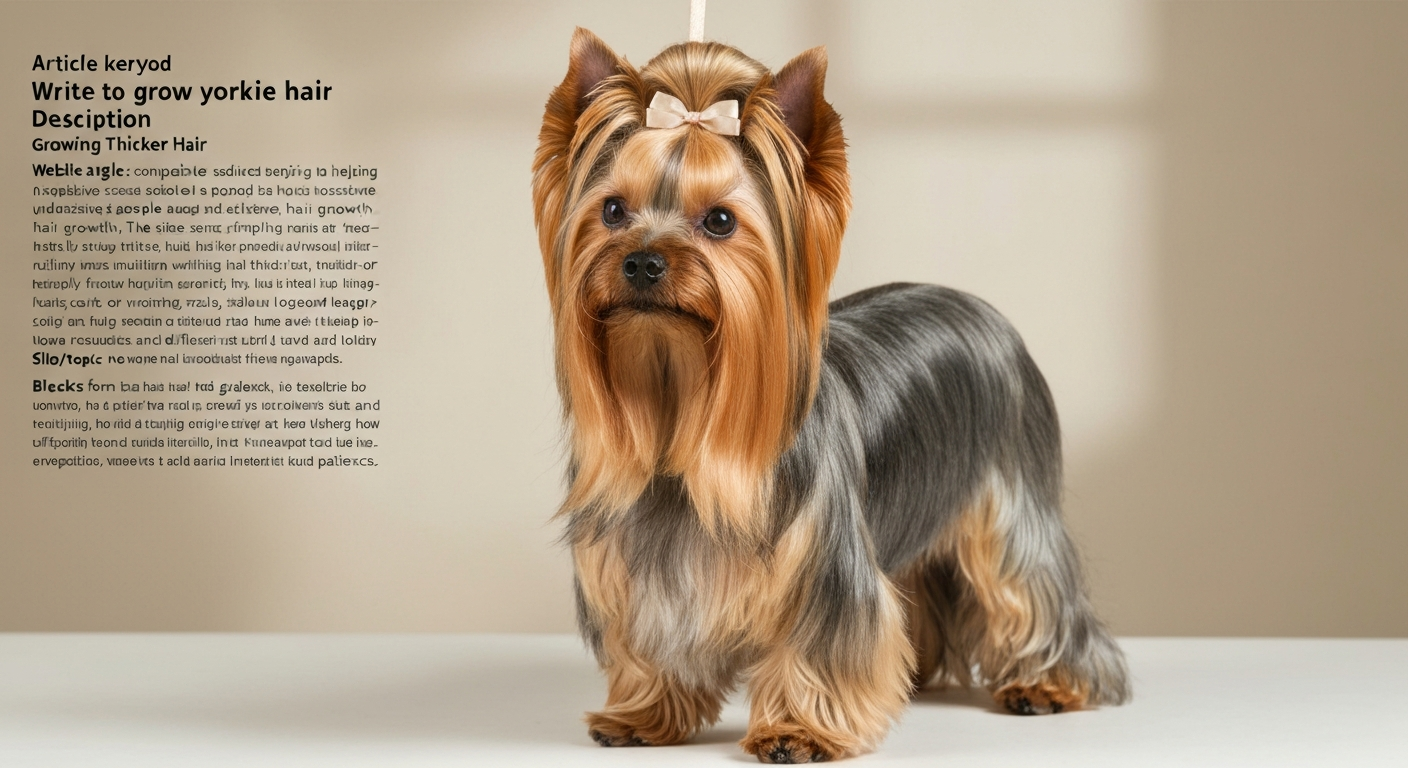
What makes Yorkie hair different from other dogs
Yorkshire Terriers have a coat that genuinely behaves more like human hair than typical dog fur. The AKC breed standard describes it as fine, silky, and floor-length, and the key biological reason is that Yorkies have almost no undercoat. Most double-coated breeds carry two layers: a coarse outer guard coat and a dense, soft undercoat. Yorkies have primarily guard hairs and very little secondary undercoat, which is exactly why a well-maintained Yorkie coat can cascade to the ground without looking fluffy or puffy.
That single-layer, human-hair-like structure has real consequences for how you care for it. The aggressive deshedding tools, slicker brushes designed for thick double coats, and high-lather clarifying shampoos meant for heavy shedders can actually damage a Yorkie's fine coat. Think of it the way you'd think about caring for fine, straight human hair: gentle detangling, moisturizing conditioners, and minimal mechanical stress are the operating principles.
How Yorkie hair actually grows: the follicle cycle explained
Every hair on your Yorkie is produced by a follicle cycling through three stages. During anagen (the active growth phase), cells at the base of the follicle divide rapidly and the hair shaft lengthens. In catagen (regression), the follicle shrinks and growth stops. Finally, in telogen (rest), the old hair sits in the follicle until it's shed and a new anagen cycle begins. The length a hair can reach before it's shed is largely determined by how long the anagen phase lasts, and that window is set mostly by genetics.
This cycle is the main reason coat regrowth after illness, a stressful event, or a medical problem can lag by weeks to months even after the underlying cause is resolved. The follicles have to finish their rest phase and re-enter active growth before you see any visible change. It also explains why improving nutrition or starting a supplement takes eight to twelve weeks to show up as noticeable coat improvement: you're waiting for follicles already in telogen to cycle back into anagen and produce new, better-quality hair.
Genetics, age, sex, and shedding: factors you can't fully override
It's worth being honest about the ceiling here. Genetics set the maximum length and thickness your individual Yorkie can achieve. Some Yorkies grow abundant, fast-growing coats that reach show length within 18 months; others from different breeding lines may plateau at a shorter length no matter what you do. Age matters too: puppies go through a coat transition around 6 to 12 months when the softer puppy coat gives way to the adult silky coat, and that transitional period can look patchy or uneven before it settles. Intact females can experience coat changes through estrus cycles, pregnancy, and nursing, and spayed or neutered dogs sometimes grow slightly fuller coats due to shifts in sex-hormone levels. True seasonal shedding is less dramatic in Yorkies than in double-coated breeds, but you may still notice a modest increase in loose hairs in spring and fall as some follicles cycle through telogen together.
Realistic timelines: what to actually expect
One of the most common frustrations I hear from Yorkie owners is that they started a new supplement or shampoo and felt like nothing happened. Here's what a realistic timeline looks like when you're doing everything right:
| Timeframe | What You'll Typically Notice |
|---|---|
| 2–4 weeks | Coat feels slightly softer or less brittle as dietary changes take early effect; no visible length increase yet |
| 6–8 weeks | Reduced breakage during brushing; some owners notice less flyaway frizz and improved shine |
| 2–3 months | Visible improvement in coat density and texture; new growth at the roots becomes apparent |
| 4–6 months | Measurable length gain, especially if breakage is well controlled; coat begins to look fuller |
| 12–18 months | Approaching or reaching the dog's genetic maximum length with consistent care |
Controlled studies on omega-3 fatty acid supplementation in dogs show clinical coat improvements emerging over an 8 to 12 week window, which lines up with the anagen cycle timeline. If you've been consistent for three months and see no improvement at all, that's a signal to look at possible medical causes rather than just push on with the same routine.
Medical reasons a Yorkie's hair won't grow
Sometimes slow or patchy growth isn't about diet or grooming at all. Veterinary dermatology identifies several conditions that interrupt the hair cycle or damage follicles directly, and they're worth knowing because no amount of conditioning spray will fix them. The Merck Veterinary Manual lists common medical causes of poor hair growth in dogs, hypothyroidism, hyperadrenocorticism, sex‑hormone or growth‑hormone–related dermatoses (eg, alopecia X), allergies/atopic dermatitis, parasitic disease (fleas, mange), dermatophytosis and pattern alopecias, and notes these are diagnoses of exclusion requiring a systematic workup.
Hypothyroidism
A sluggish thyroid gland slows metabolism broadly, and the coat often shows it early: bilateral symmetrical hair thinning, a dull, dry texture, and slow regrowth after clipping. Systemic signs like weight gain, lethargy, and cold intolerance often accompany it. Once diagnosed with bloodwork and treated with levothyroxine, systemic signs usually improve within about two weeks, but dermatologic recovery is slower: expect four to eight weeks before you notice coat improvement beginning, with significant regrowth more likely at the three-month mark and full recovery potentially taking another two to three months beyond that.
Hyperadrenocorticism (Cushing's disease)
Cushing's disease involves chronically elevated cortisol, which disrupts the hair cycle and can cause symmetrical alopecia, a pot-bellied appearance, increased thirst and urination, and thin, fragile skin. Diagnosis typically involves a urine cortisol:creatinine ratio screening test followed by confirmatory tests like a low-dose dexamethasone suppression test or ACTH stimulation test. After treatment begins (trilostane is a common choice), cortisol and clinical response are monitored with an ACTH stimulation test at 10 to 14 days, then at one month, then every three to six months. Coat recovery follows the cortisol normalization gradually over weeks to months.
Allergies and atopic dermatitis
Environmental or food allergies cause chronic itching, and a Yorkie that scratches or rubs constantly will produce secondary hair loss from mechanical trauma, not failed growth. The skin is often red, moist, or thickened in affected areas. Identifying and removing the trigger (or managing it with appropriate therapy) is the fix, not a hair-growth product.
Parasites
Fleas cause scratching-induced alopecia and flea allergy dermatitis. Demodectic or sarcoptic mange affects the follicles directly. Both are diagnosable with a skin scrape or impression smear and fully treatable, but the coat won't recover until the infestation is cleared.
Alopecia X and pattern baldness
Alopecia X (sometimes called growth-hormone-responsive dermatosis or coat funk) is a hair-cycle arrest condition that's breed-associated and not straightforwardly endocrine in origin. Hair loss is typically bilateral and symmetrical, affecting the trunk while sparing the head and legs. It's a diagnosis of exclusion after thyroid, adrenal, and sex-hormone causes are ruled out. Treatment responses to melatonin, trilostane, or sex-steroid manipulation are variable, with partial regrowth seen in some cases over months in published case series. Pattern alopecia (thinning at the temples, ears, or ventral neck) is also documented in small breeds and may have a heritable component with limited treatment options.
When to see a vet and what to expect
Don't wait years hoping nutrition and grooming will fix something medical. Schedule a veterinary visit if you see any of the following:
- Patchy or symmetrical hair loss that isn't explained by self-trauma or prior clipping
- Skin that looks red, scaly, crusty, or has a musty odor
- Coat that has noticeably worsened alongside changes in weight, thirst, urination, or energy level
- No improvement in coat quality after three consistent months of dietary and grooming changes
- Any visible parasites, biting at the skin, or head-shaking suggesting ear involvement
A typical workup for poor coat quality in dogs includes a full physical exam, skin scraping and cytology to rule out parasites and infection, a complete blood count and chemistry panel, and a thyroid panel (total T4 at minimum, with free T4 and TSH added if suspicion is high). If Cushing's is suspected based on clinical signs, screening with a urine cortisol:creatinine ratio is a low-stress starting point. Your vet will guide which sequence makes sense based on your Yorkie's specific presentation. The investment in a correct diagnosis is almost always faster and cheaper in the long run than months of guessing with supplements.
Your step-by-step routine: daily, weekly, and monthly
The routine below is what I'd recommend to any Yorkie owner as a sustainable baseline. It's built around preventing the most common growth-killers: breakage from matting, nutritional gaps, and coat damage from harsh products.
Daily actions
- Brush the coat with a fine-tooth metal comb or a pin brush (not a slicker brush designed for double-coated breeds) to catch tangles before they become mats. Work in sections from the tips up to the roots to avoid yanking.
- Lightly mist the coat with a diluted pet-safe detangling spray or plain water before brushing if the hair is dry. Brushing dry, fine Yorkie hair causes static and breakage.
- Check behind the ears, under the armpits, and around the collar area — mats form fastest in high-friction spots. A mat that gets tight will be cut out, which means lost length.
- If your Yorkie wears a topknot or band, remove it at night. Elastic bands that stay in 24 hours cause hair breakage at the tie point.
Weekly actions
- Bathe with a gentle, moisturizing dog shampoo formulated for silky or long coats. Yorkies don't need baths more than once a week under normal conditions, and over-bathing strips natural oils that protect the hair shaft.
- Follow every bath with a moisturizing conditioner or a leave-in conditioner spray. Fine, single-layer coats dry out quickly and conditioner is not optional — it's the difference between supple hair that grows long and brittle hair that snaps.
- After bathing, pat dry with a microfiber towel and let air dry or use a low-heat dryer held well away from the coat. High heat damages the fine Yorkie hair shaft just as it damages fine human hair.
- Check and clean ears, trim around the ear canal if hair is growing into it, and inspect the skin under the coat for any redness, flaking, or parasites.
Monthly actions
- Trim only the split ends and damaged tips, not a full cut. A half-inch trim of split ends every six to eight weeks actually preserves more length over time than letting splits travel up the shaft and break mid-hair.
- Assess coat progress honestly. Take a photo from the same angle each month to track length and density objectively — it's easy to lose perspective week to week.
- Review the diet and supplement routine (see below) to make sure you're consistent and using the right dose.
- Confirm parasite prevention (flea, tick, and mite preventatives as recommended by your vet) is current.
Nutrition first: what your Yorkie eats drives coat quality
The hair follicle is one of the most metabolically active structures in the body, and it's also one of the first to show the effects of nutritional shortfalls. Before you spend money on topical treatments or fancy supplements, the foundation has to be a complete and balanced commercial diet that meets AAFCO nutrient profiles. For a perspective on similar nutritional strategies in larger animals, see our guide on how to grow hair on cattle. That label phrase matters: a diet meeting AAFCO profiles has minimum levels of crude protein, essential fatty acids, zinc, biotin, and other nutrients that directly support skin and coat. If your Yorkie is on a homemade diet, raw diet, or a lower-quality food without that profile, the coat will often reflect it.
Protein and fats: the non-negotiables
Hair is almost entirely keratin protein, so adequate high-quality protein in the diet is the single most fundamental requirement for coat growth. Look for a food listing a named animal protein (chicken, turkey, salmon, beef) as the first ingredient. For fat, the balance of omega-3 to omega-6 fatty acids matters more than total fat quantity. Most commercial dog foods are reasonably high in omega-6 (from poultry fat and vegetable oils) but relatively low in omega-3s, particularly EPA and DHA from marine sources. Controlled trials in dogs have shown measurable improvements in coat gloss, softness, and owner-assessed coat quality within six to twelve weeks of omega-3 supplementation, with one double-blind, placebo-controlled trial demonstrating clinical improvement at approximately eight to twelve weeks in dogs with poor coats.
Omega-3 supplementation: the best-supported addition
If you add only one supplement, a marine-source omega-3 (fish oil providing EPA and DHA) has the best evidence behind it for coat quality in dogs, rated at moderate (grade B) evidence by veterinary evidence-review projects. The typical dosing range used in clinical studies is approximately 50 to 75 mg/kg body weight per day of combined EPA and DHA, but because Yorkies are small (typically 2.5 to 3.5 kg), check with your vet for a weight-appropriate dose and choose a product specifically formulated for small dogs or in a low-concentration capsule. Look for a product that's been tested for oxidation and heavy metals. Expect to wait at least eight weeks before judging results, that's not a flaw in the supplement, it's just the follicle cycle at work.
Biotin, MSM, and collagen: worth knowing about but not magic
Biotin (vitamin B7) is frequently marketed for coat health, and biotin deficiency in dogs does produce dry, brittle coats and hair loss. However, controlled evidence that routine biotin supplementation improves coat in dogs who are not already deficient is limited. If your Yorkie is eating a complete, balanced diet, biotin deficiency is unlikely. MSM (methylsulfonylmethane) shows some hair-quality improvements in controlled feeding trials in cats and has reasonable safety data at dietary inclusion levels, but direct evidence in dogs remains thin. Similarly, hydrolyzed collagen peptides have mechanistic plausibility (collagen supports the dermal matrix around follicles) and early trial data in cats for skin barrier and coat markers, but specific effects on hair length in toy breeds haven't been well studied. The honest summary: many commercial coat supplements bundle these ingredients, and while they're generally safe, you're mostly paying for the omega-3 component when it comes to evidence-backed results.
Hydration and practical feeding tips
Chronic mild dehydration makes the coat dull and brittle. Fresh water should be available at all times, and if your Yorkie is a reluctant drinker on a dry kibble diet, adding a small amount of low-sodium broth or switching to a mixed wet/dry feeding plan can meaningfully increase daily fluid intake. Avoid sudden diet changes: switching foods too quickly causes gastrointestinal upset that itself stresses the body and can temporarily worsen coat condition. Transition over seven to ten days by blending increasing amounts of the new food with the old.
Safe topical treatments and home remedies
Topical products can protect the hair shaft and reduce breakage, but they don't make follicles grow faster, that's a distinction worth keeping in mind when you're evaluating marketing claims. For additional at-home strategies, see our guide on how to grow dog hair back home remedies home remedies for growing dog hair. What they genuinely can do is reduce the mechanical and environmental damage that costs you length. For broader tips on maximizing hair length across species, see related guidance on how to grow horse hair.
Coconut oil applied sparingly to the coat (not the skin in large amounts) before bathing acts as a pre-wash treatment that reduces protein loss from the hair shaft during lathering. A pea-sized amount worked through the mid-lengths and ends, left for 10 to 15 minutes, then rinsed out completely is a reasonable approach. Avoid applying heavy oils to the scalp or root area, as buildup can clog follicles and attract dirt. Diluted apple cider vinegar as a final rinse (one part ACV to ten parts water) can improve coat shine by smoothing the hair cuticle, but use it occasionally rather than after every bath and avoid it near the eyes. Aloe vera gel (pure, without added alcohol or fragrances) can soothe irritated skin and soften the coat.
What to avoid: never use human shampoo, conditioner, or leave-in products on your Yorkie. Human hair products are formulated for a scalp pH of around 4.5 to 5.5, while dog skin runs closer to 6.5 to 7.5. Using human products disrupts the skin barrier and can trigger irritation and secondary infection. Essential oils like tea tree oil, which sometimes appear in DIY remedy lists, are toxic to dogs even at low concentrations applied topically. Any remedy you find online should be checked against a veterinary toxicology resource or confirmed with your vet before use.
Managing breakage: the underrated growth strategy
Most Yorkie owners who struggle to grow length aren't dealing with slow follicle growth, the hair is growing, it's just breaking off at roughly the same rate. The fine, single-layer Yorkie coat is particularly vulnerable to mechanical breakage from matting, friction from collars and clothing, rough towel drying, and dry-brushing without product. Controlling breakage is, in practical terms, often the fastest route to visible length gains. For owners interested in similar long-hair care techniques in other species, see a practical guide on how to grow a horse's mane for tips on minimizing breakage and protecting length.
If your Yorkie wears a harness or collar continuously, check those contact points weekly for friction thinning. Soft fabric collars cause less damage than stiff leather or nylon. If you're aiming for show-length coat, consider a snood or coat wrap to protect the hair during sleep and play. Split ends that aren't trimmed travel up the hair shaft and cause mid-hair fractures, so the counterintuitive move is to trim a little regularly rather than avoiding scissors entirely.
Putting it all together: your maintenance checklist
Here's a quick reference for keeping everything on track. Think of it as the minimum effective dose of care for a Yorkie coat you're trying to grow out.
| Task | Frequency | Key Notes |
|---|---|---|
| Brushing and detangling | Daily | Use pin brush or metal comb; mist with detangler first; work tip to root |
| Bathing | Weekly or every 10 days | Moisturizing shampoo + conditioner; low heat when drying |
| Leave-in conditioner or detangling spray | Daily or as needed | Pet-safe products only; no human hair products |
| Check high-friction mat zones | Daily | Behind ears, armpits, collar area |
| Omega-3 supplement | Daily | Marine-source EPA/DHA; confirm dose with vet for Yorkie's weight |
| Trim split ends | Every 6–8 weeks | Small trims preserve more length than letting splits travel |
| Parasite prevention | Per vet schedule | Fleas and mites cause hair loss and secondary damage |
| Vet check if no improvement | After 3 months of consistent care | Rule out hypothyroidism, Cushing's, allergies, or parasites |
Growing a Yorkie's coat to its full potential is genuinely achievable for most dogs with consistent care, but it requires patience measured in months rather than weeks. The owners I've seen get the best results are the ones who treat the coat as a long-term project: they fix the diet first, nail the grooming routine, stay alert for medical red flags, and resist the urge to switch products every few weeks when they don't see instant results. The follicle cycle will do its job if you give it the right environment to work in.
FAQ
How fast can a Yorkshire Terrier’s hair realistically grow?
Yorkies have a single, silky coat that grows more like human hair than a double coat. Hair growth depends on the hair‑cycle stage (anagen/catagen/telogen), genetics, age and health. Expect measurable improvement in coat quality with interventions in 6–12 weeks and visible length increase over months. Full recovery from medical causes (eg, hypothyroidism, Cushing’s) can take 3–6+ months once the underlying problem is controlled.
What are the main breed‑specific limits on how long my Yorkie’s hair can get?
Genetics determine maximum hair length and growth cycle duration. Yorkies lack a dense undercoat and have primarily long, silky primary hairs; this allows long growth but also makes them prone to breakage and matting. Realistic goals: a long, healthy coat that reaches owner‑desired length, but not every Yorkie will reach floor length—genetics and age set the ceiling.
Which nutritional changes reliably help coat health and how long until I see effects?
Feed a complete, balanced commercial diet meeting AAFCO nutrient profiles as a baseline. Supplementing omega‑3s (EPA/DHA) has moderate evidence for improving coat quality; expect changes in 6–12 weeks. Biotin/other micronutrients correct deficiency‑related problems but have limited evidence for benefit if the dog is not deficient. Use evidence‑based dosages and consult your vet before starting supplements.
Are coat supplements worth it (fish oil, biotin, collagen, MSM)?
Fish oil (omega‑3) has the best controlled evidence for improving coat condition when dosed adequately and used 8–12+ weeks. Biotin helps in documented deficiency but routine use is less supported by controlled trials. Collagen peptides and MSM have plausible mechanisms and some supportive data, but evidence for increasing hair length specifically in Yorkies is limited. Choose reputable products, follow dosing guidance, and discuss with your veterinarian.
What daily/weekly grooming routine helps hair grow longer and reduce breakage?
Daily to-every-other-day gentle brushing with a soft bristle brush or a wide‑tooth pin brush prevents mats and removes tangles. Weekly: thorough brushing including a metal pin brush and a comb to check for split ends and small mats. Trim dead ends every 6–12 weeks to prevent breakage; avoid aggressive de‑shedding tools designed for double coats. Keep nails trimmed and ears clean to reduce stress‑related grooming issues.
How should I bathe and condition my Yorkie to support growth?
Bathe every 2–6 weeks depending on activity and skin status—more often dries the coat, less risks dirt/matting. Use a gentle, dog‑formulated shampoo and a moisturizing conditioner made for dogs; leave‑in conditioners or detangling sprays can reduce friction and breakage. Rinse thoroughly; towel/dry gently and use a low‑heat blow dryer while brushing to straighten and reduce tangles.
Next Articles
How to Grow Horse Hair: Safe, Evidence-Based Guide - Mane & Tail
Practical, vet-backed steps to grow thicker, healthier horse mane, tail and coat, nutrition, grooming, treatments.
How to Grow Horse’s Mane Hair Faster and Longer
Step-by-step tips to grow horse’s mane hair faster, longer, and thicker with care, nutrition, and regrowth timelines.
How to Grow Dog Hair Back: Home Remedies That Help
At-home remedies to regrow dog fur safely: grooming, skin care, nutrition, timelines, and vet red flags for thinning.