
Reddit's hair growth threads keep coming back to the same core questions: how fast does hair actually grow, what genuinely works for regrowth or thickness, and how long do you have to wait before you see anything? Here's the honest answer: hair grows about 1 cm (roughly half an inch) per month no matter what you do, so patience is non-negotiable. But the steps you take today, fixing nutritional gaps, improving scalp health, cutting out damaging habits, directly affect whether you're retaining that growth and whether thinning hair comes back. This guide pulls together everything that actually has evidence behind it, organized by the specific situation you're in.
How to Grow Hair Reddit Tips That Actually Work

Marcus Holloway
21 Jun 2026
Set a realistic goal before you start
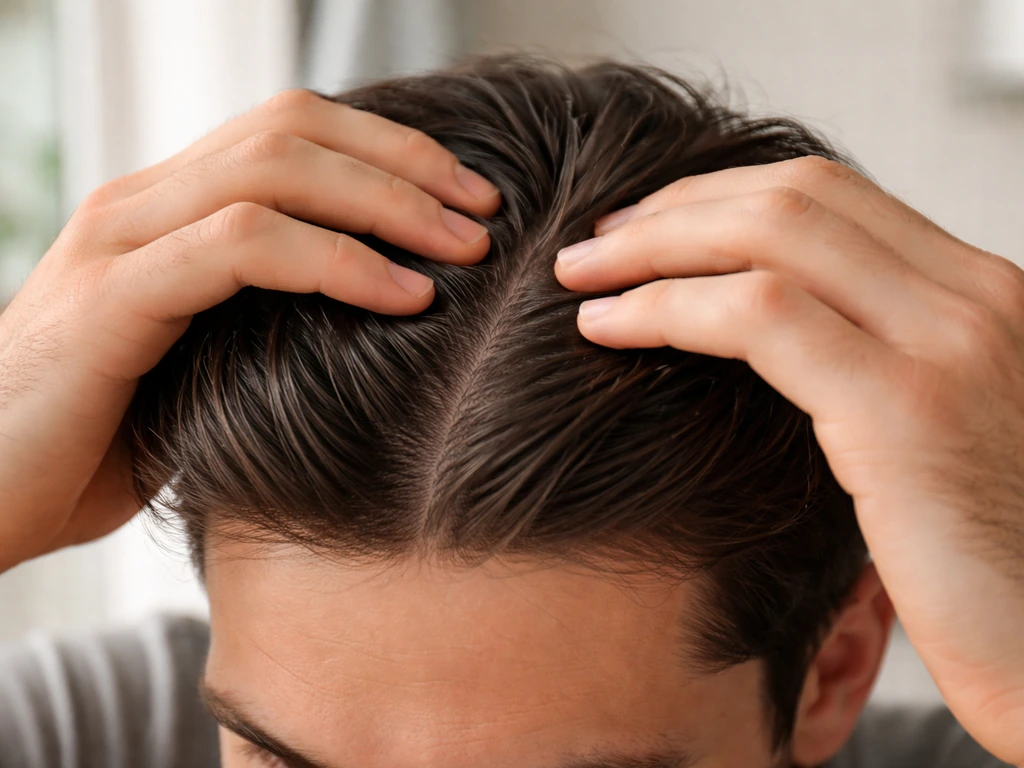
The most common mistake people make is chasing the wrong goal. "Grow my hair" can mean three completely different things: growing it longer from a short cut, regrowing hair that has thinned or fallen out, or making existing hair look and feel thicker. Each one requires a different approach. Before you build a routine, get clear on which one you're actually trying to solve, or which combination. Once you know which goal you mean, you can build a routine that supports getting your hair long without fighting the wrong issue how did you grow your hair long. A lot of Reddit frustration comes from people doing length-retention routines when what they actually need is a regrowth protocol, or vice versa.
For growing longer hair, the goal is simple: maximize the length you keep. You grow about 1 cm a month regardless, so the only variable you control is how much breaks off before it reaches your target length. For regrowth after thinning or shedding, the goal is getting dormant or damaged follicles back into an active growth phase. For thickness and density, the goal is either stimulating more follicles or improving the visual fullness of the hair you already have. Write down which one applies to you. It changes everything below. A helpful place to look for real-world guidance is how to grow long hair on Quora, since it’s full of step-by-step routines people have tried.
Hair growth basics: what's actually happening in your scalp
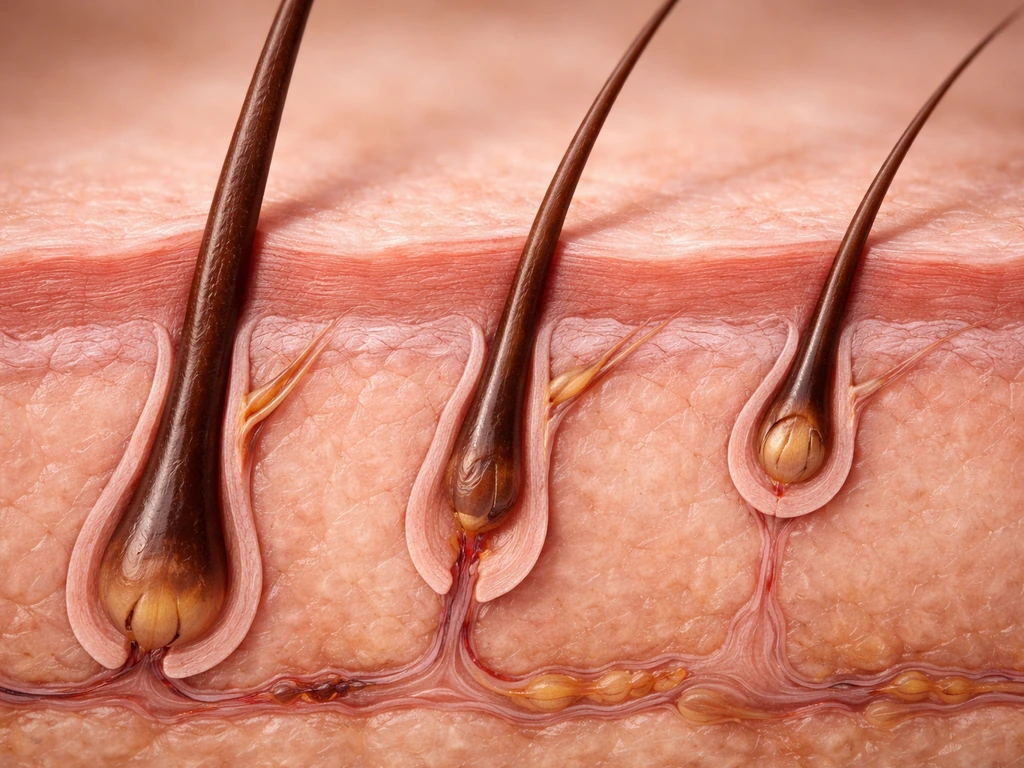
Every hair follicle runs through a cycle independently. The growth phase (anagen) lasts two to six years, this is the phase that determines your maximum potential length. If you want a practical, step-by-step guide to support that growth phase, check out how to grow hair on wikiHow anagen. After that comes a short transition phase (catagen, about one to two weeks), then a resting phase (telogen, about two to four months) where the hair sits in the follicle before shedding. At any given moment, roughly 90% of your follicles are actively growing, about 1% are in transition, and around 9% are resting. That last 9% is why you normally shed 50 to 100 hairs a day, it's completely normal, not a crisis.
The growth rate itself is fixed at roughly 0.3 to 0.35 mm per day, which adds up to about 1 cm per month or 6 inches per year. No supplement, oil, or scalp treatment changes this number in any meaningful way in healthy people. What does change is how much of that growth you actually keep. If your hair is breaking off at the same rate it's growing, you'll stay at the same length forever, which is why breakage prevention is the unsung hero of long hair journeys.
Why does progress vary so much between people? Genetics sets your anagen length (and therefore your max potential length), your follicle density, and your hair's natural texture. But health conditions, nutritional deficiencies, stress, hormones, and how you handle your hair all layer on top of genetics. Two people can do the exact same routine and get very different results six months later. That's not a failure of the routine, it's just biology. The goal is to stack as many favorable conditions as you can and then give it time.
Growing out your hair as a man: what actually works
Growing out hair as a guy comes with its own specific challenges, mostly the awkward in-between stages and the fact that men's hair care habits often weren't built for longer hair. The biology is identical to women's hair, but the practical hurdles are different. Here's what works.
Survive the awkward stages
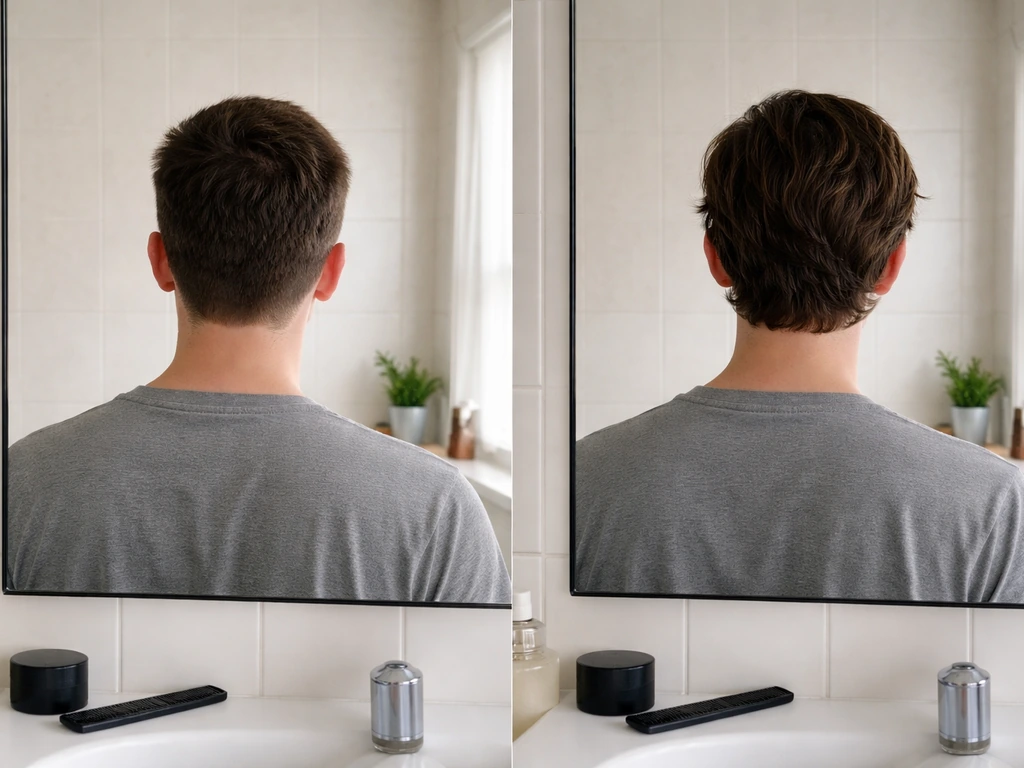
The phases where hair is too long to look short but too short to style as long hair are where most guys quit. A good strategy is to work with a barber who understands grow-outs: clean up the sides and nape while leaving length on top, use a light styling product to manage flyaways, and accept that months 2 through 6 will look a little rough no matter what. Headbands, beanies, and simple tying-back techniques help get through the ear-length phase. This is mostly a patience and commitment issue, not a hair health one.
Prevent the breakage men don't know about
Men transitioning to longer hair often underestimate how much breakage matters. Towel-rubbing wet hair aggressively, using a regular brush on tangled hair straight out of the shower, and sleeping on rough cotton without any moisture in the hair all cause cumulative snapping. Switch to gently patting hair dry, let it air-dry about 70% before combing with a wide-tooth comb, and use the lowest heat setting if you blow-dry. These aren't fussy habits, they're the difference between hair that actually gets longer and hair that seems to stall.
Hairline and male pattern concerns
If you're growing out your hair but also noticing a receding hairline or thinning at the crown, that's a different conversation from general grow-out advice. Male androgenetic alopecia (the clinical name for male pattern baldness) typically shows up as bitemporal recession and vertex thinning, and it progresses slowly over time. The only two FDA-approved treatments for it are topical minoxidil and oral finasteride. Both slow or stop the progression and can, in some cases, stimulate regrowth. If that's what you're dealing with alongside your grow-out goals, treating the pattern loss proactively while growing out the rest of your hair makes a lot of sense. More on both treatments is in the regrowth section below.
Fine hair and length: how to keep it and make it look fuller
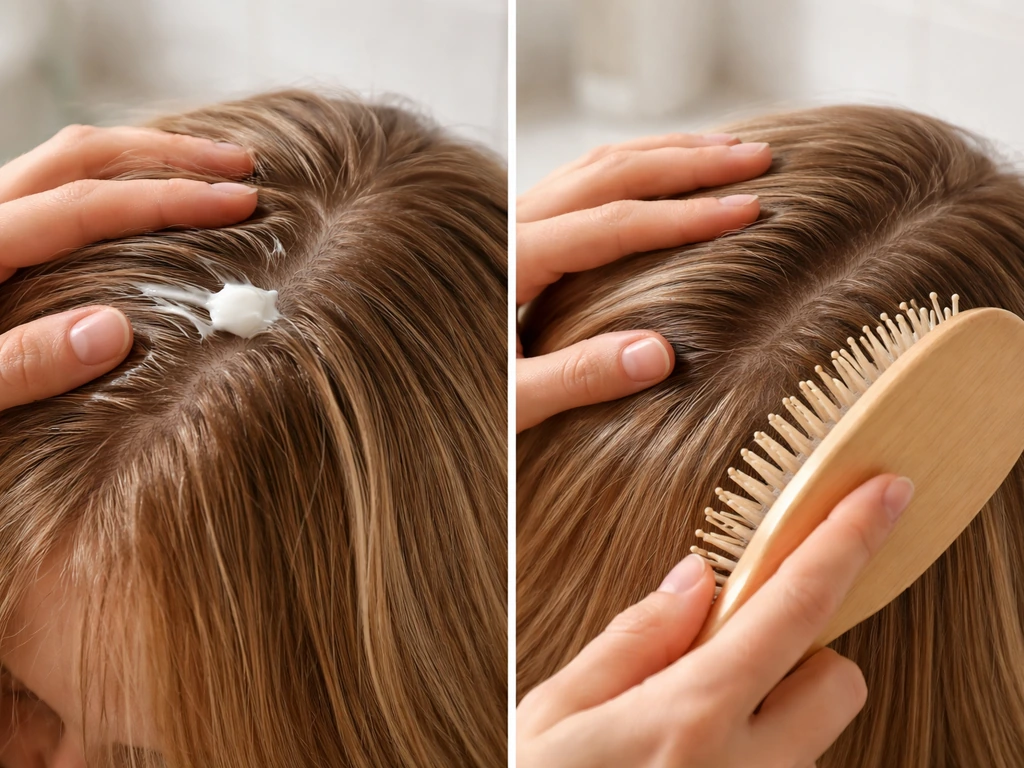
Fine hair presents two separate challenges: it's more prone to breakage (because each strand is thinner and more fragile), and even when it's long, it can look flat or wispy rather than full. These are solvable, but you have to address them differently.
For length retention with fine hair, moisture and gentleness are everything. Fine strands lose moisture faster, which makes them more brittle. A lightweight leave-in conditioner or hair oil (a very small amount, fine hair gets weighed down easily) applied to damp ends before drying helps. Protective styles that keep the ends tucked away reduce the mechanical friction that snaps fine hair. Avoid tight elastics and rough fabric. Sleep on a satin or silk pillowcase, or use a satin hair wrap, this one change alone reduces the friction breakage that fine-haired people are especially vulnerable to.
For visual thickness and volume, the honest truth is that no product actually makes fine hair coarser in a lasting way. What does help is volume-building techniques: blow-drying with a round brush while lifting at the root, using a lightweight volumizing mousse before drying, and getting a cut that's not too blunt at the ends (long layers distribute light better and make the hair look fuller). Scalp massage and improving the health of your scalp create the best environment for your existing follicles, which over time can improve the overall appearance of density even without a change in strand diameter.
Regrowing hair that's thinned or fallen out
This is where the "grow my hair back" and "grow more hair" questions live, and it's important to separate the different causes because the solution depends entirely on what's driving the loss.
Temporary shedding vs. actual hair loss
One of the most useful things Reddit communities figured out, and the dermatology literature backs up, is checking the shed hairs themselves. If the hairs have a small white bulb at the root end (a club hair), they're telogen hairs shed naturally during the resting phase. Massive amounts of those, often after a stressful event, illness, surgery, crash diet, or hormonal change, is called telogen effluvium (TE). It's temporary. The follicles aren't dead, they were just pushed into resting phase early and will cycle back into growth. The bad news is the shedding peak usually happens two to four months after the triggering event, and then it can take another several months before the regrown hair reaches noticeable length. TE resolves on its own when the trigger is gone, but fixing any nutritional deficiencies (especially iron and vitamin D, more on those below) speeds the recovery. If the shed hairs are short, uneven fragments without a bulb, that's breakage, not shedding, and the fix is gentler handling, not a regrowth treatment.
Pattern hair loss and what to do about it
For androgenetic alopecia (genetic pattern loss in both men and women), the two treatments with the most evidence behind them are minoxidil and finasteride. Topical minoxidil is available over the counter and has been shown in clinical trials to reduce hair loss and stimulate regrowth in people with AGA. Apply it to a dry scalp only, using more than directed doesn't speed results and increases the risk of side effects. If propylene glycol (a common ingredient in the liquid formula) irritates your scalp, the foam version is an alternative because it typically doesn't contain it. Finasteride is prescription-only for men and works by blocking the hormone conversion that drives pattern loss. A dermatologist can help you figure out which option or combination fits your situation. For alopecia areata (patchy loss caused by an autoimmune response), treatment is different, often involving corticosteroid injections for the localized patches, sometimes with minoxidil added afterward to maintain regrowth. That one really does need a professional diagnosis.
When to see a dermatologist
If you're not sure whether you're dealing with shedding, breakage, pattern loss, or something else, a dermatologist can actually diagnose it rather than leaving you guessing. The distinction between excessive shedding and true hair loss changes the entire treatment path, and spending months on the wrong protocol wastes time and money. For anything beyond general grow-out goals or a clear, temporary TE episode, getting a diagnosis first is worth it.
Scalp care and topicals: a simple DIY routine
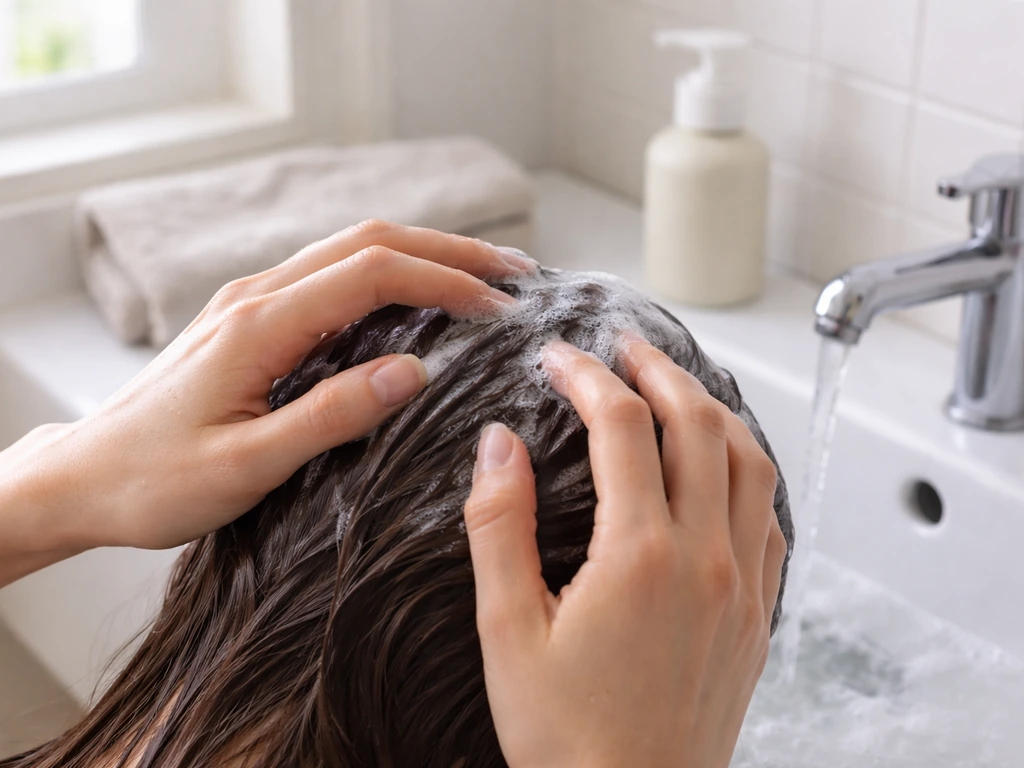
Your scalp is skin, and it needs the same basic care as your face, cleanliness, circulation, and a healthy barrier. An unhealthy scalp environment (clogged with product buildup, chronically inflamed, or flaky with dandruff) makes it harder for follicles to do their job. Here's a routine that covers the essentials without overcomplicating it.
- Shampoo your scalp, not just your hair. Work the shampoo into your scalp gently with your fingertips—no aggressive scrubbing. The lengths don't need direct shampoo; they'll get cleaned as the product rinses through. How often you shampoo depends on your scalp type, but regular cleansing prevents buildup that can interfere with follicle health.
- Condition from mid-length to ends. The scalp doesn't need conditioner—applying it right at the root can weigh fine hair down and contribute to buildup. Focus from about ear level downward.
- Use a wide-tooth comb when hair is damp (not soaking wet). Let hair air-dry about 70% first, then gently detangle starting from the ends and working up. Ripping through knots from root to tip is one of the most damaging habits people have.
- If you use heat tools, use the lowest effective setting. High heat repeatedly applied to the same sections causes cumulative damage that leads to snapping—and snapping at mid-length means you're not retaining your growth.
- If you're dealing with dandruff, flaking, or scalp inflammation, a ketoconazole shampoo (available over the counter) has both antifungal properties and some evidence for supporting hair density in androgenetic alopecia. Use it a few times a week in place of your regular shampoo.
- For minoxidil users: apply to a completely dry scalp, don't exceed the directed dose, and give it at least four to six months before evaluating results. Expect some initial shedding in the first few weeks—this is normal and temporary.
Scalp massage: helpful but don't oversell it
Scalp massage gets a lot of enthusiasm in Reddit hair communities. The honest evidence summary: small studies show some potential benefit for hair thickness over about six months of consistent daily massage, but the evidence base is limited and the results are not dramatic. It does improve circulation and is a low-risk, free habit that also helps with tension and stress, which in turn can improve overall hair health. Worth doing, just not worth counting on as your main strategy.
What to avoid
- Tight hairstyles worn daily (ponytails, braids, buns that pull at the hairline): these cause traction alopecia over time, which is preventable hair loss
- High-heat styling without a heat protectant or on the highest setting
- Essential oils applied directly to skin without a carrier oil: some, like bergamot, can cause phototoxic reactions and serious burns when skin is then exposed to UV light
- Rubbing wet hair aggressively with a towel
- Skipping conditioner if your hair is longer or textured—dry ends break faster
- Applying minoxidil to wet hair (it won't absorb properly)
Nutrition, supplements, and natural remedies that actually matter
The supplement industry is extremely loud on this topic, and most of it is noise. Here's what the evidence actually supports.
Fix deficiencies first
Hair is one of the first places your body shows a nutritional gap. The nutrients most commonly linked to hair shedding and thinning are iron (specifically low ferritin), vitamin D, and in rare cases biotin. If you're experiencing significant shedding, getting bloodwork done to check these levels before throwing money at supplements is genuinely the smarter move. Supplementing iron when you're not deficient doesn't help hair and can cause other issues. But if your ferritin is low and you fix it, shedding often slows noticeably. Vitamin D deficiency has a real association with hair loss and cycle disruption, if you're not getting regular sun exposure or eating vitamin D-rich foods, supplementing is low-risk and potentially high-reward.
Biotin: helpful only if you're actually deficient
Biotin is heavily marketed for hair growth, but the evidence doesn't support supplementing it if you're not deficient. A true biotin deficiency does cause thinning hair and loss of body hair, and supplementing fixes that. But in people with normal biotin levels, there's no trial evidence showing that adding more biotin improves hair quantity or quality. Most people eating a varied diet aren't deficient. Save your money unless a blood test suggests otherwise.
Protein: important but not the problem for most people
Hair is made of keratin, a protein, so severe protein deficiency does cause hair loss. But if you're eating regular meals with a variety of foods, you're almost certainly getting enough protein. This only becomes relevant in the context of very restrictive diets, eating disorders, or serious illness. If you've recently cut calories aggressively or gone through a prolonged period of low food intake, increasing protein is worth doing, both for hair and general health.
Natural remedies: the honest breakdown
Rosemary oil is the natural remedy with the most legitimate evidence behind it, small studies have compared it favorably to low-concentration minoxidil for AGA, though the research is still limited. If you want to try it, dilute it in a carrier oil (like jojoba or coconut oil) before applying to the scalp to avoid irritation. Castor oil is popular on Reddit and Pinterest-style communities for length and thickness, but there's no strong clinical evidence, it may help with moisture retention and handling of the hair, but it won't stimulate follicles. If you are searching for what to try for long hair growth, you may see many Pinterest-style tips, but it still helps to separate myths from what actually supports healthy growth Pinterest-style communities. Onion juice has some early-stage study support but is inconvenient and the evidence isn't strong enough to recommend routinely. Peppermint oil has shown some circulation-stimulating effects in animal studies, but human data is thin. The bottom line: natural remedies are low-risk when used correctly and can be part of a routine, but they're not replacements for proven treatments when real hair loss is happening.
| Approach | Best for | Evidence level | Notes |
|---|---|---|---|
| Topical minoxidil | Pattern hair loss (AGA), regrowth after thinning | Strong (FDA-approved) | Apply to dry scalp; foam avoids propylene glycol |
| Oral finasteride | Male AGA | Strong (FDA-approved, prescription only) | Requires dermatologist; not for women of childbearing age |
| Ketoconazole shampoo | Dandruff, scalp inflammation, possible AGA adjunct | Moderate | Use 2–3x/week; widely available OTC |
| Iron / ferritin correction | Telogen effluvium from deficiency | Moderate-strong | Test first; only supplement if deficient |
| Vitamin D supplementation | Hair loss linked to deficiency | Moderate | Low-risk supplement; widely relevant |
| Rosemary oil (diluted) | Mild AGA, scalp circulation | Limited but promising | Dilute in carrier oil; more research needed |
| Biotin | Only if deficient | Weak (without deficiency) | Most people don't need it |
| Scalp massage | General scalp health, possible thickness over time | Limited | Free, low-risk, worth adding to routine |
| Breakage prevention (gentle handling, low heat, satin pillowcase) | Length retention, all hair types | Strong (dermatology-supported) | The most underrated part of growing long hair |
Where to start today
You don't need to overhaul everything at once. The most impactful first steps depend on your situation, but here's a practical starting framework.
- Identify your primary goal: longer length, regrowth, or thickness. This determines your focus.
- Audit your breakage habits: check how you're towel-drying, combing, and heat-styling. Fix the worst offenders immediately—this costs nothing and often makes the biggest early difference.
- If you're experiencing noticeable shedding or thinning, get bloodwork done for ferritin, vitamin D, and thyroid function before buying supplements.
- Start a gentle scalp care routine: regular, proper shampooing, conditioner on lengths, and consider a ketoconazole shampoo if your scalp is irritated or flaky.
- If you're dealing with pattern hair loss, start minoxidil and see a dermatologist for a full assessment. The sooner you start, the more you have to work with.
- Add scalp massage and a diluted rosemary oil application to your routine if you want to try a natural adjunct—it's low-risk and takes about five minutes.
- Set a realistic timeline: expect to evaluate results at the four to six month mark, not the four to six week mark. Hair biology doesn't move faster than that.
The most important thing Reddit gets right, buried in all the anecdote threads, is that consistency and patience are what separate people who make real progress from people who cycle through products every six weeks and never see results. Pick a solid, evidence-backed routine, stick with it, and measure progress in months, not days. Communities like the Long Hair Community and spaces focused on real Rapunzel-length journeys reinforce this same lesson: there's no shortcut to the rate of growth itself, but protecting what you grow is entirely in your hands.
FAQ
How can I tell if I’m not growing because of shedding or because my hair is breaking?
If your goal is longer hair, focus on breakage and retention, not “faster growth.” A quick home check is whether the shed strands are full-length hairs with a root bulb (usually shedding) versus short snapped fragments (usually breakage). If you cannot tell, take clear photos of your hair length and ends every 2 to 4 weeks and track whether length is increasing or just not changing.
Why aren’t I seeing results after a few weeks, even though I’m doing everything I read on Reddit?
“Two to six weeks” is not realistic for visible change, because most routines are affecting retention, scalp environment, or a follicle cycle that takes months. For telogen effluvium, shedding peaks typically 2 to 4 months after the trigger and noticeable regrowth can take several more months. For pattern hair loss treatments, early shedding or irritation can happen, but meaningful improvements still take consistent use over many months.
Can I combine minoxidil and finasteride, or should I start with just one?
It depends on the exact condition, but for androgenetic alopecia, the common evidence-based combo is minoxidil (regrowth support) plus finasteride (slows the hormonal driver), chosen with a dermatologist. If you use minoxidil, apply it to a dry scalp only and follow the label, using more does not speed results and can increase irritation. Stopping AGA treatment usually leads to gradual loss of gains.
What should I do differently if my shed hairs look like snapped pieces instead of long hairs?
If your shed hairs are short and uneven, treat it as breakage: gentler towel drying (pat), wide-tooth comb when damp, less heat, and protective handling at the ends. If you see many full-length hairs with a club bulb, treat it as shedding and look for triggers 2 to 4 months earlier (stress, illness, surgery, crash diet, hormonal shifts) and consider bloodwork for iron (ferritin) and vitamin D.
Is rosemary oil worth trying, and how do I use it without irritating my scalp?
Rosemary oil can be used as an add-on, but it should be properly diluted to reduce irritation risk, and it is not a substitute for proven AGA therapy. If your scalp gets red, itchy, or burns, stop and switch to a gentler option, since irritant dermatitis can worsen shedding. Patch test behind the ear or on a small scalp area for a few days before applying more widely.
How do I grow hair without my scalp feeling oily or my fine hair looking flat?
If you get scalp buildup from oils and leave-ins, switch to lighter products and limit where you apply them. Fine hair is especially prone to looking flat, so use small amounts on damp ends only, not the scalp unless a product is designed for that. If you notice increased shedding after a new product, it may be irritation or contact dermatitis rather than “purging.”
Are shed counts on days with lots of hair in the shower normal, or a sign something is wrong?
Don’t over-interpret shed counts, because shedding is normal and daily numbers vary. A better signal is trend over time (a clear increase lasting more than a few weeks) and whether the hairs are shed with a club bulb or are short fragments. If shedding is heavy and persistent, or you also see widening part, crown thinning, or recession, get evaluated instead of guessing.
What’s the fastest way to choose the right Reddit-inspired routine for my situation?
Start by matching the routine to the problem. Example decision aid: if length is stalling but there is no visible thinning at the part or crown, prioritize breakage prevention. If you see pattern thinning, prioritize diagnosis and AGA treatment options. If shedding started after a trigger and you have uniform shedding, address likely nutritional issues and the trigger rather than chasing follicle “growth hacks.”
Does scalp massage actually work, or is it just a feel-good habit?
Massage can be a low-risk habit, but results, if they happen, are gradual and the evidence is limited. If you massage aggressively, scratch, or use very hot scalp stimulation, you can worsen inflammation and worsen shedding. Keep it gentle, short, and consistent, and do not replace medical treatment when pattern hair loss or autoimmune patches are suspected.
Should I get bloodwork before buying supplements, and which labs matter most for hair shedding?
Yes, but timing matters: for telogen effluvium, fixing deficiencies can support recovery, but it still takes the follicle cycle time to complete. For bloodwork, ask a clinician about ferritin and vitamin D, and interpret results in context (some labs can be “normal” yet still low for hair shedding recovery). Avoid high-dose supplementation without testing, especially iron.
Next Articles
Tips on How to Grow Your Hair Out: A Step by Step Guide
Step-by-step tips to grow hair out: stop breakage, build scalp routine, nutrition, safe actives, and track progress.
Grow Hair Long Tips: Step-by-Step Routine to Reach Length
Step-by-step grow hair long tips: boost scalp health, cut breakage, improve diet, and track progress for length.
Tips for How to Grow Long Hair: A Practical Guide
Actionable tips to grow long hair naturally: care routine, scalp habits, nutrition and breakage prevention for healthy l