
Yes, you can grow your hair longer and fuller longer and fuller, but how you get there depends entirely on what's actually slowing things down. Some women are dealing with real shedding (too many hairs falling out), others are dealing with breakage (hairs snapping off before they get long), and some are dealing with both. The fix for each is different, so before you buy a single supplement or treatment, it's worth taking a few minutes to figure out which situation you're actually in. This guide walks through all of it: the biology, the diagnosis, the daily routine, the nutrition side, and the topical options that have real evidence behind them.
How to Grow Hair for Women: Step-by-Step Guide

Marcus Holloway
24 Mar 2026
How hair actually grows (and why it takes so long)
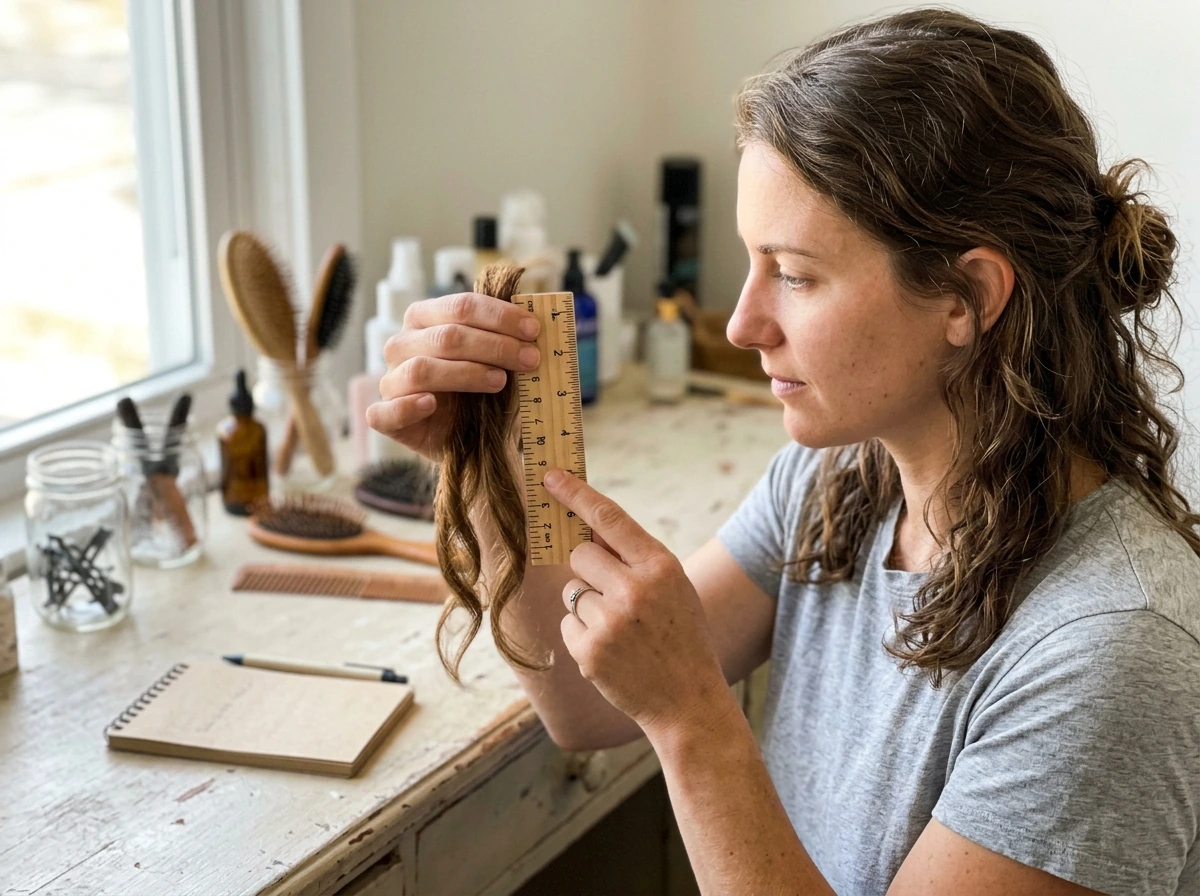
Every single hair on your scalp is in one of four phases: anagen (active growth), catagen (regression), telogen (resting), and exogen (shedding). The anagen phase is where the action is, and it lasts anywhere from 2 to 6 years. That long window is why genetics plays such a big role in maximum hair length. Catagen is brief, just 1 to 2 weeks, and telogen sticks around for about 2 to 4 months before the hair sheds and a new one starts the cycle.
The rate of growth itself is roughly 1 to 1.25 cm per month, which works out to about half an inch. So if you're expecting dramatic length in 60 days, the biology just won't cooperate. A year of healthy, unbroken growth gets you roughly 6 inches. That's the ceiling, and that's assuming no breakage, no excessive shedding, and a reasonable anagen phase. Most shedding happens naturally as hairs transition out of telogen and make way for new growth, so losing 50 to 100 hairs a day is completely normal.
Why does this matter practically? Because visible density and length changes are slow by default. When shedding increases or breakage picks up, the effects build over weeks and months before they're obvious. And recovery, even after you fix the underlying cause, takes just as long. Keeping that timeline in mind early helps you stay consistent with the right habits instead of bouncing between products looking for faster results.
Figuring out what's actually happening with your hair
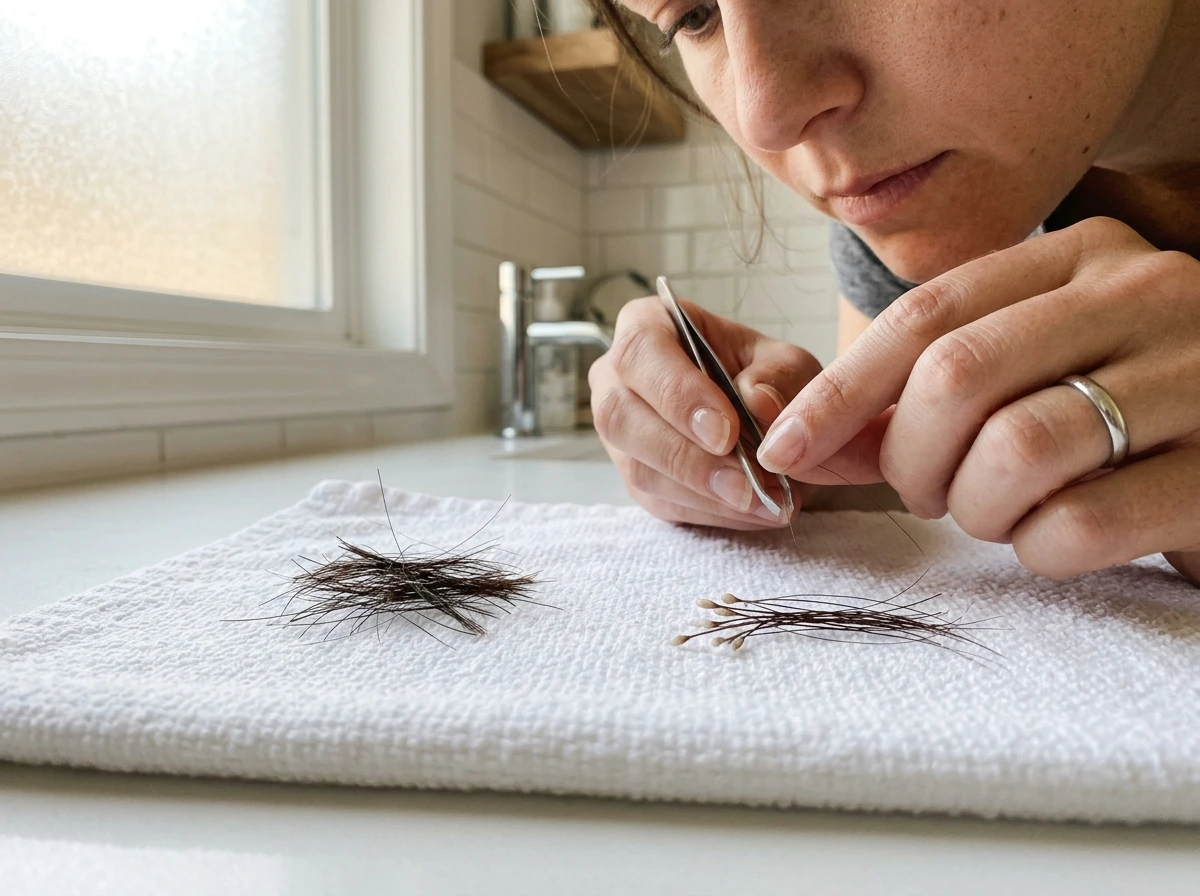
The first thing to do is distinguish shedding from breakage, because these are two completely different problems. Shedding means hairs falling out from the root with a small white bulb at the end. Breakage means hairs snapping somewhere along the shaft, so they're shorter and often uneven. If you're finding lots of shorter, broken-looking hairs with no bulb on your brush or in the shower, breakage is the bigger issue. If you're finding full-length hairs with a white tip, shedding is more likely the culprit.
Common reasons women experience increased shedding
The most common form of sudden, increased shedding in women is telogen effluvium. This is when a stressor pushes a larger-than-normal percentage of hairs into the resting phase at the same time, and then they all shed together a couple of months later. The tricky part is the delay: the shedding often becomes noticeable 6 to 12 weeks after the trigger, which makes it easy to miss the connection. Common triggers include postpartum hormonal shifts (shedding typically starts around 3 months after delivery), major surgery, severe illness, a high fever, extreme calorie restriction or low protein intake, and significant emotional stress.
Thyroid dysfunction and iron deficiency are also frequent contributors in women. Low ferritin (stored iron) in particular is associated with diffuse hair shedding, and many women with hair loss have low-normal iron levels that wouldn't otherwise cause symptoms. Hormonal changes at perimenopause and menopause can also thin hair, partly through reduced estrogen and partly through the relative increase in androgenic influence on hair follicles.
Female pattern hair loss (androgenetic alopecia) is a separate, progressive condition driven by genetics and hormonal sensitivity. It shows up as gradual widening of the part and diffuse thinning at the crown, rather than dramatic daily shedding. It doesn't mean you're losing hair like men do, but it does mean follicles are slowly miniaturizing and producing finer, shorter hairs over time. This type requires a different approach than temporary telogen effluvium.
Common reasons women experience breakage
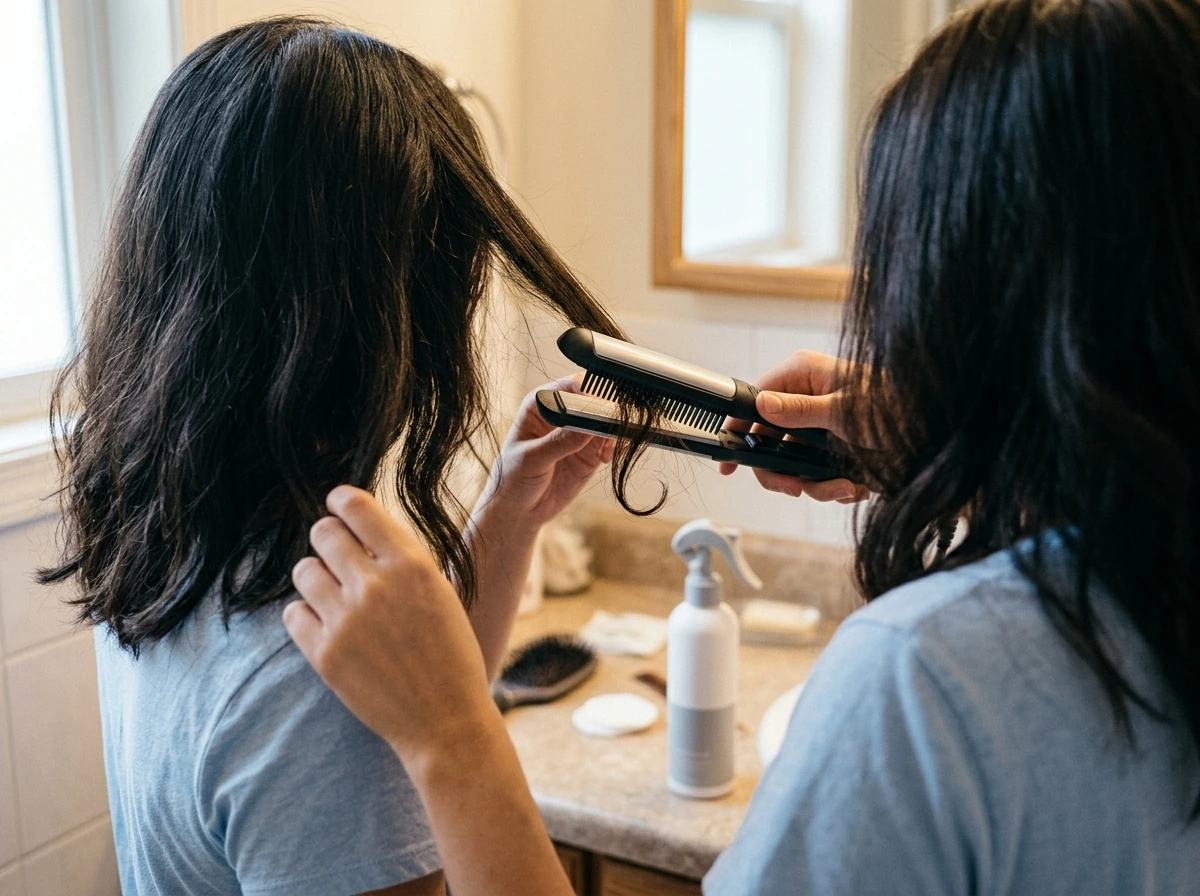
Heat styling is probably the most widespread cause of breakage. Regular use of flat irons, curling wands, and blow dryers at high heat damages the hair shaft, making it brittle and prone to snapping. Once split ends form, the damage travels up the shaft and breakage happens higher and higher if you don't trim. Chemical processing (bleaching, perming, relaxing) compounds the problem significantly. Tight hairstyles that put constant tension on strands, dry hair that's aggressively detangled, and sleeping on rough pillowcase surfaces all contribute to cumulative shaft damage that shortens apparent length.
Your daily and weekly hair-growth routine
This is where most of the practical gains come from, especially if breakage is a significant factor. Think of this routine in three categories: scalp care, gentle handling, and protecting the length.
Scalp care
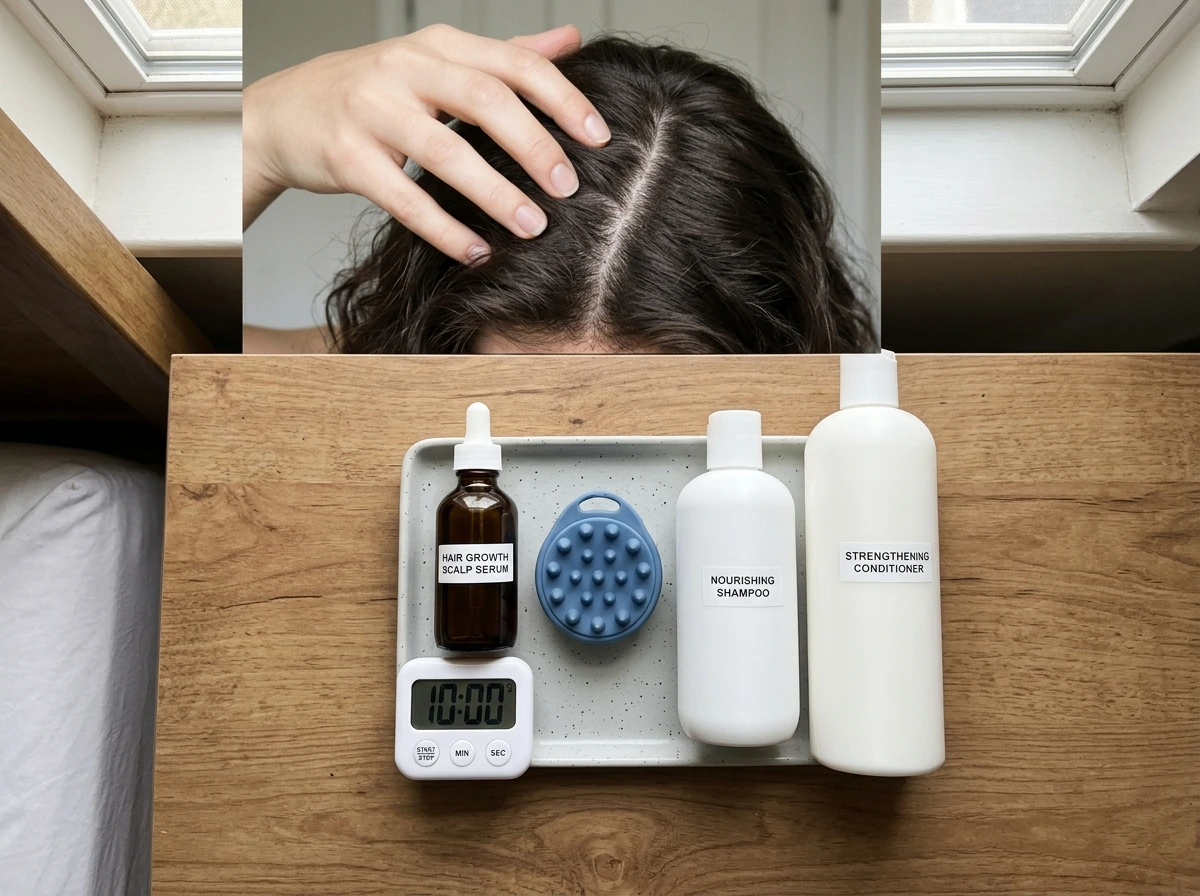
The scalp is where hair growth starts, so it deserves real attention. Washing frequency matters: washing too rarely can allow product buildup and scalp inflammation to interfere with follicle health, while washing too often (especially with harsh shampoos) can strip natural oils and dry out the scalp. Most women do well washing 2 to 3 times per week, adjusting based on oiliness, activity level, and hair texture. If you deal with dandruff or seborrheic dermatitis (flaking, itching, greasy patches), that scalp inflammation is worth treating directly. Ketoconazole 2% shampoo has solid clinical evidence for controlling seborrheic dermatitis and can be used a couple of times per week when this is an issue.
Scalp massage is low-effort and worth doing consistently. A few minutes of firm circular massage at the scalp (either with your fingertips or a simple silicone scalp brush) increases blood flow to follicles and may help with both product absorption and general scalp health. Do it while you're shampooing or as a dry massage before washing.
Gentle handling habits
Reduce heat styling as much as you realistically can. When you do use heat, always apply a heat protectant first and use the lowest effective temperature setting. Air drying is the kindest option, but if you need to blow dry, use a diffuser or low heat with continuous movement. Avoid going to bed with wet or damp hair, which weakens the shaft and makes it much more vulnerable to breakage from friction overnight.
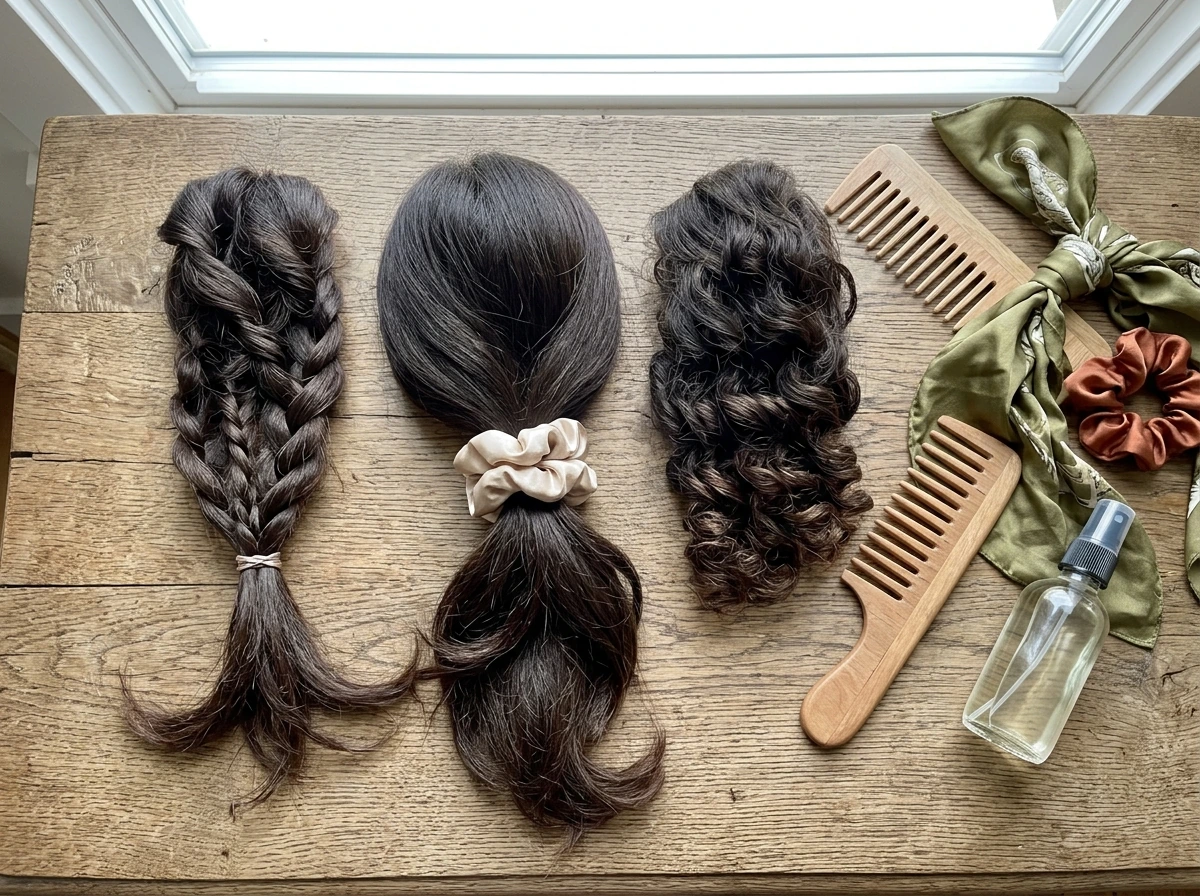
Swapping a cotton pillowcase for a satin or silk one is a small change that makes a real difference in reducing overnight friction and breakage. The same goes for how you tie your hair up: loose styles with fabric-covered ties instead of elastic bands reduce tension breakage, especially at the hairline and nape.
Detangling the right way
Always detangle starting from the ends and working upward toward the roots, not the other way around. Forcing a brush through tangles from root to tip causes massive, unnecessary breakage. Use a wide-tooth comb or a brush designed for wet or detangling work, and always apply a conditioner or detangling product first to reduce friction. Detangling dry or unlubricated hair, particularly curly or coily textures, is one of the fastest ways to lose significant length.
Protective styles
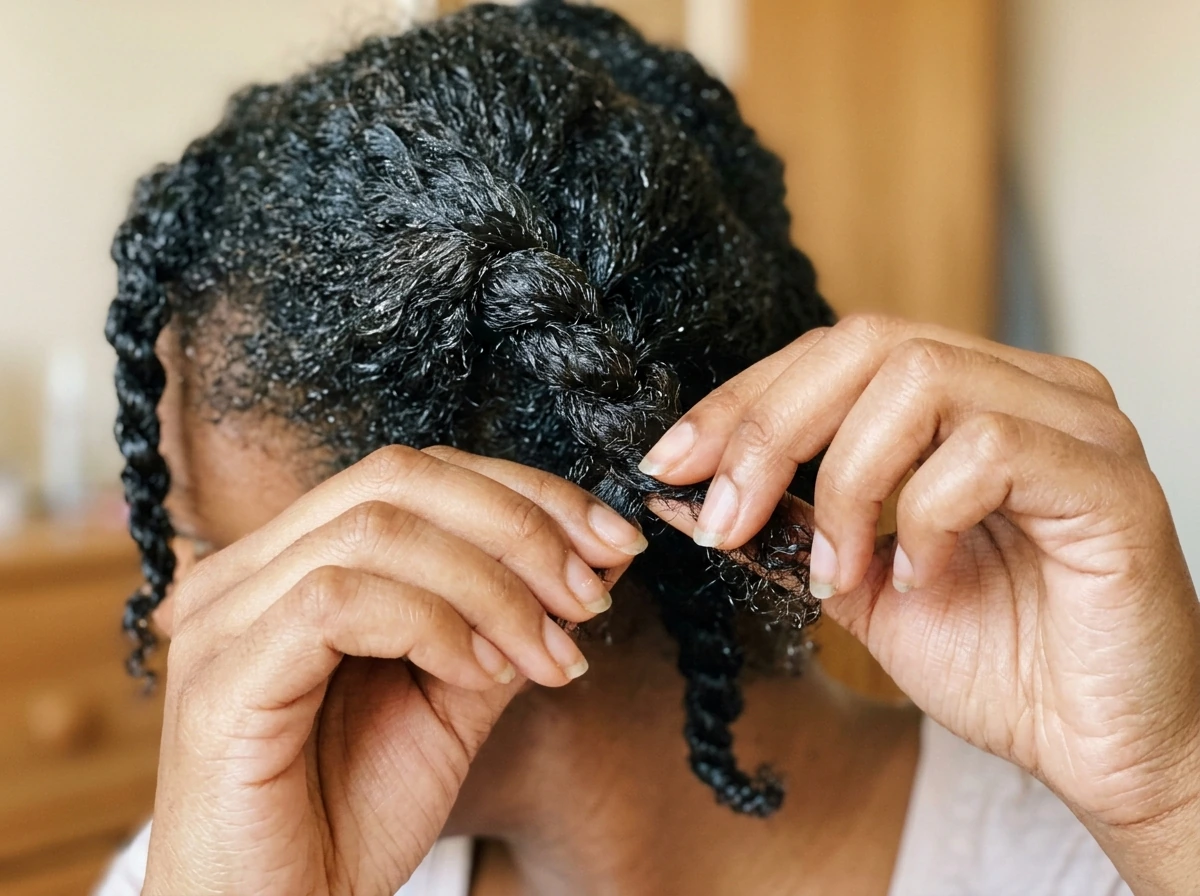
Protective styles like loose braids, buns, or twists that tuck away the ends of your hair can significantly reduce daily wear, breakage, and environmental damage. They're especially useful for longer-length goals because the ends of your hair are the oldest, most fragile part. Just be careful not to make protective styles so tight that they create traction stress at the roots, which can cause a different kind of hair loss (traction alopecia) along the hairline.
Nutrition, supplements, and hormones
Hair follicles are metabolically demanding. They need consistent protein, adequate calories, and a range of micronutrients to stay in the growth phase. When any of these drop significantly, such as during crash dieting, illness, or sustained high stress, the body deprioritizes hair and sheds more. Here's what actually matters.
The nutrients that have the strongest evidence
- Protein: Hair is made of keratin, a protein, so consistent dietary protein is foundational. Aim for adequate daily intake from whole food sources (eggs, fish, legumes, meat, dairy). Severe restriction is a well-documented trigger for shedding.
- Iron and ferritin: Iron deficiency is one of the most common, and most commonly missed, contributors to hair loss in women. Some clinicians use a ferritin threshold of around 40 ng/mL as a benchmark for hair-related evaluation. If you're shedding heavily, it's worth getting a CBC and ferritin test before supplementing, since taking high-dose iron without confirmed deficiency has its own risks.
- Vitamin D: Low vitamin D is frequently found in people with various forms of hair loss, including telogen effluvium and androgenetic alopecia. Getting levels tested is a smart move if you haven't recently.
- B vitamins: Biotin gets a lot of marketing attention, but biotin deficiency is actually rare in people eating a normal diet. More relevant are B12 and folate, which can be low in women who eat limited animal products or have absorption issues. These are worth checking via bloodwork.
- Omega-3 fatty acids: Oily fish, walnuts, and flaxseeds support scalp health and reduce inflammation. A fish oil supplement is a reasonable addition, especially if your diet is low in these foods.
- Zinc: The evidence for zinc supplementation in hair loss is relatively weak unless you have a confirmed deficiency. Don't megadose zinc, as excess zinc can actually cause hair shedding.
Which labs to ask for
If you're experiencing noticeable shedding or thinning and want a clear picture, ask your doctor for a panel that includes ferritin, CBC (complete blood count), TSH (thyroid-stimulating hormone), vitamin D, B12, and folate. Thyroid dysfunction, both hypothyroidism and hyperthyroidism, can cause hair shedding independently of everything else. Getting these results back gives you something concrete to address rather than guessing.
Hormones and life stage
Postpartum and perimenopausal or menopausal hair changes are driven largely by hormonal shifts, especially drops in estrogen. In the postpartum case, shedding usually peaks around 3 months after delivery and resolves on its own within several months for most women, though restoring nutrients depleted during pregnancy (particularly iron) accelerates recovery. Menopausal hair thinning tends to be more persistent and may involve female pattern hair loss, which benefits from specific treatments described below.
Topical treatments and home remedies that actually help
Minoxidil: the best-evidenced topical option
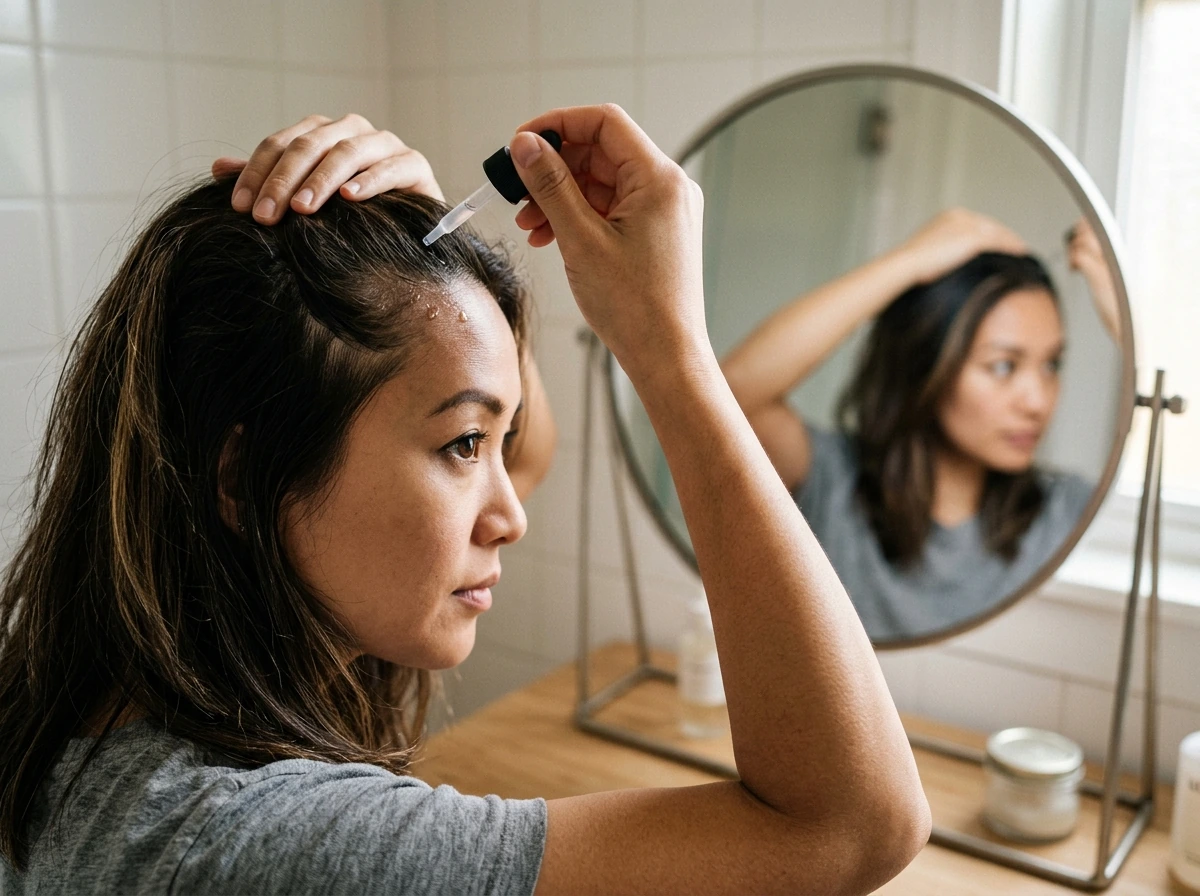
Topical minoxidil is the most well-studied topical treatment for female pattern hair loss and is considered first-line therapy with strong clinical evidence. It comes as a 2% or 5% solution and a 5% foam. For women specifically, both concentrations have shown benefit, with the 5% foam often preferred for ease of use and lower risk of scalp irritation. The honest caveat: about 18% of people starting minoxidil experience a temporary increase in shedding in the first few weeks. This is a known side effect called the shedding phenomenon, and it does not mean the product isn't working. It happens because minoxidil pushes resting hairs into the exogen phase to make way for new growth.
Results from minoxidil typically become visible after 4 to 6 months of consistent daily use, and you need to keep using it to maintain those results. If you stop, the benefit fades over several months. One important note: minoxidil is generally not recommended during pregnancy or breastfeeding. If either applies to you, speak to a doctor before starting.
Microneedling as a complement
Microneedling (dermarolling) involves rolling a device with very fine needles across the scalp to create micro-injuries that stimulate healing and may enhance absorption of topical treatments. Clinical trials comparing minoxidil plus microneedling versus minoxidil alone suggest the combination may produce better results for hair density and diameter than minoxidil on its own. If you're using minoxidil and want to add microneedling, a 0.5 to 1.5 mm roller used once weekly is the typical protocol. Use it on a clean scalp before applying minoxidil, not immediately after.
Scalp-focused home remedies with plausible support
Rosemary oil has attracted growing attention in hair loss research. A small but notable trial compared rosemary oil to 2% minoxidil over 6 months and found comparable results for hair count in androgenetic alopecia, with less scalp itching in the rosemary group. It's not a replacement for minoxidil in significant hair loss, but it's a reasonable, low-risk addition if you prefer a more natural approach or want to complement a treatment routine. Dilute it in a carrier oil like jojoba and massage it into the scalp a few times per week.
Caffeine-based topical shampoos and serums have some preliminary research suggesting caffeine may inhibit the enzyme linked to follicle miniaturization (5-alpha reductase), but the evidence is early and these products aren't a replacement for proven treatments. Peppermint oil, in one animal study, showed promising effects on hair growth, but human evidence is very limited. These options are worth exploring as low-risk add-ons, not as primary strategies.
Coconut oil used as a pre-wash treatment helps reduce protein loss from the hair shaft during washing, which can reduce breakage over time. This doesn't stimulate new growth but protects existing length, which for many women is just as important.
Treatments side by side
| Treatment | What it targets | Evidence strength | Key notes |
|---|---|---|---|
| Topical minoxidil (2% or 5%) | Female pattern hair loss, follicle miniaturization | Strong (first-line therapy) | Takes 4–6 months; maintain use; not for pregnancy/breastfeeding |
| Microneedling (with minoxidil) | Androgenetic alopecia, absorption enhancement | Moderate (improves on minoxidil alone) | Weekly use; clean scalp; 0.5–1.5 mm roller |
| Ketoconazole 2% shampoo | Scalp inflammation, seborrheic dermatitis | Strong for scalp condition | Use 2–3x/week when dandruff/seb derm present |
| Rosemary oil | Androgenetic alopecia | Preliminary (one comparative trial) | Low risk; dilute in carrier oil; complements other treatments |
| Coconut oil (pre-wash) | Hair shaft breakage | Moderate (reduces protein loss) | Helps protect length, not a growth stimulant |
| Iron/ferritin correction | Shedding from deficiency | Strong when deficiency confirmed | Get labs first; don't supplement without confirmed low levels |
Realistic timelines and when to see a dermatologist
Here's what a realistic progression looks like. If you start addressing breakage through handling changes today, you'll likely notice less hair on your brush within 2 to 4 weeks. If you're dealing with telogen effluvium and address the trigger (fix iron deficiency, manage stress, recover from illness), shedding typically slows around the 3-month mark after the trigger is resolved. But even once shedding stops, visible fullness takes much longer to return because hair is only growing at about half an inch per month. Full recovery of prior density can take 12 to 18 months in some cases.
If you start topical minoxidil for pattern hair loss, plan for an honest 4 to 6 months before you see meaningful changes in density. Progress photos taken in consistent lighting once a month are the most useful way to track changes you might otherwise miss day to day.
Signs it's time to see a dermatologist
Some situations go beyond what a routine and supplements can address on their own. See a dermatologist or trichologist if you notice any of the following:
- Shedding that's still heavy after 6 months with no clear trigger or improvement
- Sudden, rapid hair loss over days or weeks (patchy loss, for example, can indicate alopecia areata)
- Scalp symptoms alongside hair loss: pain, burning, visible scarring, redness, or persistent flaking that doesn't respond to antidandruff shampoos
- Clear pattern thinning at the crown or along the part that's progressing over months
- Hair loss that followed a new medication (this is worth mentioning to your prescribing doctor too)
- No improvement after 4 to 6 months of consistent, well-executed effort on routine, nutrition, and an appropriate topical treatment
A dermatologist can perform a clinical hair pull test, look at your scalp with a dermoscope, order targeted labs, and diagnose scarring versus non-scarring forms of hair loss, which require very different treatment. Pattern hair loss in particular responds well to prescription options like oral spironolactone or low-level laser therapy when topical minoxidil alone isn't enough. Getting an accurate diagnosis early saves a lot of time and guesswork.
Your next steps starting today
Start by figuring out whether you're dealing primarily with shedding, breakage, or both. Look at the hairs you're losing: is there a bulb at the end, suggesting shedding from the root? Or are they shorter and jagged, pointing to breakage? From there, build your routine around the likely cause, starting with the things that cost the least and are the lowest risk: handling changes, scalp massage, reducing heat, improving detangling technique, and getting your nutrition basics solid. If you're experiencing significant shedding, book a blood panel that includes ferritin, TSH, and vitamin D before loading up on supplements.
If you want more targeted information on growing out a specific style or length, managing the transition period, or which <a data-article-id="F2B37A77-5AC5-4D1E-9860-E20575A618E9">hairstyles support length retention</a> while you grow, there's more specific guidance elsewhere on this site. If you are trying to figure out what hairstyles grow your hair, it starts with styles that protect the ends and reduce tension at the roots. The core takeaway here is that <a data-article-id="F2B37A77-5AC5-4D1E-9860-E20575A618E9">growing longer, fuller hair</a> is genuinely achievable for most women. It just takes the right diagnosis, consistent habits, and enough patience to let slow biology do its work.
- Assess whether hair loss is shedding (bulb present) or breakage (no bulb, shorter strands)
- Identify any likely triggers: recent illness, postpartum period, major stress, dietary restriction, or new medications
- Book a blood panel (ferritin, CBC, TSH, vitamin D, B12, folate) if you've been shedding for more than 8 to 12 weeks
- Start a gentle handling routine: reduce heat, use protective styles, detangle from ends up, switch to a satin pillowcase
- Add scalp massage daily and consider ketoconazole shampoo if scalp inflammation or dandruff is present
- Address confirmed nutritional deficiencies through diet first, supplements second
- Consider topical minoxidil if female pattern hair loss is likely, with realistic 4 to 6 month expectations
- Take monthly progress photos and give any strategy at least 3 to 6 months before evaluating
- See a dermatologist if shedding is sudden, patchy, accompanied by scalp symptoms, or not improving after 6 months
FAQ
How fast can I realistically grow my hair if I start today?
Yes, but the expectations should match the biology. Even with perfect care, hair typically gains only about 1 to 1.25 cm per month, so the biggest “fast” win is reduced breakage and less visible thinning, not dramatic length growth in a few weeks.
What’s the easiest way to tell if I’m shedding or breaking?
A good rule is to base your routine on what you can observe, not what you assume. If you see full-length hairs with a white bulb at the end, that points to shedding from the root, while lots of shorter, uneven pieces with no bulb points to breakage.
Can female pattern hair loss look like “shedding” at first?
It can be, but the key is the pattern. If your part is gradually widening and thinning is focused at the crown while daily shedding is not dramatically elevated, that’s more consistent with female pattern hair loss than telogen effluvium.
What should I do if minoxidil makes my shedding worse at the start?
For minoxidil, take “temporary shedding” seriously but interpret it correctly. If you notice an initial increase in shedding in the first few weeks, that can be part of the shedding phenomenon, and you usually decide to continue rather than stop unless you have significant irritation or other concerning symptoms.
Will my hair growth results last if I stop treatment?
Use it consistently, because results depend on ongoing application. With female pattern hair loss, you generally need to keep using minoxidil to maintain gains, and stopping often leads to fading of benefits over the following months.
Is minoxidil safe during pregnancy or breastfeeding?
If you are pregnant, trying to conceive, or breastfeeding, avoid starting minoxidil without medical guidance. A clinician can help you balance risks, timing, and safer alternatives while your hormones and hair cycle normalize.
How should I fit minoxidil into my shampoo schedule, especially if I use ketoconazole?
You should be able to wash regularly while using minoxidil, but many people find it easier to follow a simple schedule. Apply to a dry scalp, let it dry fully, and avoid washing immediately after; if you use a medicated ketoconazole shampoo, ask your clinician about spacing so you do not reduce tolerability or interfere with routine.
What are the main mistakes to avoid with microneedling?
Microneedling is not the same as at-home skincare, so technique and hygiene matter. Stick to gentle, once-weekly sessions at the typical small roller size mentioned in your routine, use it on a clean scalp, and pause if you have irritation, infection, or active scalp conditions.
Do supplements help if my diet is the real problem?
A more “protein and calories first” approach reduces uncertainty. Crash dieting and low protein can worsen shedding, and if you do supplements without improving food intake, you may not see changes even if labs look okay.
If I suspect a deficiency, which labs should I request?
Yes, and the value is in checking for common deficiencies and hormone issues that cause shedding. Ask for a panel that includes ferritin and thyroid testing (TSH), plus vitamin D and CBC, so you know what to address rather than guessing.
Will treating dandruff help hair growth or just reduce flaking?
If you already have a clear scalp problem like dandruff or seborrheic dermatitis, treating inflammation can improve the environment for follicles. Ketoconazole is generally used a couple of times per week for that condition, but if you have frequent irritation, you may need a tailored plan.
Can coconut oil “grow” new hair, or is it mainly for strength?
It depends on why you’re losing hair. If breakage is the main issue, coconut oil may help reduce protein loss from washing and make your hair feel stronger, but it does not replace treatments that address root shedding or follicle miniaturization.
What’s the best way to measure progress without getting discouraged?
Track changes in two ways: shedding volume (for example, hair caught in the shower and brush) and visible density (photos). Because growth is slow, monthly progress photos in the same lighting are more reliable than daily judgment.
How do I connect my hair shedding to something that happened months ago?
Not necessarily. Hair loss can be triggered by an event and show up later, often with a delay, so it helps to mark possible triggers 2 to 4 months earlier such as postpartum timing, major illness, surgery, fever, or a restrictive diet.
When should I stop self-treating and see a dermatologist?
You should get evaluated promptly if you notice scarring, smooth shiny patches, sudden patchy loss, pain or burning of the scalp, or rapidly progressive thinning. Those patterns can indicate non-scarring or scarring types that need specific treatment.
Next Articles
Hair How to Grow: Step by Step Plan for Longer, Fuller Growth
Step-by-step plan to grow longer, fuller hair by fixing breakage, scalp health, shedding causes, and safe add-ons.
How to Grow Hair for a Wedding: Fast Plan in Weeks
Fast, realistic plan to grow wedding hair in weeks with scalp care, nutrition, breakage prevention, and trackable steps.
Best Hair Styles to Grow Hair: Protect Growth and Length
Best hair styles to grow hair by protecting strands, reducing breakage, easing scalp irritation, and supporting length g