
Yes, you can grow your hairline back, but how much you can recover depends almost entirely on what's causing it to recede in the first place. If your hairline is pulling back because of tight styles, braids, or traction, there's a genuinely good chance of regrowth if you catch it early and change what you're doing. If it's androgenetic alopecia (male pattern baldness), natural remedies can slow things down but you'll likely need minoxidil or finasteride to actually reverse it. The first step isn't buying a product. It's figuring out which situation you're actually in.
How to Grow Your Hairline Back for Black Men Naturally

Marcus Holloway
25 Jun 2026

Hairline recession vs thinning: what's actually happening
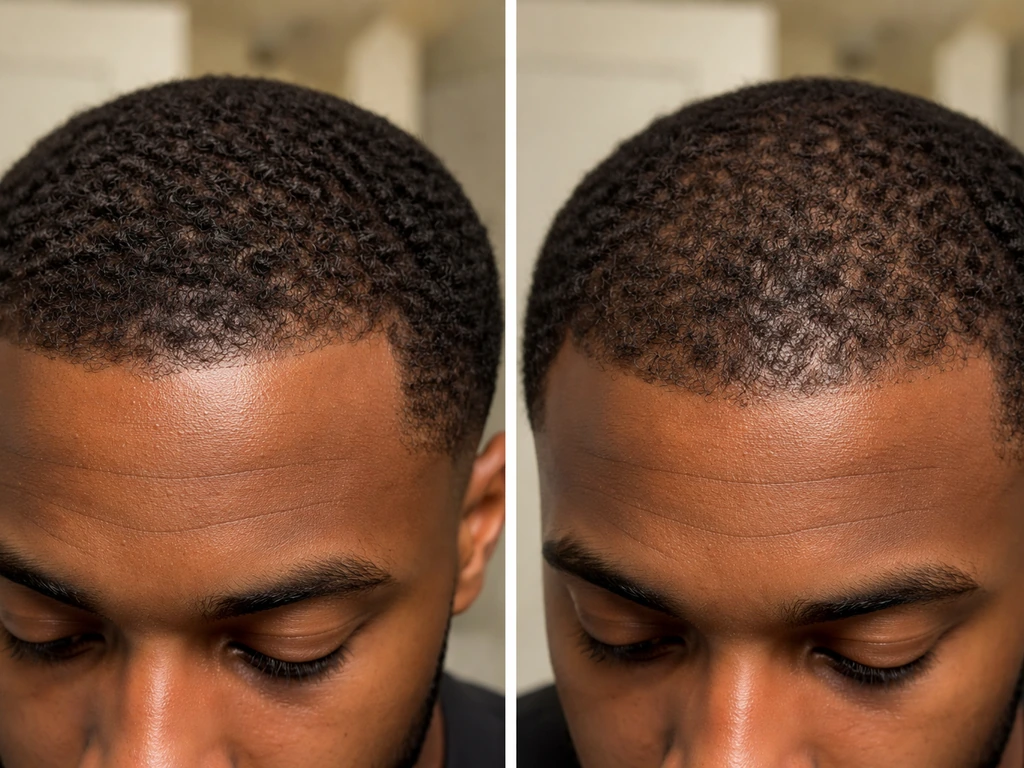
Not all hairline loss is the same, and treating the wrong cause wastes months of effort. There are four main things that cause hairline recession in Black men, and they look similar from the outside but require completely different responses.
Androgenetic alopecia (AGA) is the classic male pattern baldness. It's driven by a hormone called DHT that gradually miniaturizes your hair follicles over time, making each hair thinner and shorter until nothing grows. About half of men experience it by age 50. The pattern typically starts with temple recession or a thinning crown, and the follicles themselves shrink. This is genetically predetermined, meaning no amount of scalp massage or castor oil will reverse the underlying biology. It can be slowed or partially reversed, but it needs the right tools.
Traction alopecia is extremely common in Black men and it's frequently mistaken for male pattern baldness. It happens when repeated pulling from tight braids, locs, waves brushing, durag compression, or other tension damages the follicles along the marginal hairline, especially the front, temples, and sides. Early signs include small bumps or pimples at the hairline, broken hairs, and gradually reduced density along the edges. If you catch it before the follicles scar over, regrowth is very possible. If traction continues for years, it can progress to permanent scarring and the window closes.
Telogen effluvium is diffuse shedding triggered by stress, illness, crash dieting, or nutritional deficiency. It doesn't usually produce a crisp receding-hairline pattern, but it can make an already-thin hairline look worse. The good news: it's not permanent. Cleveland Clinic notes that telogen effluvium often improves and resolves once the cause is addressed, with new growth after a shedding period that can last months. Once you address the trigger, the follicles cycle back into growth and shedding typically stops within a few months.
Scalp conditions like seborrheic dermatitis or tinea capitis can also affect the hairline. Seborrheic dermatitis produces greasy yellow scales, itching, and redness along the hairline and doesn't usually cause permanent loss, but untreated inflammation can worsen whatever else is going on. Tinea capitis (scalp ringworm) causes patchy, scaly loss and needs a prescription oral antifungal, not a home remedy. If you're seeing scale, patches, or unusual circular areas of loss, get it checked before assuming it's pattern baldness.
The practical test: look at where and how the loss is happening. A temple and crown pattern without broken hairs or bumps suggests AGA. Broken hairs and pustules along your edges after years of braids or tight styles points to traction. Patchy circular loss with scale is a red flag for a fungal or inflammatory cause. If you're unsure, a dermatologist can do a dermoscopy exam, which gives a clear picture of what's happening at the follicle level.
Hair-growth basics for Black hair: follicles, scalp health, and cycles
Every hair on your scalp goes through a growth cycle: anagen (active growth, lasting 2 to 7 years), catagen (transition, a few weeks), and telogen (resting/shedding, about 3 months). For regrowth to happen at your hairline, dormant or damaged follicles need to re-enter the anagen phase. The question is whether those follicles are still capable of doing that, which comes back to the cause.
Black hair has a naturally elliptical, tightly coiled follicle shape that makes the hair shaft more prone to breakage, especially at points of friction or tension. This isn't a weakness, it's just biology, but it does mean that the mechanical stress from tight styles or dry, brittle hair snapping off at the hairline can mimic the appearance of hairline recession when it's actually breakage. If you're seeing short, stubbly hairs along your edges rather than a completely bare scalp, that's a good sign. Stubble means the follicle is still active.
Scalp health is the foundation of everything. A healthy scalp has good blood flow, balanced sebum production, no chronic inflammation, and follicles that aren't being physically compressed or chemically irritated. Anything that disrupts those conditions, whether it's chronic dandruff inflammation, tight cap bands, chemical relaxers applied too close to the hairline, or daily heat, creates an environment where the follicle struggles to produce a strong hair shaft. The hairline follicles are the most exposed and most often the first to show the damage.
Natural and evidence-based options to grow your hairline back

If your hairline recession is traction or breakage-related, the most powerful thing you can do is remove the cause and support the scalp while it recovers. If it's AGA, you'll need to combine a scalp-friendly routine with something that actually targets follicle miniaturization. Here's what the evidence actually supports.
Scalp massage
Daily scalp massage increases blood flow to the follicles and may support anagen phase duration. Use your fingertips (not nails) and work around the hairline for 5 to 10 minutes daily. You can do this dry or with a light oil. It costs nothing and there's no real downside. It won't reverse AGA on its own, but it's a smart addition to any regrowth routine. If you're specifically trying to figure out how to grow hair on hairline, remember scalp massage is only one supportive step and it works best when you match the approach to the cause of your hairline loss.
Topical minoxidil (most evidence-backed option)
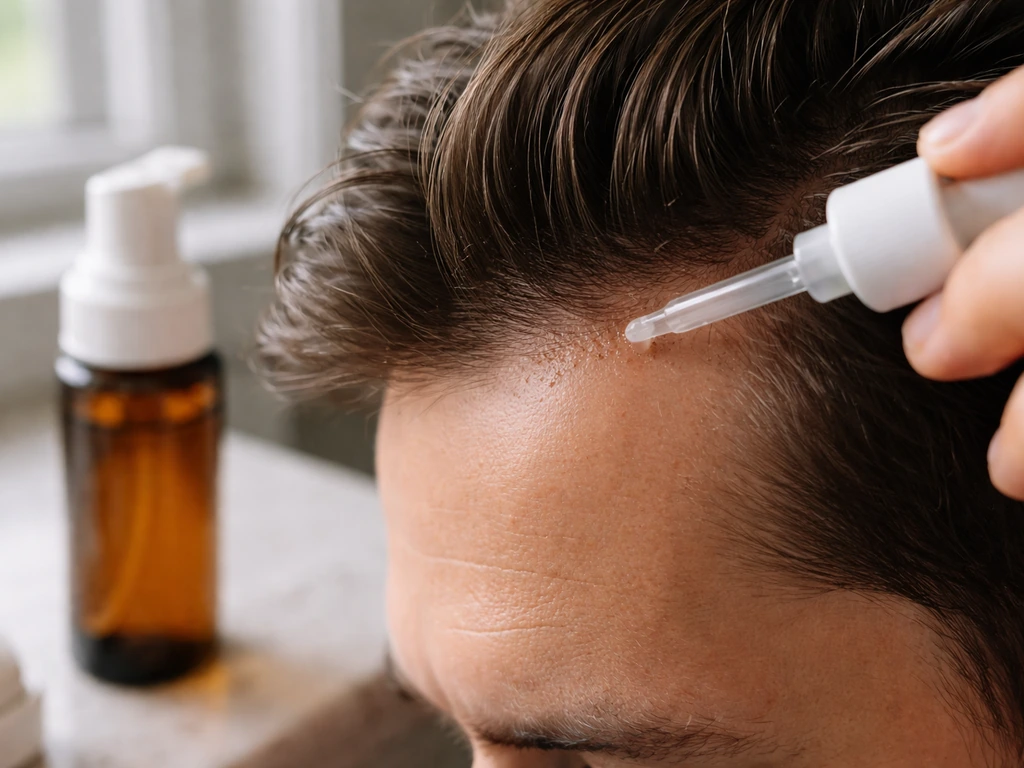
For AGA or any situation where follicle miniaturization is happening, minoxidil is the most evidence-backed over-the-counter option available. The standard dosing for men is 1 mL of 2% or 5% solution applied twice daily, or the foam equivalent. Studies show that results can start appearing around 2 months with consistent twice-daily use, though meaningful density improvements typically take 4 to 6 months. You apply it directly to the scalp (not the hair), and you have to keep using it, because if you stop, any gains gradually reverse over several months. It's available without a prescription and it's where most dermatologists start.
Rosemary oil
Rosemary oil has gotten a lot of attention, and one randomized trial found it performed comparably to minoxidil 2% for hair count at 3 and 6 months. That's genuinely interesting, but don't overread it. The comparison was against the weaker 2% concentration, and the evidence base is smaller and less consistent than the decades of data behind minoxidil. It's a reasonable thing to try, especially if you want to start with something natural, but dilute it in a carrier oil (like jojoba) before applying directly to the scalp, since undiluted rosemary oil can cause irritation. A few drops in a teaspoon of carrier oil massaged into the hairline a few times a week is a practical starting point.
What to avoid at the hairline
- Heavy petroleum-based edge control products that can clog follicles and cause inflammation over time
- Alcohol-heavy gels applied daily to an already stressed hairline
- Tight bonnets, durags, or wave caps worn for extended hours with significant compression on the edges
- Chemical relaxers or dye applied directly onto the hairline without a protective barrier
- Scratching or picking at the scalp if you have flaking or bumps, which worsens inflammation
Washing and moisture routine
Cleanse the scalp (not just the hair) once or twice a week with a gentle, sulfate-free or low-sulfate shampoo to remove product buildup and sebum without stripping protective oils. Follow with a moisturizing conditioner, focusing on the hair shaft rather than the scalp. For the hairline specifically, keep the area moisturized with a lightweight leave-in or oil to reduce brittleness and breakage. Dry, brittle edges break off at the point of tension, which makes the hairline look even thinner.
Nutrition, supplements, and lifestyle for regrowth
Hair is one of the body's lower-priority tissues, meaning it gets nutrients after your vital organs are taken care of. If your diet is lacking in key building blocks, your follicles will be the first to suffer. Here's what actually matters for hair regrowth, in order of importance.
Protein
Hair is made of keratin, which is a protein. If you're not eating enough protein, your body will slow hair production before it does anything else. Aim for at least 0.7 to 1 gram of protein per pound of body weight daily from whole food sources like eggs, chicken, fish, legumes, and Greek yogurt. This isn't about supplements, it's about consistent daily intake.
Iron
Iron deficiency is one of the most common nutritional drivers of hair shedding and slow regrowth. It's worth getting a blood test (specifically serum ferritin, not just standard hemoglobin) to check your levels. A ferritin level below 30 ng/mL is often associated with hair loss even if you're not technically anemic. Red meat, leafy greens, lentils, and fortified cereals are good sources. If your levels are low, your doctor may recommend a supplement.
Vitamin D
Vitamin D deficiency is widespread, particularly in men with deeper skin tones who produce less D from sun exposure. Low vitamin D has been linked to hair thinning and slower growth. A simple blood test will tell you where you stand. Supplementing with 2,000 to 4,000 IU daily is a common approach if you're deficient, but get tested first so you're not guessing.
Zinc and omega-3 fatty acids
Zinc plays a role in hair follicle repair and oil gland function. Good food sources include oysters, pumpkin seeds, and beef. Zinc supplements can help if you're deficient, but don't megadose, because too much zinc can actually interfere with iron absorption and make things worse. Omega-3 fatty acids from fatty fish, walnuts, or a fish oil supplement support scalp circulation and reduce the low-grade inflammation that can hinder follicle recovery.
Lifestyle factors that matter
- Chronic stress elevates cortisol, which can push follicles into the resting phase and trigger diffuse shedding. Managing stress isn't just advice, it's physiologically relevant to hair cycling.
- Poor sleep disrupts growth hormone release, which peaks during deep sleep and supports tissue repair including hair follicles.
- Smoking reduces blood flow and has been associated with accelerated hair loss in multiple studies.
- Crash diets and severe caloric restriction are a fast way to trigger telogen effluvium. Eat enough, prioritize protein, and cut deficit calories slowly if you're trying to lose weight.
Scalp care and protective practices: traction, breakage, and styling
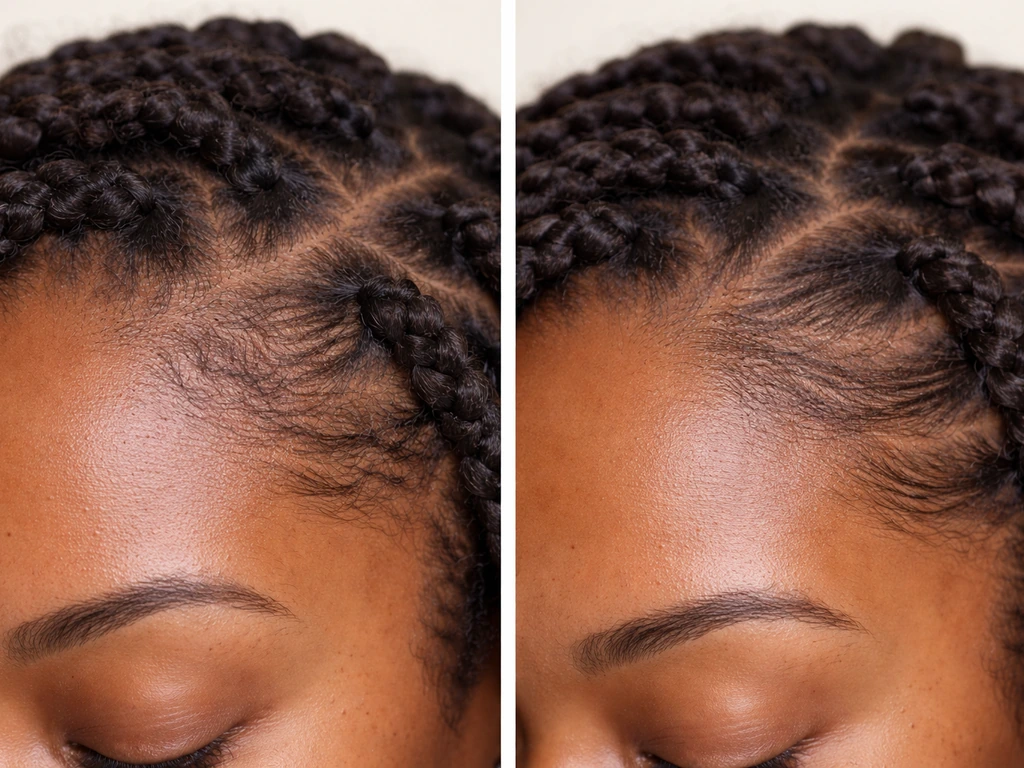
Traction alopecia is arguably the most common and most preventable cause of hairline loss in Black men, and the fix starts with an honest look at your styling habits. The hairline follicles are the most vulnerable because they're the ones under the most tension when hair is braided, loc'd, or pulled back.
If you wear braids or locs, ask your stylist to leave the edges out or to install them with less tension, especially around the temples and front hairline. Pain during installation or for days afterward is a sign that the tension is too high. Those small bumps (folliculitis) that sometimes appear along your edges after installation are early warning signs that the follicle is being stressed. That's your cue to change something before the damage becomes permanent.
Give your hair a break between protective styles. A week or two of wearing your hair out between installations lets the hairline follicles decompress. When you're not in a style, keep the edges moisturized and avoid tight durags or wave caps for extended periods, especially overnight.
For men who brush for waves, the edges along the hairline can be over-brushed, which causes friction breakage. Use a softer brush on the hairline specifically, and don't brush aggressively on dry hair. Dampening the hair slightly before brushing reduces the mechanical stress significantly.
If you use chemical relaxers, resist the urge to apply product directly to the hairline. Use a petrolatum barrier along the edges before any chemical service to reduce chemical burns and irritation. Heat from blow dryers and flat irons applied repeatedly to already-fragile edges will accelerate breakage. If you're in a regrowth phase, lay off direct heat on the hairline entirely and let air drying do the work.
If you're dealing with seborrheic dermatitis along the hairline, an anti-dandruff shampoo containing zinc pyrithione, selenium sulfide, or ketoconazole used 2 to 3 times per week will bring the flaking and inflammation under control. This matters because chronic scalp inflammation is its own barrier to regrowth, and you won't make progress on the hairline if the scalp is constantly irritated.
When to consider medical treatments and a dermatologist
Home routines and natural approaches have a real ceiling. If you want the best chance of regrowth, focus on proven steps for how to grow hairline at home and match them to the cause of your hairline loss. If you've been consistent for 3 to 4 months with traction elimination, scalp care, and nutrition and you're not seeing any improvement, it's time to get a professional involved. There are also situations where you should see a dermatologist immediately, not after months of trying things at home.
Go see a dermatologist if:
- Your hairline has been receding steadily for more than a year regardless of styling changes
- You're seeing smooth, shiny patches of scalp with no hair stubble (possible scarring alopecia)
- There's significant scaling, crusting, or circular patches that look different from typical pattern loss
- You have painful bumps, open sores, or significant inflammation at the hairline
- You're under 30 and experiencing rapid recession that seems to be accelerating
Minoxidil and finasteride
For AGA specifically, the two most evidence-supported medical options are topical minoxidil (which you can start without a prescription) and oral finasteride (which requires a prescription). Finasteride works by blocking the conversion of testosterone to DHT, directly targeting the hormone that drives follicle miniaturization. It's effective, but it comes with potential side effects that your doctor needs to discuss with you, including sexual side effects (ejaculation problems), breast tenderness or enlargement, and mood changes in some reports. These aren't universal, but they're real and they're on the FDA label. Don't start finasteride without a proper conversation with a doctor about your full picture.
PRP (platelet-rich plasma)
Platelet-rich plasma injections involve drawing your own blood, concentrating the growth-factor-rich plasma, and injecting it into the scalp. A 2023 systematic review and meta-analysis of randomized clinical trials found PRP produced statistically significant improvements in hair density at both 3 and 6 months compared to placebo. It's not a first-line treatment and it's not cheap, but it's a genuine option for men who haven't responded to minoxidil or want to combine approaches. It's done in a dermatologist or hair specialist's office.
Hair transplant surgery
If the hairline recession is permanent and severe, follicular unit extraction (FUE) transplants can redistribute follicles from the back of the scalp to the hairline. This is a surgical procedure with real cost and recovery time, and it's typically considered after other options have been tried. It's also not a solution for active AGA without concurrent medical management, because the remaining native hairs will continue to miniaturize without treatment.
Timeline, expectations, and how to track progress

This is where most people get discouraged, because hair grows slowly and the timeline is not satisfying. But knowing what to expect week by week keeps you from abandoning something that's actually working.
| Timeframe | What you might notice | What to do |
|---|---|---|
| Weeks 1 to 4 | Reduced shedding, less scalp irritation if inflammation was present, no visible regrowth yet | Stay consistent, photograph hairline under the same lighting |
| Months 2 to 3 | Fine, wispy new growth along the hairline edges (especially if traction-related) | Continue routine, compare photos monthly, note any new bumps or irritation |
| Months 4 to 6 | More visible density improvement, thicker re-emerging hairs if using minoxidil | Assess whether progress justifies continuing; consult derm if no change at all |
| Months 6 to 12 | Meaningful regrowth if follicles were still active; plateau if AGA is driving loss | Evaluate whether to add or adjust medical treatments with a professional |
| 12+ months | Full picture of what's recoverable becomes clear; maintenance becomes the goal | Maintain whatever is working; revisit with dermatologist annually |
The best way to track progress is photos, not the mirror. Take a photo of your hairline from the same angle, in the same lighting, once every two to four weeks. Daily mirror checks are psychologically brutal and won't show you anything useful. Photos over months will actually show you what's changing. Some people also use a ruler or trace their hairline lightly on a photo to mark the exact point of recession so they have an objective reference.
One thing worth saying directly: if your hairline recession is being driven by androgenetic alopecia, natural remedies alone probably won't reverse it. They may slow the progression, which is genuinely valuable, but if you want real regrowth you're likely looking at minoxidil at minimum, and possibly finasteride or a procedure down the line. That's not a failure, it's just biology. The men who make the most progress are honest about which category they're in and match their approach to the actual cause rather than hoping a scalp serum will do what DHT blockers need to do.
If traction or breakage is your issue, the prognosis is genuinely better with home changes alone, especially if you act early. The same goes for hairline loss that's connected to nutritional deficiencies or telogen effluvium after a stressful period. Address the root cause and give it real time, and many men do see meaningful recovery. Patience isn't passive here: you're doing active work every week and the follicle is responding on its own timeline.
FAQ
How long should I give traction changes before I expect regrowth at my hairline?
If it is traction-related and you stop the tension early, shedding and edge inflammation often calm within weeks, but visible density usually takes 3 to 4 months. If you see no change by 4 months, reassess the cause, and ask a dermatologist to check for scarring or androgenetic alopecia mixed in.
How can I tell if my “receding” hairline is actually breakage from dry hair?
Look for short, stubbly hairs along the edges and a gradient of thickness rather than a completely smooth, bare scalp line. Breakage often improves quickly once you reduce friction, moisturize the hairline, and stop aggressive brushing, while true follicle loss progresses even if you baby the hair shaft.
Is minoxidil safe to use if I have sensitive skin or dandruff?
Many people do well, but minoxidil can irritate some scalps. If you have dandruff or seborrheic dermatitis, get that under control first with an anti-dandruff shampoo plan, then start minoxidil on a steady schedule. If burning, severe redness, or crusting happens, stop and talk to a dermatologist.
Can I use rosemary oil and minoxidil together?
You can combine them in many cases, but keep rosemary diluted and introduce changes one at a time so you can identify irritation. Use rosemary a few times per week and reserve minoxidil for daily use, applying minoxidil directly to the scalp where it matters, not the hair shaft.
What’s the difference between improving hair appearance and true regrowth?
True regrowth means dormant or miniaturized follicles produce longer, denser hairs over time, so your photos from the same angle and lighting gradually show a less recessed hairline. Appearance-only changes, like better styling, reduced breakage, or less shedding, can look better fast but usually do not shift the hairline boundary after a couple of months.
Should I stop taking finasteride if I feel side effects?
Do not just stop abruptly without speaking to the prescriber, but contact them promptly if you notice sexual side effects, breast tenderness, or mood changes. Your clinician can adjust the plan, review your risk factors, and discuss options like staying on another dose, switching strategy, or reassessing whether AGA is the actual diagnosis.
Will platelet-rich plasma (PRP) work if I’m not using minoxidil or finasteride for AGA?
PRP can help some people, but it is not typically considered a first-line replacement for medical therapy in active androgenetic alopecia. If miniaturization from DHT is ongoing, many clinicians recommend pairing PRP with an evidence-based plan, or at least confirming your diagnosis before spending on injections.
Do I need a blood test for hairline loss, or can I just supplement?
Hair responds best when you correct the specific deficiency, so blind supplementation often wastes money and sometimes causes problems, like too much zinc interfering with iron. If shedding or slow regrowth is persistent, ask for serum ferritin and vitamin D, and consider other tests your clinician recommends based on your symptoms.
What shampoo routine works best for hairline regrowth when I wear braids or locs?
Aim for gentle cleansing 1 to 2 times per week, focusing on the scalp and hairline area rather than just the lengths. If you use heavy products or you itch or flake, an anti-dandruff shampoo 2 to 3 times per week can reduce inflammation, but avoid over-stripping by keeping conditioner on the hair shaft only.
How can I safely wear protective styles without worsening my hairline?
Request less tension around the front and temples, and treat pain or follicle bumps after installation as an early stop sign. Build recovery time into your schedule by giving your edges a break between installations and avoid tight durags or wave caps for long stretches, especially overnight.
When should I see a dermatologist instead of trying home methods for months?
Get evaluated sooner if you have patchy areas, circular scaly loss, painful bumps, pus, rapidly worsening recession, or signs of scarring. Also see a dermatologist if traction-free changes and scalp care for about 3 to 4 months do not improve your hairline, since you may have mixed causes.
If I get a hair transplant, will my hairline keep receding?
It depends on whether the underlying process is active. If androgenetic alopecia is still miniaturizing follicles, transplanted hairs can survive while the surrounding native hairs continue to thin, creating a changing look. That’s why medical management is often discussed alongside surgery.
Next Articles
How to Grow Hair on Hairline: Fix Causes and Regrow
Step-by-step plan to regrow/thicken hairline hair by fixing causes, scalp care, topical options, and nutrition.
How to Grow Back a Thinning Hairline: Step-by-Step
Step-by-step plan to regrow a thinning hairline with causes, scalp care, targeted topicals, nutrition, and realistic tim
Tips on How to Grow Your Hair Out: A Step by Step Guide
Step-by-step tips to grow hair out: stop breakage, build scalp routine, nutrition, safe actives, and track progress.