
Growing thick, long hair as a guy is genuinely achievable for most men, but it takes longer than you think and requires more than just skipping haircuts. For a concise, practical resource on the best way to grow hair male, see this guide. The realistic path combines consistent scalp care, smart nutrition, breakage prevention, and, if genetics are working against you, some evidence-backed topical or medical support. Most men see meaningful length progress in 6–12 months and noticeable density improvements in 3–6 months when they follow a structured routine. This guide gives you everything in one place: the biology, a goal-setting checklist, daily and weekly routines, product guidance, and a clear-eyed look at what minoxidil, finasteride, and other clinical options actually do. If you're specifically aiming for a flow with thick hair, see our focused guide on how to grow a flow with thick hair for targeted styling, care, and timeline advice. For a step-by-step plan and routines, see our detailed guide on how to grow long hair for a guy.
How to Grow Thick, Long Hair for Men: Step-by-Step Guide

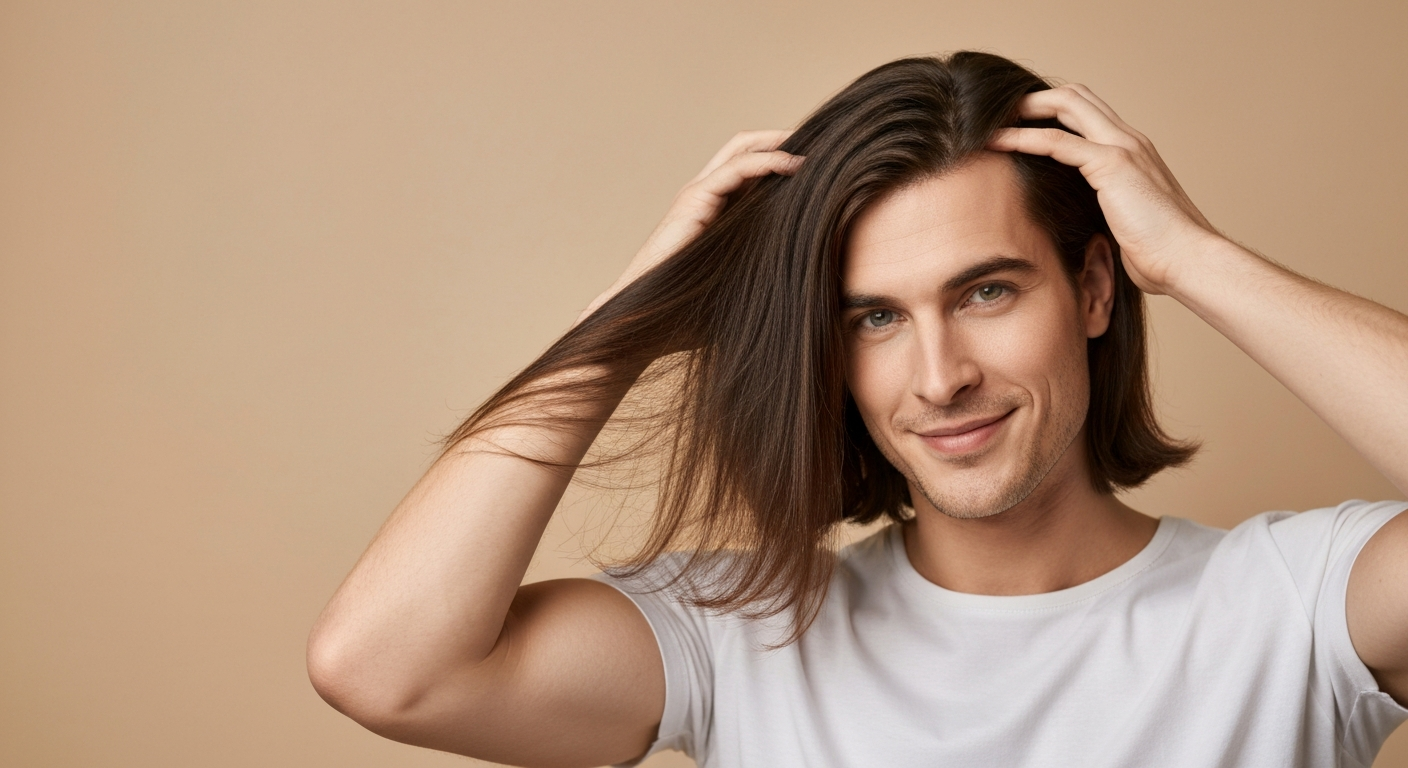
Who this guide is for and what to expect
This is written for adult men at any stage of the growing-out process. Maybe you have naturally thick hair and just want length. Maybe your hair is thinning and you want to recover density before growing it out. Maybe you're somewhere in between, noticing that your hair looks less full than it did a few years ago. All three situations are covered here. What you should not expect is a magic shortcut. Hair grows roughly 1 cm per month on average, and nothing currently available changes that rate dramatically. What you can do is keep more of what you grow, protect it from breaking off, and support the follicles that are underperforming. That's where most of the real-world gains come from.
If you're dealing with rapid shedding, patchy loss, or a receding hairline that's moving quickly, this guide will point you toward the right professional options, but it won't replace a dermatologist. The goal here is to give you a practical, honest foundation, not to oversell results.
Hair growth biology: what's actually happening on your scalp
Each follicle on your scalp cycles through three phases independently. Anagen is the active growth phase, and for scalp hair this lasts anywhere from 2 to 7 years, which is why some people can grow hair to their waist and others max out at shoulder length. That ceiling is largely genetic. After anagen, the follicle enters catagen, a short transitional phase lasting about 2–3 weeks, then moves into telogen, a resting phase of roughly 2–4 months, before a new strand pushes the old one out and anagen restarts.
The average growth rate across studies is approximately 0.6–1.5 cm per month, with 1 cm per month being the most commonly cited figure. That means getting from a short crop to ear length takes around 4–6 months, shoulder length is roughly 12–18 months from a short start, and a true 'flow' past the ears and collar takes most men 18–24 months. For a step-by-step plan tailored to men aiming for shoulder-length hair, see our guide on how to grow shoulder length hair male. For a practical step-by-step routine on how to grow flow hair men, see the dedicated guide. Stress, nutritional deficiencies, illness, and hormonal changes can push more follicles into telogen at the same time, causing diffuse shedding that temporarily makes hair look thinner. Losing 50–100 hairs a day is normal. Seeing significantly more than that, especially combined with a pull test where more than 4–6 hairs come out from a gentle tug on a small section, is worth getting checked out.
Visible thickness is a combination of two things: how many hairs you have per square centimetre (density) and the diameter of each strand. Both can be affected by genetics, scalp health, hormones (particularly DHT in androgenetic alopecia), and nutrition. When men talk about wanting thicker hair, they usually mean both more density and fatter, more substantial individual strands. These respond differently to treatment, which is why a multi-pronged approach works better than any single product.
Set your goals before you start
Before diving into routines, take 10 minutes to establish a real baseline. This matters more than most guys realise because hair changes slowly and you'll lose motivation if you're not tracking progress in a structured way.
- Take standardised baseline photos now: bright overhead light, same angle front and top, no product in the hair. Repeat monthly from the exact same position.
- Measure your current hair length at the sides, top, and back with a tape measure. Note the date.
- Set a specific length target: ear coverage is roughly 5–7 cm of growth, a flow past the ears and touching the collar is roughly 12–15 cm from a short cut, and shoulder length is roughly 18–25 cm from a short starting point.
- Assess your density honestly. Look at your scalp under bright light or use your phone camera. Can you see significant scalp through dry, unstyled hair? If yes, density support (scalp care, possible topical treatment) should be a parallel goal alongside length.
- Rate your current shedding. Run a clean, dry comb through your hair from root to tip 60 times over a sink. Counting more than 100 hairs in that test is a flag worth noting.
- Note your hair type: fine, medium, or coarse; straight, wavy, curly, or coily. This changes which products and routines work best.
- If you have visible patterned recession or thinning at the crown, consider mapping it against the Hamilton-Norwood scale, which clinicians use to classify male pattern hair loss from Stage I (no recession) through Stage VII (extensive loss). This gives you a realistic picture of what length goals are achievable without medical intervention.
- Book a check-in with yourself at 3 months, 6 months, and 12 months using the same photos and measurements.
Your daily hair routine, broken down by hair type
The single most common mistake men make when growing their hair is treating a long-hair routine the same as a short-hair one. Short hair is resilient and forgiving. Long hair accumulates damage, dries out faster at the ends, and breaks if you're rough with it. Your daily routine needs to shift as your hair gets longer.
Shampooing
Daily shampooing strips the natural oils that keep longer hair moisturised, which leads to dry ends and breakage. Most men with fine to medium straight hair do well shampooing every 2–3 days. If you have wavy or curly hair, 2–3 times a week is often enough, and some guys with coily hair go once a week. On non-shampoo days, rinse with water or use a conditioner-only wash (co-washing) if your scalp tolerates it. When you do shampoo, focus the product on the scalp and roots, and let the suds rinse through the lengths rather than scrubbing. Use a sulphate-free or mild sulphate formula if your hair tends toward dryness.
Conditioning
Conditioner is non-negotiable once your hair passes 5–6 cm. Apply it from mid-shaft to ends after every shampoo, leave it for 2–3 minutes, and rinse with cool water (which smooths the cuticle and adds visible shine). Fine hair gets weighed down by heavy butters and oils, so choose a lightweight, rinse-out conditioner. Coarse or coily hair needs richer formulas. Avoid applying conditioner directly to the scalp if you're prone to oiliness or product buildup.
Detangling
Wet hair is significantly more fragile than dry hair because the hydrogen bonds in the strand are temporarily broken by water. Always detangle gently, starting from the ends and working up toward the roots in small sections. Use a wide-tooth comb or a wet brush specifically designed to flex under tension. Never drag a fine-tooth comb through wet, tangled hair. If you have curly or coily hair, apply a leave-in conditioner or detangling spray before combing.
Daily scalp care
Keep your scalp clean, but not stripped. A healthy scalp, with good circulation and a balanced microbiome, is the foundation for every hair goal. If you deal with dandruff or seborrheic dermatitis, use a targeted shampoo (zinc pyrithione, ketoconazole 1%, or selenium sulphide) on a rotating basis rather than every wash, which helps manage flare-ups without over-drying. Persistent scaling, redness, or itching that doesn't respond to over-the-counter products is worth a dermatologist visit.
Weekly and monthly treatments that actually move the needle
Deep conditioning (weekly)
Once a week, replace your regular conditioner with a deep conditioning mask and leave it on for 15–30 minutes under a shower cap. This matters more as your hair gets longer because the ends can be months or years old and genuinely need more moisture and protein replenishment. Look for masks containing hydrolysed keratin, panthenol, or natural oils (argan, jojoba). If your hair feels mushy or stretches and doesn't spring back when wet (signs of over-moisturisation), alternate moisture masks with a protein treatment every other week.
Clarifying (monthly)
Product buildup, hard water minerals, and excess sebum gradually coat the hair shaft and scalp, making hair look flat and dull and potentially clogging follicles. Use a clarifying shampoo once a month to reset your scalp. Follow immediately with a deep conditioning treatment because clarifying shampoos are intentionally stripping and your hair will need the moisture back.
Scalp oil treatments (weekly or bi-weekly)
Pre-shampoo oil treatments (sometimes called pre-poo) coat the hair shaft before water exposure, reducing hygral fatigue, the repeated swelling and contracting of the strand that causes breakage over time. Apply a light oil (jojoba, argan, grapeseed) or a heavier one (coconut, castor) to the scalp and lengths 30–60 minutes before washing, then shampoo as normal. Castor oil applied to the scalp specifically is a popular home remedy with some user evidence for thickness; it's thick and sticky, so dilute it with a lighter carrier oil at about a 1:3 ratio.
Scalp massage and stimulation: what the evidence says
Scalp massage is one of the most accessible, zero-cost tools available and it has genuine supporting evidence. A 2016 study found that standardised daily scalp massage of 4 minutes over 24 weeks was associated with increased hair thickness in participants. The proposed mechanism involves increased blood flow to the follicle and possible mechanical stretching of dermal papilla cells. More recently, several small studies have reported self-reported improvements in hair thickness and shedding reduction among participants who maintained a regular massage routine.
How to do it correctly
Use the pads of your fingertips, not your nails. Apply firm but not painful pressure in small circular motions, covering the entire scalp from the hairline to the nape. Spend 4–5 minutes daily, which you can split between your morning routine and your shower. You can do this on a dry scalp or with a light oil applied first. The key is consistency: sporadic massage is unlikely to produce measurable results.
Scalp massage tools
Silicone scalp massagers (the handheld kind that look like a spider) are cheap, effective, and won't scratch the scalp the way some tools can. Use them in the shower during your shampoo application. Avoid stiff-bristle tools with sharp tips if you have any active scalp inflammation or a thin skin barrier. Dermarollers (microneedling devices) are a separate category covered in the medical options section below.
Preventing breakage: the underrated half of growing long hair
Here's something most men don't realise when they start growing their hair: you can have perfectly healthy follicles and still never reach your length goal because your ends are breaking off almost as fast as your scalp is growing new hair. Breakage prevention is genuinely just as important as growth promotion, especially once your hair is past the ears.
Trimming schedule
The old advice to 'trim to grow faster' is a myth in terms of follicle biology, but trimming does remove split ends before they travel up the shaft and cause more breakage. If you're growing out, trim just the ends, roughly 0.5–1 cm, every 10–12 weeks. This is a maintenance trim, not a cut. Being clear with your barber or stylist about this matters. If you have significant split ends or damage, one slightly larger trim of 2–3 cm will save you length overall by stopping the breakage cascade.
Handling wet hair
Never towel-dry your hair by rubbing it vigorously. This is one of the highest-friction things you can do to a wet strand and it causes enormous cuticle damage over time. Instead, gently squeeze water out with a microfibre towel or an old T-shirt, then let your hair air dry when possible. If you need to comb wet hair, always apply a leave-in conditioner or detangling spray first and use a wide-tooth comb starting from the ends.
Brush and comb selection
For dry hair, a boar bristle brush distributes natural scalp oils down the hair shaft and adds shine without the damage that nylon bristles can cause. For detangling, a wide-tooth comb (about 4–5 mm between teeth) or a flexible-bristle detangling brush is the safest choice. Avoid fine-tooth combs on anything longer than a buzz cut; they generate too much friction and snag tangles aggressively. For curly or coily hair, finger detangling first before reaching for any tool is often the gentlest approach.
Protective styles and overnight care
Cotton pillowcases create friction as you move in your sleep and can cause significant breakage over time. Switching to a satin or silk pillowcase is a genuinely worthwhile change. If your hair is long enough to tie back, a loose bun or braid at night protects the ends. Avoid tight rubber bands; use seamless, fabric-covered hair ties. Never sleep with wet hair tied up as this promotes breakage and can cause scalp issues.
Heat styling and product use: what to avoid and what to allow
Heat is one of the fastest ways to undo months of growth-oriented care. Blow dryers, flat irons, and curling wands all work by temporarily altering the protein structure of the hair shaft. With repeated use, this causes cumulative damage that shows up as dryness, brittleness, and eventually breakage, particularly at the ends.
Safe heat use guidelines
- Always apply a heat-protectant spray or cream before any heat tool touches your hair. Products containing ingredients like dimethicone, cyclomethicone, or hydrolysed proteins form a barrier on the cuticle.
- Keep flat irons and wands below 180°C (350°F) for fine or colour-treated hair and no higher than 200°C (390°F) for thick, coarse hair. Higher temperatures cause protein degradation that's irreversible.
- Use a blow dryer on medium heat with a diffuser attachment rather than blasting on high heat. Hold the dryer at least 15 cm from your scalp.
- Air dry whenever your schedule allows. Even switching from daily blow-drying to every other day makes a meaningful difference over a year.
- If you're using a blow dryer to style, use the cool shot button for the final 60 seconds to set the style and close the cuticle.
Chemical treatments: bleach, relaxers, and perms
Bleaching, chemical relaxing, and perming all alter the disulphide bonds in the hair shaft's cortex. These processes are not reversible and they leave the hair structurally weaker. If you're growing hair for length and thickness, this is not the time for major chemical work. If you're set on colour, single-process dye in a shade close to your natural colour is significantly less damaging than bleaching. If you use a relaxer for manageability, limit applications and invest heavily in protein and moisture treatments between sessions. Ask your stylist to stretch the time between relaxer applications as your hair grows longer.
Styling products and buildup
Gels, pomades, and heavy waxes are fine in moderation but many of them contain ingredients that build up on the scalp and shaft if not fully removed at wash time. Water-soluble products are easier to clear with a regular shampoo. Silicone-based products (look for ingredients ending in '-cone' or '-xane') give excellent slip and shine but require sulphate shampoo to remove fully, which is why your monthly clarifying wash matters. Avoid applying heavy products directly to the scalp if you're dealing with follicle clogging or excess sebum.
Nutrition and supplements for hair growth
Hair is a non-essential tissue from your body's perspective, which means it's one of the first places to show the effects of nutritional shortfalls. Correcting a genuine deficiency will produce visible improvement in hair quality and shedding; supplementing above adequate levels on top of an already balanced diet will produce little to no additional benefit and, in some cases, can cause harm.
Nutrients with the strongest evidence for hair
| Nutrient | Role in hair health | Food sources | Supplement dose (if deficient) | Notes |
|---|---|---|---|---|
| Iron (ferritin) | Supports anagen phase; low ferritin is a recognised cause of telogen effluvium | Red meat, lentils, spinach, fortified cereals | As directed by lab results; typical therapeutic dose 150–200 mg elemental iron/day split | Test ferritin before supplementing; excess iron is harmful |
| Vitamin D | Receptors present in follicle; deficiency linked to diffuse shedding | Oily fish, fortified foods, sunlight | 1,000–2,000 IU/day for mild deficiency; up to 4,000 IU under supervision | Test 25-OH-D level before supplementing |
| Zinc | Required for protein synthesis and follicle cell division | Oysters, beef, pumpkin seeds, chickpeas | 25–40 mg/day elemental zinc for deficiency | Excess zinc can suppress copper absorption; don't exceed 40 mg without medical guidance |
| Biotin (B7) | Popular hair supplement; evidence mainly supports benefit in cases of genuine biotin deficiency | Eggs, almonds, sweet potato, salmon | 30–100 mcg/day (most people get enough from food) | High-dose biotin (5,000–10,000 mcg) can interfere with thyroid and cardiac lab tests; no proven benefit in non-deficient men |
| Protein (dietary) | Hair is ~95% keratin; inadequate total protein intake directly impairs growth | Meat, fish, eggs, legumes, dairy | Aim for 1.2–1.6 g per kg of bodyweight daily | Most men eating a varied diet meet this; vegans should combine plant proteins |
| Omega-3 fatty acids | Anti-inflammatory; small studies show benefit for hair density | Oily fish (salmon, mackerel), flaxseed, walnuts | 1,000–2,000 mg combined EPA/DHA/day from fish oil | Also supports scalp hydration and reduces inflammation |
Before spending money on multi-ingredient hair supplements, ask your GP to check ferritin, vitamin D, TSH (thyroid), and a full blood count. These four tests will identify the most common nutritional and hormonal causes of poor hair growth in men and cost relatively little. Targeted correction of a genuine deficiency beats any branded hair vitamin.
Topical treatments and home remedies with real evidence
Topical minoxidil
Minoxidil is the most evidence-backed topical option available without a prescription for men. The 5% formulation (solution or foam) has consistent randomised controlled trial data showing increased hair count and density versus placebo. In a 48-week RCT, the 5% formulation outperformed both 2% and placebo in men. Standard trial dosing was 1 mL of solution applied to the scalp twice daily, or half a capful of foam twice daily. You'll likely see some effect at 2–4 months, but the clearest improvements show up between 6 and 12 months.
There are a few things to know before starting. First, many men experience a temporary increase in shedding in the first 4–8 weeks as resting hairs are pushed out to make way for new growth. This is normal and typically resolves. Second, minoxidil needs to be used continuously. Stopping it will likely result in the reversal of benefits within approximately 3–6 months. Third, local irritation and contact dermatitis are possible, more commonly with the solution (which contains propylene glycol) than the foam. If your scalp is reactive, start with the foam.
Rosemary oil
Rosemary oil has become the most talked-about natural hair remedy, and the evidence is more than anecdote. A 2015 randomised trial comparing rosemary oil to 2% minoxidil over 6 months found comparable increases in hair count, with rosemary causing less scalp itching. The proposed mechanism involves improved microcirculation. Dilute rosemary essential oil to about 2–3% in a carrier oil (jojoba or argan work well, which is roughly 3–4 drops per teaspoon of carrier) and massage it into the scalp 2–3 times a week. Leave it on for at least 30 minutes before washing out. Never apply undiluted essential oil directly to the scalp as it can cause irritation or chemical burns.
Caffeine topicals
Caffeine has been shown in cell culture and some small human studies to counteract DHT-induced inhibition of hair follicle growth. Caffeine-containing shampoos and serums are widely available and low-risk. The evidence isn't as strong as minoxidil, but as a low-cost addition to a routine, they're reasonable. Leave-on caffeine serums are more likely to maintain scalp contact long enough to have an effect compared to a shampoo rinsed out after 2 minutes.
Low-level laser therapy (LLLT)
Home-use LLLT devices (laser helmets and combs) have randomised sham-controlled trials and meta-analyses behind them, showing modest increases in hair density and diameter over 16–26 weeks. Several devices have FDA 510(k) clearance based on this data. They're not cheap, typically ranging from several hundred to over a thousand dollars, but they're low-risk and the evidence is more robust than most at-home gadgets. If you're already using minoxidil and want to add a complementary approach, LLLT is a reasonable choice.
Medical options: finasteride, dutasteride, PRP, and microneedling
If your goal is not just length but recovering or preserving density, and topical approaches alone aren't cutting it, these clinical options have meaningful evidence but require either a prescription or professional administration. They're worth understanding before you talk to a doctor.
Finasteride (oral)
Oral finasteride at 1 mg daily is backed by multiple large randomised controlled trials showing it increases hair count and slows progression in men with androgenetic alopecia. It works by inhibiting 5-alpha reductase, the enzyme that converts testosterone to DHT, the hormone responsible for miniaturising follicles in pattern hair loss. It requires a prescription and must be taken continuously to maintain its effect. The side effect profile matters: pooled trial and observational data show a small but statistically increased risk of sexual side effects including reduced libido, erectile dysfunction, and ejaculatory disorders versus placebo. Post-finasteride syndrome, where some men report persistent sexual and neurological symptoms after stopping, is a real and ongoing area of clinical and regulatory discussion. This is a medication that deserves a careful, informed conversation with a prescribing doctor, not a quick online order.
Dutasteride
Dutasteride inhibits both type I and type II 5-alpha reductase (finasteride only inhibits type II), which produces a greater suppression of DHT. Meta-analyses and some head-to-head trials show larger hair-count gains with dutasteride compared to finasteride for AGA. However, it's not universally approved for male pattern hair loss (it's approved for benign prostatic hyperplasia) and is used off-label for hair loss in many countries. It carries the same class risks as finasteride and needs a clinician to prescribe and monitor it.
Combining treatments
The evidence for combining approaches is compelling. Meta-analyses and RCTs consistently show greater hair-count gains when minoxidil is combined with finasteride compared to either alone. Adding microneedling to topical minoxidil also outperforms minoxidil alone in multiple small RCTs, with a randomised evaluator-blinded trial by Dhurat et al. showing weekly microneedling plus 5% minoxidil produced significantly greater improvement than minoxidil alone over 12 weeks. If you're going the medical route, discussing a combination approach with a dermatologist or trichologist is worth it.
Platelet-rich plasma (PRP)
PRP involves drawing a small amount of your blood, concentrating the platelet-rich fraction, and injecting it into the scalp. Multiple RCTs and systematic reviews report increased hair density versus control in many studies, but protocols vary considerably between clinics and the optimal injection schedule hasn't been standardised. A 2020 systematic review, Autologous platelet‑rich plasma therapy for pattern hair loss: A systematic review (2020), concluded PRP improved hair density and thickness in multiple studies but highlighted substantial heterogeneity in preparation and treatment protocols. It's generally considered a safe procedure with a reasonable evidence base, but it's expensive and requires repeated sessions. It's best thought of as a complement to other treatments rather than a standalone solution.
When to see a professional
See a dermatologist or trichologist if you experience any of the following: rapid diffuse shedding that doesn't resolve after 3 months, rapidly progressive patterned loss, scalp inflammation, erosions, or significant scaling that doesn't respond to OTC products, sudden patchy loss (could be alopecia areata), or any situation where you're uncertain about the cause. For guidance on red flags and initial workup, see Male and Female Pattern Hair Loss, Cleveland Clinic (clinical guide) Male and Female Pattern Hair Loss — Cleveland Clinic (clinical guide). When you go, initial investigations for diffuse shedding typically include a full blood count, TSH, ferritin, iron studies, and vitamin D, which together rule out the most common reversible causes.
Salon techniques that help as your hair grows
Choosing the right cut strategy as you grow out makes a meaningful difference to how your hair looks month to month. Growing hair from a short cut can go through some genuinely awkward phases, particularly around the 3–6 month mark when it's long enough to puff out but not long enough to lie down or be styled easily. A good stylist can help you manage this.
- Layers: Adding soft layers to the top and sides as your hair grows past the ears reduces bulk and keeps the shape looking intentional rather than shaggy. This is different from thinning shears, which can cause split ends and should be used sparingly.
- Undercut or fade: Keeping the sides shorter while growing the top creates structure and makes the growing-out phase far more manageable. It also makes the top section appear denser. This is a common strategy for men going for a flow hairstyle.
- Texturizing: For men with naturally thick or coarse hair, light texturizing with point-cutting removes bulk without sacrificing length and prevents the hair from forming a triangular, top-heavy shape as it grows.
- Dusting: This is an ultra-minimal trim where only the very tips of split ends are removed, taking off less than 3mm. Some stylists offer this as a maintenance service between regular trims and it's ideal when you want to preserve every centimetre of length.
- Communicate your goal: Tell every person who touches your hair that you are growing it out and exactly how much you want removed. Be specific: say '1 cm off the ends only, no shaping the sides' rather than 'just a trim.'
A practical 6–12 month action plan
Here is how to stack everything together into a realistic timeline. Also see the guide how to grow my hair long men for a concise step-by-step checklist. This assumes you're starting from a short cut with no significant medical hair loss.
| Timeframe | Length milestone | Key actions | What to monitor |
|---|---|---|---|
| Month 1–2 | 0.5–2 cm growth | Establish daily massage, adjust shampoo frequency, start tracking with photos, review diet and get blood tests if shedding is a concern | Baseline shedding level, scalp health, product routine compliance |
| Month 3–4 | 2–4 cm growth (approaching ear coverage) | Add weekly deep conditioning, monthly clarifying wash, introduce pre-shampoo oil treatments, review minoxidil if density is a goal | Compare photos to baseline, note any change in shedding or texture |
| Month 5–6 | 4–7 cm growth (ear coverage to just past ears) | First maintenance trim (0.5–1 cm), consider adding rosemary oil or caffeine serum, discuss prescription options with a doctor if patterned thinning is present | Length measurements, density photos from overhead |
| Month 7–9 | 7–12 cm growth (ear to collar area) | Focus on breakage prevention (silk pillowcase, no rough towel drying), maintain trim schedule, consider LLLT device if budget allows, visit stylist for shaping (layers or undercut) | Split end presence, shedding, overall density |
| Month 10–12 | 12–18 cm growth (collar to approaching shoulder) | Full routine running consistently, second maintenance trim, review any medical or topical treatment outcomes, set next 12-month length and density targets | Compare to 6-month photos, assess whether density goals are being met alongside length goals |
Troubleshooting common problems
My hair seems to stop growing at a certain length
This is almost always a breakage problem, not a growth ceiling. If your ends are breaking off at roughly the same rate your scalp is producing new hair, your length stays flat. Audit your routine for the most common breakage causes: heat styling without protectant, rough towel drying, cotton pillowcase, tight elastics, and infrequent conditioning. Eliminate these one by one. Also check whether you're due a trim, as split ends that are allowed to travel up the shaft cause widespread breakage.
Excessive shedding
If you're clearly losing more than the normal 50–100 hairs a day, the most common culprits are: a stressful event 2–4 months ago (hair loss from telogen effluvium is delayed), a nutritional deficiency (ferritin and vitamin D are the first to check), thyroid dysfunction, or the early stages of androgenetic alopecia. A gentle pull test where more than 4–6 hairs come out easily is a clinical flag. Get blood tests first, and if those are normal and shedding continues past 3–4 months, see a dermatologist.
My hair is thick but looks flat and shapeless as it grows
This is a common experience for men with naturally thick, coarse hair. The weight of the hair itself can make it lie flat or puff out in a triangular shape. Layers, texturizing cuts, and an undercut or taper on the sides will give your hair structure and movement. Lightweight styling products (a small amount of hair oil or a light hold cream) applied to damp hair and scrunched in can also enhance natural texture and reduce the helmet-hair effect.
Choosing between minoxidil, rosemary oil, and other topicals
| Option | Evidence level | Cost | Main benefit | Main drawback | Best for |
|---|---|---|---|---|---|
| Topical minoxidil 5% | Strong (multiple large RCTs) | Low to moderate (OTC) | Increases hair count and density | Requires indefinite use; initial shed; possible irritation | Men with confirmed androgenetic alopecia or diffuse thinning |
| Rosemary oil (2–3%) | Moderate (one RCT vs 2% minoxidil, smaller studies) | Very low | Comparable to 2% minoxidil in one trial; good scalp tolerability | Less evidence than 5% minoxidil; results slower | Men wanting a natural first step or who react to minoxidil |
| Caffeine serums/shampoo | Low to moderate (cell studies, small human trials) | Low | May reduce DHT effect on follicles; low risk | Evidence not as strong; shampoos may rinse off too quickly | Men wanting a low-risk add-on to their routine |
| LLLT devices | Moderate (RCTs, FDA 510(k) cleared devices) | High upfront | Modest density/diameter improvement | Expensive; modest effect size | Men who want a prescription-free device alongside topicals |
| Finasteride 1mg oral | Very strong (multiple large RCTs) | Low to moderate (Rx) | Slows progression and increases count in AGA | Requires prescription; sexual side effect risk; must use continuously | Men with confirmed androgenetic alopecia after informed clinician discussion |
| PRP injections | Moderate (multiple RCTs, variable protocols) | High | Increases density; natural growth factors | Expensive; needs repeat sessions; protocol not standardised | Men with AGA seeking in-clinic complement to topical/oral treatment |
The mindset that actually gets you to long hair
The men who successfully grow long, thick hair aren't doing anything dramatically different from what's in this guide. What separates them is consistency and patience. Hair growth is one of the slowest-feedback processes your body has. You will not notice the difference week to week. You will absolutely notice it at 3 months, 6 months, and a year, if you stick to your routine and protect what you grow. For a concise step-by-step routine tailored to men, see our guide on how to grow healthy long hair male. Take the photos. Measure the hair. Don't change everything at once. Build habits that are sustainable, not a 17-product routine you'll abandon in a month. And if something feels medically wrong, whether that's rapid loss, scalp pain, or patchy loss that appears suddenly, don't wait: get it evaluated early, because most causes of hair loss are far more treatable when caught promptly. For a clear, step-by-step plan on how to grow longer hair male, see the dedicated guide that lays out timelines, routines, and troubleshooting.
FAQ
How fast will my hair grow and what realistic length can I expect in 6–12 months?
Average scalp hair grows ~0.6–1.5 cm/month (commonly ≈1 cm/month). That means roughly 6–12 cm in 6–12 months — enough to notice measurable length and begin reaching shoulder-length over longer timelines depending on start length. Individual rates vary with genetics, age, nutrition, and hair cycle (anagen/catagen/telogen). Source types: scalp‑hair growth physiology reviews and clinical measurement studies (see PMC12586478).
How do I set realistic goals (assessment checklist) for ‘long thick’ hair?
Use this checklist: 1) Baseline photos (top/left/right/back) and measure from scalp to tip. 2) Decide target length (e.g., shoulder ~30–40 cm from crown depending on head size). 3) Assess density and pattern: diffuse thinning vs patterned (use Norwood scale for men). 4) Run a gentle pull test (normal 50–100 hairs/day shed; >4–6 hairs on one gentle pull suggests active shedding). 5) Note hair type (straight/wavy/curly), texture (fine/medium/coarse) and damage level. 6) Set timeline (6, 9, 12 months) with interim checks every 8–12 weeks using same photos and, if available, trichoscopy or standardized hair counts. Source types: AAD patient guidance, Norwood scale resources, hair-evaluation method reviews.
What daily routine maximizes growth and visible thickness?
Daily routine: 1) Gentle cleansing as needed (see weekly routine) with a mild shampoo—avoid harsh surfactants and hot water. 2) Scalp stimulation: 1–2 minutes of fingertip massage during washing or daily for circulation; handheld devices are optional. 3) Apply topical treatments per instructions if using (e.g., minoxidil*). 4) Use leave-in conditioner or light oil on ends to reduce breakage. 5) Avoid tight hairstyles and minimize heat styling. *When using minoxidil, follow product directions (usually once or twice daily). Sources: clinical guidance on cleansing and scalp care; RCT evidence for minoxidil (Olsen et al.).
What weekly routine should I follow for shampooing, conditioning and scalp care?
Weekly routine: 1) Shampoo frequency: 2–4×/week for most men (adjust to scalp oiliness). 2) Condition every wash focusing on mid-lengths and ends; avoid heavy conditioners on the scalp if you have fine hair. 3) Deep-condition or protein treatment 1× every 2–4 weeks if hair is dry/damaged. 4) Scalp exfoliation or clarifying shampoo 1× every 2–4 weeks if product buildup or dandruff present. 5) Optional: microneedling in clinic or at home using evidence-based protocols (see microneedling FAQ) — perform per provider or device guidance. Sources: hair-care practice recommendations and microneedling RCTs.
How can I prevent breakage and keep my ends healthy while growing my hair long?
Key steps: 1) Regular trims: dusting/cleaning split ends every 8–12 weeks (conservative trims every 3–4 months if avoiding length loss). 2) Minimize heat: use low heat, heat protectant sprays, and limit blow‑drying/straightening. 3) Gentle detangling: wide-tooth combs and detangle from ends upward when wet. 4) Use protective nightly habits: cotton T‑shirts or silk pillowcases, loose bun/pineapple for long hair. 5) Avoid elastic bands with metal; prefer soft scrunchies. 6) Limit chemical processing (bleach/perms). Sources: breakage-prevention best practices and salon guidance.
What nutrition and supplements support hair growth? Which dosages have evidence?
Foundational advice: eat a varied diet with adequate protein, iron, zinc, essential fatty acids, and vitamins. Evidence-backed supplements when deficiencies are present: 1) Iron: check ferritin; treat low ferritin per clinician (target ferritin often >50–70 ng/mL in hair loss contexts, individualized). 2) Vitamin D: check 25‑OH vitamin D and supplement to replete per guidelines (e.g., 800–2000 IU/day or as directed). 3) Biotin: only helpful if deficient; routine high-dose biotin is not supported for non-deficient individuals and can interfere with lab tests. 4) Omega‑3/6 and multinutrients: small trials suggest modest benefit; consider a balanced multivitamin if diet is poor. Avoid megadoses without medical advice. Source types: clinical guidance on labs (CBC, ferritin, vitamin D) and nutritional deficiency studies.

Step-by-step flow hair plan for men, including timelines, styling tips for awkward stages, breakage prevention, and scal
Step-by-step routine to grow men’s hair longer: prevent breakage, calm scalp, optimize nutrition, and troubleshoot thinn
Step-by-step plan to regrow or grow out male hair with scalp care, nutrition, minoxidil tips, timeline, and dermatologis