
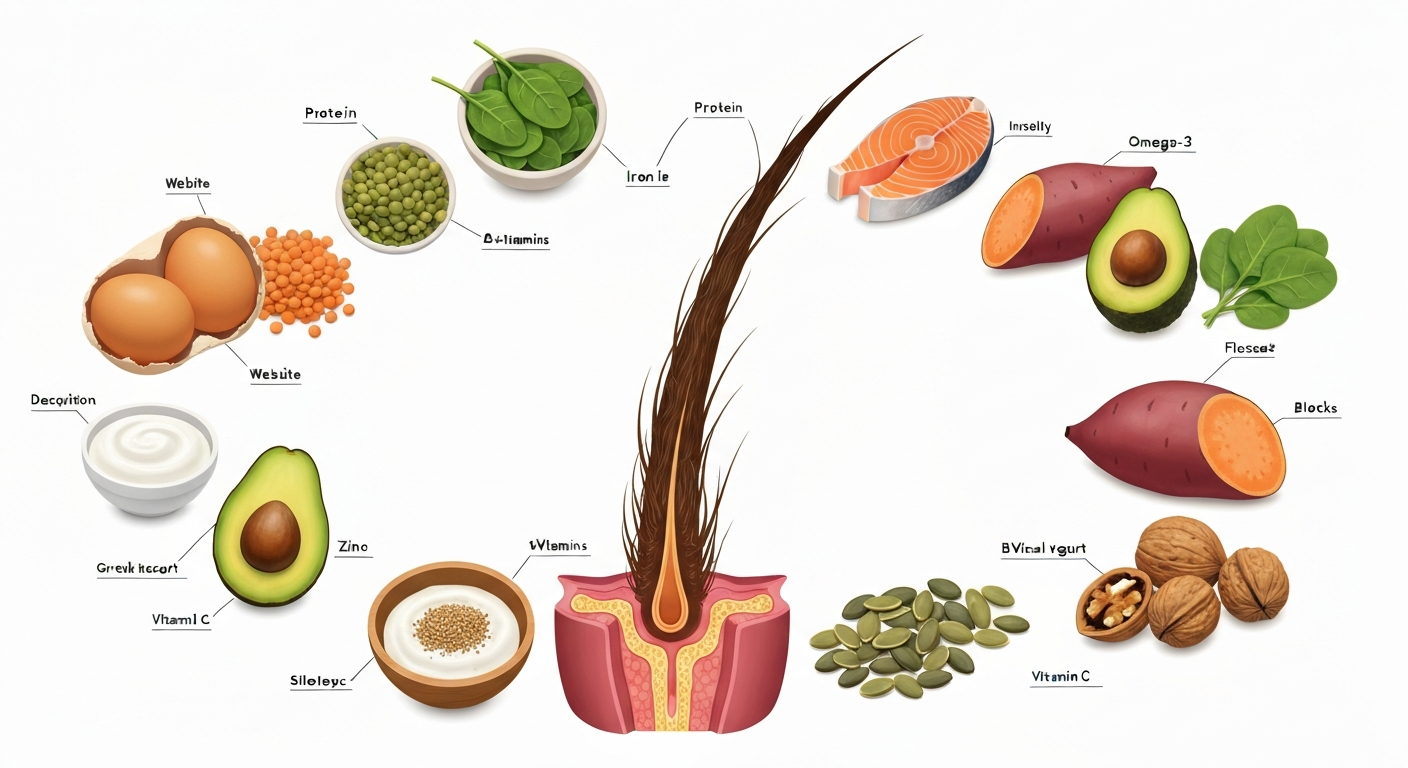
The best foods to grow hair are those that consistently supply the raw materials your follicles need most: protein (especially eggs, fish, chicken, legumes), iron-rich foods like lean red meat, lentils, and dark leafy greens, zinc sources such as pumpkin seeds and shellfish, omega-3 fats from fatty fish and walnuts, and a wide spread of B-vitamins from whole grains, leafy greens, and eggs. No single food works alone. What moves the needle is a daily pattern of eating that keeps these nutrients topped up, because your hair follicles are among the fastest-dividing cells in your body, and they notice very quickly when supply runs short.
Best Hair Food to Grow Hair: Evidence-Based Meal Plan & Shopping List

Marcus Holloway
24 Jul 2026
Who this guide is for (and what it can realistically do)
I wrote this for anyone staring at the shower drain with frustration, whether you're dealing with postpartum shedding, age-related thinning, a recent bout of stress, or just want more length and density than you've got. It covers men and women, omnivores and vegans, younger adults and those navigating hormonal shifts. I'll walk you through the science of why what you eat genuinely matters, which foods deliver the most relevant nutrients, how to build meals around them, and what a realistic seven-day plan looks like. I'll also be honest about what food alone can and can't do, and when a blood test or a dermatologist visit is the real next step. Hair growth is slow, about half an inch per month on a healthy scalp, so patience is part of this process. But consistently eating for your follicles is one of the highest-leverage, lowest-risk things you can do, and it compounds over time.
Why what you eat actually changes your hair
Each hair follicle cycles through growth (anagen), transition (catagen), and rest (telogen) phases on its own schedule. During anagen, the matrix cells at the base of the follicle divide faster than almost any other cells in the adult body. That rapid division demands a continuous supply of amino acids to build keratin, the structural protein hair is made of, plus iron as a cofactor for ribonucleotide reductase, the enzyme that makes the DNA building blocks those dividing cells need. Omega-3 fatty acids help keep the follicle environment anti-inflammatory. Vitamins A, C, D, and E support sebum production, collagen synthesis around the follicle, cell signaling, and oxidative protection respectively. When any of these run low, the follicle can shift into telogen early, shedding more hair than usual or producing thinner, slower-growing shafts. You're not going to regrow a full head of hair overnight just by eating better, but deficiency-driven shedding is very real and very correctable through diet.
The nutrients that matter most, and what they actually do
Protein and amino acids
Hair shaft is roughly 95% keratin, a protein built from amino acids, particularly cysteine, glycine, and proline. If your total protein intake is chronically low, your body deprioritizes non-essential functions like hair growth. A general guideline for hair support is at least 0.7–1.0 g of protein per kilogram of body weight per day, and closer to 1.2–1.6 g/kg if you're very active, postpartum, or recovering from illness. Complete protein sources (eggs, fish, poultry, meat, dairy) deliver all essential amino acids in one go. Plant proteins can do the same when you combine them intentionally, lentils and rice, or hummus and whole grain bread.
Iron
This is the nutrient I see come up most often in conversations about diffuse shedding, especially in women. A meta-analysis of observational studies found women presenting with nonscarring hair loss had mean serum ferritin roughly 18.5 ng/mL lower than controls. Many dermatologists use a ferritin threshold of 30–40 ng/mL when evaluating hair loss, which is higher than the standard anemia cutoff of 15 ng/mL, because hair follicles can be functionally iron-deficient before you're technically anemic. The practical takeaway: if you're shedding heavily and eat a low-meat or no-meat diet, getting your ferritin tested is worth the conversation with your doctor before loading up on supplements.
Zinc
Zinc plays a role in DNA synthesis, protein production, and the normal function of sebaceous glands around the follicle. Both deficiency and excess can cause shedding, so this is one to get from food first. Good food sources provide a self-limiting dose. The RDA for zinc is 8 mg/day for women and 11 mg/day for men, and the tolerable upper intake level is 40 mg/day. Going above that, which is easy to do with aggressive supplement stacking, can actually trigger hair loss.
Biotin (vitamin B7)
Biotin has become almost synonymous with hair supplements, but the evidence picture is more nuanced than the marketing suggests. True biotin deficiency, which is rare in adults eating varied diets, does cause brittle hair and alopecia. But there are no well-powered randomized controlled trials showing that extra biotin improves hair in people who are already replete. NIH guidance states this clearly. What's also important to know: high-dose biotin supplements (often 2,500–10,000 mcg) can interfere with common blood tests including thyroid panels and troponin assays, causing falsely abnormal or falsely normal results. The FDA has issued formal warnings about this. I mention it because a lot of people are taking high-dose biotin and getting routine labs without telling their doctor.
Vitamins A, C, D, and E
Vitamin A regulates cell growth and sebum production in follicles, but more is not better. Excess vitamin A is a documented cause of hair loss, so this is another one where food-first logic matters. Vitamin C is essential for collagen synthesis and also improves non-heme iron absorption when eaten alongside plant iron sources (a squeeze of lemon on lentils genuinely helps). Vitamin D receptors are found in hair follicle cells, and research shows that genetic loss of these receptors causes alopecia, but randomized trials of vitamin D supplementation for hair loss have not yet produced consistent positive results. It's still worth keeping your levels in range (most guidelines define deficiency as below 20 ng/mL). The Consensus Statement on Vitamin D Status Assessment and Supplementation (review, PMC) states serum 25‑hydroxyvitamin D <20 ng/mL is generally considered deficient, 20–30 ng/mL insufficient, and notes some groups use ≥30 ng/mL for extra‑skeletal targets while randomized evidence that raising 25‑OH‑D improves hair outcomes is limited. Vitamin E, particularly tocotrienol forms, showed a statistically significant increase in hair number versus placebo in one randomized trial over eight months, though tocotrienols are distinct from the more common tocopherol form in most supplements, so the source matters. High-dose vitamin E (above 1,000 mg/day) can also paradoxically worsen hair loss, so moderation applies here too.
B-vitamins: folate, B12, niacin, and the rest
B12 deficiency is common in vegans and vegetarians who don't supplement, and low B12 can affect the rapidly dividing cells in hair follicles. Folate is involved in DNA methylation and cell division. Niacin (B3) supports circulation and may improve nutrient delivery to the scalp. These nutrients work best as part of an overall B-complex from food, whole grains, eggs, legumes, leafy greens, and fortified foods cover most bases. Vegans specifically need a reliable B12 supplement or fortified food source, as B12 occurs naturally only in animal products.
Omega-3 fatty acids
Omega-3s help modulate inflammation at the follicle level, chronic low-grade scalp inflammation is one mechanism that pushes follicles toward shedding. Fatty fish (salmon, mackerel, sardines) are the most bioavailable sources. For plant-based eaters, walnuts, flaxseeds, and chia seeds provide ALA, which the body converts to EPA and DHA at low rates (roughly 5–10%). An algae-based omega-3 supplement is a more efficient option if you avoid fish.
Collagen and amino acids
Collagen surrounds the hair follicle and provides structural scaffolding for growth. Hydrolyzed collagen supplements have shown improvements in hair thickness and scalp condition in some industry-sponsored randomized trials over 8–12 weeks, though effect sizes are modest and independent replication is limited. From a food perspective, bone broth, fish, chicken with skin, and egg whites all contribute collagen precursors (glycine, proline, hydroxyproline). Vitamin C is required for collagen synthesis, so pairing these foods with vitamin C-rich produce makes practical sense.
The best whole foods for hair growth
The table below maps the top whole-food sources to the nutrients they deliver along with practical serving guidance. These aren't exotic ingredients, most are regular grocery staples.
| Food | Key Nutrients | Suggested Serving | Notes |
|---|---|---|---|
| Eggs | Protein, biotin, zinc, B12, selenium | 2 whole eggs daily | One of the most complete single foods for hair nutrition |
| Salmon / mackerel / sardines | Omega-3s (EPA/DHA), protein, vitamin D, B12, selenium | 2–3 servings per week (100–150 g each) | Canned versions count; sardines also high in calcium |
| Lean beef / chicken thigh | Protein, heme iron, zinc, B12, niacin | 1–2 servings per week (85–120 g each) | Heme iron absorbs significantly better than non-heme |
| Lentils | Iron (non-heme), protein, folate, zinc, B vitamins | ½ cup cooked (about 100 g) daily or near-daily | Pair with vitamin C food to boost iron absorption |
| Spinach / dark leafy greens | Iron, folate, vitamin A (as beta-carotene), vitamin C | 1–2 large handfuls per day, raw or cooked | Cooking increases iron bioavailability slightly |
| Pumpkin seeds | Zinc, magnesium, iron, omega-3 ALA, protein | 2–3 tablespoons (28 g) daily | One of the best plant zinc sources; also studied for hair in AGA |
| Walnuts | Omega-3 ALA, vitamin E (tocopherols), biotin, zinc | 1 small handful (28–30 g) daily | Good omega-3 to omega-6 ratio vs. other nuts |
| Sweet potato | Beta-carotene (converts to vitamin A), vitamin C, B6 | 1 medium (130–150 g) several times per week | Beta-carotene is safer than preformed vitamin A — no toxicity risk at food doses |
| Greek yogurt / cottage cheese | Protein, B12, calcium, zinc, probiotics | 150–200 g serving daily | High protein-per-calorie ratio; probiotics may support nutrient absorption |
| Oysters / shellfish | Zinc (exceptionally high), iron, B12, omega-3s, selenium | 6 medium oysters provide ~32 mg zinc — exceed only occasionally | Best intermittent zinc source; avoid daily high doses |
| Fortified whole grain cereals / bread | Iron, B12, folate, niacin, zinc | 1–2 servings per day per label guidance | Check label for fortification level; especially useful for vegans/vegetarians |
| Berries (strawberries, blueberries) | Vitamin C, antioxidants, folate | ½–1 cup (75–150 g) daily | Vitamin C enhances non-heme iron absorption when eaten at same meal |
| Avocado | Vitamin E, healthy fats, B vitamins, folate | ½ medium avocado daily | Fat content improves absorption of fat-soluble vitamins A, D, E, K |
| Flaxseeds (ground) | Omega-3 ALA, lignans, fiber, B vitamins | 1–2 tablespoons (10–15 g) daily | Grind before eating for better absorption; add to smoothies or oats |
| Bone broth / collagen sources | Glycine, proline, hydroxyproline (collagen precursors) | 1–2 cups per week, or collagen-rich protein several times per week | Pair with vitamin C for collagen synthesis support |
Plant-based and vegetarian alternatives
Eating plant-based doesn't mean accepting worse hair nutrition, it does mean being more intentional about a few specific nutrients. The main ones to watch are iron, zinc, B12, omega-3s, and protein completeness. Non-heme iron from plants absorbs less efficiently than heme iron from meat, but you can meaningfully improve absorption by always pairing iron-rich plant foods with a vitamin C source in the same meal. For zinc, plant sources like pumpkin seeds, hemp seeds, and legumes are solid but phytates in whole grains can reduce absorption, so soaking or sprouting legumes and seeds helps. B12 has no reliable plant food source, if you're vegan, a B12 supplement (typically 25–100 mcg daily or 1,000 mcg 2–3 times per week) is non-negotiable for hair and overall health. For omega-3s, algae oil provides direct EPA and DHA without relying on the inefficient ALA conversion from flax and walnuts.
| Nutrient | Omnivore Source | Plant-Based Alternative | Portion Swap Notes |
|---|---|---|---|
| Complete protein | Eggs, chicken, fish | Tofu, tempeh, edamame, quinoa, soy milk | Aim for at least 2–3 servings of legume/soy protein daily |
| Heme iron | Red meat, chicken, salmon | Lentils + vitamin C, fortified cereals, blackstrap molasses, tofu, pumpkin seeds | Add lemon juice, tomatoes, or bell peppers to every iron-rich plant meal |
| Zinc | Oysters, beef, chicken | Pumpkin seeds, hemp seeds, chickpeas, cashews, fortified cereals | Soak legumes overnight to reduce phytates |
| Vitamin B12 | Eggs, dairy, meat, fish | Fortified plant milks, nutritional yeast, B12 supplement | Don't rely on food alone if fully vegan — supplement consistently |
| Omega-3 (EPA/DHA) | Salmon, mackerel, sardines | Algae oil supplement (200–500 mg DHA/EPA daily), ground flaxseed, chia, walnuts (ALA) | Algae oil is the most efficient plant-based EPA/DHA source |
| Collagen precursors | Bone broth, meat, fish with skin | High-glycine plant proteins (soy, pumpkin seeds), vitamin C for synthesis | Plant collagen boosters work by supplying precursor amino acids, not collagen itself |
| Vitamin D | Fatty fish, egg yolks, fortified dairy | Fortified plant milks, UV-exposed mushrooms, D3 supplement from lichen | Most people — regardless of diet — may need a supplement if sun exposure is limited |
Practical meal ideas to eat your way to healthier hair
You don't need complicated recipes. The goal is building each meal around at least one strong protein source, an iron or zinc-rich component, and a vitamin C source nearby. Here are simple, realistic ideas for each part of the day.
Breakfasts
- Scrambled eggs (2–3) on whole grain toast with a handful of spinach and sliced tomato — hits protein, iron, biotin, folate, and vitamin C in one plate
- Greek yogurt (150–200 g) with mixed berries, ground flaxseed (1 tbsp), and a small handful of walnuts — protein, omega-3, vitamin C, zinc
- Oat porridge made with fortified oat milk, topped with pumpkin seeds (2 tbsp), ground flaxseed (1 tbsp), and sliced banana — iron, zinc, ALA omega-3, B vitamins
- Smoothie: spinach, frozen berries, Greek yogurt or silken tofu, a scoop of hemp seeds, and half an avocado — protein, folate, vitamin C, vitamin E, iron
Lunches
- Lentil soup with a squeeze of lemon and crusty whole grain bread — non-heme iron with vitamin C boost, protein, B vitamins, zinc
- Salmon salad: canned salmon over mixed greens, cherry tomatoes, sliced bell pepper, avocado, and olive oil dressing — omega-3s, protein, B12, vitamin D, vitamin C, vitamin E
- Chicken and chickpea grain bowl with roasted sweet potato, tahini dressing, and fresh parsley — protein, zinc, beta-carotene, iron, B6
- Tofu stir-fry with broccoli, edamame, bell peppers, and brown rice — complete plant protein, iron, vitamin C, folate, zinc
Dinners
- Baked salmon (150 g) with roasted sweet potato and steamed broccoli — omega-3s, vitamin D, B12, beta-carotene, vitamin C
- Beef and vegetable stir-fry (85 g lean beef) with bok choy, snap peas, and brown rice — heme iron, zinc, protein, vitamin C
- Black bean tacos with shredded cabbage, salsa, avocado, and corn tortillas — plant iron, plant protein, vitamin C, vitamin E, folate
- Sardines on whole grain pasta with olive oil, garlic, cherry tomatoes, and wilted spinach — omega-3s, iron, B12, vitamin C
Snacks
- A small handful of pumpkin seeds and a few Brazil nuts (2 per day max for selenium)
- Hard-boiled egg with a few cherry tomatoes
- Apple slices with almond butter (provides vitamin E, protein, healthy fats)
- Edamame (100 g) lightly salted — complete plant protein, folate, zinc
- Cottage cheese with sliced strawberries — protein, B12, vitamin C
Your hair growth shopping list
Keep these staples on hand and building hair-supportive meals becomes automatic rather than effortful. This list covers omnivores and can be adapted by swapping the animal proteins for plant alternatives listed above.
Proteins
- Eggs (a dozen lasts most people a week)
- Canned salmon and/or sardines (2–3 cans)
- Fresh salmon or mackerel fillet (1–2 pieces)
- Chicken thighs or breast
- Lean beef or lamb (once or twice per week)
- Dried or canned lentils and chickpeas
- Firm tofu or tempeh
- Greek yogurt or cottage cheese
- Hemp seeds and/or edamame (frozen)
Produce
- Spinach and/or kale (fresh or frozen)
- Sweet potatoes
- Bell peppers (any colour — highest in vitamin C when red or yellow)
- Broccoli
- Avocados
- Berries (fresh or frozen — blueberries, strawberries)
- Cherry tomatoes
- Citrus fruits (lemons, oranges)
- Garlic and onion (support absorption and scalp circulation)
Pantry staples
- Pumpkin seeds (raw or lightly roasted, unsalted)
- Walnuts
- Ground flaxseed (store in fridge once opened)
- Whole grain oats
- Brown rice or quinoa
- Whole grain bread or wraps
- Fortified plant milk (if vegan/vegetarian — check for B12, D, and iron)
- Nutritional yeast (B12-fortified brands)
- Blackstrap molasses (iron-rich sweetener alternative)
- Bone broth (cartons or cubes, for plant-based swap use fortified vegetable broth)
- Olive oil
- Tahini
7-day meal plan for hair growth
This sample plan is designed to be varied, practical, and achievable. Each day covers protein, iron, zinc, omega-3s, and vitamins from whole food sources. I've included substitutions for vegan and vegetarian versions throughout. Portions are approximate and should be adjusted to your body size, activity level, and energy needs, this is a pattern guide, not a calorie prescription.
Day 1 (Monday)
- Breakfast: 2 scrambled eggs + whole grain toast + handful of baby spinach + 1 sliced tomato | Vegan swap: scrambled tofu with the same veg
- Snack: Greek yogurt (150 g) + handful of blueberries | Vegan swap: soy yogurt + blueberries
- Lunch: Lentil soup (1.5 cups) + squeeze of lemon juice + whole grain roll
- Snack: 2 tbsp pumpkin seeds + small apple
- Dinner: Baked salmon (150 g) + roasted sweet potato + steamed broccoli | Vegan swap: tofu fillet baked with same sides
Day 2 (Tuesday)
- Breakfast: Oat porridge (50 g oats) made with fortified oat milk + 1 tbsp ground flaxseed + handful of walnuts + sliced strawberries
- Snack: Hard-boiled egg + cherry tomatoes | Vegan swap: edamame (100 g)
- Lunch: Chicken and chickpea grain bowl with roasted sweet potato, tahini dressing, fresh parsley | Veg swap: double chickpeas instead of chicken
- Snack: Apple with 1 tbsp almond butter
- Dinner: Beef stir-fry (85 g lean beef) with bok choy, snap peas, garlic, brown rice | Vegan swap: tempeh stir-fry
Day 3 (Wednesday)
- Breakfast: Smoothie — spinach, frozen berries, Greek yogurt or silken tofu, 1 tbsp hemp seeds, ½ avocado, fortified plant milk
- Snack: Cottage cheese (100 g) + sliced strawberries | Vegan swap: soy yogurt
- Lunch: Canned salmon salad over mixed greens, avocado, cherry tomatoes, bell pepper, olive oil | Vegan swap: marinated tofu cubes
- Snack: Small handful of walnuts + 2 Brazil nuts
- Dinner: Sardines on whole grain pasta + wilted spinach + cherry tomatoes + olive oil | Vegan swap: cannellini beans on pasta
Day 4 (Thursday)
- Breakfast: 2 poached eggs + rye toast + sliced avocado + lemon squeeze | Vegan swap: poached tofu or avo toast with hemp seeds
- Snack: Oat crackers + tahini + sliced bell pepper
- Lunch: Black bean and sweet potato burrito bowl with brown rice, salsa, shredded cabbage, lime | Naturally vegan
- Snack: Greek yogurt + 1 tbsp pumpkin seeds | Vegan: soy yogurt
- Dinner: Mackerel fillet (grilled) + quinoa + roasted red peppers + spinach | Vegan swap: lentil patties with same sides
Day 5 (Friday)
- Breakfast: Oat porridge + 1 tbsp ground flaxseed + blackstrap molasses (1 tsp, stirred in — adds iron + B vitamins) + sliced banana + walnuts
- Snack: Hard-boiled egg + small orange | Vegan swap: edamame + orange
- Lunch: Tofu stir-fry with broccoli, edamame, bell peppers, soy sauce, sesame oil, brown rice | Naturally vegan
- Snack: 2 tbsp pumpkin seeds + dried apricots (a few — good iron source)
- Dinner: Chicken thigh (baked, 120 g) + roasted sweet potato + green beans + lemon | Vegan swap: baked tempeh
Day 6 (Saturday)
- Breakfast: Veggie omelette — 3 eggs, spinach, bell pepper, mushrooms, feta | Vegan swap: chickpea flour omelette
- Snack: Smoothie — kale, frozen mango, Greek or soy yogurt, 1 tbsp chia seeds
- Lunch: Lentil and roasted vegetable soup + whole grain bread + large green salad with lemon dressing
- Snack: Apple + cottage cheese (100 g) | Vegan: apple + almond butter
- Dinner: Salmon (150 g) with quinoa, roasted asparagus, cherry tomatoes | Vegan swap: baked tofu
Day 7 (Sunday)
- Breakfast: Whole grain pancakes with mixed berry compote + 2 eggs on the side | Vegan swap: banana oat pancakes + hemp seed topping
- Snack: Handful of mixed nuts (walnuts, cashews) + dried mango
- Lunch: Beef and vegetable bone broth soup (slow-cooked, or use carton bone broth as base) + lentils, carrots, kale | Vegan swap: vegetable broth-based soup + firm tofu
- Snack: Greek yogurt + 1 tbsp flaxseed + berries | Vegan: fortified coconut yogurt
- Dinner: Prawn or shrimp stir-fry with bok choy, garlic, ginger, sesame oil, brown rice | Vegan swap: edamame and tofu stir-fry
Weekly grocery checklist for this plan
- Eggs: 12–15
- Salmon fillets: 2–3 (or 2 cans of salmon + 1 can of sardines)
- Mackerel fillet or canned: 1–2 servings
- Chicken thighs: 2–3 pieces
- Lean beef: 85–120 g (1 meal's worth)
- Firm tofu: 2 blocks
- Tempeh: 1 packet
- Canned or dried lentils: 2 cans or 1 bag dried
- Canned chickpeas: 1–2 cans
- Canned black beans: 1 can
- Edamame (frozen): 1 bag
- Greek yogurt or soy yogurt: 500–750 g tub
- Cottage cheese: 250 g
- Fortified oat or soy milk: 1 litre
- Spinach: 2 large bags (or 1 fresh + 1 frozen)
- Sweet potatoes: 4–5 medium
- Bell peppers: 4–5 mixed
- Broccoli: 1–2 heads
- Avocados: 3–4
- Berries (fresh or frozen): 400–500 g
- Cherry tomatoes: 2 punnets
- Lemons: 4–5
- Kale: 1 bunch
- Pumpkin seeds (raw): 150–200 g bag
- Walnuts: 150 g
- Ground flaxseed: 1 bag
- Whole grain oats: 500 g
- Quinoa or brown rice: 500 g
- Whole grain bread or wraps
- Nutritional yeast (B12-fortified, for vegans): 1 jar
- Blackstrap molasses: 1 small jar
- Tahini: 1 jar
- Olive oil: 1 bottle
Whole food vs. supplements: how to decide
Supplements occupy a genuinely complicated space for hair growth. Systematic reviews of commercial oral hair supplements (products like Viviscal, Nutrafol, and various omega-plus-antioxidant blends) do report favorable outcomes in several studies, increased hair count, improved terminal hair diameter, better patient-reported outcomes versus placebo. If you're interested in product options, see our guide to the best products to thicken and grow hair for evidence-backed supplement and topical choices. For a quick comparison of the best products to grow hair longer, see our roundup of evidence-backed hair-growth products. But these reviews also consistently flag high heterogeneity between trials, small sample sizes, and heavy commercial sponsorship as serious limitations. The honest summary is: some people in some trials saw real benefits, but the evidence isn't consistent enough to say a particular supplement will work for you specifically.
There are a few supplement-related points worth knowing. Pumpkin seed oil at 400 mg/day was studied in a randomized, double-blind, placebo-controlled trial in men with mild-to-moderate androgenetic alopecia over 24 weeks, showing roughly 40% increase in hair count in the assessed area versus about 10% in placebo. The trial was small and hasn't been replicated at scale, but it's one of the more methodologically sound individual studies. Tocotrienol supplementation (the less-common form of vitamin E) showed a statistically significant increase in hair number versus placebo over eight months in a randomized trial. Neither of these findings means you should reflexively buy these supplements, but they're worth noting if you've already addressed your dietary foundations and want to layer something on top.
Where supplements are clearly warranted: diagnosed deficiencies. If your ferritin is below 30 ng/mL, your B12 is low, or your vitamin D is under 20 ng/mL, correcting those through supplementation (with medical guidance on dose) is a direct intervention on a known cause. Conversely, if you're already replete, adding more of those nutrients is unlikely to do much, and in the case of vitamin A, selenium, zinc, and vitamin E, excess can actually cause hair loss. The dermatology consensus is to treat confirmed deficiencies, not to guess.
| Supplement | Evidence Level | Suggested Use Case | Cautions |
|---|---|---|---|
| Iron (ferrous sulfate or bisglycinate) | Strong for deficiency correction | Confirmed low ferritin (<30 ng/mL) or iron deficiency anemia | Take with vitamin C; avoid with calcium or antacids; constipation common — bisglycinate is gentler |
| Vitamin D3 | Moderate for deficiency correction; weak for hair-specific RCTs | Serum 25-OH-D below 20 ng/mL | Fat-soluble — don't exceed 4,000 IU/day without medical guidance |
| B12 (methylcobalamin) | Essential for vegans/vegetarians | Dietary restriction or confirmed deficiency | Water-soluble, generally very safe; sublingual or injection if absorption issues |
| Omega-3 (algae oil or fish oil EPA/DHA) | Moderate — anti-inflammatory, some RCT evidence | Consistently low oily fish intake, or vegan | 200–500 mg combined EPA/DHA; can thin blood at high doses |
| Pumpkin seed oil | One promising small RCT (men, AGA) | May be a reasonable add-on for men with AGA | 400 mg dose studied; long-term safety data limited |
| Tocotrienol (vitamin E) | One randomized trial showing positive result | May complement diet if hair loss is present and diet is already optimised | Use tocotrienol-rich forms specifically; avoid high-dose tocopherol |
| Hydrolyzed collagen | Industry-sponsored RCTs show modest improvements in hair and scalp | Can be trialled for 8–12 weeks if protein-focused diet isn't enough | Generally safe; less useful if protein intake is already high |
| Biotin (high dose 2,500–10,000 mcg) | No RCT evidence for hair in biotin-replete adults | Not recommended unless confirmed deficiency | CRITICAL: interferes with thyroid, troponin, and vitamin D lab tests — tell your doctor |
| Zinc | Useful only for confirmed deficiency | Low zinc status confirmed by testing | Do NOT exceed 40 mg/day UL; excess zinc causes hair loss and copper deficiency |
| Multi-ingredient hair supplements (Viviscal, Nutrafol etc.) | Systematic reviews show mixed but sometimes positive results | Can be considered after dietary foundations are in place; expect 3–6 months of use | Commercially sponsored trials; variable quality; check for vitamin A content |
What to realistically expect and when
Hair grows approximately 1–1.5 cm (about half an inch) per month on a healthy scalp. Even if you fix every nutritional gap today, the hair that grows as a result of that correction won't be visible above the skin for several weeks. If iron deficiency is part of your picture, research suggests shedding may start to stabilize within about six to eight weeks of beginning supplementation, but visible new hair or measurable density changes typically appear at three to six months, and full recovery depends on how long the deficiency existed, genetics, and whether other causes are also present. Iron Plays a Certain Role in Patterned Hair Loss (review, PMC) reports that iron repletion commonly requires months for ferritin to rise and for patients to notice reduced shedding and visible new hair growth, with stabilization often by ~6–8 weeks and measurable density improvements typically appearing at 3–6 months. Nutritional changes work on the same timeline. You're not going to see dramatic results in two weeks. You might notice less shedding and improved hair texture within six to eight weeks, and meaningful length and density changes at three to six months. I know that's a frustrating answer, but it's the honest one. Setting that expectation is part of not giving up.
When food and supplements aren't enough: testing and specialist help
If you've been eating well, managing stress reasonably, and still seeing significant diffuse shedding for more than three months, it's time to get bloodwork done rather than trying another supplement. The tests most relevant to nutritional hair loss include serum ferritin (ideally alongside a full iron panel), complete blood count (CBC), thyroid-stimulating hormone (TSH), B12 and folate, vitamin D (25-OH-D), and fasting zinc. Some dermatologists also check DHEA-S, prolactin, and sex hormones depending on the clinical picture. The AAD and European dermatology guidelines both note that nutritional contributors are part of the standard workup for diffuse non-scarring alopecia, so this isn't a fringe consideration, it's mainstream dermatology practice. Bring your supplement list to any medical appointment, especially if you're taking high-dose biotin, because it can falsely alter thyroid and other test results enough to cause missed diagnoses.
Conditions that commonly drive hair loss and require specific medical treatment, not just better nutrition, include androgenetic alopecia (pattern hair loss), alopecia areata, scalp fungal infections, polycystic ovary syndrome (PCOS), hypothyroidism, and autoimmune conditions. Postpartum shedding (telogen effluvium) is extremely common and typically self-resolves within 6–12 months after delivery, though nutritional support during that period is still worthwhile. If your hair loss is patchy, occurring in distinct circles or spots, or accompanied by scalp redness, scaling, or itching, see a dermatologist rather than starting a supplement protocol.
Combining diet with scalp care and topical treatments
Nutrition addresses the internal supply chain, but what happens at the scalp also matters. Poor scalp circulation, chronic inflammation, product buildup, and follicle miniaturization all interact with your nutritional status. Eating well creates the raw materials; scalp care creates the environment where those materials can be used effectively. If you're interested in DIY topical options, see a guide on how to make shampoo that grow hair for simple formulations and safety tips. For a practical, step-by-step guide to daily scalp care and styling habits that complement nutrition, see the best hair routine to grow hair. For improving the scalp environment, consider using the best deep conditioner to grow hair as part of your routine to boost moisture and reduce breakage. A consistent cleansing routine that removes buildup without stripping the scalp barrier, regular gentle scalp massage to support circulation, and targeted topical treatments (minoxidil being the most evidence-supported option) work alongside diet rather than instead of it. For guidance on choosing the best hair treatment to grow hair, see our detailed treatment guide. For men looking for topical options, see our guide to the best shampoo to grow hair for men for evidence-backed product choices and usage tips. If you're working on your diet and want to pair it with a stronger overall approach, the right shampoo formulation, deep conditioning practices, and a structured hair care routine all contribute to the bigger picture.
Special considerations: pregnancy, postpartum, and aging
During pregnancy, iron, folate, and omega-3 demands increase significantly. Most prenatal vitamins cover folate and iron, but check the label for iodine and omega-3 DHA as well. Postpartum shedding usually peaks around three to four months after birth due to the hormonal drop and is largely telogen effluvium, normal but alarming. Keeping protein and iron intake strong during that period supports recovery. If you're breastfeeding, continue with a postnatal supplement or ensure dietary sources of iron, B12, D, and omega-3s are consistent. For older adults, stomach acid production declines with age, reducing B12 absorption from food, a sublingual or supplement form of B12 becomes more relevant. Protein needs also don't decrease with age despite common assumptions; if anything, maintaining adequate protein intake is more important for muscle and hair tissue as you get older.
Allergy and safety notes
A few practical cautions worth flagging. If you have a fish or shellfish allergy, algae-based omega-3 supplements are a safe alternative to fish oil, and you can still get strong hair nutrition from plant sources. Tree nut allergies are common, pumpkin seeds, hemp seeds, and sunflower seeds can substitute for walnuts and cashews as zinc and omega-3 sources. If you're taking blood thinners, speak with your doctor before adding high-dose fish oil or omega-3 supplements. Selenium toxicity from supplements is a real risk, Brazil nuts are an excellent food source but two per day is genuinely the upper safe limit. Vitamin A toxicity from supplements or high-dose fortified foods (not from beta-carotene in vegetables) can cause hair loss, so avoid retinol-form supplements unless prescribed. And again: if you take any supplements and are getting routine blood tests, tell your healthcare provider, particularly if biotin is in the mix.
FAQ
Which specific foods reliably support hair growth and what key nutrients do they provide?
Foods that support hair growth supply protein, iron, zinc, essential fatty acids, vitamins (A, C, D, E, B‑vitamins including biotin), collagen amino acids, and antioxidants. Practical choices: oily fish (salmon, sardines) for omega‑3s and protein; eggs for protein, biotin and vitamin D; lean red meat and shellfish (oysters) for highly bioavailable iron and zinc; legumes, tofu, tempeh and seitan for plant protein and iron; leafy greens and bell peppers for vitamin C + nonheme iron absorption; nuts/seeds (walnuts, flaxseed, pumpkin seeds) for zinc, selenium and omega‑3 precursors; citrus/fruits/berries for vitamin C and antioxidants; dairy or fortified plant milks for calcium and vitamin D; bone or collagen broth and hydrolysed collagen powders for collagen peptides (supporting matrix/amino acids). Emphasize whole‑food portions (eg, 1–3 oz oily fish, 1 egg, 3–4 oz cooked legumes or tofu, 1 handful nuts/seeds, 1 cup leafy greens) distributed across meals to meet protein and micronutrient needs.
How do these nutrients biologically affect hair growth?
Hair follicles are highly proliferative and require building blocks and cofactors: protein/amino acids form keratin; iron is a cofactor for enzymes involved in DNA replication and cellular energy in the hair matrix; zinc participates in protein synthesis and cell division; B‑vitamins (including biotin) support metabolic pathways and keratin formation; vitamin D/VDR signaling influences follicle cycling; essential fatty acids reduce scalp inflammation and support lipid membranes; antioxidants limit oxidative damage to follicles. Deficiency or insufficiency of these nutrients can slow anagen (growth) phase, increase shedding, or produce thinner shafts.
What are evidence‑based portion guidelines and plant‑based alternatives?
Aim for daily protein ~0.8–1.2 g/kg body weight (higher during postpartum/recovery). Examples: 2–3 servings of high‑quality protein (each ~20–30 g protein): 3–4 oz fish/chicken, 2 eggs, 3/4–1 cup cooked legumes with grains, or 4–5 oz firm tofu/tempeh. Iron: include iron‑rich foods several times weekly (eg, 3–4 oz red meat twice weekly, or daily plant sources with vitamin C to boost absorption). Omega‑3s: 2 servings/week of oily fish or daily plant sources (flax/ chia + algal DHA supplement for vegans). Collagen: 2.5–10 g/day hydrolysed collagen used in some trials; plant‑based vegans can prioritize varied amino acids (legumes, grains, soy) instead. Pair nonheme iron foods with vitamin C‑rich foods to improve absorption.
Can meal plans realistically help? Provide practical meal/snack ideas.
Yes—consistent, nutrient‑dense meals help meet the substrates follicles need. Examples: breakfast—omelette with spinach, mushrooms and tomato; or fortified oatmeal with ground flaxseed and berries; snack—Greek yogurt or soy yogurt with nuts; lunch—salmon salad with mixed greens and citrus vinaigrette; or lentil and quinoa bowl with roasted vegetables; snack—pumpkin seeds and an orange; dinner—stir‑fried tofu with broccoli, bell peppers and brown rice; or lean beef chili with beans. Include a source of protein, an iron or zinc food, a vitamin C source, and an omega‑3 or seed/nut daily. Rotate foods to cover micronutrients. Use fortified plant milks and multigrain combos for vegans.
How do whole foods compare to supplements for supporting hair growth?
Whole foods provide multiple synergistic nutrients, fiber and better bioavailability for many micronutrients; they should be the foundation. Supplements can help when dietary intake is inadequate, when lab‑confirmed deficiency exists (eg, iron, vitamin D), or in targeted RCT‑backed contexts (some multi‑ingredient formulas, tocotrienols, pumpkin seed oil, collagen showed benefit in small trials). However, evidence for many single‑nutrient supplements (eg, biotin in biotin‑replete adults) is weak. Quality, dosing, duration and trial sponsorship vary, so prefer evidence‑based products, look for third‑party testing, and discuss with a clinician before starting high‑dose supplements.
Which supplements have the best trial evidence and what are safe dosing ranges?
Supplements with some RCT evidence include: certain multi‑ingredient oral hair supplements (dose varies by product) showing modest hair count/diameter improvements; tocotrienol supplements (study used ~100 mg/day mixed tocotrienols) with improved hair count over 8 months; pumpkin seed oil (400 mg/day in one small trial) with benefit in men with androgenetic alopecia; hydrolysed collagen (commonly 2.5–10 g/day for 8–12 weeks) showing improved hair thickness in some trials. For deficiencies: oral iron dosing typically 60–100 mg elemental iron/day for mild deficiency (individualize), vitamin D 800–2000 IU/day or higher if deficient per lab guidance, and zinc 8–11 mg/day as RDA (short courses up to 40 mg/day are used under supervision). Avoid excessive vitamin A, selenium, vitamin E and chronic high‑dose zinc or iron without testing because they can cause hair loss or toxicity. Always review interactions (eg, iron interferes with some antibiotics, high‑dose biotin interferes with lab assays).
Next Articles
Best Products to Thicken and Grow Hair: Buyer’s Guide
Evidence-based products for thicker, longer hair plus supplements, routines, timelines, and when to see a dermatologist.
Best Deep Conditioner to Grow Hair: How to Choose + Use
Find the best deep conditioner to reduce breakage, improve scalp health, and support longer hair with proper use tips.
Best Products to Grow Hair Longer: What to Buy and Use
Buying guide to grow hair longer with evidence-based serums, scalp care, conditioners and supplements to reduce breakage