
The best hair treatment to grow hair depends almost entirely on why your hair stopped growing in the first place. If you're shedding heavily after a stressful event, pregnancy, or illness, the trigger itself is the treatment and your hair will likely grow back on its own within a few months.
Best Hair Treatment to Grow Hair Back: What Works

Marcus Holloway
18 May 2026
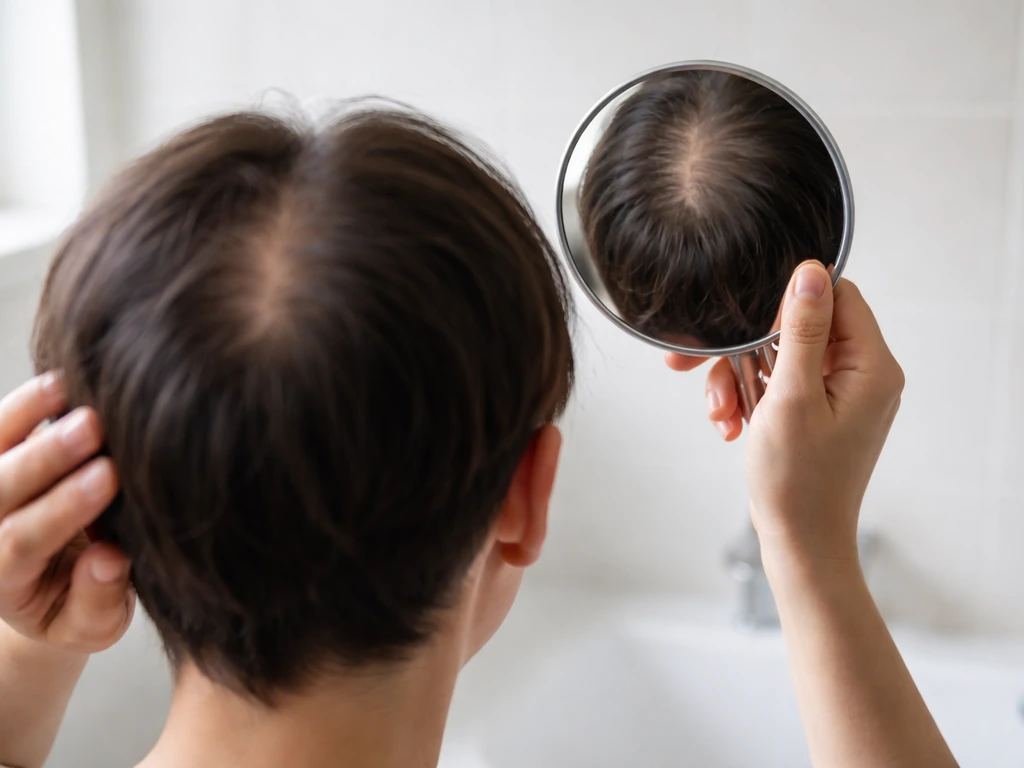
If you have true androgenetic alopecia (pattern hair loss), minoxidil applied daily to the scalp is the most evidence-backed over-the-counter option available right now, with visible improvement typically showing up at the two-to-four-month mark. [NICE provides clinical guidance for hair loss and related conditions](https://www. nice. org.
uk/), and additional targeted searches may be needed to extract specific alopecia recommendations relevant to minoxidil or finasteride. Everything else, including supplements, natural oils, and scalp massages, works best as a supporting layer once you've matched the treatment to the actual cause.
Quick reality check: why hair growth results vary so much
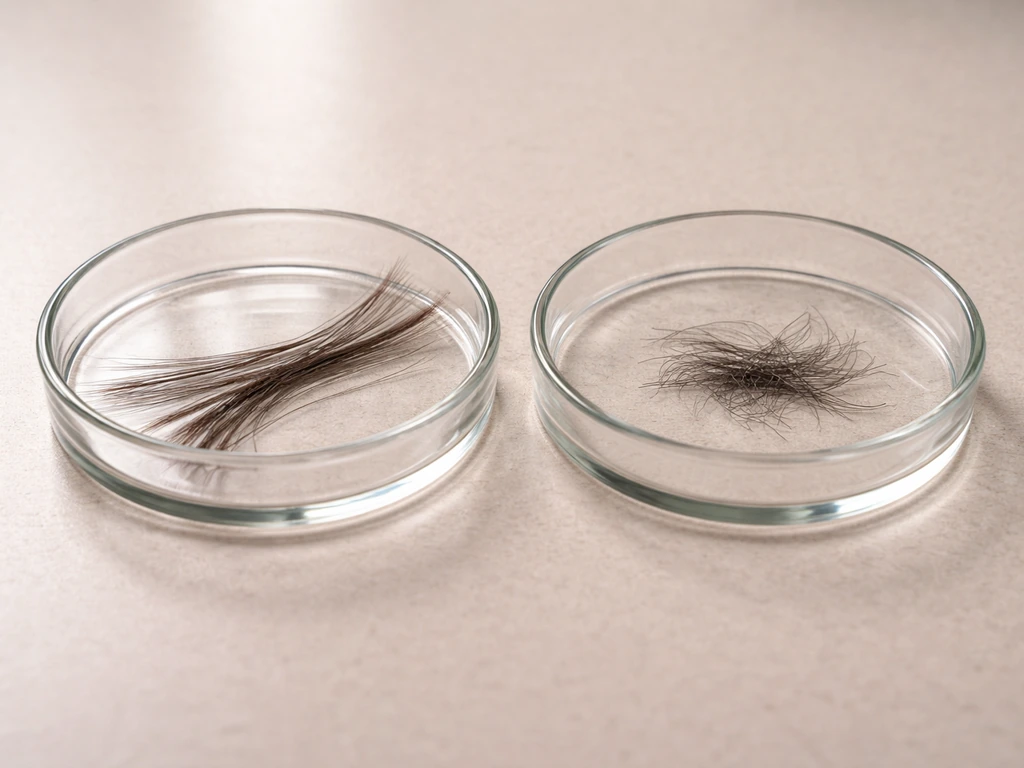
One of the most frustrating things about searching for the "best" hair treatment is that the same product can produce dramatic results for one person and nothing at all for another. That's not marketing spin, it's biology. Hair loss is not one condition, it's a category of conditions, and the underlying mechanism is what actually determines whether a treatment will work for you.
Your hair cycle has three main phases: growth (anagen), transition (catagen), and rest/shedding (telogen). At any given time, roughly 85 to 90 percent of your hairs should be actively growing. When something disrupts that balance, whether it's hormones, nutrition, stress, inflammation, or genetics, more hairs than usual shift into the resting and shedding phase. The cause of that disruption is what separates a temporary shed that fixes itself from a long-term thinning problem that needs ongoing treatment.
Age, genetics, hormone levels, scalp health, and how recently a trigger occurred all affect how quickly (or whether) hair responds to a given treatment. That's not a disclaimer, it's genuinely useful information, because it tells you that skipping the "why" and going straight to a product is the most common reason people waste months on the wrong approach.
Find the likely cause first: shedding vs. actual hair loss
Before you buy anything, spend five minutes figuring out which category you're in. Shedding (telogen effluvium) and true hair loss (androgenetic alopecia or other forms) look similar on the bathroom floor, but they respond to completely different strategies.
Signs you're dealing with a shed (telogen effluvium)
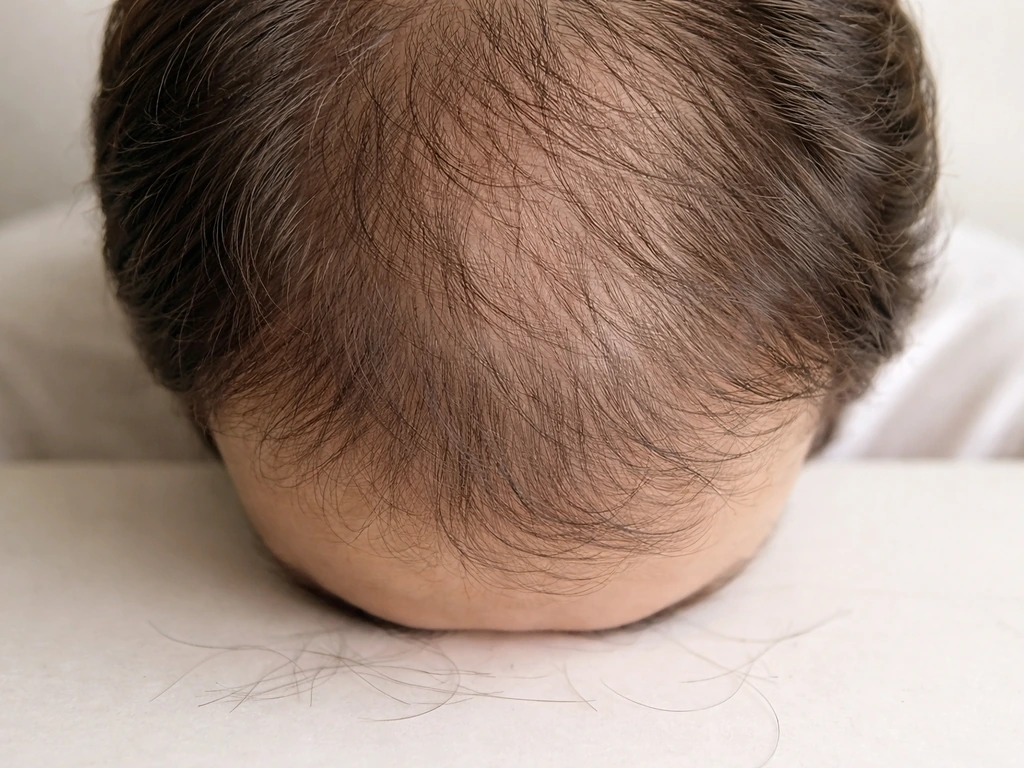
- Heavy, diffuse shedding all over the scalp, not concentrated at the temples or crown
- Shedding started roughly 3 to 4 months after a major stressor: illness with fever, surgery, childbirth, a significant crash diet, severe emotional stress, or a medication change
- Your hairline and part width look similar to before, just with less density overall
- You can think of a clear trigger event that happened a few months before the shedding started
Telogen effluvium can affect up to 50 percent of your scalp hair at once, which makes it feel catastrophic even though it's almost always reversible. The key is that when the trigger resolves, the hair typically grows back within months. Harvard Health notes it rarely lasts longer than six months. No topical treatment is going to speed that up if the trigger is still active, so the first move is identifying and removing it.
Signs you're dealing with pattern hair loss or another condition
- Gradual thinning at the temples, crown, or a widening part over months to years
- A family history of hair loss on either side (androgenetic alopecia has a genetic component)
- Patchy, well-defined bald spots rather than diffuse thinning (can indicate alopecia areata)
- A scaly, itchy, or inflamed scalp alongside hair loss (could point to seborrheic dermatitis or scalp psoriasis)
- Hair loss that started slowly and has continued without an obvious trigger
If you're unsure, a dermatologist can usually distinguish between these with a physical exam and sometimes a dermatoscope, a magnifying tool that looks at the scalp and follicle patterns up close. Getting that diagnosis right is genuinely worth the appointment because it changes every decision you make afterward.
Start with the scalp: wash, unclog, and reduce inflammation
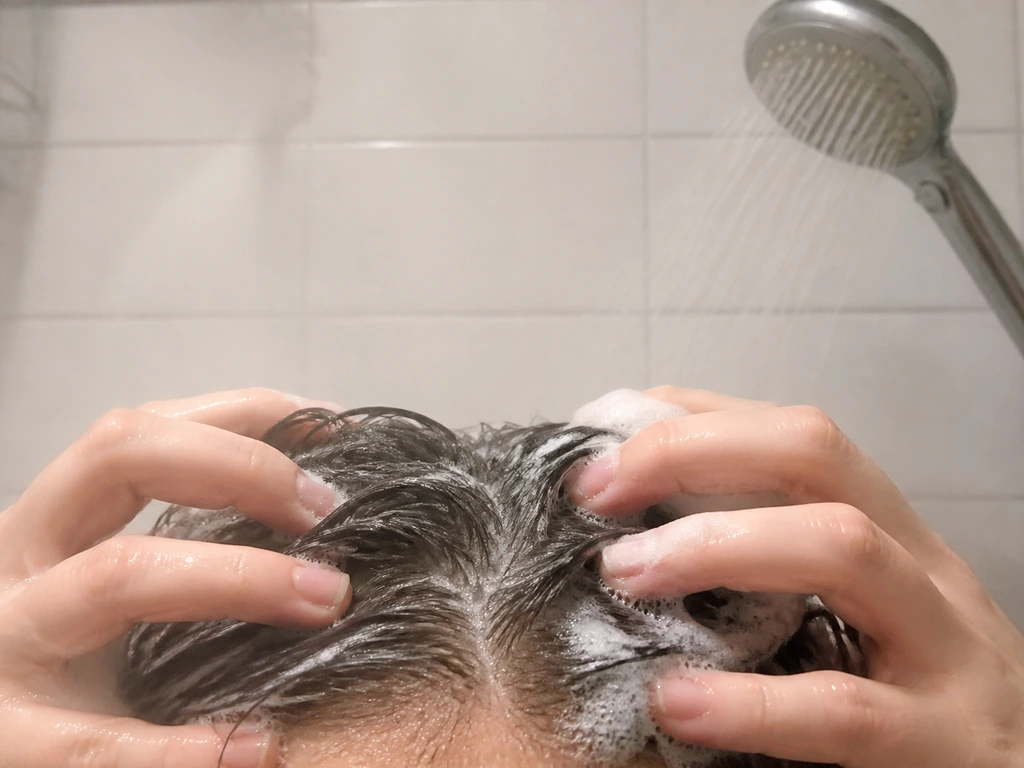
No hair treatment works well on a scalp that's blocked, inflamed, or covered in buildup. Think of it this way: the follicle lives inside the scalp, and if the environment around it is irritated or congested, anything you apply on top is working uphill. Getting the scalp in good shape is step one, and for some people with inflammation-driven shedding, it's actually the main treatment.
Wash frequency and product choice
Washing your hair regularly, at least every two to three days if you have an oily scalp, keeps sebum, dead skin, and product residue from accumulating around the follicle opening. Under-washing is actually a common problem in people trying to "protect" their hair, but a clean scalp is a healthier scalp. Use a gentle, sulfate-free shampoo for regular washes, and save the heavy conditioner for the lengths rather than the roots. To support thickening, choose a shampoo that matches your scalp needs, since the best shampoo to grow and thicken hair is the one that keeps your scalp healthy and unclogged.
Medicated shampoo when inflammation is present
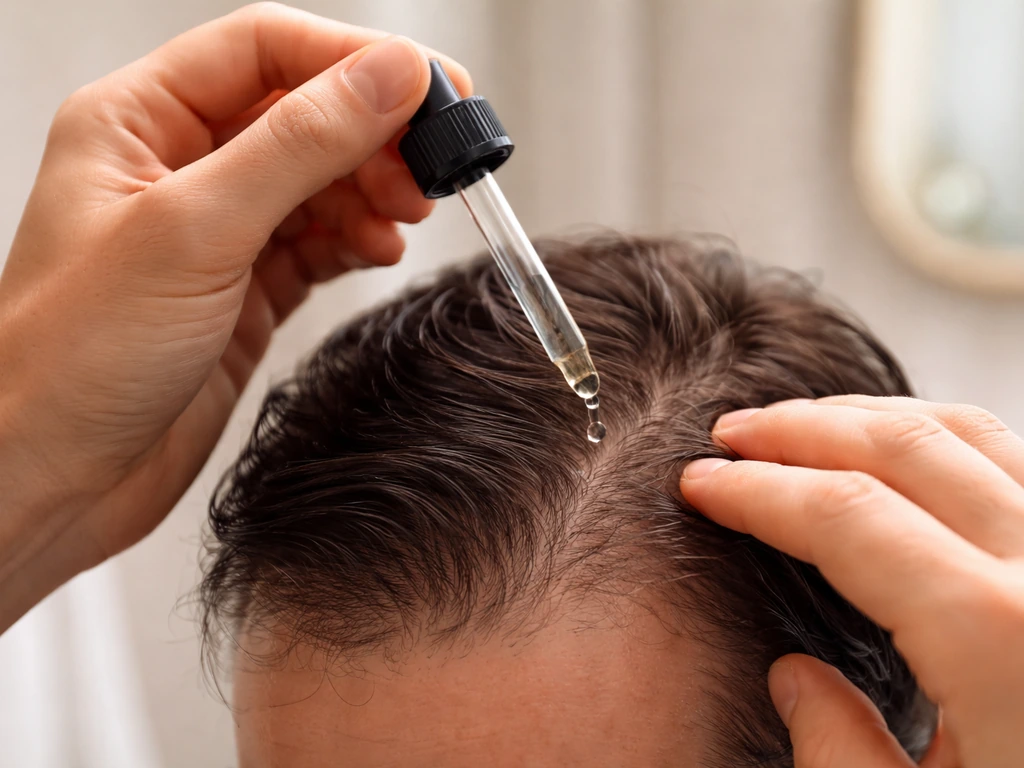
If you have dandruff, flaking, or a persistently itchy scalp alongside your shedding, a medicated shampoo should be your first purchase. If you are a man looking for the best shampoo to grow hair, focus on the right medicated shampoo for your scalp issue and use it consistently along with evidence-backed treatments like minoxidil when appropriate. Seborrheic dermatitis and scalp psoriasis are both documented causes of hair loss that respond to targeted treatment.
Ketoconazole 2% shampoo (prescription) or 1% (over the counter) is one of the most effective options for seborrheic dermatitis. The correct way to use it: lather onto a damp scalp, leave it on for 5 minutes, then rinse. Don't just scrub and rinse immediately, the contact time matters. For scalp psoriasis, a dermatologist may prescribe stronger options containing clobetasol propionate.
An interesting bonus: ketoconazole shampoo has shown some evidence of independently supporting hair growth, and combining it with minoxidil appears to produce better results than minoxidil alone in androgenetic alopecia, making it a worthwhile addition even if your scalp isn't visibly flaky.
Scalp massage and gentle exfoliation
A regular scalp massage, 4 to 5 minutes daily, improves blood circulation to the follicles and helps loosen buildup. You don't need a special device, just your fingertips with gentle circular pressure. Do it while shampooing or as a standalone step with a light oil. A scalp scrub once a week can also help if you have heavy product buildup, but skip it if your scalp is actively irritated or broken.
Best topical treatments to actually stimulate growth
Once your scalp environment is healthy, topical treatments have a real chance of working. Here's what the evidence actually supports.
Minoxidil: the most evidence-backed option
Minoxidil is the gold standard over-the-counter topical for hair regrowth, and it has the clinical evidence to back that up. Cochrane reviews show that minoxidil produces moderate hair regrowth at roughly twice the rate of placebo in female pattern hair loss trials. It works by prolonging the growth phase of the hair cycle and increasing blood flow to follicles. It's approved for both men and women.
| Option | Concentration | Application | Who it's for |
|---|---|---|---|
| Minoxidil solution 2% | 2% | Twice daily to dry scalp | Women (classic dosing) |
| Minoxidil solution 5% | 5% | Once or twice daily to dry scalp | Men; women under dermatologist guidance |
| Minoxidil foam 5% | 5% | Once daily to dry scalp | Men and women (easier to apply, less drip) |
A phase III randomized trial confirmed that once-daily 5% minoxidil foam and twice-daily 2% minoxidil solution produced comparable hair regrowth in women with pattern hair loss, which is useful to know because the foam format tends to be much easier to fit into a daily routine. Apply it to a dry scalp (not wet hair), part the hair to expose the scalp, and work it into the affected areas. Wash your hands immediately after.
Critical expectations to set: the Cleveland Clinic notes it takes two to four months of daily use before you'll see noticeable improvement, and many people see a temporary increase in shedding in the first few weeks as the hair cycle resets. Do not stop using it at that point. If you stop minoxidil, the regrowth it produced tends to reverse within a few months, so this is an ongoing commitment for androgenetic alopecia. Avoid applying it to an irritated or inflamed scalp, and keep it away from your eyes.
Finasteride (for men with pattern hair loss)
Finasteride is a prescription oral medication that blocks the conversion of testosterone to DHT, the hormone primarily responsible for androgenetic alopecia in men. It's one of the most effective single treatments for male pattern hair loss and works even better when combined with topical minoxidil and ketoconazole shampoo. It's not approved for women of childbearing age due to risk of birth defects. If you're a man with pattern loss and minoxidil alone isn't doing enough, talk to a doctor or dermatologist about whether finasteride makes sense for you.
Topical caffeine
Topical caffeine is a lower-evidence but genuinely interesting option. A recent systematic review found it consistently demonstrated hair growth or reduced hair loss with minimal side effects across included studies. It's thought to counteract some of the DHT-related inhibition of follicle growth. You'll find it in caffeine-based shampoos and leave-in scalp serums. It's not a replacement for minoxidil if you have pattern loss, but it's a reasonable addition to your routine with low risk.
Treatment options for alopecia areata
If you have patchy hair loss from alopecia areata (an autoimmune condition), the over-the-counter options above are not the primary treatment. Intralesional corticosteroid injections are often the first-line treatment for limited patchy disease in adults, with topical corticosteroids as an alternative. These are medical treatments that require a dermatologist. The AAD emphasizes that starting treatment early improves outcomes, so don't sit on this one.
Nutrition and supplements that actually support regrowth

Nutrition matters for hair growth, but the honest truth is: supplementing blindly is one of the most common and least effective things people do when their hair is falling out. Supplements help when you're deficient. If you're not deficient, adding more of a nutrient rarely does anything.
Deficiencies that are actually linked to hair loss
A 2024 systematic review and meta-analysis found that people with telogen effluvium had significantly lower serum ferritin (stored iron) and vitamin D levels compared to controls. Another 2024 systematic review linked micronutrient deficiencies including vitamin D, iron, and zinc to androgenetic alopecia. These are the three to get tested for first before spending money on supplements.
- Iron/ferritin: Low iron is one of the most common correctable triggers for hair shedding, particularly in menstruating women. Ask your doctor for a ferritin test, not just a standard hemoglobin check, as ferritin can be low before anemia shows up
- Vitamin D: Deficiency is extremely common and linked to hair follicle cycling. A blood test can confirm your level; supplementation is straightforward if you're low
- Zinc: Less common as a deficiency in most Western diets, but worth checking if you eat a restrictive diet or have gut absorption issues
- Protein: Harvard Health notes that in people with normal food access, adding more protein is unlikely to stop hair loss unless actual protein malnutrition is present. If you're eating adequate calories and protein (roughly 0.8g per kg of body weight), this isn't your problem
What about biotin and hair growth supplements?
Biotin deficiency can cause hair loss, but true biotin deficiency is rare in people eating a varied diet. The supplement industry has leaned heavily on biotin for hair marketing, but there's no strong evidence it helps people who aren't actually deficient. The same skepticism applies to most multi-ingredient "hair growth" supplements. Some contain useful nutrients like zinc and vitamin D at reasonable doses, which is fine, but you're paying a premium for marketing rather than science.
Get your deficiencies identified via blood test, then supplement specifically for what you're missing. For a deeper look at the food-first approach to supporting hair growth, the relationship between diet and hair health is worth exploring in detail. If you want the best hair food to grow hair, focus on nutrients like iron, vitamin D, zinc, and adequate protein rather than chasing one magic ingredient food-first approach to supporting hair growth.
If you want to include a shampoo in your hair growth routine, look for options that address scalp health and inflammation and avoid relying on “hair growth” claims alone.
Thyroid function
Thyroid disorders are a documented cause of hair loss and shedding, and they won't respond to any topical treatment until the underlying hormonal imbalance is corrected. If you have other symptoms of thyroid dysfunction (fatigue, weight changes, cold sensitivity, dry skin), ask your doctor to test TSH and related markers before assuming you need a hair-specific product.
Natural remedies and home care: what they can (and can't) do
Natural home remedies sit in a frustrating middle ground: some have real evidence behind them, most have very limited evidence, and almost none are replacements for clinical treatments when you have true pattern loss or a medical cause of shedding. That said, several are low-risk, low-cost, and genuinely supportive as part of a broader routine.
Rosemary oil
Rosemary oil is the natural remedy with the strongest evidence base. A randomized comparative trial ran rosemary oil against minoxidil 2% for 6 months in people with androgenetic alopecia and found no significant difference in hair count between the two groups at either the 3-month or 6-month mark. That's actually a striking result, though it's important to note this was one trial against a lower concentration of minoxidil, not 5%. Still, it makes rosemary oil worth including. Apply a few drops diluted in a carrier oil (like jojoba or coconut) to the scalp 2 to 3 times per week, massage in, leave for at least 30 minutes, then wash out.
Scalp massage
Regular scalp massage (4 to 5 minutes daily) has emerging evidence for improving hair thickness, likely by increasing blood flow to follicles and creating mild mechanical stretching of follicle cells. It costs nothing, has no downside, and pairs well with applying any topical treatment. Make it a habit while you're watching something or listening to a podcast.
Castor oil, coconut oil, and other oils
These are popular but lack clinical trial evidence for actually stimulating hair growth. They can be useful for moisturizing the scalp, reducing breakage, and making existing hair look and feel healthier. If your hair appears thinner partly because of breakage and dryness, a weekly oil treatment can visibly improve things. Just don't expect regrowth from them. Using the right deep conditioning routine on a regular basis can help preserve the hair you have while growth treatments do their work. If you're wondering what the best deep conditioner to grow hair is, focus on ingredients that moisturize and reduce breakage so your hair stays healthier while growth treatments work deep conditioning routine.
A word on microneedling at home
Dermarolling (microneedling) for hair growth is something you'll see a lot of online. Clinical microneedling done by a professional does have some evidence behind it for androgenetic alopecia, particularly when combined with minoxidil. However, the FDA has not cleared any microneedling devices for at-home use for hair loss, and they've flagged reports of serious complications including burns and scarring with certain RF microneedling approaches. Proceed with real caution here and talk to a dermatologist before going this route.
How long to try, what to track, and when to see a doctor
Patience is genuinely non-negotiable with hair growth. Hair grows about half an inch per month on average, and even after a follicle reactivates, it takes time before you'll see visible density change. Here's a realistic framework.
Your month-by-month timeline
| Timeframe | What to expect | What to do |
|---|---|---|
| Weeks 1 to 4 | Possible increase in shedding with minoxidil (normal), scalp adjusting to routine | Stay consistent, don't stop treatment |
| Months 1 to 2 | Shedding from telogen effluvium may start slowing if trigger is resolved | Track shedding with a simple hair count on wash days |
| Months 2 to 4 | First signs of regrowth (fine baby hairs, reduced shedding), per Cleveland Clinic timeline for minoxidil | Take monthly photos in the same lighting for comparison |
| Months 4 to 6 | Visible improvement in density if treatment is matched to cause and used consistently | Assess progress; consult a dermatologist if no change |
| 6 months+ | Continued improvement with pattern loss treatments (minoxidil, finasteride); maintenance phase begins | Don't stop working treatments; plan for long-term use |
How to track progress without driving yourself crazy
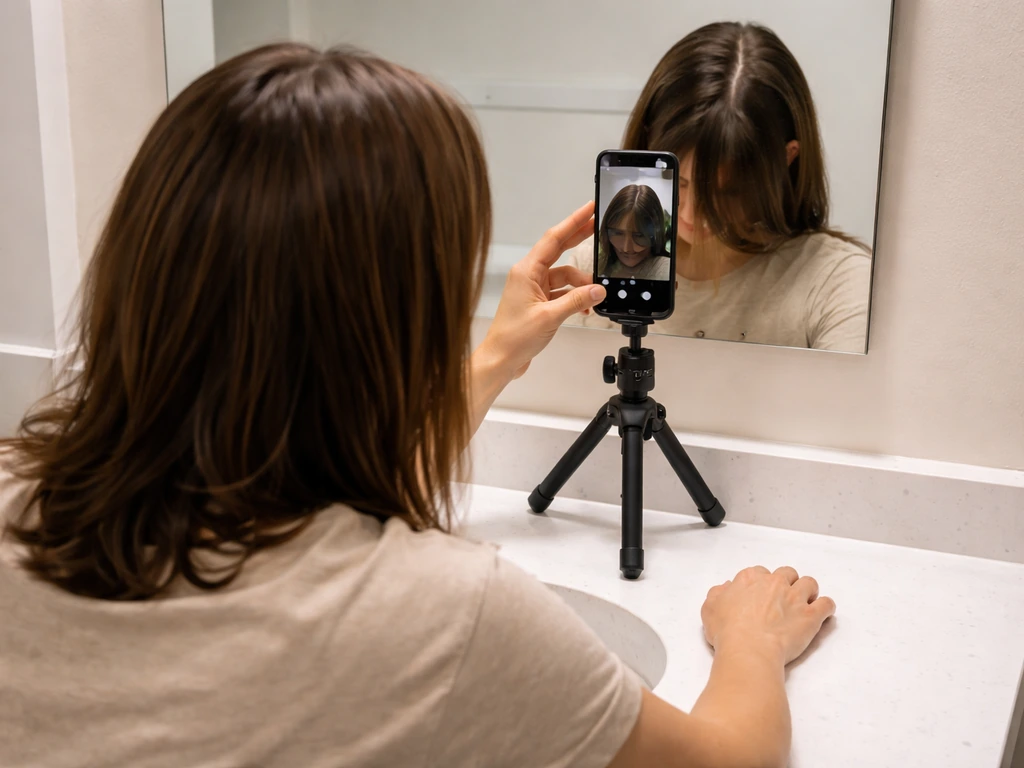
- Take a photo of your part, hairline, and crown every 4 weeks in the same lighting and position. Changes are gradual and daily observation will not show them clearly
- On wash days, loosely count or estimate shed hairs. Losing 50 to 100 hairs per day is normal; consistent improvement in that number over weeks is a good sign
- Note changes in hair texture and thickness at the roots, new growth often comes in fine at first
- Keep a simple log of what you're using, when you started, and any changes you notice
When to stop waiting and see a dermatologist
See a dermatologist sooner rather than later if: your shedding is severe and came on suddenly with no clear trigger; you have patchy loss rather than diffuse thinning; your scalp is visibly inflamed, scarred, or producing unusual symptoms; you've been using minoxidil correctly for 6 months with zero change; or you suspect a hormonal or autoimmune cause. The AAD makes a point that treatment is most effective when started early, and this is especially true for scarring alopecias where delay can mean permanent follicle loss. A dermatologist can also run targeted bloodwork to check for the iron, vitamin D, thyroid, and hormone issues that won't resolve with any topical treatment alone.
The bottom line is that the best hair treatment to grow hair is the one that matches your specific cause. For most people reading this, that means addressing scalp health first, adding minoxidil if you have pattern loss, getting your iron and vitamin D checked if you're shedding heavily, and giving any treatment a genuine 4 to 6 month trial before evaluating results.
Putting the right hair-thickening and growth approach together is the key to finding the best products to thicken and grow hair for your specific cause. A good shampoo that supports a healthy scalp is often the best place to start before moving on to growth treatments scalp health first. Building out a consistent hair care routine around these treatments will help you get the most from whatever approach you choose.
If you want the best hair routine to grow hair, focus on matching the routine to the actual cause of your shedding or hair loss hair care routine.
FAQ
How can I tell if my hair shedding is temporary or a true long-term thinning problem?
Look at timing and pattern. Telogen effluvium often starts weeks after a trigger (stress, illness, pregnancy) and is usually diffuse, while androgenetic alopecia tends to worsen gradually and follow a pattern (widening part, crown thinning, or receding hairline). If shedding is severe, lasts beyond about six months, or you see scalp symptoms like burning, pain, or scarring, get evaluated rather than guessing.
Is there a “best” treatment I can start immediately without knowing the cause?
You can safely start with scalp optimization and consistency. Focus on regular, gentle cleansing, address dandruff or itch with an appropriate medicated shampoo if you have flaking, and avoid harsh buildup practices. For true pattern loss, minoxidil is the main evidence-based OTC option, but if you are dealing with an acute shed after a recent trigger, minoxidil may not be necessary to see regrowth.
Can I combine multiple growth treatments right away, like minoxidil plus finasteride or ketoconazole?
Often yes, but start in a way that you can track results and side effects. Many people add ketoconazole as a scalp-support step, and men can discuss finasteride with a clinician if minoxidil alone is insufficient. If you introduce several changes at once, it becomes harder to know what is helping or causing irritation, especially if your scalp reacts to active ingredients.
How should I apply minoxidil so it actually works and I avoid mistakes?
Apply it to the scalp, not the hair strands, and ensure the scalp surface is dry when using foam or solution formats that require it. Part the hair to reach the skin, apply to the thinning areas, and wash your hands immediately. Avoid applying to irritated or broken skin, and keep it away from eyes, face, and pets because accidental transfer can cause unwanted effects.
What if I see extra shedding in the first few weeks of minoxidil, should I stop?
Do not stop just because of early shedding. A temporary increase can happen as follicles shift through the hair cycle reset. The decision point is usually longer-term adherence, if you have been consistent for at least two to four months with correct application, and you still have no improvement by about four to six months.
How long should I trial minoxidil before judging it as ineffective?
Plan for at least four months to see noticeable change, and evaluate more fully around six months of daily use. Hair growth progress can be subtle early, and density changes can lag behind shedding reduction. If you truly used it correctly for six months and see no change, a dermatologist can help confirm the diagnosis and check for contributing issues like thyroid or iron problems.
What blood tests matter most when I’m trying to grow hair back?
If you are shedding heavily, the most useful starting points are ferritin (iron stores) and vitamin D, plus thyroid screening (often TSH and related markers). If there are dietary risks, heavy menstrual bleeding, or low intake, iron-related markers are especially relevant. A clinician can tailor additional tests, including zinc or hormone evaluation, based on symptoms and history.
Do supplements like biotin or “hair growth gummies” help if my labs are normal?
Usually not. If you are not deficient, adding more of a nutrient rarely improves hair growth. Biotin deficiency causing hair loss is uncommon in people with varied diets, and many multi-ingredient supplements are driven by marketing rather than strong evidence. If you still want supplements, choose based on confirmed deficiencies and appropriate dosing.
How often should I wash my hair when trying to grow it back?
At least every two to three days for many people, especially if your scalp gets oily, because buildup and residue can irritate the follicle openings. If you use medicated shampoo for dandruff or seborrheic dermatitis, follow the contact-time instructions carefully instead of just rinsing immediately. Over-washing can irritate some scalps, so adjust if you notice dryness or itch worsening.
When is a dermatologist appointment urgent rather than “later”?
Get seen promptly if hair loss is patchy (possible alopecia areata), if you suspect scarring (shiny or scar-like areas, loss of follicle openings), if there is significant inflammation (pain, burning, severe itch), or if shedding is sudden and severe without a clear trigger. Early diagnosis changes outcomes, especially for scarring alopecias.
Is rosemary oil safe to use on my scalp, and how should I avoid irritation?
Use it diluted in a carrier oil and start with a few times per week rather than daily, then increase if you tolerate it. Patch test on a small scalp area first, because essential oils can irritate sensitive skin. If you get redness, burning, or worsening itch, stop and reassess before continuing any topical oil regimen.
Is derma-rolling or microneedling worth trying at home?
Be cautious. While professional microneedling may help some people when combined with evidence-based treatments, the FDA has not cleared at-home microneedling devices for hair loss, and complications like burns or scarring have been reported for certain device types. If you are interested, ask a dermatologist to evaluate device choice, technique, and whether it is appropriate for your scalp condition.
What should I do if my scalp is inflamed or flaky but I still want to treat hair growth?
Treat scalp inflammation as the foundation, because topical regrowth products perform poorly on irritated or clogged scalp conditions. Start with a medicated shampoo if you have dandruff, flaking, or itch, and use a contact-time method as directed. Once the scalp calms, add growth-focused treatments if indicated for your hair loss type.
Next Articles
Best Shampoo to Grow Hair for Men: Picks, Ingredients, Routine
Evidence-based top men’s shampoos for less shedding and healthier scalp growth, with ingredient picks and routine tips.

Best Shampoo to Grow and Thicken Hair: Pick Yours Fast
Practical picks for the best thickening shampoo and conditioner, how to use them, and realistic timelines for fuller gro
Tips on How to Grow Your Hair Out: A Step by Step Guide
Step-by-step tips to grow hair out: stop breakage, build scalp routine, nutrition, safe actives, and track progress.