
Growing your hair to your waist is absolutely doable, but it takes longer than most people expect and it almost always comes down to three things: keeping the hair you're already growing (preventing breakage), supporting healthy follicles from the scalp up, and fueling growth from the inside with good nutrition. If you can get all three working together consistently, waist length is a realistic goal for most people. If you’re specifically wondering how to grow Korean hair, the same core goals apply: protect your scalp, reduce breakage, and support steady growth with good nutrition waist length. It just won't happen in a few months.
How to Grow Your Hair to Your Waist: Step-by-Step

Marcus Holloway
26 Jun 2026

Set a realistic waist-length goal and measure your baseline

Before you change a single thing about your routine, figure out exactly where you're starting. Grab a measuring tape and measure from your scalp at the crown down to your current ends. Then measure from your scalp to your natural waist (the narrowest part of your torso, not your hips). The difference between those two numbers is how many inches or centimeters you need to gain, minus any trims along the way.
Hair grows roughly 1 cm per month on average, which works out to about 6 inches a year. That's the number to anchor your expectations to. It also varies by genetics, age, hormonal health, and nutrition, but 1 cm per month is a solid working estimate. Some people sit closer to 0.8 cm, some hit 1.5 cm. You'll learn your own rate by tracking, which I'll cover at the end.
A commonly cited rule of thumb is that hair typically takes around two years to reach shoulder length and roughly seven years to reach waist or hip length for someone starting from short hair, assuming occasional trims. Starting from mid-length cuts that timeline down significantly. The point is that this is a multi-year project, not a six-month one, and mentally accepting that early makes everything easier.
Find what's limiting your length: growth vs breakage vs shedding
This is the most important diagnostic step and the one most people skip. There are three distinct reasons hair might not be reaching your waist, and the fix for each one is different.
Slow or stunted growth
Every hair follicle cycles through a growth phase called anagen, which can last anywhere from about 2 to 6 years for scalp hair. If your anagen phase is on the shorter end genetically, your hair reaches a terminal length before it gets to your waist and then sheds. You'll notice that your hair seems to stop growing past a certain point regardless of how well you care for it. Nutrition deficiencies, thyroid issues, and hormonal imbalances can also shorten this phase. Supporting your body with good nutrition (covered below) gives your follicles the best chance to stay in anagen as long as genetically possible.
Breakage (the most common culprit)
If you're losing length from the ends rather than the roots, that's breakage, not a growth problem. Check your ends for splits, check your brush and shower drain for short broken pieces (rather than long shed hairs with a white bulb), and notice whether your hair feels brittle, rough, or tangles easily. Most people chasing waist length are dealing with breakage more than slow growth, especially if they've been using heat, chemical treatments, or rough handling. The hair care section below is where you'll fix this.
Excessive shedding

Shedding is normal. You lose about 50 to 100 hairs a day naturally as follicles complete their resting phase (called telogen) and release the old hair. The resting phase lasts roughly 3 months, which is why events like illness, crash dieting, or major stress tend to cause a noticeable surge in shedding about 2 to 3 months after the fact. This is called telogen effluvium and it's temporary in most cases. If you're suddenly shedding dramatically more than usual, look back 2 to 3 months for a possible trigger before assuming something more serious is happening.
Scalp care routine for healthier follicles
Your scalp is the soil your hair grows from. If it's irritated, inflamed, flaky, or clogged, follicle health suffers and that affects the quality and rate of growth. Scalp care is not glamorous but it's foundational.
Washing frequency and product choice
Wash often enough to prevent buildup but not so often that you strip natural oils. For most people that means two to three times a week. Use a gentle, sulfate-free shampoo on the scalp and let it rinse through the lengths. If you have dandruff or a flaky scalp, look for shampoos containing zinc pyrithione, ketoconazole, or selenium sulfide, which are clinically supported for managing the Malassezia yeast that drives most dandruff. Use an anti-dandruff shampoo two to three times a week until symptoms improve, then scale back to once a week for maintenance.
Scalp massage
Regular scalp massage improves blood circulation to the follicles, which supports nutrient delivery. There's some interesting research suggesting that daily scalp massage over several months may increase hair thickness. Use your fingertips (not nails) to apply gentle pressure in small circular movements for 3 to 5 minutes. You can do this on dry hair, before washing, or with a lightweight oil. It's one of the easiest free habits to build into a routine and it genuinely feels good.
Dealing with scalp inflammation and irritation
Itching, redness, or persistent flaking that doesn't respond to over-the-counter anti-dandruff products within 4 to 6 weeks could point to seborrheic dermatitis, psoriasis, or scalp eczema. These conditions cause chronic inflammation around the follicle that can affect growth over time. Don't ignore a persistently irritated scalp. A dermatologist can confirm what's going on and prescribe targeted treatment, which will do more for your hair growth goals than any growth serum.
Hair care practices that prevent breakage
This section is where most people gain the most ground. Hair that grows 6 inches a year but breaks off 4 inches per year at the ends will never reach your waist. Protecting what you grow is just as important as growing it. If you want more specific guidance, follow the sections on scalp care, breakage prevention, and nutrition to build a plan for medium length hair.
Washing and conditioning
Always follow shampoo with a conditioner on your mid-lengths and ends. This step is non-negotiable for long-hair goals. Conditioner smooths the cuticle, reduces friction, and makes detangling much easier. For drier or coarser hair types, adding a weekly deep conditioning treatment or hair mask builds additional moisture and strength over time. Leave it on for 15 to 30 minutes under a shower cap for deeper penetration.
Detangling properly
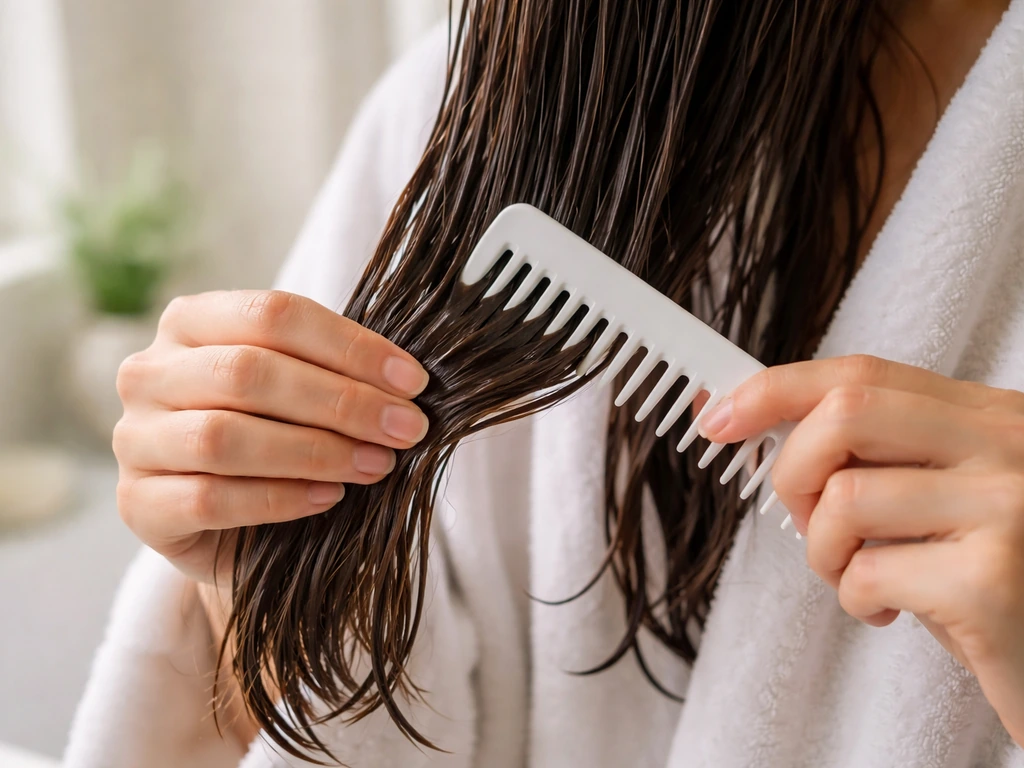
Wet hair is at its weakest and most vulnerable to snapping. Always detangle starting from the ends and working upward in sections, never from the root down. Use a wide-tooth comb or a detangling brush with slip, and apply a leave-in conditioner or detangling spray if you have significant tangles. Rushing through knots is one of the fastest ways to cause mechanical breakage.
Drying
Rubbing hair aggressively with a cotton towel roughens the cuticle and causes breakage, especially at longer lengths. Blot or scrunch hair dry gently, or use a microfiber towel or old cotton t-shirt. If you use a blow dryer, apply a heat protectant spray first and use medium heat rather than high. Air drying when you have time is always the lower-damage option.
Heat and chemical damage
Flat irons, curling wands, and repeated chemical treatments (bleach, relaxers, perms) are the biggest breakage accelerators. If you're serious about reaching waist length, reduce heat styling to once or twice a week maximum, always use a heat protectant, and keep tool temperatures below 375°F (190°C). If you're chemically processing your hair, consider spacing treatments out as much as possible and prioritizing protein treatments to reinforce the structure between sessions.
Protective styles and reducing friction

Wearing your hair up in protective styles (loose braids, buns, or twists) reduces daily friction and environmental exposure that causes split ends. Sleep on a satin or silk pillowcase, or use a satin bonnet or scarf, to dramatically reduce the friction that breaks ends overnight. Cotton pillowcases are genuinely rough on hair and it's an easy switch to make.
Trim strategically, not aggressively
Trimming doesn't make hair grow faster, but removing split ends before they travel up the shaft prevents further breakage and keeps ends healthy. Every 3 to 4 months, trim just enough to remove damaged ends, maybe a quarter inch to half an inch. Avoid the advice to trim every 6 to 8 weeks if you're already protecting your ends well, because that adds up to a lot of length lost over a year.
Nutrition and supplements for faster, stronger hair
Hair is made of protein and it's grown by living cells that need a steady supply of nutrients. If your diet is lacking in key areas, growth rate and hair quality both suffer. The good news is that addressing nutritional gaps often produces noticeable improvements in shedding and strand quality within a few months.
The nutrients that matter most
- Protein: Hair is made of keratin, a protein, so adequate dietary protein is foundational. Aim for at least 0.8 g per kg of body weight daily, with many hair-focused dietitians recommending closer to 1.2 to 1.6 g per kg. Sources include eggs, chicken, fish, legumes, and Greek yogurt.
- Iron and ferritin: Low iron (specifically low ferritin, the stored form) is one of the most common and most overlooked drivers of hair shedding in women. If you're shedding a lot, getting your ferritin levels tested is one of the most worthwhile things you can do. Ferritin levels below 30 ng/mL are often associated with increased shedding.
- Zinc: Zinc deficiency causes hair loss and it's more common than most people realize, especially in people who restrict animal proteins. Foods like red meat, pumpkin seeds, and shellfish are good sources. Don't over-supplement zinc without testing, as excess zinc competes with copper absorption.
- Vitamin D: Low vitamin D is linked to hair thinning and disrupted hair cycles. Many people are deficient, particularly in low-sunlight climates. A blood test tells you where you stand.
- Omega-3 fatty acids: Found in oily fish, walnuts, and flaxseed, omega-3s support scalp health and reduce inflammation. There's some evidence they improve hair density.
- Biotin: Biotin deficiency is actually rare in people eating a balanced diet, and the evidence for supplementing biotin in non-deficient people is weak. If your overall nutrition is good, a biotin supplement is unlikely to make a meaningful difference.
Should you take a hair supplement?
Targeted supplements make sense if you have a confirmed deficiency or a restricted diet. A general multivitamin covering iron, zinc, and vitamin D is a reasonable low-risk starting point while you wait for lab results. Be cautious of expensive "hair growth" supplements with proprietary blends and inflated claims. Most of them contain biotin, silica, and a few vitamins at doses that won't do anything a good diet wouldn't. If you suspect a specific deficiency, test first, then supplement specifically. That's a much smarter approach than spending a lot of money on something you may not need.
Topical treatments and at-home remedies
There are a few topical options with genuine evidence behind them and plenty more that are popular but less proven. Here's how to think about each one practically.
Minoxidil
Minoxidil (available over the counter as 2% or 5% solutions and foams) is the most evidence-backed topical for stimulating hair growth. It works by prolonging the anagen phase and increasing blood flow to follicles. It's FDA-approved for hair loss and is used by both men and women. If you're dealing with noticeable thinning or shedding alongside your length goals, it's worth discussing with a dermatologist. Note that it needs to be used consistently to maintain results.
Rosemary oil
Rosemary oil has emerged as a genuinely interesting option. One well-cited study found rosemary oil (at 2% concentration) performed comparably to 2% minoxidil for hair growth after 6 months of use. Dilute rosemary essential oil to about 2 to 3 drops per tablespoon of carrier oil (like jojoba or coconut oil) and massage into the scalp before washing, 2 to 3 times a week. Don't apply undiluted essential oil directly to your scalp as it can cause irritation.
Castor oil
Castor oil is popular in the long-hair community and many people swear by it for thickness and growth. The scientific evidence is limited, but it's generally safe, moisturizing, and may have mild anti-inflammatory properties at the scalp. If you want to try it, use it as a pre-wash scalp oil. Be aware that it's very thick and can be hard to wash out, so a little goes a long way.
Caffeine serums
Caffeine applied topically has shown some promise in lab and clinical studies for stimulating follicle activity. Caffeine-based scalp serums are widely available and low-risk. They're not a miracle product but they're a reasonable addition to a scalp care routine, especially if you enjoy the ritual of applying them.
What to avoid or approach carefully
Onion juice is often recommended as a home remedy and there is a small study suggesting it may help with patchy alopecia areata, but the evidence for general hair growth is thin and the smell is a practical issue. Egg masks and rice water rinses are popular but the evidence is largely anecdotal. They won't harm your hair and the proteins in egg may temporarily improve texture, but don't expect them to dramatically accelerate growth.
How long it will actually take and how to track your progress

Let's get concrete about timelines. A commonly cited rule of thumb is that hair takes about 2 years to reach shoulder length and around 7 years to reach waist or hip length, reflecting growth rate and the natural limits of the anagen phase blank" rel="noopener noreferrer">Long hair. The table below gives rough estimates based on common starting points, assuming average growth of 6 inches per year and healthy retention.
| Starting length | Approximate distance to waist | Estimated time (no trims) | Estimated time (with trims) |
|---|---|---|---|
| Very short (2–3 inches) | 14–16 inches | 2.5–3 years | 3–4 years |
| Chin length (8–10 inches) | 8–10 inches | 1.5–2 years | 2–2.5 years |
| Shoulder length (12–14 inches) | 4–6 inches | 8 months–1 year | 1–1.5 years |
| Armpit length (16–18 inches) | 0–2 inches | A few months | 6–12 months |
These are estimates and they assume average genetics and a reasonably healthy routine. Your actual timeline depends on your natural growth rate, how well you reduce breakage, and whether any underlying issues like nutritional deficiencies or scalp problems are addressed.
How to track whether your routine is working
- Take a baseline measurement now from scalp to ends and record it with a date. Remeasure every 4 to 6 weeks in the same conditions.
- Take monthly photos in the same lighting and position. Side-by-side comparisons over 3 to 6 months are more motivating and informative than any single measurement.
- Track your daily shed count for a week to establish your baseline. Count what's in your brush and shower drain. If it's consistently above 150 hairs daily, that's worth investigating.
- Check your ends monthly for split ends or rough texture. If you're getting splits very quickly despite protective habits, it may point to a protein or moisture imbalance in your routine.
- Note how your scalp feels: itchy, tight, or consistently oily between washes are all signs your scalp routine needs adjustment.
When to see a professional
Some situations go beyond what diet and routine changes can fix. See a dermatologist or your doctor if you notice significant thinning at the crown or temples, sudden or patchy hair loss, a scalp condition that isn't improving with over-the-counter treatment, or shedding that has been heavy for more than 3 months without an obvious cause. A doctor can run blood panels to check ferritin, thyroid hormones, vitamin D, and androgens, which are all common underlying drivers of hair loss. Getting a diagnosis early makes treatment more effective and stops you from spending years chasing a length goal that has a medical solution.
Growing your hair to your waist is a long game. The readers who actually get there are the ones who optimize all the variables they can control, stay consistent with their routine, and don't get discouraged when progress feels slow in month three. If you're starting from mid-length hair and working through topics like how to grow short hair to long or bridging through medium length, the same principles apply, just over a shorter runway. If you're working toward waist-length hair, the best place to start is the same growth-and-retention plan described here, including reducing breakage and supporting healthy follicles how to grow short hair to long. Build the habits now, measure consistently, and stay patient. The results compound quietly over months and then one day you'll look at a photo from a year ago and realize how far you've come.
FAQ
How long will it take me to reach my waist if I’m starting from shoulder or mid-back hair?
Use your measurements plus a realistic growth-and-retention estimate. If you’re currently shoulder to mid-back, subtract the scalp-to-ends distance from your scalp-to-waist distance, then estimate growth using about 1 cm per month. The catch is retention, so if you typically lose 0.5 to 2 cm per year to breakage and trims, your “net” timeline may be 1.1 to 2+ years longer than growth alone. That’s why tracking ends condition and shedding matters as much as growth rate.
Should I measure my hair length in its wet or dry state?
Measure the same way each time. Wet hair stretches and can mislead you if you compare weeks where the hair is measured damp versus fully dry. For consistency, measure on clean, fully dry hair after detangling, then record scalp-to-ends and scalp-to-waist using the same method (for example, straight down from the crown).
Do trims help you reach waist length faster?
Trims do not increase the growth rate, but they can improve net length by stopping splits from traveling up the shaft. If you’re seeing a lot of fraying at the ends, skipping maintenance trims usually costs more length later. A practical approach is to trim just enough to remove visibly damaged ends every 3 to 4 months, and revisit sooner only if you notice new split point formation.
What’s the difference between breakage and shedding, and how can I tell which one I have?
Shedding usually looks like full hairs with a tiny white bulb, and it shows up more around the scalp line. Breakage looks like shorter snapped pieces, especially along the mid-lengths and ends, and you may see lots of flyaways that don’t “grow out.” If your hair feels rough or tangles quickly in the lower lengths, breakage is usually the main limiter for waist goals.
If I stop heat and chemicals, will my hair automatically start growing to waist faster?
Reducing heat and chemicals helps retention, but it won’t change the biology of how fast follicles cycle. Think of it as improving your “net growth.” If your scalp is healthy and nutrition is adequate, less breakage means more of your monthly growth survives long enough to reach the target.
How often should I wash to prevent scalp buildup without drying my hair out?
Most people land around 2 to 3 washes per week, but the right frequency depends on oiliness, product use, and scalp symptoms. If you’re using heavier oils or styling products, you may need more frequent cleansing to avoid buildup that can affect scalp comfort. The key is shampooing the scalp, letting it rinse through the lengths, and conditioning the mid-lengths and ends every wash.
What should I do if my scalp is itchy or flaky even when I use dandruff shampoo?
If symptoms persist after 4 to 6 weeks of using an anti-dandruff shampoo consistently (and you’re not changing products every few days), it may be more than simple dandruff. That’s the point to consider seborrheic dermatitis, psoriasis, or scalp eczema, and to get a dermatologist to confirm and prescribe a targeted treatment. Keeping scalp inflammation controlled often has a bigger impact on growth quality than adding new hair serums.
Does scalp massage actually thicken hair, or is it just a nice habit?
Massage can support follicle health by improving local circulation and reducing scalp tightness, and it may be helpful for some people. However, it’s not a substitute for fixing breakage, nutrition, or a persistently inflamed scalp. If you try it, do it gently for a few minutes most days, and stop if it increases irritation or causes flare-ups.
Is minoxidil safe to use long-term to reach waist length?
Minoxidil can be effective for some types of hair loss, but it’s not the same as “length growth.” It primarily helps follicles produce more or thicker hair, and you need consistent use to maintain results. If you start it, plan that you may need ongoing treatment, and it’s best to discuss your situation with a dermatologist, especially if you have patchy hair loss or significant shedding.
Can I use rosemary oil without irritation?
Yes, but dilution is the main safety step. Essential oil should not be applied undiluted to the scalp, and patch testing is smart, especially if you have sensitive skin or eczema. Use a low concentration (commonly around a couple drops per tablespoon of carrier oil), apply 2 to 3 times per week, and discontinue if redness, burning, or more flaking appears.
Will castor oil or rice water actually speed up hair growth to waist length?
Castor oil may help with moisture and scalp comfort, which can reduce friction-related breakage, but evidence for major growth acceleration is limited. Rice water and egg masks are mostly anecdotal, and they may improve texture temporarily. If your goal is waist length, prioritize proven basics first (breakage prevention, scalp health, nutrition), and treat home remedies as optional support rather than the main growth driver.
What blood tests are most useful if I’m not getting traction toward waist length?
If hair seems to stop progressing or shedding is heavy beyond 3 months without an obvious lifestyle trigger, ask a clinician about common drivers. Tests often include ferritin (iron stores), thyroid markers, vitamin D, and androgen-related evaluation where appropriate. Testing helps you supplement the correct thing rather than guessing, which reduces wasted time and money.
How can I track progress so I know what’s working by month three?
Track two numbers, not just one. Measure scalp-to-ends monthly on the same day and method, and separately log retention signs: how many split ends you notice, how often you detangle without snapping, and whether you’re seeing more short broken hairs versus full shed hairs. If length barely changes but breakage improves, your net growth may still be happening, just surviving better.
Next Articles
How to Grow Waist Length Hair: A Realistic Plan
Realistic plan to grow waist length hair fast by boosting growth, reducing breakage, and protecting natural curls weekly
Tips on How to Grow Your Hair Out: A Step by Step Guide
Step-by-step tips to grow hair out: stop breakage, build scalp routine, nutrition, safe actives, and track progress.
Grow Hair Long Tips: Step-by-Step Routine to Reach Length
Step-by-step grow hair long tips: boost scalp health, cut breakage, improve diet, and track progress for length.